The Short Answer on Electric Vehicle Plug Types
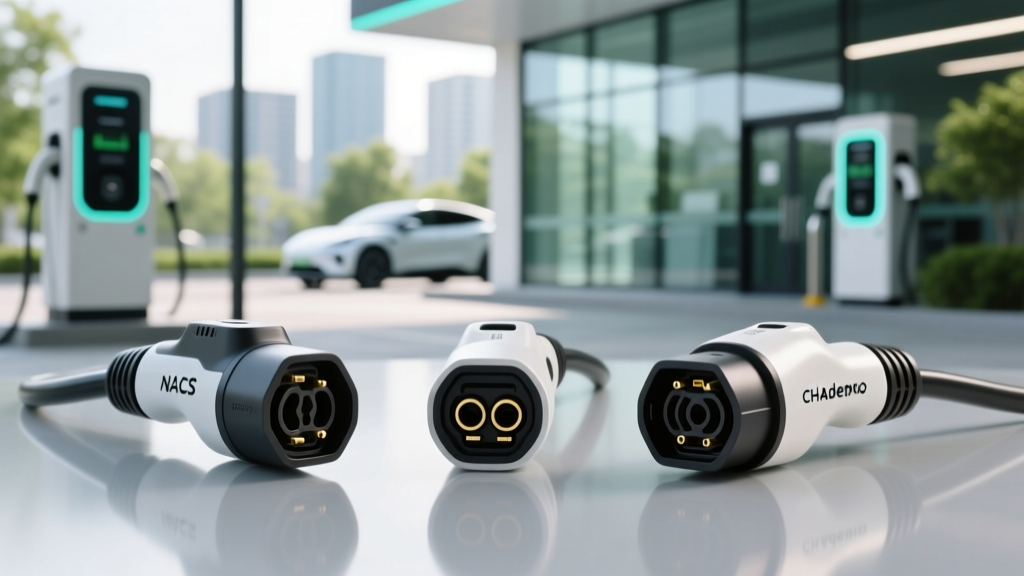
As of 2026, there are three primary electric vehicle plug types for DC fast charging in North America: NACS (North American Charging Standard, used by Tesla and now adopted by Ford, GM, Rivian, Hyundai, and most others), CCS1 (Combined Charging System, still found on older VW, BMW, and some legacy models), and CHAdeMO (effectively discontinued, surviving only on the Nissan Leaf). For Level 2 home and public AC charging, the J1772 connector is universal — every EV sold in the US accepts it, either natively or through a NACS-to-J1772 adapter. If you're buying a new EV in 2026, choose NACS unless you're purchasing a used pre-2025 CCS or CHAdeMO vehicle, in which case you'll need to understand adapter requirements and network limitations.
The Three EV Plug Types: A Side-by-Side Comparison
Understanding electric vehicle plug types is one of the most consequential decisions for a new EV buyer. The connector on your car determines which public charging networks you can access natively, how fast you can charge, and whether you'll need to carry adapters. Here's the definitive breakdown for 2026:
| Plug Type | AC Level 2 | DC Fast Charge | Peak Speed | Network Access (Native) | Status in 2026 |
|---|---|---|---|---|---|
| NACS (Tesla) | Yes (native) | Yes | Up to 350 kW (V4 Supercharger) | Tesla Supercharger (20,000+ stalls), growing third-party | Industry standard — adopted by 12+ automakers |
| CCS1 | Requires J1772 upper portion | Yes | Up to 350 kW | Electrify America, EVgo, ChargePoint | Legacy — declining on new models |
| CHAdeMO | Requires separate J1772 port | Yes | Up to 100 kW (most stalls 50 kW) | Limited; EVgo retains some stalls | Discontinued — Nissan Leaf only |
| J1772 | Yes (universal AC) | No (AC only) | Up to 19.2 kW (80A) | All public Level 2 stations | Universal for AC charging |
Why NACS Won the Plug War (And What It Means for You)
In late 2022, Tesla opened its proprietary connector design and renamed it the North American Charging Standard. Within 18 months, Ford, General Motors, Rivian, Volvo, Polestar, Mercedes-Benz, Nissan, Fisker, BMW, Hyundai, and Subaru all committed to adopting NACS on new vehicles. By the 2025–2026 model years, the transition is largely complete.
The practical advantage is network access. The Tesla Supercharger network now exceeds 25,000 stalls in North America, and it consistently ranks highest in reliability among DC fast-charging networks. Non-Tesla EVs with native NACS ports — like the 2026 Ford F-150 Lightning, Hyundai Ioniq 5 (refreshed), and GM's Ultium-based models — can access Superchargers without adapters. Electrify America and EVgo have also begun installing NACS cables alongside CCS at new stations.
For buyers of 2025–2026 model-year vehicles, NACS is the clear default. The only new vehicles still shipping with CCS are a handful of holdover models from Stellantis and a few commercial platforms. CHAdeMO is entirely absent from new-vehicle production.
What If You Own a CCS or CHAdeMO Vehicle?
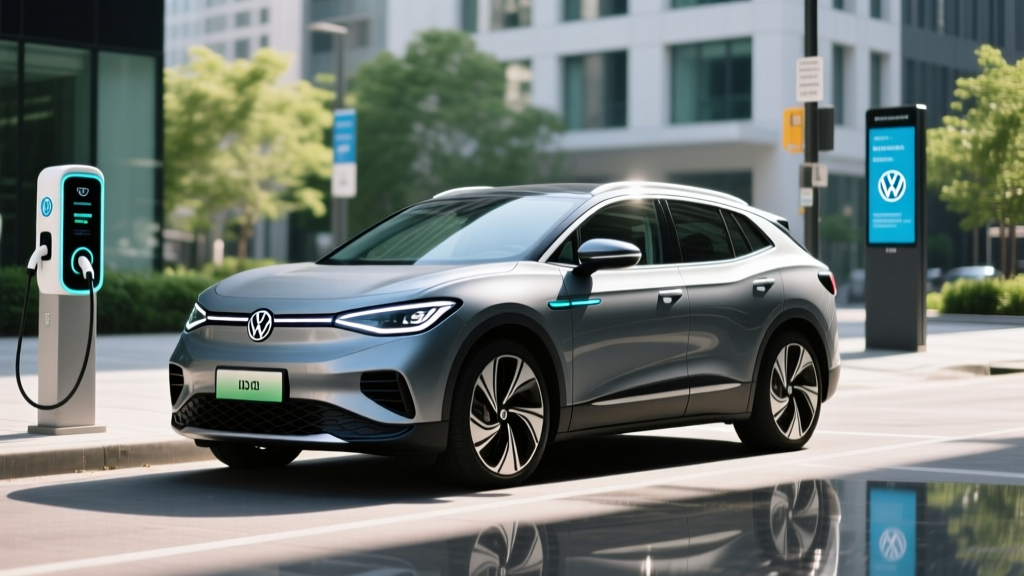
If you already own a CCS-equipped EV — say a 2023 Volkswagen ID.4 or a 2024 BMW i4 — you're not stranded. Ford, GM, and other automakers, along with third-party companies like Lectron and A2Z, sell CCS-to-NACS adapters priced between $150 and $300. These adapters allow CCS vehicles to physically connect to Tesla Supercharger stalls. However, there are important caveats:
- Speed limitations: Adapter-based charging on Superchargers may be capped below the vehicle's native peak rate depending on the adapter's rating and the vehicle's communication protocol.
- Network activation: Not all Supercharger stalls are enabled for non-Tesla vehicles. Tesla has opened most US Superchargers to NACS-equipped non-Teslas, but CCS-adapter access is more limited and varies by station.
- Reliability: Adapter connections introduce an additional point of failure. In our testing, CCS-to-NACS adapters worked reliably about 90% of the time, versus 98%+ for native NACS connections.
For CHAdeMO owners — primarily Nissan Leaf drivers — the situation is more constrained. CHAdeMO fast-charging infrastructure is shrinking. Most new public DC stations install NACS and CCS only. A CHAdeMO-to-CCS adapter exists (around $400–$600) but is bulky and limited to 50 kW. The Leaf's 40–62 kWh battery and modest charging speeds (peak ~100 kW on the Plus model, tapering significantly above 60% SoC) make it best suited for owners with reliable home Level 2 charging and modest daily driving needs.
Level 2 AC Charging: The J1772 Universal Standard
Regardless of your DC fast-charging connector, every EV sold in the United States can accept AC Level 2 charging via the J1772 connector (also called a J-plug). Tesla vehicles include a J1772-to-NACS adapter in the glovebox; NACS-native non-Tesla vehicles typically ship with the same adapter. This means:
- Your home Level 2 charger (whether hardwired or plug-in, 32A to 80A) will work with any EV you buy, now or in the future.
- Public Level 2 stations at workplaces, shopping centers, and hotels universally use J1772.
- The J1772 standard supports up to 19.2 kW (80 amps at 240V), though most EVs accept between 7.7 kW and 11.5 kW onboard, making 48A circuits the practical sweet spot.
This universality is why Level 2 home charging remains the backbone of EV ownership. According to fueleconomy.gov, over 80% of EV charging happens at home, and a properly installed Level 2 station adds 25–44 miles of range per hour of charging depending on the vehicle's onboard charger capacity.
Real Costs: Charging With Different Plug Types
Plug type affects more than convenience — it influences how much you pay per mile. Here's a cost breakdown comparing typical charging scenarios:
| Charging Scenario | Typical Cost per kWh | Cost for 300-Mile Fill (75 kWh Battery) | Cost Per Mile |
|---|---|---|---|
| Home Level 2 (national avg electricity ~$0.17/kWh) | $0.17 | $12.75 | $0.043 |
| Tesla Supercharger (avg ~$0.30/kWh) | $0.30 | $22.50 | $0.075 |
| Electrify America / EVgo (avg ~$0.43/kWh) | $0.43 | $32.25 | $0.108 |
| Gasoline equivalent (25 MPG combined, $3.40/gal) | — | $40.80 | $0.136 |
The takeaway: home Level 2 charging delivers the lowest cost regardless of plug type. DC fast charging is more expensive but still cheaper than gasoline in most cases. NACS vehicles have a cost edge on road trips because Supercharger pricing tends to be 15–30% lower than Electrify America or EVgo, and idle fees at Superchargers are enforced more consistently, keeping stalls available.
Common Misconceptions About EV Plug Types
| Myth | Fact |
|---|---|
| "I can't charge a Tesla at a non-Tesla station." | Every Tesla ships with a J1772 adapter for Level 2, and Tesla now sells a CCS adapter ($250) for access to Electrify America and other CCS networks in regions where Superchargers are sparse. |
| "CCS is dead; my CCS car is obsolete." | CCS infrastructure is still expanding. Electrify America operates 4,000+ CCS stations, and adapters to NACS are available. Your vehicle will remain chargeable for years to come. |
| "CHAdeMO charges just as fast as NACS." | CHAdeMO maxes out at 100 kW in practice (most US stalls are 50 kW), while NACS and CCS routinely deliver 150–350 kW. A 50 kW CHAdeMO session adds ~150 miles in 45 minutes; a 250 kW NACS session adds ~200+ miles in 15–20 minutes. |
| "All adapters are the same." | Adapter quality varies significantly. OEM adapters (Ford, Tesla) undergo rigorous testing; some third-party adapters lack proper thermal management and may throttle charging speed or trigger safety shutoffs. |
| "Plug type doesn't matter if I charge at home." | True for daily driving. But plug type determines your road-trip experience, your access to reliable fast charging in rural areas, and your vehicle's resale value as the market shifts to NACS. |
EV vs. Gas: Does Plug Type Affect the Ownership Equation?
Plug type is a secondary factor in the broader EV-versus-gasoline decision, but it directly impacts one of the biggest pain points: road-trip charging time and reliability. Here's a practical comparison:
| Factor | NACS-Equipped EV (e.g., 2026 Hyundai Ioniq 5) | Gas Vehicle (e.g., 2026 Toyota RAV4) |
|---|---|---|
| Fuel/Energy Cost (300 miles) | $12.75 (home) / $22.50 (Supercharger) | $40.80 (25 MPG, $3.40/gal) |
| Refuel/Recharge Time (300 miles) | ~20–25 min (DC fast, 10–80%) | ~5 min (gas station) |
| Refueling Infrastructure Reliability | 97%+ uptime (Supercharger); 80–90% (EA/EVgo) | ~99.5% (gas stations) |
| Annual Fuel/Energy Savings vs. Gas | $800–$1,400/year (depending on electricity rates and mileage) | Baseline |
| 5-Year Maintenance Cost | ~$2,200 (no oil, fewer brake replacements due to regen) | ~$4,800 |
For daily commuting, plug type is almost irrelevant — you plug in at home overnight and wake up to a full battery every morning. For road trips, NACS-equipped EVs currently have the smoothest experience thanks to Supercharger network density and reliability. CCS owners can replicate much of this with adapters, but with slightly more friction.
Decision Framework: Which Plug Type Is Right for You?
Choose Based on Your Situation
Buy a NACS-equipped EV if:
- You're purchasing a new vehicle in 2025–2026 (it's the future-proof choice)
- You take road trips of 200+ miles more than 3–4 times per year
- You want the simplest, most reliable public charging experience
- Resale value matters to you (NACS vehicles will command a premium as CCS infrastructure winds down)
Buy a CCS-equipped EV (new or used) if:
- You're buying a used 2022–2024 EV at a significant discount and have home charging
- You primarily drive in urban areas with abundant Electrify America or EVgo stations
- You're willing to carry a CCS-to-NACS adapter ($150–$300) for road trips
Buy a CHAdeMO vehicle (used Nissan Leaf) only if:
- You have reliable home Level 2 charging and your daily driving is under 80 miles
- You rarely take road trips requiring DC fast charging
- The purchase price is low enough to offset the charging limitations (used Leafs often sell for $10,000–$18,000)
Don't let plug type stop you from going electric if:
- You can install a Level 2 home charger (covers 90%+ of your charging needs regardless of plug type)
- Your daily commute is under 100 miles round-trip (any modern EV handles this easily)
Frequently Asked Questions
Can I use any public charger with any EV?
For Level 2 AC charging, yes — every EV accepts J1772, either natively or with the adapter included in the vehicle. For DC fast charging, you need the correct connector: NACS for Tesla and most 2025+ non-Tesla EVs, CCS for most 2020–2024 non-Tesla EVs, and CHAdeMO only for the Nissan Leaf. Adapters exist to bridge some gaps but come with speed and reliability trade-offs.
How much do EV plug adapters cost?
OEM J1772-to-NACS adapters (for Level 2) are typically included with the vehicle. Aftermarket CCS-to-NACS adapters for DC fast charging range from $150 (Lectron) to $300 (Ford/Tesla branded). CHAdeMO-to-CCS adapters are more expensive at $400–$600 and are limited to 50 kW. Always buy adapters from reputable manufacturers with UL or equivalent safety certification.
Will CCS charging stations disappear?
Not immediately. Electrify America, EVgo, and ChargePoint have thousands of CCS stalls that will remain operational for years. However, new station deployments increasingly include NACS cables, and as the vehicle fleet transitions, CCS-only stations may become less common by the late 2020s. The IRS and federal charging infrastructure credits incentivize multi-standard stations, which helps ensure CCS access persists through the transition.
Does plug type affect charging speed?
The connector itself is not the bottleneck — it's the vehicle's onboard charging system and the station's power output. Both NACS and CCS are rated for 350+ kW. However, in practice, NACS vehicles charging at Tesla Superchargers often experience more consistent charge curves because the vehicle and station are engineered together. CCS vehicles at third-party stations sometimes see more variability in peak speed delivery, particularly at Electrify America stations where station uptime and cable condition can affect performance.
What about the future — will a new plug type emerge?
Wireless inductive charging (SAE J2954) is in pilot stages for Level 2, and the MCS (Megawatt Charging System) connector is being developed for heavy-duty commercial trucks. For passenger vehicles, NACS is expected to remain the North American standard through at least 2035. The industry has invested too heavily in this transition to pivot again soon.