Quick Answer: What Is an Electric Vehicle Motor?
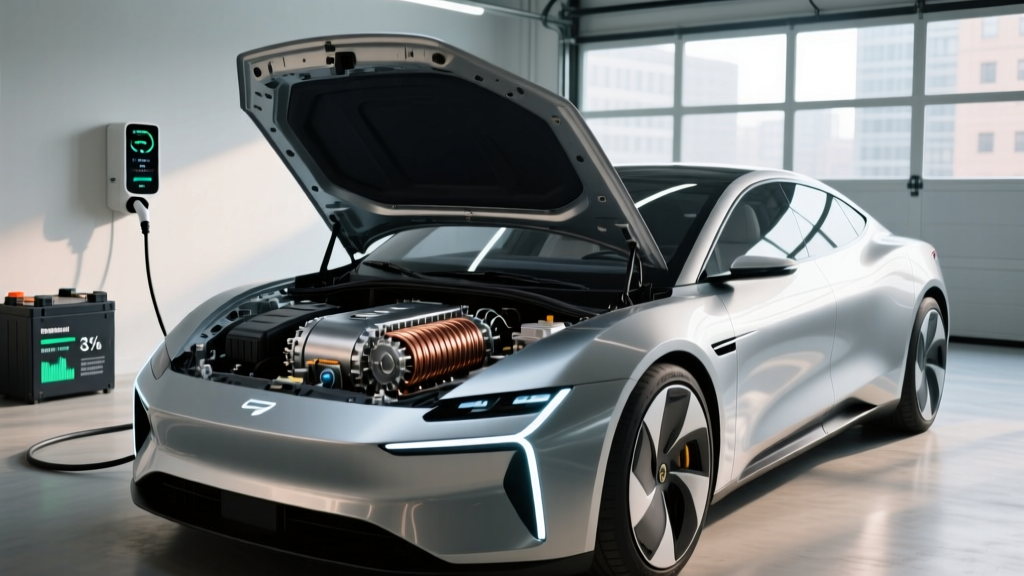
An electric vehicle motor converts electrical energy from the battery into mechanical rotation to drive the wheels. Unlike a gas engine, it delivers peak torque instantly from 0 RPM, requires no multi-speed transmission, and has roughly 20 moving parts versus 2,000+ in an internal combustion engine (ICE). Most modern EVs use either a permanent magnet synchronous motor (PMSM) or an AC induction motor, producing anywhere from 150 to over 1,000 horsepower depending on the vehicle. Motor efficiency typically exceeds 90%, compared to roughly 25-30% thermal efficiency for a gas engine, meaning far more of the stored energy reaches the wheels.
Electric Vehicle Motor Types: PMSM vs. Induction vs. Axial Flux
Not all EV motors are identical. Automakers choose motor architectures based on cost, efficiency targets, and performance goals. Here's how the three main types compare in 2026 production vehicles:
| Motor Type | Peak Efficiency | Typical Use | Example Vehicles (2026) | Trade-Off |
|---|---|---|---|---|
| Permanent Magnet Synchronous (PMSM) | ~95-97% | Primary drive motor in most EVs | Honda Prologue, Hyundai Ioniq 5, Chevrolet Equinox EV | Uses rare-earth magnets (neodymium), higher material cost |
| AC Induction | ~90-93% | Secondary/front motor in AWD setups | Tesla Model Y (front motor), Rivian R1T (quad-motor variants) | Lower efficiency at partial load, but no rare-earth dependency |
| Axial Flux | ~96-97% | High-performance, compact packaging | Mercedes-AMG EQE, Lucid Gravity (certain trims) | Higher manufacturing cost, limited to premium segment |
Why it matters for buyers: PMSM motors dominate the market because they deliver the best combination of range and responsiveness. Induction motors are often used as the secondary motor in dual-motor AWD configurations because they can be disconnected (freewheeling) when not needed, eliminating drag. This is why Tesla's dual-motor vehicles achieve strong EPA range despite AWD — the front induction motor disengages during steady-state cruising.
Motor Power, Torque, and Real-World Performance
The electric vehicle motor's defining characteristic is instant torque delivery. A gas engine needs to rev to 3,000-5,000 RPM to reach peak torque; an EV motor delivers maximum torque at 1 RPM. This translates to brisk off-the-line acceleration even in modestly priced EVs.
Here's how popular 2026 models stack up in motor output and acceleration:
| Vehicle | Motor Config | Horsepower | Torque (lb-ft) | 0-60 mph | Base MSRP |
|---|---|---|---|---|---|
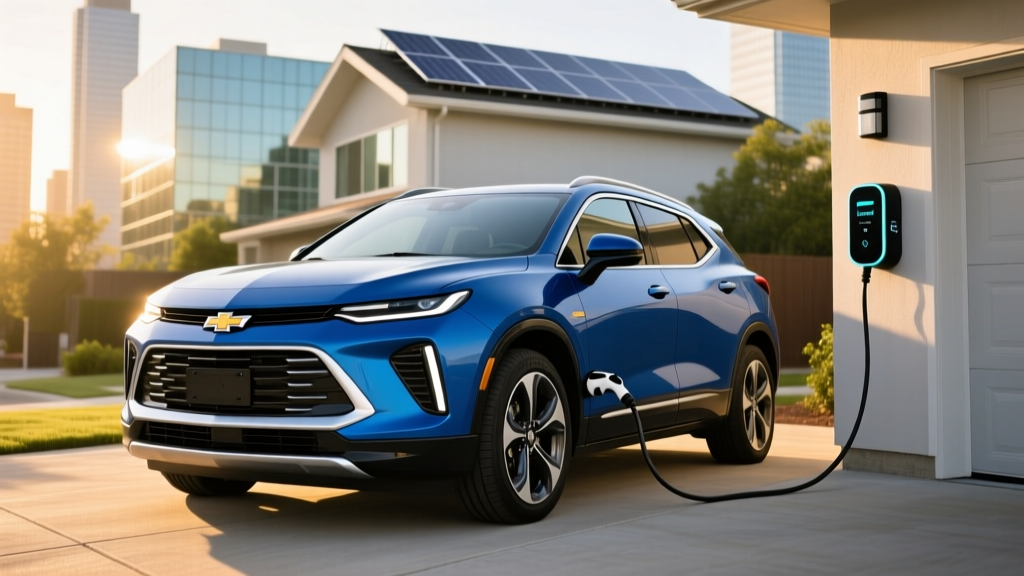
| Chevrolet Equinox EV 2LT | Single PMSM (FWD) | 213 hp | 236 | 7.8 sec | $34,900 |
| Hyundai Ioniq 5 SE | Single PMSM (RWD) | 168 hp | 258 | 7.4 sec | $43,975 |
| Tesla Model Y Long Range | Dual motor (AWD) | 384 hp | 376 | 4.8 sec | $46,630 |
| Ford F-150 Lightning Lariat | Dual PMSM (AWD) | 580 hp | 775 | 4.0 sec | $61,995 |
| Lucid Air Pure | Single PMSM (RWD) | 430 hp | 443 | 3.8 sec | $71,400 |
Real-world note: Horsepower figures in EVs can be misleading. Because EVs have no transmission to multiply torque, sustained highway power (above 80 mph) can taper in single-motor, lower-output models. A 213 hp Equinox EV accelerates strongly to 50 mph but doesn't pull as hard from 70-100 mph as a 384 hp Model Y. If you frequently drive on high-speed interstates or mountain passes, the dual-motor advantage is tangible, not just a spec-sheet number.
EV Motor Efficiency vs. Gas Engine: Where the Energy Goes
This is where the electric vehicle motor's fundamental advantage becomes clear in your wallet. The U.S. Department of Energy calculates that EVs convert over 77% of the electrical energy from the grid to power at the wheels. Conventional gasoline vehicles convert only about 12-30% of the energy stored in gasoline to wheel power — the rest is lost as heat, friction, and accessory drag.
| Metric | EV (Single Motor) | Gas Vehicle (4-cyl Turbo) | Hybrid (HEV) |
|---|---|---|---|
| Motor/Engine efficiency | 90-97% | 25-30% | 30-38% (Atkinson cycle) |
| Well-to-wheel efficiency | 77%+ | 12-30% | 25-35% |
| Energy cost per mile (avg) | $0.04-$0.06 (home charging) | $0.12-$0.16 | $0.08-$0.11 |
| Idle energy waste | Near zero | ~0.2-0.5 gal/hr | Minimal (engine off at stop) |
| Regenerative braking recovery | Yes (recaptures kinetic energy) | No (wasted as brake heat) | Partial |
Based on fueleconomy.gov data, a typical EV with a single PMSM motor achieving 120 MPGe combined and driven 12,000 miles per year at $0.15/kWh (average U.S. residential rate) costs roughly $540 annually in electricity. A comparable gas car averaging 28 MPG combined at $3.40/gallon costs approximately $1,457 annually in fuel — a difference of $917 per year, or $4,585 over five years.
Motor Maintenance and Long-Term Ownership Costs
The electric vehicle motor itself is one of the most reliable components in any car. With no oil, no spark plugs, no timing belts, no exhaust system, and no multi-speed transmission, the motor is essentially a sealed unit designed to last the life of the vehicle. Most manufacturers warranty the motor and power electronics under the same EV powertrain warranty covering the battery — typically 8 years/100,000 miles, and in states adopting California emissions rules (CARB states), 10 years/150,000 miles.
Here's a realistic 5-year ownership cost comparison for a mid-price EV versus a comparable gas crossover:
| Cost Category | 2026 EV (e.g., Ioniq 5, ~$44k) | Gas Crossover (e.g., Tucson, ~$32k) |
|---|---|---|
| Purchase price (after incentives) | ~$36,500 (if §30D eligible) | $32,000 |
| Fuel/energy (5 yr, 60k mi) | $2,700 (home charging) | $7,285 |
| Maintenance (5 yr) | ~$1,200 (cabin filter, wipers, tire rotation, brake fluid) | ~$3,500 (oil, filters, spark plugs, brakes, transmission fluid) |
| Insurance (5 yr avg) | ~$9,500 (EVs carry ~15-25% higher premiums) | ~$7,600 |
| Depreciation (5 yr) | ~$16,000 | ~$13,500 |
| Total 5-Year Cost | ~$65,900 | ~$63,885 |
Key takeaway: The EV's fuel and maintenance savings ($4,585 + $2,300 = $6,885) nearly offset its higher purchase price (after credit), insurance premiums, and steeper depreciation. Over 7-10 years, the EV pulls ahead decisively — but the breakeven point depends heavily on your home charging access, annual mileage, and whether you qualify for the federal §30D tax credit.
Common Misconceptions About EV Motors
| Myth | Fact |
|---|---|
| "EV motors wear out like gas engines" | EV motors have no piston rings, valves, or timing chains. Failure before 200,000 miles is rare. The bearings and inverter are the most likely service points. |
| "More horsepower always means better" | Motor power matters less than battery discharge rate for sustained performance. A 213 hp EV with a large battery can cruise more efficiently than a 500 hp EV with the same battery size. |
| "Dual motors always cut range drastically" | Modern dual-motor EVs with induction front motors (that freewheel) or disconnect clutches lose only 5-10% range versus single-motor variants. The Tesla Model Y LR AWD achieves 310 miles EPA vs. the RWD's 320 miles — a 3% gap. |
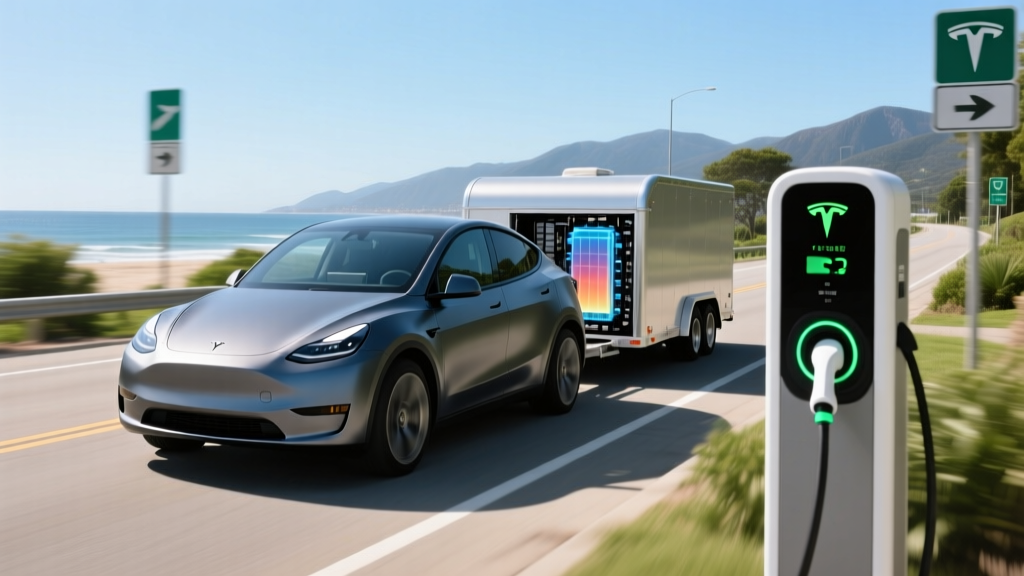
| "EV motors can't handle towing" | Torque is torque. The F-150 Lightning's dual PMSM setup produces 775 lb-ft and tows 10,000 lbs. The trade-off is range reduction under load (expect 40-50% range loss when towing at max capacity), not motor capability. |
| "The motor is the expensive part to replace" | The traction battery ($5,000-$20,000+ depending on kWh) is the costly component. Motor replacement typically runs $2,000-$5,000, and failures are uncommon within the warranty period. |
Real-World Ownership: What First-Time EV Buyers Need to Know
The motor is the easy part — it just works. The ownership variables that actually matter are charging access, climate impact, and driving patterns.
Home Charging Access
Roughly 75-80% of EV charging happens at home. If you can install a Level 2 charger (240V, 32-48 amps, delivering 7.7-11.5 kW), you'll wake up every morning with a full "tank." Installation costs typically run $800-$2,500 including equipment and electrician labor, assuming your electrical panel has capacity. A panel upgrade (to 200A service) can add $1,500-$3,000.
If you cannot charge at home (apartment, street parking), EV ownership is still viable but requires planning around public Level 2 or DC fast charging. Budget $0.15-$0.48/kWh at public stations versus $0.10-$0.18/kWh at home.
Cold-Weather Range Loss
The electric vehicle motor itself doesn't lose power in cold weather — it's the battery chemistry that slows. Expect 20-30% range reduction at 20°F, primarily from battery resistance and cabin heating demands. Vehicles with a heat pump (standard on the Ioniq 5, Model Y, and most 2026 EVs above $40k) reduce this penalty to 15-20% by scavenging waste heat from the motor and power electronics. Preconditioning the battery while plugged in is the single most effective cold-weather strategy.
Driving Patterns
EV motors are most efficient in stop-and-go city driving, where regenerative braking recaptures energy. Highway driving at 75-80 mph reduces range by 15-25% compared to the EPA combined estimate due to aerodynamic drag. If your commute is 90% highway at high speed, size your battery 20% larger than the EPA range would suggest.
Decision Framework: Is an EV Motor Right for Your Next Car?
Choose an EV (battery + electric motor) if:
- You have home or workplace Level 2 charging access
- Your daily driving is under 250 miles round-trip
- You want minimal scheduled maintenance (no oil changes, fewer brake replacements)
- You qualify for the federal §30D credit (income under $150k single / $300k joint, vehicle MSRP under $55k cars or $80k SUVs/trucks, and battery sourcing requirements met)
- You value instant torque and quiet operation
Choose a hybrid (HEV) or plug-in hybrid (PHEV) if:
- You lack reliable home charging and frequently drive over 300 miles between stops
- You live in a region with extreme cold (-10°F or below) where range loss is severe
- Your budget is under $30,000 and you need maximum range flexibility (a Toyota Prius HEV at 57 MPG combined costs ~$28,350)
- You tow frequently and can't accept 40-50% range reduction on long hauls
Consider the motor configuration:
- Single motor (FWD or RWD): Best efficiency, lowest price, sufficient for 90% of drivers. Choose this if you prioritize range over all-weather traction.
- Dual motor (AWD): Better traction in snow/rain, faster acceleration, 5-10% range penalty. Choose this if you live in a snowy climate or want sub-5-second 0-60 times.
- Tri-motor/Quad-motor: Performance-oriented (Lucid Air Sapphire, Rivian R1T Quad). Premium pricing ($90k+), marginal daily benefit. Choose only if track performance or extreme off-road capability is a priority.
Federal Tax Credit and Motor/Battery Sourcing Rules
Under current IRS §30D rules for 2026, the new clean vehicle credit offers up to $7,500 — split into $3,750 for battery component manufacturing and $3,750 for critical mineral sourcing. The electric vehicle motor itself is not separately incentivized, but it's covered under the powertrain warranty requirements. Key eligibility criteria:
- MSRP caps: Vans, SUVs, and pickup trucks under $80,000; sedans and other vehicles under $55,000
- Buyer income limits: Modified AGI under $150,000 (single), $225,000 (head of household), $300,000 (joint)
- Point-of-sale transfer: You can transfer the credit to the dealer at purchase, reducing the sale price directly
- Assembly: Vehicle must undergo final assembly in North America (verify at fueleconomy.gov)
Always confirm eligibility with a tax professional and check irs.gov for the latest sourcing requirements, which tighten annually.
Frequently Asked Questions
Do electric vehicle motors need oil changes?
No. EV motors use sealed bearings and have no engine oil, transmission fluid (in most single-speed designs), or coolant flushes on the same schedule as gas engines. Some EVs have a reduction gear fluid that may need replacement at 100,000+ miles, but this is a $100-$200 service, not a recurring maintenance item.
How long does an EV motor last?
Most electric vehicle motors are designed to last 200,000-300,000+ miles. The motor itself rarely fails — the more common service items are the inverter (which converts DC battery power to AC motor power) and the reduction gear bearings. Tesla has reported motor failure rates under 1% over the first 150,000 miles across its fleet.
Can an EV motor be repaired or does it need full replacement?
Most motor issues involve the inverter or power electronics, not the motor stator/rotor. Inverter replacement typically costs $1,500-$3,500 and is covered under the 8-year/100,000-mile powertrain warranty. Full motor replacement is rare and runs $2,000-$5,000 for most mainstream models.
Why do some EVs use two different motor types?
Dual-motor EVs often pair a PMSM on one axle (for efficiency) with an AC induction motor on the other (for cost and freewheeling capability). The induction motor can spin freely without drawing power or creating magnetic drag when AWD isn't needed, preserving range. This is why the Tesla Model Y Long Range uses an induction front motor and a PMSM rear motor.
Does motor size affect how much I'll pay for insurance?
Indirectly, yes. Higher-output dual-motor and tri-motor EVs carry higher insurance premiums because of their greater replacement cost, higher repair complexity, and statistically higher claim severity. A single-motor Chevrolet Equinox EV may cost $1,600-$2,000/year to insure, while a tri-motor Tesla Model S Plaid can exceed $3,500-$4,500/year depending on your state and driving record.