Quick Answer: What Is Electric Vehicle Efficiency?
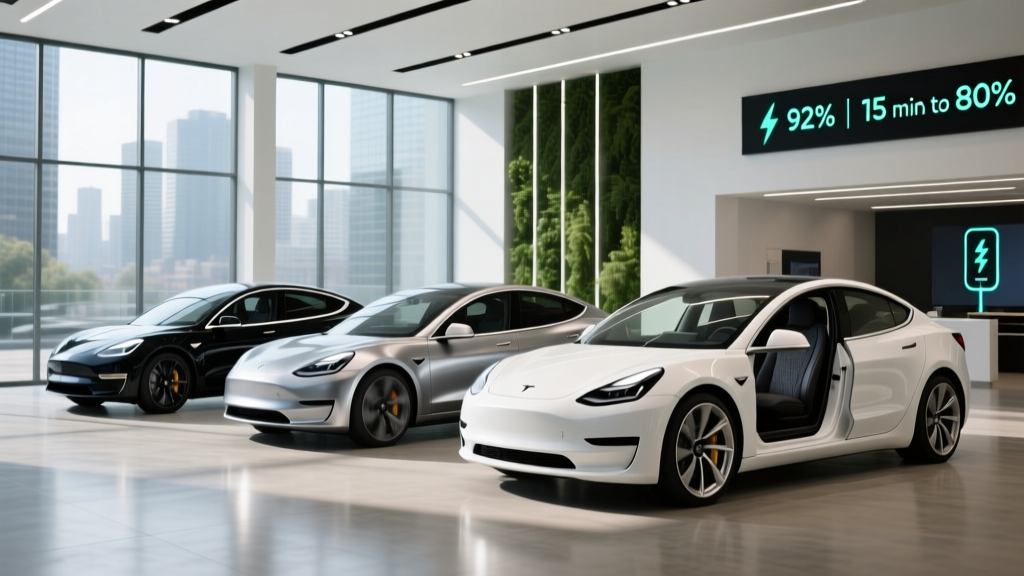
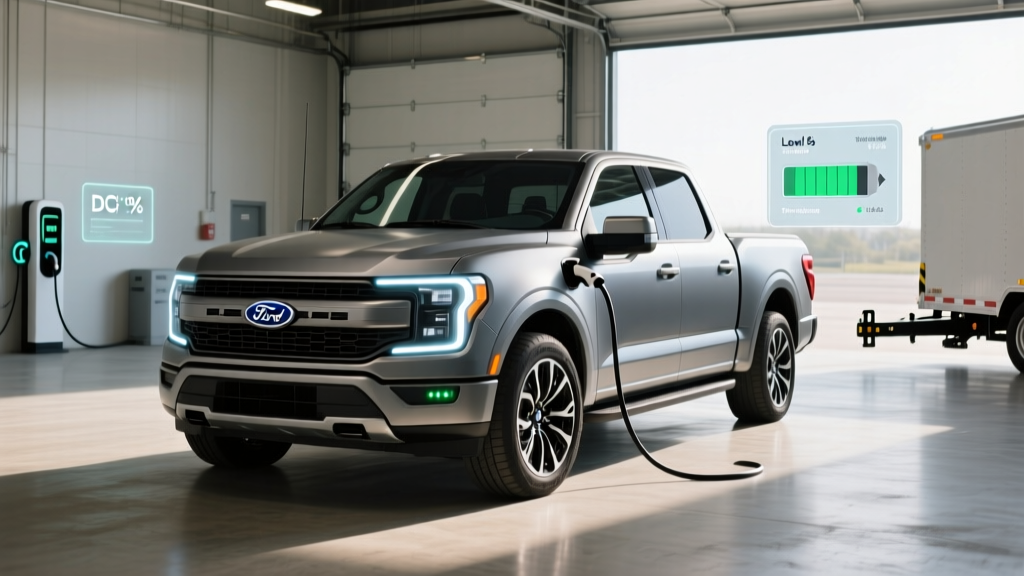
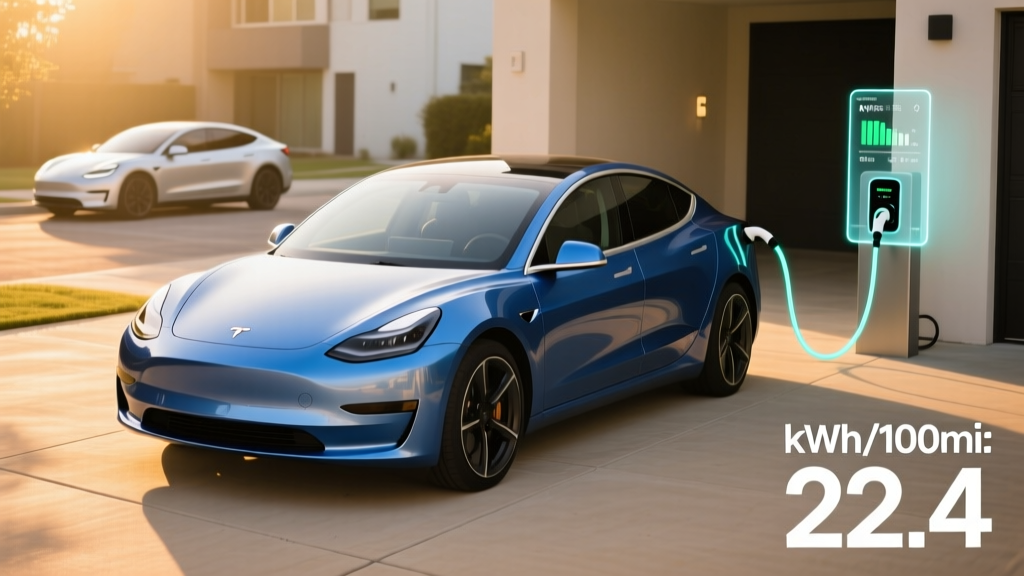
Electric vehicle efficiency measures how much electrical energy (in kilowatt-hours, or kWh) an EV uses to travel a given distance. It's expressed two ways: kWh per 100 miles (lower is better — think of it like gallons per 100 miles) and MPGe (miles per gallon equivalent — higher is better, designed to compare with gas cars). For 2026 models, efficient EVs like the Tesla Model 3 achieve 24 kWh/100mi (140 MPGe), while larger SUVs like the Ford F-150 Lightning use around 48 kWh/100mi (70 MPGe). Efficiency directly determines your real-world range, your charging cost per mile, and how often you stop on road trips.
Why Electric Vehicle Efficiency Matters More Than Range Alone
Most EV shoppers fixate on EPA range — and range matters — but efficiency is the upstream metric that determines everything else. Two EVs with identical 80 kWh battery packs can deliver wildly different ranges depending on how efficiently they convert stored energy into miles. A lighter, more aerodynamic sedan might squeeze 300 miles from that pack, while a boxy SUV with all-terrain tires might manage only 220.
Efficiency also dictates your operating cost. If your electricity costs $0.14/kWh (a typical US residential average in 2026 per the EIA), driving an EV rated at 25 kWh/100mi costs $3.50 per 100 miles. A less efficient EV at 45 kWh/100mi costs $6.30 per 100 miles on the same electricity. Over 15,000 annual miles, that's a $420/year difference — and it compounds over ownership.
Finally, efficiency determines how fast you replenish on road trips. A 25 kWh/100mi EV gains 100 miles from 25 kWh of charging; a 45 kWh/100mi EV needs 45 kWh for the same distance. At a 150 kW DC fast charger, that's roughly 10 minutes versus 18 minutes. Over a 600-mile drive, efficient vehicles shave meaningful time off total trip duration.
Understanding the Metrics: kWh/100mi vs MPGe
The EPA rates EVs using two efficiency figures, both found on the window sticker and at fueleconomy.gov:
- kWh per 100 miles: The raw energy consumption figure. Lower is better. This is the EV equivalent of liters per 100 km used in many markets. It tells you exactly how much electricity you'll buy to cover distance.
- MPGe (miles per gallon gasoline equivalent): A conversion metric. The EPA defines one gallon of gasoline as containing 33.7 kWh of energy. So an EV using 33.7 kWh/100mi earns a 100 MPGe rating. One using 24 kWh/100mi earns ~140 MPGe. Higher is better, and it lets you compare directly with a gas car's MPG rating.
A critical nuance: kW is power (the rate of energy flow), while kWh is energy (the total amount consumed or stored). Think of kW as how fast water flows from a hose, and kWh as how many gallons fill the bucket. Your EV's battery capacity is measured in kWh (energy stored); its charging speed is measured in kW (power delivered). Efficiency bridges the two — it tells you how many kWh of battery capacity translate into actual miles.
| Vehicle | Powertrain | EPA Efficiency | Energy Cost per 100 mi | Annual Fuel/Energy Cost* |
|---|---|---|---|---|
| Tesla Model 3 RWD | BEV | 25 kWh/100mi (134 MPGe) | $3.50 (home, $0.14/kWh) | $525 |
| Hyundai Ioniq 6 SE LR | BEV | 24 kWh/100mi (140 MPGe) | $3.36 (home, $0.14/kWh) | $504 |
| Toyota Prius LE | HEV | 57 MPG combined | $5.26 ($3.00/gal gas) | $789 |
| Honda Accord EX | Gas | 32 MPG combined | $9.38 ($3.00/gal gas) | $1,406 |
*Based on 15,000 miles/year. Electricity at $0.14/kWh (residential avg); gasoline at $3.00/gal. Actual costs vary by region and utility plan. Source: fueleconomy.gov 2026 data.
What Drives EV Efficiency — and What Destroys It
Electric vehicle efficiency isn't a single engineering decision; it's the sum of dozens of factors. Here's what moves the needle:
Vehicle Design Factors
- Aerodynamic drag: The dominant force at highway speeds. Sleek sedans (drag coefficient ~0.21-0.24 Cd) dramatically outperform boxy SUVs (~0.30-0.35 Cd). This is why the Hyundai Ioniq 6 (0.21 Cd) achieves 24 kWh/100mi while similarly sized crossovers use 30+.
- Weight: Heavier vehicles need more energy to accelerate and climb hills. A 5,500-lb electric truck uses nearly double the energy per mile of a 3,900-lb sedan, even with regenerative braking recovering some energy on deceleration.
- Tire rolling resistance: OEM EV tires are specifically engineered for low rolling resistance. Switching to aggressive all-terrain or winter tires can reduce efficiency by 5-15%.
- Drivetrain configuration: Single-motor RWD or FWD setups are typically 5-10% more efficient than dual-motor AWD, which carries the weight and friction losses of a second motor.
- Thermal management: Vehicles with heat pumps (standard on most 2026 Hyundai/Kia EVs, Tesla Model Y/3) use roughly 30% less energy for cabin heating in cold weather compared to resistive heater systems.
Real-World Factors That Reduce Efficiency
- Cold weather (below 40°F): Battery chemistry slows, cabin heating demands energy, and tire pressure drops. Expect 15-30% range reduction in sustained sub-freezing temperatures, with the largest losses below 20°F.
- Highway speeds above 70 mph: Aerodynamic drag increases with the square of speed. Driving 80 mph vs 65 mph can increase energy consumption by 20-25%.
- Elevation gain: Mountain driving consumes significantly more energy. Climbing 3,000 feet of elevation can use 10-15 additional kWh, though regenerative braking recovers some on descent.
- Climate control: Running full A/C in 95°F heat adds ~1-3 kWh/100mi. Cabin heating in 20°F weather without a heat pump can add 4-6 kWh/100mi.
EV Efficiency Myths vs Facts
| Myth | Fact |
|---|---|
| "MPGe means my EV gets 130 miles per gallon." | MPGe is an energy-equivalent comparison, not a fuel economy figure. Your EV uses electricity, not gasoline. kWh/100mi is the actionable metric for calculating your charging cost. |
| "All EVs cost the same to charge." | An efficient sedan (24 kWh/100mi) costs roughly half as much to charge as a heavy electric truck (48 kWh/100mi) on the same electricity rate. Efficiency differences are massive. |
| "I'll always get the EPA range." | EPA range is tested under controlled conditions. Real-world highway driving at 75 mph typically yields 85-90% of EPA range. In freezing weather, expect 70-85%. Always budget a buffer. |
| "Regenerative braking makes EVs equally efficient everywhere." | Regen helps in stop-and-go city driving (recovering kinetic energy), but it cannot overcome aerodynamic drag at sustained highway speeds or the energy demands of extreme cold. |
| "Bigger battery always means better." | A larger battery extends range but adds weight, reducing efficiency. A 60 kWh pack in an efficient vehicle can outperform an 80 kWh pack in a heavier, less aerodynamic one — and cost less to charge. |
Real-World Cost Breakdown: EV vs Gas Over 5 Years
Efficiency translates directly into ownership economics. Here's a five-year total cost comparison for a typical buyer driving 15,000 miles annually. This uses a 2026 Tesla Model 3 RWD (base MSRP ~$38,990 before incentives) versus a comparably equipped 2026 Honda Accord EX (~$33,000 MSRP).
| Cost Category | Tesla Model 3 RWD (BEV) | Honda Accord EX (Gas) |
|---|---|---|
| Purchase Price (MSRP) | $38,990 | $33,000 |
| Federal Tax Credit (§30D)* | −$7,500 (if eligible) | $0 |
| Effective Purchase Price | $31,490 | $33,000 |
| Energy/Fuel (75,000 mi) | $2,625 (home @ $0.14/kWh, 25 kWh/100mi) | $7,031 (32 MPG @ $3.00/gal) |
| Maintenance (5 yr) | ~$1,200 (cabin filter, wipers, tire rotation, brake fluid check) | ~$3,500 (oil changes, filters, spark plugs, brake pads, transmission fluid) |
| Insurance (5 yr est.) | ~$9,500 (EV premiums typically 15-25% higher) | ~$7,800 |
| Estimated Depreciation | ~$14,000 | ~$12,000 |
| 5-Year Total Cost | ~$58,815 | ~$63,331 |
*Federal §30D credit eligibility requires meeting income caps ($150K single / $300K joint), MSRP caps ($55K sedans), and battery sourcing requirements per IRS rules. Credit may be applied at point of sale. Consult a tax professional. Electricity cost assumes 85% home charging; public DC fast charging at $0.35-$0.50/kWh would increase EV energy costs. Depreciation estimates based on current market trends.
The EV wins this comparison by roughly $4,500 over five years, primarily through fuel and maintenance savings. But note the caveats: insurance premiums are higher for EVs, and depreciation remains less predictable as the used EV market stabilizes. If you can't charge at home and rely entirely on public DC fast chargers at $0.40/kWh, your energy cost rises to ~$3,750 over 75,000 miles — still below gasoline, but the gap narrows.
How Efficiency Impacts Charging Time on Road Trips
Efficiency doesn't just affect cost — it determines how long you spend at chargers. Here's the math most EV reviews skip:
Imagine a 400-mile road trip in two vehicles:
- Efficient sedan (25 kWh/100mi, 75 kWh usable battery, 300 mi EPA range): Needs one charging stop. Must replenish ~50 kWh. At a 150 kW DC fast charger (sustained ~100 kW average accounting for charge curve taper from 10-80%), that takes roughly 30 minutes.
- Heavy electric SUV (42 kWh/100mi, 100 kWh usable battery, 240 mi EPA range): Needs two charging stops. Must replenish ~84 kWh total. At the same charger, that takes roughly 50 minutes across two stops.
The efficient sedan saves 20 minutes of charging on a single trip. Over a year of road trips, that adds up. And this assumes both vehicles have access to the same charging speeds — in practice, some older or less-capable EVs can't sustain high charge rates above 80% State of Charge, further extending stop times.
Charge curve reality check: No EV charges at its peak kW rate from 10% to 80%. A vehicle advertising "250 kW peak charging" typically sustains that rate only between roughly 10-30% SoC, then tapers progressively. Average charging power from 10-80% is usually 60-75% of the advertised peak. Always look for 10-80% charge time, not peak kW, when evaluating road-trip practicality.
First-Time Buyer Decision Framework
Electric vehicle efficiency should inform your purchase, but it's one factor among several. Use this framework to match an EV to your actual driving life:
Choose Based on Your Situation
Choose a high-efficiency sedan (24-28 kWh/100mi) if:
- Your commute exceeds 40 miles round trip
- You take frequent road trips of 200+ miles
- You pay high electricity rates ($0.20+/kWh) or rely on public charging
- You want to minimize charging stops and cost per mile
- Examples: Tesla Model 3, Hyundai Ioniq 6, BMW i4
Choose a mid-efficiency crossover/SUV (28-36 kWh/100mi) if:
- You need cargo space, AWD, or higher seating position
- Your daily driving is under 60 miles and you charge at home
- Road trips are occasional (2-4 per year)
- You value practicality over maximum efficiency
- Examples: Tesla Model Y, Hyundai Ioniq 5, Kia EV6
Choose a heavy-duty electric truck/large SUV (38-50+ kWh/100mi) if:
- You need towing capacity (5,000+ lbs) or a truck bed
- You have reliable home Level 2 charging (a 100 kWh battery on Level 1 at 1.4 kW takes 70+ hours for a full charge — Level 2 at 11.5 kW takes ~9 hours)
- You accept higher per-mile energy costs and more frequent charging stops
- Examples: Ford F-150 Lightning, Rivian R1T, Chevrolet Silverado EV
Consider a PHEV instead of a BEV if:
- You lack access to home or workplace charging
- You regularly drive in remote areas with sparse charging infrastructure
- Your daily driving is under 30 miles (most PHEVs offer 25-45 miles of electric-only range) but you take long trips where gas flexibility matters
- Examples: Toyota RAV4 Prime (42 mi EV range, 38 MPG gas), Jeep Wrangler 4xe (22 mi EV range, 20 MPG gas)
What First-Time EV Buyers Must Know
- Home charging is the foundation. Level 1 (120V, ~1.4 kW) adds 3-5 miles of range per hour — adequate only for low-mileage drivers. Level 2 (240V, 7.7-11.5 kW) adds 25-45 miles per hour and is essential for most EV owners. Budget $500-$2,000 for a Level 2 home charger installation (equipment + licensed electrician + permit), potentially more if your panel needs an upgrade to 200A service.
- Precondition your battery. Most EVs let you schedule departure times or precondition the battery before fast charging. A cold battery charges far slower — preconditioning warms it to optimal temperature, enabling peak charge rates. This is especially critical in winter.
- The 80% rule for daily charging. For NMC/NCA battery chemistries, daily charging to 80% prolongs battery life. Charge to 100% only for road trips. LFP (lithium iron phosphate) batteries, found in base Tesla Model 3/Y RWD trims, can be charged to 100% daily without degradation concerns — check your specific vehicle's battery chemistry and manufacturer guidance.
- Check §30D eligibility before buying. The federal tax credit of up to $7,500 has strict requirements: buyer income caps, vehicle MSRP limits ($55,000 for sedans, $80,000 for SUVs/trucks/vans), and battery critical-mineral and component sourcing rules that change annually. Verify current eligibility on fueleconomy.gov and consult a tax professional.
Frequently Asked Questions
Is a higher MPGe always better?
Yes, for efficiency — but MPGe alone doesn't tell the full story. A vehicle with 140 MPGe and a small 50 kWh battery has only ~200 miles of range, while one with 110 MPGe and an 82 kWh battery delivers ~290 miles. Balance efficiency with battery capacity based on your driving needs. For daily commuting, high efficiency with a smaller battery saves money. For road trips, you may prioritize range even at a slight efficiency penalty.
Does cold weather permanently reduce EV efficiency?
No. Cold-weather range loss (15-30% in sub-freezing temperatures) is temporary and reversible. Once temperatures rise, efficiency returns to normal. However, consistently operating in extreme cold without preconditioning can slightly accelerate long-term battery degradation. Using a garage and preconditioning while plugged in mitigates both efficiency loss and degradation.
How does EV efficiency compare to a hybrid in city driving?
EVs generally hold an advantage in city driving because regenerative braking recovers energy that gas cars waste as brake heat, and electric motors are inherently more efficient at low speeds than internal combustion engines. A BEV at 25 kWh/100mi costs ~$3.50 per 100 miles at $0.14/kWh; a 57 MPG hybrid costs ~$5.26 at $3.00/gal. The EV saves ~$1.76 per 100 miles in city conditions.
Will my EV's efficiency degrade as the battery ages?
Efficiency itself (kWh/100mi) remains largely stable over the battery's life. What degrades is total battery capacity — a 10% loss in capacity after 100,000 miles means 10% less range, but the car still uses the same kWh per mile. Most 2026 EVs carry battery warranties of 8 years/100,000 miles with a guaranteed minimum capacity retention of 70% (check your specific manufacturer's terms).
Do I need to worry about efficiency if I charge at home on solar?
If your marginal electricity cost is near zero (fully amortized solar with net metering), the dollar cost of inefficiency is minimal. But efficiency still matters for range and road-trip charging time. And if you ever move or your solar arrangement changes, an efficient EV protects you from higher electricity rates.