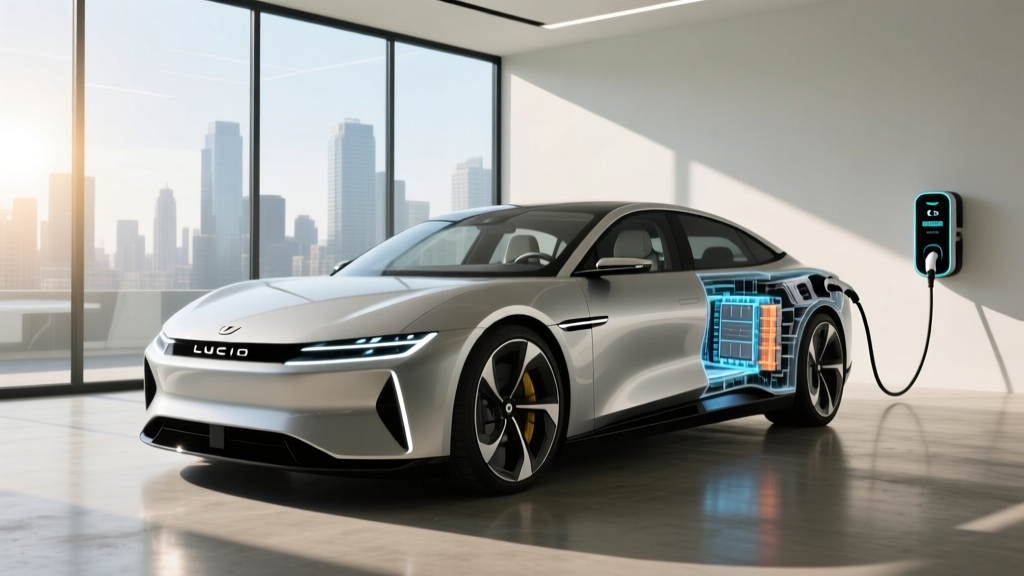
What is an electric vehicle drivetrain? An electric vehicle drivetrain replaces a gas engine, transmission, and exhaust system with three core components: a high-voltage battery pack (typically 50–100+ kWh), an electric motor (or two for AWD), and a single-speed reduction gear. Unlike internal combustion, there's no multi-gear transmission, no spark plugs, and no oil changes. The result is instant torque from 0 RPM, roughly 85–95% drivetrain efficiency (versus ~20–35% for gas), and far fewer moving parts to maintain. A typical EV drivetrain delivers 200–500+ horsepower and accelerates 0–60 mph in 3–8 seconds depending on the model and motor configuration.
How the Electric Vehicle Drivetrain Actually Works
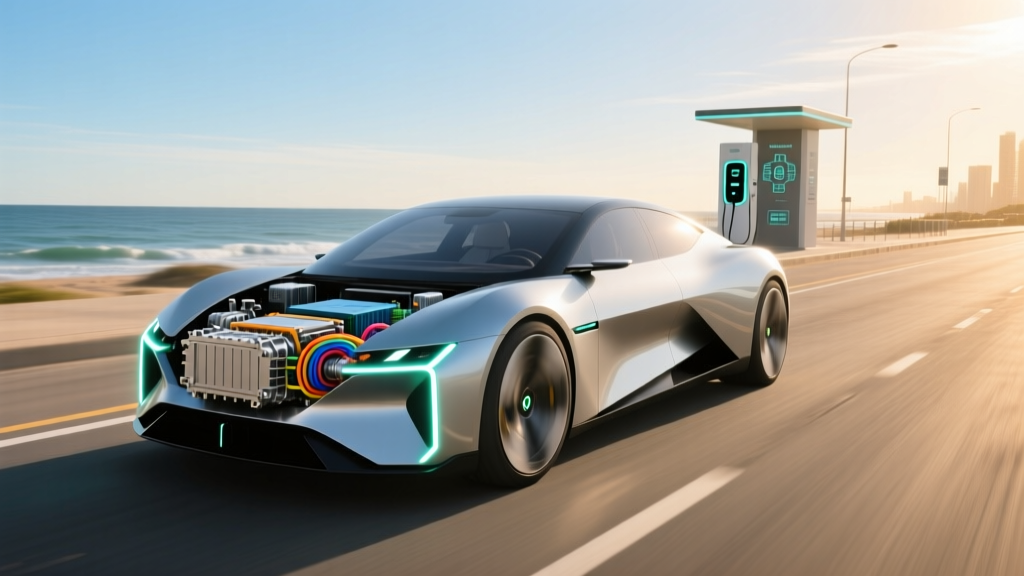
At the core of every EV is a deceptively simple powertrain architecture. Energy flows from the grid into the battery pack (measured in kWh — kilowatt-hours, the total energy stored). When you press the accelerator, the inverter converts the battery's DC (direct current) into AC (alternating current) to drive the electric motor. That motor spins the wheels through a single-speed reduction gear — no shifting required.
Here's the component breakdown that matters when you're shopping:
| Component | Function | Key Spec to Watch |
|---|---|---|
| Battery Pack | Stores energy; determines range | Usable kWh (e.g., 75 kWh usable in Tesla Model Y Long Range) |
| Electric Motor(s) | Converts electrical energy to motion | Horsepower & torque (e.g., 346 hp in Ioniq 5 RWD) |
| Inverter | Converts DC battery power to AC for the motor | Efficiency rating; silicon carbide (SiC) inverters are more efficient |
| Reduction Gear | Single-speed gear that multiplies motor torque | Gear ratio (typically 8:1 to 12:1) |
| Thermal Management | Keeps battery and motor at optimal temperature | Liquid cooling with heat pump (critical for cold-weather range) |
| Onboard Charger | Converts AC grid power to DC for battery charging | Level 2 acceptance rate (e.g., 11.5 kW or 19.2 kW) |
One nuance that catches new buyers off guard: motor type matters. Permanent magnet synchronous motors (PMSM) are more efficient at lower speeds and dominate in models like the Hyundai Ioniq 5 and Tesla Model 3. Induction motors are less efficient at partial load but excel at high-speed highway cruising and are often used as the secondary motor in dual-motor AWD setups because they can be fully disengaged when not needed, reducing drag.
EV Drivetrain vs. Gas Car vs. Hybrid: The Numbers
The electric vehicle drivetrain's biggest advantage isn't speed — it's energy efficiency. A gas engine wastes roughly 65–80% of fuel energy as heat. An EV drivetrain converts 85–95% of battery energy into motion. That gap drives the real-world cost savings.
| Metric | EV (e.g., 2026 Tesla Model 3 LR) | Gas Car (e.g., 2026 Toyota Camry LE) | Hybrid (e.g., 2026 Camry Hybrid) |
|---|---|---|---|
| Drivetrain Efficiency | ~90% | ~25–30% | ~35–42% |
| EPA Range / Tank | 341 mi (EPA) | ~448 mi (13.2 gal × 34 mpg) | ~572 mi (13.2 gal × 44 mpg combined) |
| Energy Cost per Mile | $0.04–0.06 (home L2) / $0.12–0.16 (public DC) | $0.11–0.14 (at $3.30/gal) | $0.08–0.10 |
| 0–60 mph | 4.2 seconds | 7.6 seconds | 7.2 seconds |
| Moving Parts (drivetrain) | ~20 | ~2,000+ | ~1,500+ |
| Regenerative Braking | Yes — recovers kinetic energy | No — all energy lost as heat | Yes (limited) |
| Annual Maintenance | $300–500 | $900–1,200 | $700–1,000 |
Real-world context: According to fueleconomy.gov, the 2026 Tesla Model 3 Long Range achieves 132 MPGe combined. That's roughly equivalent to a gas car getting 132 miles per gallon — a figure no combustion engine can approach because of thermodynamic limits.
Where hybrids still win: total range per fill-up/charge and flexibility in areas with sparse charging infrastructure. A Camry Hybrid's 570+ mile range and 5-minute refueling make it a pragmatic choice for rural drivers without home charging.
Real Ownership Costs: Purchase, Charging, Maintenance, and Insurance
The electric vehicle drivetrain saves money in operation but demands a different upfront budget. Here's a realistic 5-year cost breakdown comparing a mid-range EV against a comparable gas sedan, assuming 12,000 miles/year.
| Cost Category | EV (2026 Model 3 LR, ~$47,740 MSRP) | Gas (2026 Camry LE, ~$28,700 MSRP) |
|---|---|---|
| Purchase Price (before incentives) | $47,740 | $28,700 |
| Federal Tax Credit (§30D) | Up to $7,500 (if eligible) | $0 |
| Effective Purchase Price | ~$40,240 | $28,700 |
| Home Charger Install (Level 2) | $800–2,500 (one-time) | $0 |
| 5-Year Fuel/Energy Cost | $2,400–3,600 (home charging) | $6,600–8,400 |
| 5-Year Maintenance | $1,500–2,500 | $4,500–6,000 |
| 5-Year Insurance (avg) | $8,500–11,000 | $6,500–8,500 |
| Estimated 5-Year Depreciation | $16,000–20,000 | $10,000–13,000 |
| 5-Year Total Cost of Ownership | ~$52,000–$67,000 | ~$46,000–$56,000 |
Key takeaways from this data:
- Energy savings are real: You'll save $3,000–5,000 on fuel over 5 years if you charge primarily at home.
- Maintenance savings compound: No oil changes, no spark plugs, no transmission fluid, and regenerative braking extends brake pad life to 80,000–120,000+ miles.
- Insurance costs more: EV insurance premiums run 15–30% higher on average due to higher repair costs and battery replacement risk. Get quotes before buying.
- Depreciation is steeper: EVs have historically depreciated faster than gas cars, though the gap is narrowing as battery longevity data improves.
- Tax credit eligibility is not guaranteed: The §30D credit has MSRP caps ($55,000 for sedans, $80,000 for SUVs/trucks), buyer income limits ($150K single / $300K joint), and battery sourcing requirements. Always verify current eligibility at IRS.gov.
Battery Chemistry and Drivetrain Longevity: What to Expect
The battery is the most expensive component in the electric vehicle drivetrain — and the one buyers worry about most. Two dominant chemistries define the 2026 market:
| Factor | LFP (Lithium Iron Phosphate) | NMC/NCA (Nickel Manganese Cobalt) |
|---|---|---|
| Energy Density | Lower (heavier pack for same range) | Higher (lighter, more range per kg) |
| Cycle Life | 3,000–5,000+ cycles | 1,500–2,500 cycles |
| Degradation (10 years) | ~5–10% capacity loss | ~10–20% capacity loss |
| Charging to 100% Daily | Recommended | Not recommended (80% daily ideal) |
| Cold-Weather Performance | Slightly worse range loss | Better in cold |
| Cost | Lower | Higher |
| Example Vehicles | Tesla Model 3 RWD, Ford Mustang Mach-E Select | Hyundai Ioniq 5 LR, BMW i4 |
Degradation reality check: Modern EV batteries don't "die" — they gradually lose capacity. Most manufacturers warranty the battery for 8 years / 100,000 miles with a guaranteed minimum of 70% capacity retention. Real-world data from fleet operators shows most NMC packs retain 85–92% capacity at 100,000 miles, while LFP packs often retain 90–95%.
Replacement cost: If a battery fails outside warranty, expect $8,000–18,000 depending on pack size. That's a real risk — but statistically, fewer than 2% of EV batteries have required full replacement in the first 10 years of ownership according to industry data.
Common EV Drivetrain Myths vs. Facts
| Myth | Fact |
|---|---|
| "EV batteries need replacing every 5 years" | Modern packs last 15–20+ years with gradual 1–2% annual degradation. Most outlive the car's economic life. |
| "Electric motors wear out like gas engines" | Electric motors have 2–3 moving parts (rotor, bearings). They routinely exceed 300,000+ miles with zero maintenance. Fleet data shows motor failure rates below 0.5%. |
| "EVs are slower than gas cars" | Electric motors deliver peak torque at 0 RPM. A $47,000 Model 3 LR hits 0–60 in 4.2 seconds — matching sports sedans costing twice as much. |
| "Regenerative braking eliminates brake maintenance" | It dramatically extends pad life (often 100K+ miles), but brake fluid still needs flushing every 2–3 years, and rotors can corrode from underuse in humid climates. |
| "All EVs charge at the same speed" | Peak DC charge rates range from 50 kW (older models) to 350+ kW (Hyundai E-GMP, Porsche 800V). A 350 kW-capable vehicle charges 10–80% in ~18 minutes; a 50 kW vehicle takes 60–90 minutes. |
| "Cold weather destroys EV range permanently" | Cold causes temporary range loss (15–30% at 20°F), not permanent damage. Preconditioning the battery while plugged in recovers most of that loss. Heat pumps (standard on most 2026 models) further mitigate cold-weather impact. |
First-Time Buyer Decision Framework
Should you buy an EV, a hybrid, or stick with gas? Use this if-then framework:
Choose an EV if:
- You have access to home charging (garage, driveway, or workplace Level 2)
- Your daily commute is under 200 miles round-trip
- You want the lowest per-mile energy cost ($0.04–0.06/mi at home)
- You qualify for the §30D federal tax credit (check income and MSRP caps)
- You value instant acceleration and minimal maintenance
Choose a PHEV (plug-in hybrid) if:
- You want electric-only commuting (25–50 mi) but need gas flexibility for road trips
- You have home charging but frequently drive 300+ miles in a day
- You live in an area with unreliable or sparse public DC charging
Choose a conventional hybrid (HEV) if:
- You cannot install a home charger (apartment, street parking only)
- You want maximum range flexibility without ever plugging in
- Your budget is under $30,000 and you want proven reliability
Choose a gas car if:
- You regularly tow heavy loads (8,000+ lbs) over long distances
- You live in an extreme cold climate (below -20°F regularly) with no garage
- You drive fewer than 5,000 miles/year (fuel savings won't offset EV premium)
What First-Time EV Buyers Need to Know Before Signing
If you've decided on an EV, here's the practical checklist that separates informed buyers from regretful ones:
- Verify home charging feasibility first. A Level 2 (240V) home charger adds 25–44 miles of range per hour — enough to fully recharge overnight. Installation costs $800–2,500 for a straightforward setup, but can reach $3,000–5,000+ if your electrical panel needs upgrading from 100A to 200A service. Get a licensed electrician's quote before purchasing the car.
- Map your local public charging. Check PlugShare or your vehicle's built-in navigation for DC fast chargers along your regular routes. Note connector types: NACS (Tesla standard, now adopted by Ford, GM, Rivian, and most 2025+ models) vs. CCS (VW, Hyundai, BMW legacy) vs. CHAdeMO (Nissan, largely discontinued).
- Understand the charging curve. Peak kW ratings are misleading. A car rated for 250 kW might sustain that rate only from 10–30% SoC, then taper significantly. What matters is 10–80% charge time. The Hyundai Ioniq 5 (800V architecture) achieves 10–80% in ~18 minutes at a 350 kW charger; the Chevrolet Equinox EV takes ~34 minutes at 150 kW.
- Budget for real-world range, not EPA stickers. Highway driving at 70+ mph reduces range 10–20% vs. EPA. Cold weather (below 32°F) can reduce range 15–30%. If the EPA says 310 miles, plan for 250–270 miles on a highway road trip and 220–250 miles in winter.
- Check §30D tax credit eligibility carefully. The credit has three hurdles: buyer income caps, vehicle MSRP caps, and battery component/mineral sourcing requirements that change yearly. A vehicle that qualifies in January may not qualify in July if sourcing rules shift. The point-of-sale transfer option lets you apply the credit as a down payment reduction at the dealer — but confirm eligibility at IRS.gov before committing.
Frequently Asked Questions
Does an electric vehicle drivetrain require any regular maintenance?
Minimal. You'll still need tire rotations (every 6,000–8,000 miles — EVs are heavier and wear tires faster), cabin air filter replacement (every 15,000–20,000 miles), brake fluid checks (every 2–3 years), windshield washer fluid, and wiper blades. What you won't need: oil changes, transmission fluid, spark plugs, timing belts, or exhaust system repairs.
How long do electric motors last compared to gas engines?
Electric motors typically outlast gas engines by a wide margin. With only 2–3 moving parts (the rotor and bearings), there's minimal wear. Motors in commercial fleet EVs routinely exceed 300,000 miles. Gas engines, with thousands of moving parts subject to combustion heat and friction, often require major service between 150,000–200,000 miles.
What happens if the battery degrades significantly?
Federal law mandates that EV batteries carry a minimum warranty of 8 years / 100,000 miles (10 years / 150,000 miles in California and states that follow CARB standards). The warranty guarantees a minimum capacity threshold — usually 70% of original capacity. If your battery falls below that threshold within the warranty period, the manufacturer must repair or replace it at no cost. Out of warranty, individual module replacement (rather than full pack) is increasingly available for $2,000–6,000.
Are AWD EVs different from AWD gas cars?
Yes. Most AWD EVs use a dual-motor setup — one motor per axle — with no mechanical connection between them. This means instant, computer-controlled torque distribution with zero lag. A gas AWD system uses a driveshaft, transfer case, and mechanical differentials that add weight, complexity, and maintenance. Dual-motor EVs also allow the secondary motor to fully disengage during cruising to maximize efficiency.
Can I tow with an EV?
Yes, but with trade-offs. EVs offer excellent towing torque (instant from 0 RPM), and models like the Ford F-150 Lightning (towing up to 10,000 lbs) and Rivian R1T (11,000 lbs) are capable haulers. However, towing cuts range dramatically — expect 40–60% range reduction when towing at or near maximum capacity. If you tow frequently over long distances, plan your charging stops carefully or consider a diesel truck as a dedicated tow vehicle.