The Honest Answer on Electric Vehicle Disadvantages
EVs eliminate oil changes and cut fuel costs, but they carry real trade-offs that brochures won't highlight: higher upfront prices (average new EV transaction price hovers around $56,000 vs. ~$47,000 for gas cars), cold-weather range loss of 20-30%, insurance premiums 15-25% higher on average, road-trip charging adding 20-45 minutes per stop, and apartment/renter charging access that remains a dealbreaker for millions. The disadvantages shrink if you can charge at home, drive under 250 miles daily, and live in a moderate climate. They compound if you rely on public charging, tow frequently, or face sub-freezing winters.
Purchase Price and Depreciation: The Upfront Gap
The most immediate electric vehicle disadvantage is the sticker price. Even after years of cost reductions, EVs carry a premium driven by battery pack costs. Here's what the numbers look like across popular segments in the 2026 model year:
| Vehicle | Type | Base MSRP | Federal Credit Potential | Net Effective Price |
|---|---|---|---|---|
| Hyundai Ioniq 6 SE | BEV | $38,650 | Up to $7,500* | ~$31,150 |
| Tesla Model Y Long Range | BEV | $44,990 | Up to $7,500* | ~$37,490 |
| Toyota Camry LE | Gas | $29,495 | $0 | $29,495 |
| Toyota RAV4 Hybrid XLE | HEV | $33,425 | $0 | $33,425 |
| Ford F-150 Lightning XLT | BEV | $54,995 | Up to $7,500* | ~$47,495 |
| Ford F-150 XLT (gas) | Gas | $43,160 | $0 | $43,160 |
*Per IRS §30D rules, eligibility depends on buyer income caps ($150K single / $300K joint), vehicle MSRP caps ($55K cars / $80K trucks-SUVs), and battery critical-mineral and component sourcing requirements. Credits can transfer to the dealer at point-of-sale as a price reduction. Always verify current eligibility before purchase.
The credit narrows the gap but rarely eliminates it. A Kelley Blue Book analysis shows the average EV transaction price remains several thousand dollars above the average gas vehicle. Depreciation has also hit EVs harder in recent years — Tesla's aggressive price cuts in 2023-2024 cratered resale values across the segment, and some EVs have seen 40-50% depreciation over three years compared to 25-35% for comparable gas models.
Range Reality vs. The EPA Sticker
EV range ratings follow EPA testing cycles that don't fully reflect real-world conditions. This is where many first-time EV buyers feel misled.
| Scenario | Typical EV Impact | Gas Car Impact |
|---|---|---|
| EPA combined rating | As advertised (e.g., 310 mi) | As advertised (e.g., 380 mi) |
| Sustained highway driving (75 mph) | 10-15% below EPA | Often matches or beats EPA |
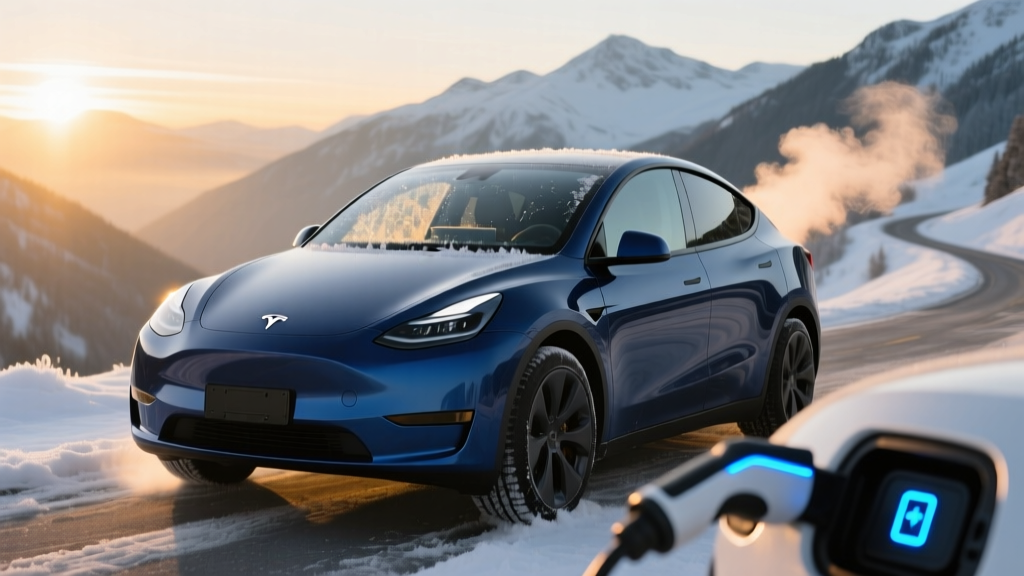
| Cold weather (20°F / -7°C) | 20-30% range loss | 5-10% fuel economy loss |
| Towing (5,000 lb trailer) | 40-50% range loss | 30-40% fuel economy loss |
| Mountain driving (net elevation gain) | 15-25% loss (partial regen on descent) | 10-20% loss |
A 310-mile EPA-rated EV might deliver 230-260 miles on a cold winter highway trip. That's not a defect — it's physics. Battery chemistry (typically NMC or LFP) operates less efficiently in cold temperatures, and cabin heating draws directly from the traction battery. Heat pumps (standard on many 2026 models including the Ioniq 5 and Model Y) mitigate this by 5-10 percentage points but don't eliminate it.
Gas cars lose efficiency too, but the impact is smaller and the 12-gallon tank provides a massive buffer. An EV's buffer is its battery, and when you lose 30% of 75 kWh of usable capacity, you feel it.
Charging Time and Infrastructure Gaps
This is the electric vehicle disadvantage that affects road trips most directly. Even the fastest-charging EVs in 2026 require meaningful stops:
| Charging Level | Power (kW) | Miles Added per Hour | 10-80% Time (Typical) |
|---|---|---|---|
| Level 1 (120V household) | 1.2-1.9 kW | 3-5 miles | Not practical (40-80+ hours) |
| Level 2 (240V home/public) | 7.2-19.2 kW | 20-60 miles | 6-12 hours (overnight) |
| DC Fast (standard) | 50-150 kW | 150-400 miles | 25-45 minutes |
| DC Fast (800V architecture) | 200-350 kW peak | 500-900 miles | 15-22 minutes |
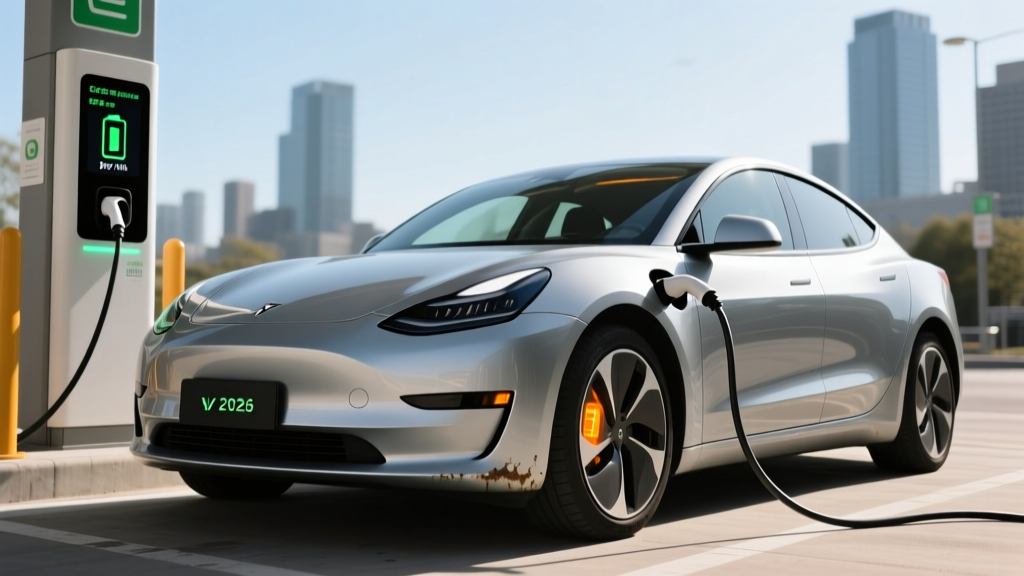
The critical nuance: peak kW is not sustained kW. A vehicle that advertises "250 kW peak charging" typically holds that rate for only a small portion of the charge curve, then tapers significantly above 50-60% State of Charge. A 10-80% session at a 350 kW Electrify America or Tesla Supercharger station might average 120-180 kW across the full session. That means your real-world stop is 18-25 minutes, plus time to find the stall, plug in, and stretch your legs. Budget 30-45 minutes per DC fast-charge stop on road trips.
Infrastructure reliability remains a legitimate concern. While the Tesla Supercharger network consistently achieves high uptime, third-party networks like Electrify America and EVgo still see 10-20% non-functional stall rates at some locations according to user-reported data on PlugShare. The industry-wide shift to the NACS connector (originally Tesla's design) is improving compatibility, but the transition creates its own friction — CCS-to-NACS adapters are required for many non-Tesla vehicles at Superchargers.
Home charging is the dividing line. If you can install a Level 2 charger at home (requiring a 240V circuit, typically 40-60 amps), your daily "refueling" takes zero extra time — you plug in overnight and wake up with a full battery. If you're an apartment dweller, street parker, or lack garage access, you'll rely on public infrastructure and the calculus changes dramatically. A weekly 45-minute public charging session adds up to 30+ hours per year of time you wouldn't spend with a gas car.
Total Ownership Cost: Where EVs Win and Where They Don't
The long-term financial picture is nuanced. EVs save on fuel and maintenance but cost more in other categories.
| Cost Category | EV (5-Year Estimate) | Gas Car (5-Year Estimate) | Notes |
|---|---|---|---|
| Purchase price (after credit) | $37,500 | $30,000 | EV premium persists even with §30D credit |
| Fuel / electricity (75K miles) | $3,750-$5,600 | $7,500-$9,400 | EV: $0.10-0.15/kWh home; Gas: $3.00-3.75/gal at 28 MPG |
| Maintenance | $1,500-$2,500 | $3,500-$5,000 | No oil changes, fewer brake replacements (regen), but tire wear is 15-20% higher on EVs |
| Insurance | $9,400-$11,250 | $7,500-$9,000 | EV premiums 15-25% higher on average (costly repairs, battery replacement risk) |
| Depreciation | $18,000-$22,000 | $10,500-$14,000 | EVs have depreciated faster in recent years |
| 5-Year Total | $70,150-$78,850 | $58,500-$67,400 | Gap narrows with higher mileage and cheap home electricity |
At 15,000 miles per year with home charging at $0.13/kWh and an efficiency of 3.5 miles/kWh, you'll spend roughly $560/year on electricity. A gas car at 28 MPG and $3.40/gallon costs about $1,820/year. That $1,260 annual fuel savings is real, but it takes 5-6 years to recover a $7,000 purchase premium — and that's before factoring higher insurance and steeper depreciation.
The math flips in the EV's favor if you drive 20,000+ miles per year, have access to very cheap electricity (under $0.10/kWh via solar or time-of-use rates), or if gas prices spike above $4.50/gallon in your region.
Battery Longevity, Warranty, and Replacement Anxiety
Battery degradation is a genuine concern, though it's often overstated. Modern NMC and LFP battery packs typically lose 8-15% of capacity over the first 100,000 miles, with degradation slowing significantly after the initial break-in period. Most manufacturers warrant the battery for 8 years / 100,000 miles with a capacity retention threshold of 70% (Hyundai and Kia) or 65-70% (most others).
If a battery does fail outside warranty, replacement costs range from $8,000 to $20,000 depending on pack size and chemistry. A 77 kWh NMC pack for a mid-size SUV might cost $12,000-$15,000 for parts and labor. This is comparable to a gas car engine or transmission replacement — rare but devastatingly expensive when it happens.
LFP (lithium iron phosphate) batteries, now used in base-model Teslas and several other 2026 vehicles, offer longer cycle life (3,000+ cycles vs. 1,500-2,000 for NMC) and can be charged to 100% regularly without degradation concerns. The trade-off: lower energy density, meaning heavier packs or shorter range for the same physical size.
Common Misconceptions vs. Facts
| Myth | Fact |
|---|---|
| "EV batteries need replacing every 5 years" | Data shows most packs retain 85-90% capacity at 100K miles. Many early Nissan Leafs are still running on original packs at 120K+ miles, albeit with reduced range. |
| "EVs are worse for the environment" | Manufacturing an EV generates more CO2 than a gas car (battery production), but the breakeven point is typically 15,000-35,000 miles of driving depending on your grid's energy mix. Over a full lifetime, EVs produce fewer emissions in every US grid region per EPA analysis. |
| "You can't drive an EV in winter" | You can, but expect 20-30% range reduction. Preconditioning the battery while plugged in and using seat/steering wheel heaters (which draw less power than cabin air heating) mitigate the loss. EVs start reliably in extreme cold — no engine cranking issues. |
| "The grid can't handle mass EV adoption" | Most charging happens overnight during off-peak hours when grid capacity is underutilized. The challenge is localized — specific neighborhoods with many EVs on the same transformer may need upgrades. Utilities are proactively managing this with time-of-use rates. |
| "EVs cost more to insure because they catch fire" | EVs actually have lower fire rates than gas cars per NHTSA data. Higher insurance premiums stem from costly collision repairs (battery pack protection, specialized labor, sensor recalibration), not fire risk. |
Decision Framework: Should You Buy an EV or Not?
Choose an EV if:
- You have reliable home or workplace Level 2 charging access
- Your daily driving is under 200 miles round-trip
- You live in a moderate climate or can accept cold-weather range reduction
- You qualify for the §30D federal tax credit (check income caps, MSRP limits, and battery sourcing)
- You plan to keep the vehicle 5+ years to recoup the upfront premium through fuel savings
- You rarely tow heavy loads long distances
Choose a hybrid (HEV) or plug-in hybrid (PHEV) if:
- You lack home charging access (a standard HEV like the RAV4 Hybrid needs no plug)
- You take frequent 400+ mile road trips and don't want to plan charging stops
- You live in an area with sparse DC fast-charging infrastructure
- You want EV-like city efficiency with gas-car road-trip convenience
- Your budget is under $35,000 and you want maximum range flexibility
Stick with gas for now if:
- You tow 7,000+ lb trailers regularly (EV range drops by 50%, and few public chargers accommodate trailers)
- You drive 300+ miles daily in rural areas with limited charging
- You cannot access any form of Level 2 charging at home, work, or along your regular routes
Frequently Asked Questions
Do electric vehicles really save money long-term?
They can, but it depends on your driving volume and electricity cost. At 15,000 miles/year with home charging at $0.13/kWh, you save roughly $1,200-$1,500/year on fuel vs. a 28 MPG gas car. Factor in $500-$800/year in higher insurance, and the net annual savings drops to $400-$1,000. If you paid $7,000 more upfront (after tax credit), breakeven takes 7-15 years. High-mileage drivers (20K+ miles/year) and those with solar-charged electricity reach breakeven in 3-5 years.
What happens if I run out of charge on the road?
You'll need a tow to the nearest charger — EVs cannot be "jump-started" from a dead traction battery the way a gas car gets a jerry can. However, modern EVs provide aggressive low-battery warnings, and navigation systems route through charging stations. Running out is almost always a planning failure, not a sudden event. AAA and other roadside services now offer mobile EV charging in some metro areas.
Are used EVs a good way to avoid the upfront cost disadvantage?
Used EVs can be excellent value, especially given recent depreciation. The §25E used EV credit offers up to $4,000 (30% of sale price) on vehicles under $25,000 sold by a dealer, with buyer income caps. Check the battery State of Health (SoH) before purchasing — most EVs display this in the settings menu or via an OBD2 scanner. Avoid used EVs with SoH below 85% unless the price reflects imminent battery concerns.
Will EV charging get faster and more convenient?
Yes, incrementally. 800-volt architectures (Hyundai Ioniq 5/6, Kia EV6, Porsche Taycan, and expanding to more 2026-2027 models) enable 10-80% charges in 15-20 minutes at 350 kW chargers. The NACS connector standardization means broader Supercharger access. But infrastructure buildout is slow — expect meaningful improvement over 3-5 years, not overnight.
Do EVs require less maintenance than gas cars?
Yes, significantly. No oil changes, no spark plugs, no timing belts, no exhaust system repairs, and regenerative braking extends brake pad life to 80,000-120,000+ miles. The main maintenance costs are tires (EVs are heavier and produce instant torque, wearing tires 15-20% faster), cabin air filters, wiper fluid, and occasional coolant system service. Budget $300-$500/year for EV maintenance vs. $700-$1,000/year for a gas car.