Quick Answer: What Are Electric USPS Trucks?
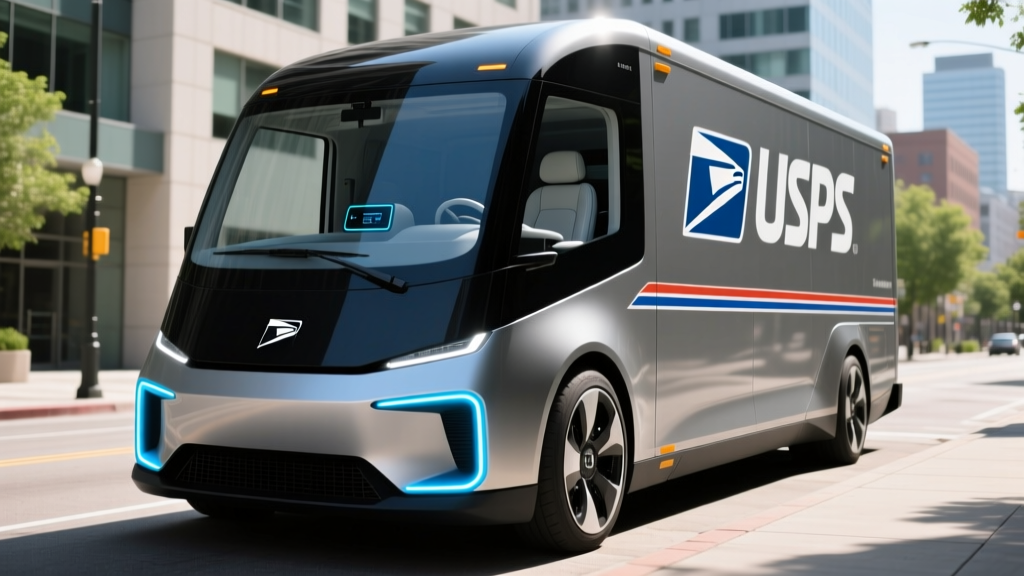
The electric USPS truck is the Oshkosh Next Generation Delivery Vehicle (NGDV), built on a purpose-designed chassis with an available all-electric powertrain. As of 2026, USPS has committed to procuring at least 66,000 battery-electric NGDVs out of a total fleet replacement of up to 106,000 vehicles. The electric variant delivers an estimated 145 miles of EPA range, uses a ~126 kWh NMC battery pack, and supports Level 2 AC charging at roughly 19.2 kW. The first electric NGDVs entered service in late 2024, with deliveries ramping through 2025-2028 from the Oshkosh plant in Spartanburg, South Carolina.
Bottom line: If you're tracking USPS fleet electrification, evaluating commercial EV logistics, or comparing electric last-mile delivery vehicles, the NGDV is the largest single electric-vehicle procurement program in U.S. government history.
The Oshkosh NGDV Electric: Specs and Powertrain Details
Unlike the aging Grumman LLV (Long Life Vehicle) that has served USPS routes since 1987, the NGDV was designed from the ground up with electrification in mind. Oshkosh Defense, a subsidiary of Oshkosh Corporation, won the contract in 2021 and began production in 2024. Here is the full electric powertrain breakdown:
| Specification | Electric NGDV (BEV) | Gas NGDV (ICE) |
|---|---|---|
| Powertrain | Battery-electric (single motor) | 2.0L turbo 4-cylinder |
| Battery Capacity | ~126 kWh usable (NMC) | N/A |
| EPA-Estimated Range | ~145 miles (stop-and-go route) | ~130 miles (8 MPG avg) |
| Efficiency | ~92 MPGe | ~8.2 MPG combined |
| Charging (Level 2 AC) | 19.2 kW (J1772) | N/A |
| Charge Time (0-100%) | ~7 hours at 19.2 kW | Refuel ~5 min |
| Horsepower | ~210 HP | ~225 HP |
| Payload Capacity | ~2,000 lbs | ~2,000 lbs |
| Cargo Volume | ~140 cu ft | ~140 cu ft |
| HVAC | Electric heat pump + AC | Engine-driven |
Real-world range caveat: The 145-mile EPA figure assumes typical mail-delivery driving — low-speed, frequent stops, regenerative braking opportunities. On highway transfers between facilities or in extreme cold (below 20°F), expect range to drop to 100-115 miles due to cabin heating demands and reduced battery efficiency. USPS routes average 20-30 miles per day, so the buffer is substantial for most carriers.
Electric vs. Gas: USPS Fleet Cost Comparison
The core question for fleet operators and taxpayers: does electrifying the USPS fleet actually save money? The answer depends on time horizon, energy costs, and maintenance assumptions. Here is a data-driven comparison based on USPS Office of Inspector General reports and fueleconomy.gov efficiency data:
| Cost Factor (Per Vehicle, 10-Year Life) | Electric NGDV | Gas NGDV | Legacy Grumman LLV (Gas) |
|---|---|---|---|
| Acquisition Cost | ~$60,000-$65,000 | ~$42,000-$46,000 | Fully depreciated |
| Fuel/Energy (Annual, 7,500 mi) | ~$550 (at $0.13/kWh) | ~$2,750 (at $3.50/gal, 8 MPG) | ~$3,100 (at $3.50/gal, 7 MPG) |
| 10-Year Fuel/Energy Total | ~$5,500 | ~$27,500 | ~$31,000 |
| Maintenance (Annual) | ~$800 | ~$2,200 | ~$4,500+ |
| 10-Year Maintenance Total | ~$8,000 | ~$22,000 | ~$45,000+ |
| Estimated 10-Year Total Cost | ~$73,500-$78,500 | ~$91,500-$95,500 | ~$76,000+ (rising) |
The takeaway: The electric NGDV carries a higher upfront acquisition cost (~$18,000-$20,000 premium), but recoups the difference through dramatically lower fuel and maintenance costs within 4-6 years of typical route service. Over a 10-year lifecycle, the BEV variant saves an estimated $13,000-$22,000 per vehicle. For a fleet of 66,000 electric trucks, that translates to roughly $850 million to $1.45 billion in projected savings.
Charging Infrastructure: How USPS Depots Power Up
One of the most significant operational challenges of electric USPS trucks is depot charging infrastructure. Unlike consumer EVs that rely on a mix of home and public charging, USPS vehicles return to a fixed facility nightly — making depot Level 2 charging the backbone of the operation.
Charging Speeds and Daily Needs
The electric NGDV charges via a J1772 connector at up to 19.2 kW on Level 2 AC power. USPS does not require DC fast charging for daily operations because:
- Average daily routes cover 20-30 miles, consuming roughly 18-28 kWh
- A full overnight charge at 19.2 kW replenishes the ~126 kWh battery in ~7 hours
- Vehicles are parked at depots for 12-16 hours between shifts
Depot Installation Realities
USPS has allocated approximately $3 billion (from the Inflation Reduction Act and USPS capital funds) for facility upgrades, including:
- Electrical panel upgrades: Many older post offices need service upgrades from 200A to 800A+ three-phase power to support dozens of simultaneous chargers
- Charger hardware: Commercial-grade Level 2 stations (estimated $3,000-$6,000 per unit installed for fleet-scale procurement)
- Utility coordination: Working with local electric utilities to ensure grid capacity, with some facilities requiring new transformers or dedicated feeder lines
As of early 2026, USPS has completed charging installations at over 1,000 delivery facilities nationwide, with priority given to routes in dense urban areas where air quality benefits are highest and daily mileage is most predictable.
Common Misconceptions About Electric USPS Trucks
Public discourse around the NGDV program has generated several persistent myths. Let's address them with data:
| Myth | Fact |
|---|---|
| "Electric USPS trucks can't handle rural routes." | USPS explicitly deploys BEV NGDVs on routes under 70 miles/day. Rural routes exceeding the range threshold receive the gas-powered NGDV variant. Route-by-route analysis determines powertrain assignment. |
| "The battery won't last the vehicle's lifespan." | NMC batteries in commercial fleet service with managed charging (never exceeding 90% daily SoC) typically retain 80%+ capacity at 150,000 miles. The NGDV's 10-year, 130,000-mile expected life falls well within this envelope. Oshkosh provides a battery warranty covering degradation below 70% capacity. |
| "Cold weather makes them unusable." | Range drops 25-35% in sub-20°F conditions, reducing the 145-mile range to ~100 miles. Since most urban routes are 20-30 miles, this still provides a 3x safety margin. The NGDV's electric heat pump is more efficient than resistive heating, minimizing cabin-heating energy draw. |
| "USPS abandoned the electric truck plan." | USPS initially planned only 10% BEV procurement (5,000 of 50,000). After the 2022 supplemental Environmental Impact Statement and IRA funding, the commitment grew to at least 66,000 BEVs out of up to 106,000 total vehicles — the opposite of abandonment. |
| "They're slower and less capable than gas trucks." | The electric NGDV produces ~210 HP with instant torque, compared to the gas variant's 225 HP with turbo lag. The BEV's 0-30 mph acceleration — the relevant metric for stop-and-go delivery — is faster due to electric motor torque delivery from zero RPM. |
The Grumman LLV Retirement: Why Replacement Was Urgent
Understanding the electric USPS truck program requires context on what it replaces. The Grumman Long Life Vehicle (LLV) has been the backbone of USPS delivery since 1987, with a designed lifespan of 24 years. By 2026, many LLVs are approaching 40 years of service — far beyond their engineering limits.
Legacy LLV vs. Electric NGDV: The Efficiency Gap
The Grumman LLV achieves approximately 7-8 MPG on delivery routes, with no air conditioning in early models and increasingly expensive maintenance for its Chevrolet-sourced 2.5L Iron Duke engine (a design dating to the 1980s). The LLV fleet costs USPS an estimated $5,000+ per vehicle per year in maintenance alone, with some facilities reporting breakdown rates exceeding 30% during peak summer heat. The electric NGDV eliminates oil changes, transmission fluid, exhaust systems, and most moving drivetrain components — reducing maintenance cost by an estimated 60-65%.
Decision Framework: Who Should Track USPS Fleet Electrification?
The electric USPS truck program extends well beyond mail delivery. Here is a practical framework for different stakeholders:
If You Are a Fleet Manager or Logistics Operator:
- Watch the NGDV depot-charging rollout — USPS infrastructure investments at 30,000+ facilities will create charging assets that may eventually support shared-use or adjacent commercial fleet charging
- Benchmark the NGDV's 145-mile range against your own last-mile routes; if your vehicles average under 70 miles/day with depot returns, the BEV economics are likely favorable
- Track Oshkosh's commercial variants — the NGDV platform may eventually be offered to private fleets
If You Are a Taxpayer or Policy Analyst:
- The IRA allocated $3 billion for USPS electrification — monitor the USPS Office of Inspector General for spending accountability reports
- Emission reductions: replacing ~66,000 gas trucks with BEVs eliminates an estimated 1.2 million metric tons of CO₂ over the fleet's lifetime (based on average grid carbon intensity and 7,500 annual miles per vehicle)
- Grid impact: depot charging at 19.2 kW per vehicle, even with 50 vehicles per facility, represents ~960 kW — manageable for most utility distribution circuits with advance planning
If You Are an EV Enthusiast or Consumer:
- The NGDV normalizes electric commercial vehicles for millions of Americans who see their mail carrier daily — accelerating public acceptance of EVs
- The J1772 Level 2 charging standard used by the NGDV is the same connector on every non-Tesla consumer EV, signaling continued infrastructure compatibility
- USPS depot upgrades may improve local grid capacity, indirectly benefiting residential EV charging in some neighborhoods
What's Next: The NGDV Rollout Timeline Through 2028
USPS and Oshkosh have outlined a phased deployment schedule:
- 2024-2025: Initial production ramp, first deliveries to select urban facilities (Atlanta, Chicago, Los Angeles, and others)
- 2025-2026: Production scales to ~15,000-20,000 units/year; charging infrastructure deployed to 2,000+ facilities
- 2026-2028: Full-rate production; target of 66,000+ BEVs delivered; LLV retirement accelerates
- 2028+: Potential follow-on contract for remaining fleet replacement beyond 106,000 vehicles
Oshkosh has invested over $150 million in its Spartanburg, SC facility to support NGDV production, employing approximately 1,000 workers on the program. The company's defense division manages the USPS contract alongside military vehicle programs.
Frequently Asked Questions
Can USPS electric trucks handle snow and extreme cold?
Yes, with managed expectations. The NGDV's range drops to approximately 100-115 miles in sub-20°F conditions due to battery chemistry limitations and cabin heating. However, since the average urban delivery route is 20-30 miles, the truck retains a 3-4x range buffer even in severe cold. USPS assigns gas-powered NGDVs to routes in extreme-climate regions where daily mileage approaches the BEV's reduced winter range.
Do electric USPS trucks use Tesla Superchargers?
No. The NGDV charges via J1772 Level 2 AC connectors at USPS depot facilities. These vehicles do not use public DC fast-charging networks (Tesla Superchargers, Electrify America, etc.) because they return to a fixed depot nightly. Depot charging at 19.2 kW fully replenishes the battery during the 12-16 hour off-service window.
How much does each electric USPS truck cost taxpayers?
The all-electric NGDV costs approximately $60,000-$65,000 per vehicle to acquire, compared to ~$42,000-$46,000 for the gas variant. However, when fuel savings (~$2,200/year) and maintenance savings (~$1,400/year) are factored in, the BEV reaches cost parity within 4-6 years and saves an estimated $13,000-$22,000 over its 10-year service life. The IRA funding covers a significant portion of the acquisition premium.
What happens if an electric USPS truck runs out of charge on a route?
USPS route planning software assigns BEV NGDVs only to routes well within the vehicle's range envelope. With a 145-mile range and typical routes of 20-30 miles, the operational buffer is 4-7x daily needs. In the rare event of unexpected range depletion (extreme detours, HVAC overuse in cold), facilities maintain spare vehicles and roadside assistance protocols — identical to current procedures for gas-truck breakdowns.
Will the electric NGDV have air conditioning?
Yes — a significant upgrade from the original Grumman LLV, which was built without A/C. The NGDV includes a full electric heat pump system providing both heating and air conditioning. This is critical not only for carrier comfort but also for battery thermal management, as the heat pump is far more energy-efficient than resistive heating, preserving more range in cold weather.
Are there any consumer vehicles similar to the electric USPS truck?
While the NGDV is a purpose-built commercial vehicle with no direct consumer equivalent, its powertrain architecture (large NMC battery, Level 2 AC charging, ~145-mile range in stop-and-go use) shares engineering DNA with commercial electric vans like the Ford E-Transit (EPA 126 miles, 68 kWh battery) and the BrightDrop Zevo 600 (up to 250 miles, 165 kWh). Fleet operators evaluating electric last-mile delivery should cross-reference these platforms.