The Short Answer: Which Electric Two Seater Car Should You Buy?
If you need a pure two-seat commuter EV in 2026, your mainstream options are narrow but compelling. The Smart EQ fortwo (discontinued after 2024 in the U.S., available used from ~$12,000) remains the only true dedicated two-seater. The Fiat 500e (2+2 layout, EPA 149 miles, starting ~$36,095) serves as the closest current alternative with occasional rear-seat utility. For buyers who strictly need two seats and maximum city efficiency, a certified pre-owned Smart EQ fortwo offers the lowest total cost. For those wanting a new vehicle with warranty coverage and modern charging, the Fiat 500e is the pragmatic pick—just know the rear seats are best suited for cargo, not adults.
The State of Electric Two Seater Cars in 2026
The electric two seater car segment has contracted in the U.S. market. Smart exited the American market after the 2019 model year for the gas fortwo and discontinued the EQ fortwo stateside after 2024. No major automaker currently sells a brand-new, dedicated two-seat EV in the United States for the 2026 model year.
That doesn't mean the use case—ultra-compact electric commuting for one or two people—isn't well served. Several small EVs with 2+2 seating layouts fill the gap, and the used market offers genuine two-seaters at compelling prices. Here's what the landscape actually looks like for buyers searching for an electric two seater car today.
True Two-Seater EVs (Used Market Only)
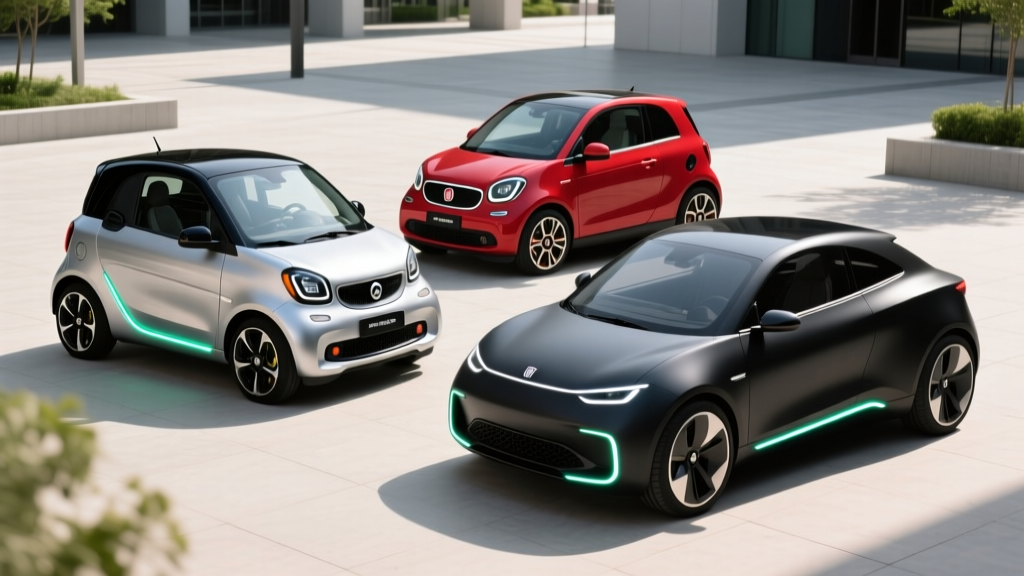
The Smart EQ fortwo (2018–2024) is the only mass-produced, highway-capable electric two seater car sold in the U.S. in recent years. With an EPA range of just 58 miles on a 17.6 kWh battery, it was designed strictly for urban commuting. Peak DC fast charging was limited to 22 kW (optional), meaning a 10–80% charge took roughly 40 minutes on a DC charger—though most owners charged at home on Level 2 overnight.
2+2 Alternatives (New for 2026)
The Fiat 500e returned to the U.S. for the 2024 model year and continues into 2026. While technically a 2+2, the rear seats are extremely tight—functional for groceries or a small child seat but not adult passengers on anything beyond a short trip. The Mini Cooper SE (redesigned for 2025 on a dedicated EV platform) also offers a 2+2 layout with significantly improved range over its predecessor.
| Spec | Smart EQ fortwo (2024, Used) | Fiat 500e (2026) | Mini Cooper SE (2026) |
|---|---|---|---|
| Seating | 2 seats | 2+2 (4 seats) | 2+2 (4 seats) |
| EPA Range | 58 miles | 149 miles | ~170 miles (est.) |
| Battery (usable) | 17.6 kWh (NMC) | 42 kWh (NMC) | ~40.7 kWh (NMC) |
| Peak DC Charge Rate | 22 kW (optional) | 85 kW | ~95 kW |
| 10–80% DC Charge Time | ~40 min | ~35 min | ~30 min |
| Level 2 Charge Rate | 7.2 kW | 11 kW | 11 kW |
| Horsepower | 80 hp | 118 hp | ~184 hp |
| 0–60 mph | ~11.5 sec | ~8.6 sec | ~7.3 sec |
| Starting Price | ~$12,000–$18,000 (used) | $36,095 | ~$38,000 (est.) |
| Battery Warranty | 8 yr/100,000 mi (transferable) | 8 yr/100,000 mi | 8 yr/100,000 mi |
Sources: fueleconomy.gov, Stellantis/Fiat, manufacturer specifications. Mini Cooper SE 2026 figures are preliminary estimates based on European-spec data.
Real-World Range Reality Check
Fiat 500e: The EPA rates it at 149 miles, but expect roughly 120–130 miles on sustained highway driving at 70+ mph. In cold weather (below 32°F), plan for 95–110 miles of usable range. The battery lacks a dedicated heat pump, so winter efficiency drops noticeably.
Smart EQ fortwo: The 58-mile EPA rating is optimistic in real-world use. Expect 40–48 miles in mixed driving and as low as 30–35 miles in cold weather. This car works only if your daily round-trip commute is under 30 miles and you charge at home every night.
EV vs Gas: Cost Comparison for Compact Commuters
The economic case for an electric two seater car hinges on fuel savings and maintenance reduction—but only if your driving pattern fits. Here's how a Fiat 500e compares to its closest gas rival, a Honda Fit (used, as it's discontinued in the U.S.), or a Hyundai Venue (current subcompact gas option).
| Cost Category | Fiat 500e (2026) | Hyundai Venue (2026, Gas) |
|---|---|---|
| Purchase Price (MSRP) | $36,095 | $22,000 |
| Federal Tax Credit (§30D) | Up to $3,750* | $0 |
| Effective Purchase Price | ~$32,345 | $22,000 |
| Fuel/Energy (5 yr, 60,000 mi) | ~$2,880** | ~$7,500*** |
| Maintenance (5 yr) | ~$1,200 | ~$3,500 |
| Insurance (5 yr avg) | ~$9,000 | ~$7,200 |
| Depreciation (est. 5 yr) | ~$14,000 | ~$9,000 |
| Total 5-Year Cost | ~$59,425 | ~$49,200 |
*§30D credit for the Fiat 500e is subject to battery sourcing and critical mineral requirements under current IRS rules. The credit may be $3,750 (partial) or $0 depending on your purchase date and the vehicle's compliance. Verify eligibility at the point of sale. **Assumes $0.16/kWh national average, 3.5 mi/kWh efficiency. ***Assumes $3.50/gal, 33 MPG combined.
The Fiat 500e costs roughly $10,000 more over five years than a gas subcompact, even after the tax credit. The savings on fuel (~$4,620) and maintenance (~$2,300) don't fully offset the higher purchase price and steeper depreciation. However, if you buy a used Smart EQ fortwo for $14,000, the math flips dramatically: total 5-year cost drops to roughly $28,000–$32,000, undercutting the gas option significantly.
Charging at Home: What You Actually Need
Most electric two seater car buyers are urban dwellers, which makes home charging access the single biggest ownership variable. Here's what to plan for:
Level 1 Charging (120V Household Outlet)
Both the Fiat 500e and Smart EQ fortwo can charge on a standard 120V outlet. The Smart EQ fortwo's tiny 17.6 kWh battery fills from empty in roughly 14–16 hours at 1.4 kW—feasible for overnight top-ups if your daily drive is under 30 miles. The Fiat 500e's 42 kWh battery takes approximately 30+ hours on Level 1, making it impractical as a primary charging method unless you drive very little.
Level 2 Charging (240V Home Charger)
A Level 2 home charger is strongly recommended for the Fiat 500e and essential if you want convenience with either vehicle. Expect the following:
- Equipment cost: $350–$700 for a quality 32A–48A Level 2 charger (ChargePoint Home Flex, Emporia Vue, Wallbox Pulsar Plus)
- Electrician installation: $500–$2,000 depending on panel proximity and whether a 240V circuit already exists
- Panel upgrade (if needed): $1,500–$3,500 if your home has a 100A panel and needs a 200A upgrade
- Charge time (Fiat 500e, 0–100%): ~4.5 hours at 11 kW
- Charge time (Smart EQ fortwo, 0–100%): ~3 hours at 7.2 kW
Apartment and Street Parking Realities
If you live in an apartment without dedicated parking or rely on street parking, owning any EV becomes significantly harder. Public Level 2 chargers cost $1.00–$1.50/hour in many cities, and DC fast charging the Fiat 500e at $0.35–$0.48/kWh (typical Electrify America or EVgo rates) raises your per-mile cost to near gas-car territory. Before buying, map your charging options honestly. If you cannot install a home charger, a used Smart EQ fortwo's small battery at least makes public Level 2 top-ups faster and cheaper.
Tax Credits and Incentives: What Applies in 2026
Federal EV tax credits under IRS §30D have tightened considerably. Here's what you need to know:
Federal §30D Credit Requirements (2026)
- Vehicle MSRP cap: $55,000 for sedans/hatchbacks (both Fiat 500e and Mini Cooper SE qualify)
- Buyer income cap: $150,000 single / $300,000 married filing jointly (modified AGI)
- Battery sourcing: Critical minerals and battery components must meet escalating domestic-content thresholds—this has disqualified several models partially or fully
- Point-of-sale transfer: You can transfer the credit to the dealer at purchase for an immediate price reduction, rather than waiting to claim it on your tax return
- Credit amount: Up to $7,500 if both critical mineral AND battery component requirements are met; $3,750 if only one is met; $0 if neither is met
For the Fiat 500e, check the DOE's qualifying vehicle list at the time of purchase, as battery sourcing compliance can change model-year to model-year. The Smart EQ fortwo, purchased used, may qualify for the separate used clean vehicle credit (30% of sale price, up to $4,000, with lower income caps of $75,000 single / $150,000 joint and a sale price cap of $25,000).
Common Misconceptions About Small EVs
| Myth | Fact |
|---|---|
| "58 miles of range is useless" | The average U.S. one-way commute is ~16 miles (U.S. Census Bureau). A Smart EQ fortwo covers a 30-mile round trip with 25+ miles of buffer—enough for most dedicated city commuters who charge nightly. |
| "Small EV batteries degrade quickly" | Both the Smart and Fiat use NMC chemistry with liquid thermal management (Fiat) or passive air cooling (Smart). Real-world data shows Smart EQ fortwo batteries retaining 85–90% capacity after 5 years of typical use. The 8-year/100,000-mile federal battery warranty provides a floor. |
| "You can't road-trip a small EV" | True for the Smart EQ fortwo—58 miles of range and slow DC charging make intercity travel impractical. The Fiat 500e, at 149 miles and 85 kW DC charging, can handle 200-mile trips with one 35-minute charge stop, though it's not ideal for frequent long-distance driving. |
| "EV insurance is always more expensive" | Partially true: EV insurance premiums run 15–25% higher on average due to repair costs and battery replacement risk. For a Fiat 500e, expect $150–$200/month depending on your state and driving record, versus $110–$150 for a comparable gas subcompact. |
Decision Framework: Which Electric Two Seater Car Is Right for You?
Choose Based on Your Situation
Choose the used Smart EQ fortwo if:
- Your daily round-trip commute is under 35 miles
- You have reliable home charging (garage, driveway, or dedicated outlet)
- You want the lowest possible purchase price and running costs
- You already own or have access to a second vehicle for longer trips
- You live in a mild climate (extreme cold cuts range to ~30 miles)
- Budget is $12,000–$18,000
Choose the Fiat 500e (new) if:
- You want a new vehicle with full warranty coverage
- Your daily driving is under 100 miles with occasional 150-mile trips
- You need rear-seat space for cargo or a child seat
- You can install a Level 2 home charger
- You value Italian design and a more refined driving experience
- Budget is $32,000–$40,000 after incentives
Choose the Mini Cooper SE (new) if:
- You want the most power and best driving dynamics in this size class
- You need ~170 miles of range for longer commutes
- You prefer a more established dealer and service network
- Budget is $35,000–$42,000 after incentives
Look elsewhere (larger EV or PHEV) if:
- You regularly drive more than 150 miles per day
- You cannot install home charging and lack reliable public charging nearby
- You live in an area with extreme winters and no garage
- You need to carry more than one passenger regularly
- You tow anything or need significant cargo volume
What First-Time EV Buyers Should Know
If this is your first EV purchase, these practical realities matter more than any spec sheet:
1. kW and kWh are not the same thing. kWh measures battery capacity (how much energy is stored—like gallons in a gas tank). kW measures charging power (how fast energy flows—like gallons per minute at the pump). The Fiat 500e has a 42 kWh battery and charges at up to 85 kW. Confusing these is the most common new-EV-owner mistake.
2. Charging slows above 80%. DC fast charging follows a curve: the Fiat 500e peaks at 85 kW only between roughly 10–50% state of charge, then tapers. The 10–80% time of ~35 minutes doesn't mean 80–100% takes another 15 minutes—it can take 30+ additional minutes. Plan road trips around 10–80% charges.
3. Preconditioning matters. If your EV supports it, preconditioning the battery before arriving at a DC fast charger (by navigating to the charger in the car's nav system) warms the battery and enables faster charging. In cold weather, this can cut your charge time by 30–50%.
4. Your electrical panel may need an upgrade. Before committing to an EV, have an electrician assess your home's panel. A 100A panel serving a modern home with electric appliances may not support a 40A EV circuit without an upgrade to 200A—a $1,500–$3,500 expense that catches many buyers off guard.
5. Used EV batteries are a calculated risk. A used Smart EQ fortwo with 40,000 miles likely has 88–92% battery capacity remaining. Ask for a state-of-health (SoH) reading from the dealer or a third-party diagnostic tool. If the battery falls below 70% capacity within 8 years/100,000 miles, the manufacturer warranty covers replacement.
Frequently Asked Questions
Is there a new electric two seater car available in 2026?
No automaker currently sells a brand-new, dedicated two-seat EV in the U.S. for 2026. The Smart EQ fortwo was discontinued after 2024. The closest new alternatives are 2+2 vehicles like the Fiat 500e and Mini Cooper SE, which have tiny rear seats primarily suited for cargo.
How much does it cost to charge a Fiat 500e at home?
At the national average electricity rate of ~$0.16/kWh, fully charging the 42 kWh battery costs about $6.72. With the car's efficiency of roughly 3.5 miles/kWh, that's approximately $0.046 per mile—compared to $0.10–$0.12 per mile for a 33 MPG gas car at $3.50/gallon. Over 12,000 miles per year, home charging saves roughly $650–$900 annually versus gas.
Can I take a Smart EQ fortwo on the highway?
Yes, the Smart EQ fortwo is highway-legal and capable of 80+ mph. However, its 58-mile EPA range drops to roughly 45–50 miles at sustained highway speeds, and it lacks DC fast charging in most U.S. examples. It works as a highway commuter only if your one-way trip is under 20 miles and you charge at home.
What happens if the battery dies on a used Smart EQ fortwo?
The Smart EQ fortwo's battery is covered by an 8-year/100,000-mile warranty (federally mandated for EVs), which transfers to subsequent owners. If the battery degrades below a set capacity threshold (typically 70%), Mercedes-Benz/Smart will replace or refurbish it at no cost. Out of warranty, a replacement battery for the Smart EQ fortwo is estimated at $8,000–$12,000—a significant cost relative to the vehicle's value.
Does the Fiat 500e qualify for the $7,500 federal tax credit?
The Fiat 500e may qualify for a partial credit of $3,750 or the full $7,500, depending on battery sourcing compliance at the time of purchase. The credit is also subject to your income (under $150,000 single / $300,000 joint) and the vehicle's MSRP (under $55,000 for passenger cars). Always verify current eligibility on the DOE's Alternative Fuels Data Center and consult a tax professional before relying on the credit.
Are electric two seater cars safe?
The Smart EQ fortwo earned mixed crash-test ratings during its production run—it performed adequately in front and side impacts but its small size is inherently disadvantaged against larger vehicles. The Fiat 500e has not been rated by IIHS or NHTSA as of early 2026. Both vehicles include standard stability control, multiple airbags, and ABS. For maximum safety in urban driving, advanced driver-assistance features (automatic emergency braking, lane-keeping) are available on the Fiat 500e but were not offered on the Smart EQ fortwo.