The Electric Truck Market in 2026: The Short Answer
The U.S. electric truck market in 2026 offers five primary consumer pickups: the Ford F-150 Lightning, Rivian R1T, Chevrolet Silverado EV, GMC Sierra EV, and Tesla Cybertruck. Base prices range from roughly $50,000 to over $100,000, with EPA-estimated ranges spanning 270 to 440 miles depending on battery pack and trim. For buyers who tow frequently, expect a 40–55% range reduction at highway speeds with a loaded trailer. For daily commuting and light-duty use, an electric truck can cut per-mile fuel costs by 50–65% versus a comparable gas V6 or V8 pickup — but only if you have reliable Level 2 home charging. The federal §30D tax credit may offset up to $7,500, though strict MSRP caps, buyer income limits, and battery-sourcing rules apply.
Who's Competing in the Electric Truck Market?
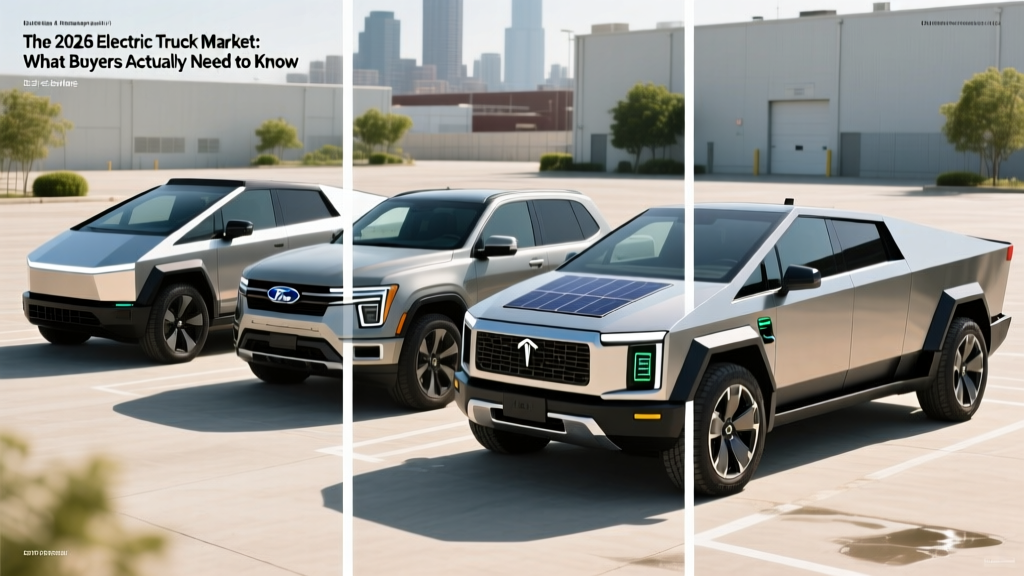
Unlike the EV sedan and crossover segments, where dozens of models compete, the full-size electric pickup field remains relatively concentrated. Here's how the major players stack up on the specs that matter most to truck buyers:
| Model | EPA Range (mi) | Battery (kWh, usable) | Peak DC Charge (kW) | 10–80% (min) | 0–60 mph (sec) | Max Tow (lb) | Base MSRP |
|---|---|---|---|---|---|---|---|
| Ford F-150 Lightning (Std Range) | 240 | ~98 kWh, NMC | 150 | ~41 | ~5.0 | 7,700 | $52,995 |
| Ford F-150 Lightning (Ext Range) | 320 | ~131 kWh, NMC | 150 | ~41 | ~4.5 | 10,000 | $62,995 |
| Rivian R1T Dual-Motor (Max Pack) | 410 | ~149 kWh, NMC | 200+ | ~30 | ~3.5 | 11,000 | $82,000 |
| Chevrolet Silverado EV (4WT) | 440 | ~200 kWh, NMC | 350 | ~20 | ~4.5 | 10,000 | $55,000 (fleet) |
| Chevrolet Silverado EV (RST) | 380 | ~200 kWh, NMC | 350 | ~20 | ~4.5 | 10,000 | $87,300 |
| GMC Sierra EV Denali | 400 | ~200 kWh, NMC | 350 | ~22 | ~4.5 | 9,500 | $99,495 |
| Tesla Cybertruck AWD | 340 | ~123 kWh, NMC | 250 | ~28 | ~4.1 | 11,000 | $79,990 |
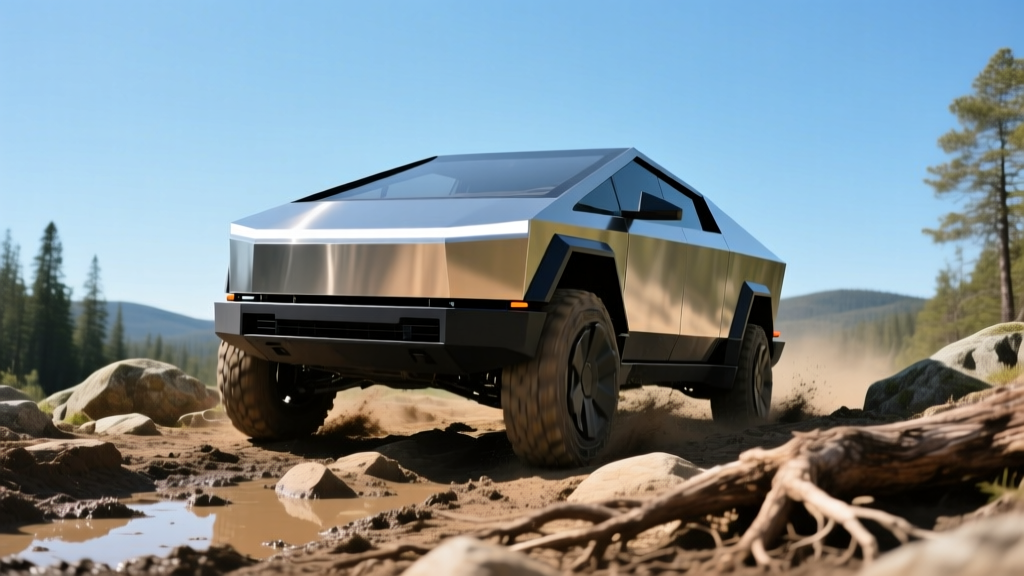
A few notes on reading this table: the Silverado EV 4WT at $55,000 targets commercial fleets, not individual consumers — the retail-friendly RST and Trail Boss trims carry significantly higher MSRPs. The Rivian R1T's Max Pack delivers the longest real-world range but also commands a premium. And the Cybertruck's polarizing design aside, its stainless-steel exoskeleton and steer-by-wire system represent a fundamentally different engineering philosophy than the body-on-frame competition.
Real-World Range vs. EPA Stickers: What Truck Owners Actually See
EPA range estimates are tested under controlled conditions that don't reflect how most people use trucks. Here's what to expect in practice:
Real-World Range Reality Check
EPA 320 mi (F-150 Lightning Ext Range): Expect ~260–280 mi on a flat highway at 70 mph in mild weather. In winter conditions (below 30°F), plan for 200–230 mi. With a 5,000-lb trailer at highway speed, range drops to 150–180 mi.
EPA 410 mi (Rivian R1T Max Pack): Expect ~330–350 mi highway in mild conditions. Cold weather drops this to ~260–290 mi. Towing a 7,000-lb camper: ~190–220 mi.
EPA 340 mi (Cybertruck AWD): Expect ~275–295 mi highway. Its angular shape creates more aerodynamic drag than expected at speed, and the tonneau-covered bed doesn't fully compensate. Towing: ~160–190 mi with a heavy load.
The physics here are unforgiving: pickups are tall, flat-faced, and heavy. Aerodynamic drag scales with the square of speed, which is why highway efficiency drops sharply above 65 mph. Add a trailer, and you're pushing a combined frontal area that no amount of battery capacity can fully overcome. According to fueleconomy.gov, the F-150 Lightning achieves 78 MPGe combined — strong for a truck, but far below the 120+ MPGe you'd see in an efficient EV sedan.
Electric Truck vs. Gas Truck: The Cost Comparison
The upfront price premium for an electric truck remains substantial, but the operating-cost picture tells a different story — especially for high-mileage drivers.
| Cost Category | F-150 Lightning (Ext Range) | F-150 Gas (3.5L EcoBoost, 4WD) |
|---|---|---|
| Base MSRP | $62,995 | $46,500 |
| Federal Tax Credit (§30D) | Up to $7,500 (see eligibility) | $0 |
| Effective Purchase Price | ~$55,495 | $46,500 |
| Fuel/Energy Cost (15,000 mi/yr) | $600–$900 (home charging, $0.13/kWh avg) | $2,250–$2,700 ($3.50/gal, 18 MPG avg) |
| Annual Maintenance | $200–$400 | $800–$1,200 |
| 5-Year Fuel/Energy Total | $3,000–$4,500 | $11,250–$13,500 |
| 5-Year Maintenance Total | $1,000–$2,000 | $4,000–$6,000 |
| Estimated Insurance (5-yr avg/yr) | $2,400–$3,200 | $1,600–$2,200 |
The math is clear on operating costs: home-charging an electric truck saves $1,350–$2,100 per year on energy alone, plus another $400–$800 on maintenance (no oil changes, fewer brake replacements due to regenerative braking, no transmission fluid). Over five years, that's $9,000–$14,000 in savings.
However, insurance premiums for electric trucks run 30–50% higher than their gas counterparts, driven by higher repair costs and battery replacement expenses. That $800–$1,000 annual insurance premium increase eats into your savings significantly. And depreciation remains uncertain — while early F-150 Lightning values have held reasonably well, the broader electric truck market is too young for reliable long-term projections.
Towing With an Electric Truck: The Honest Truth
This is where the electric truck market faces its biggest reality check. Every manufacturer advertises impressive max tow ratings — 10,000 to 11,000 pounds for most models. But tow rating and tow range are very different things.
In independent testing, electric pickups towing near their maximum capacity at sustained highway speeds (65–70 mph) have seen range reductions of 45–55%. An F-150 Lightning with a 320-mile EPA range drops to roughly 150–170 miles with a heavy trailer in real-world conditions. That means a 300-mile trip with a camper requires at least one DC fast-charge stop — and not all highway rest areas or campgrounds have 150+ kW chargers capable of handling a truck-and-trailer combo without unhitching.
The charging infrastructure gap is real. While networks like Electrify America and Tesla's Supercharger network have added pull-through stalls designed for trucks with trailers, these remain a minority of total stations. For buyers who tow frequently on rural routes, a diesel or gas truck still offers logistical advantages that no current EV can match.
Charging an Electric Truck at Home and on the Road
Electric trucks carry massive battery packs — 98 to 200 kWh — which makes charging speed a critical ownership factor.
| Charging Level | Power (kW) | Miles Added/Hour | Full Charge Time (131 kWh pack) | Typical Use Case |
|---|---|---|---|---|
| Level 1 (120V outlet) | 1.2–1.9 kW | 3–5 mi/hr | 72–109 hours | Emergency/trickle only |
| Level 2 (240V, 48A) | 11.5 kW | 25–30 mi/hr | 11–13 hours | Overnight home charging |
| Level 2 (240V, 80A) | 19.2 kW | 40–50 mi/hr | 7–8 hours | F-150 Lightning dual-charger option |
| DC Fast (150 kW) | 150 kW | ~200 mi in 30 min | 10–80% in ~41 min | Road-trip charging |
| DC Fast (350 kW) | 350 kW | ~300 mi in 25 min | 10–80% in ~20 min | Silverado EV / Sierra EV |
Home Level 2 charging is practically mandatory for electric truck ownership. A 131 kWh battery on a standard 120V outlet would take days to fill. Most buyers need a 240V, 48-amp (minimum) home charger, which requires professional installation.
Home Level 2 Charger Installation Cost Breakdown
| Item | Cost Range |
|---|---|
| Level 2 Charger Unit (48A–80A) | $400–$1,200 |
| Electrical Permit | $50–$250 |
| Electrician Labor (240V run, 50–100A circuit) | $800–$2,500 |
| Panel Upgrade (if needed, 200A service) | $1,500–$4,000 |
| Total (no panel upgrade) | $1,250–$3,950 |
| Total (with panel upgrade) | $2,750–$7,950 |
Electric trucks with 80A onboard chargers (like the F-150 Lightning with dual chargers) can accept 19.2 kW on Level 2 — but your home electrical panel may need a dedicated 100A circuit. Consult a licensed electrician to assess your panel capacity before purchasing.
On the road, the Silverado EV and Sierra EV have a significant advantage: their Ultium-based architecture supports 350 kW DC fast charging on compatible stations, enabling a 10–80% charge in roughly 20 minutes. The F-150 Lightning, capped at 150 kW, needs nearly twice as long. The Cybertruck's 800V architecture supports 250 kW at Tesla Superchargers, and with the NACS connector now becoming the industry standard (adopted by Ford, GM, Rivian, and others for 2025+ models), cross-network compatibility has improved substantially.
Federal Tax Credits and Incentives: What You Actually Qualify For
The §30D federal EV tax credit can reduce your effective purchase price by up to $7,500, but the electric truck market faces unique eligibility hurdles:
- MSRP Cap: Vans, SUVs, and pickup trucks qualify with an MSRP cap of $80,000 (higher than the $55,000 sedan cap). This includes the F-150 Lightning, R1T, and Cybertruck base trims — but excludes loaded Sierra EV Denali and Silverado EV RST models above $80K.
- Buyer Income Limits: AGI must not exceed $150,000 (single), $225,000 (head of household), or $300,000 (joint filers).
- Battery Sourcing: Critical minerals and battery components must meet escalating domestic-content thresholds. As of 2026, these requirements have tightened significantly, potentially disqualifying some trims. Check the latest IRS qualified vehicle list before purchasing.
- Point-of-Sale Transfer: You can now transfer the credit to the dealer at purchase, reducing your out-of-pocket cost immediately rather than waiting for a tax refund.
- Assembly: Vehicle must undergo final assembly in North America. All current consumer electric trucks qualify.
State incentives vary widely — Colorado offers up to $5,000, while many states offer nothing. Check your state's energy office or the Alternative Fuels Data Center for local programs.
Decision Framework: Which Electric Truck (If Any) Is Right for You?
Choose an Electric Truck If:
- You have home Level 2 charging (or can install it) and drive under 250 miles/day without towing
- Your commute is under 80 miles round-trip and you want to eliminate daily fuel costs
- You value instant torque, quiet operation, and the ability to use your truck as a backup power source (Ford's Pro Power Onboard or the Lightning's available V2H)
- You qualify for the §30D credit and your effective price is competitive with a similarly equipped gas truck
Stick With Gas or Hybrid If:
- You tow over 5,000 lbs more than 10 times per year on routes without reliable DC fast charging
- You live in an apartment or lack access to home/workplace charging
- You regularly drive 400+ miles in a single day (especially in winter)
- Your budget is under $45,000 — the electric truck market doesn't yet serve this price point
Consider a PHEV or Wait If:
- You want electric commuting but gas-powered towing range — no current PHEV truck exists in the U.S., but Ram has signaled a range-extended 1500 REV
- You need a midsize truck — the Rivian R1T is the only option, and it starts at $70K+
Common Misconceptions About Electric Trucks
| Myth | Fact |
|---|---|
| "Electric trucks can't tow anything real." | Max tow ratings of 10,000–11,000 lbs are legitimate and competitive with half-ton gas trucks. The limitation is range while towing, not capability. |
| "You'll save $10,000 a year on fuel." | Realistic savings are $1,350–$2,100/year on energy at average mileage. Insurance premium increases offset a meaningful portion of that. |
| "The battery will need replacing in 5 years." | All major electric trucks carry 8-year/100,000-mile battery warranties (10 years in CARB states) guaranteeing at least 70% capacity retention. Real-world degradation data from early Lightnings shows ~5–8% loss over 100K miles. |
| "You can charge anywhere with an adapter." | While NACS adoption has unified much of the network, some older CHAdeMO and CCS-only stations remain. Always check PlugShare or your vehicle's nav for compatible chargers before road-tripping. |
| "Electric trucks are slower than gas trucks." | Every current electric truck hits 0–60 in under 5 seconds — faster than most V8 gas pickups. Instant electric torque is a performance advantage, not a compromise. |
Battery Longevity and Warranty Coverage
All major electric truck manufacturers warranty their battery packs for 8 years or 100,000 miles (whichever comes first), guaranteeing the pack will retain at least 70% of its original capacity. In California and states that follow CARB emissions standards, that warranty extends to 10 years or 150,000 miles.
Out-of-warranty battery replacement remains expensive: $15,000–$30,000 depending on pack size and chemistry. However, NMC packs in trucks like the F-150 Lightning and R1T have demonstrated gradual, predictable degradation curves — not sudden cliff-drop failures. Proper care (avoiding repeated 100% charges, minimizing DC fast charging in extreme heat, using preconditioning) can extend usable life well beyond the warranty period.
Frequently Asked Questions
Is an electric truck practical as my only vehicle?
For most daily driving — commuting, school runs, hardware-store trips — absolutely. If you tow heavy loads long-distance more than a few times a year, you'll need to plan charging stops carefully or keep a gas vehicle for those trips. The charging infrastructure is improving but isn't yet seamless for truck-and-trailer road trips in rural areas.
Which electric truck has the best range in 2026?
The Chevrolet Silverado EV with the largest Ultium pack leads at 440 miles EPA (4WT fleet trim). For consumer-available trims, the Rivian R1T Max Pack at 410 miles and the GMC Sierra EV Denali at 400 miles top the list. Remember: real-world highway range will be 15–20% lower than the EPA sticker.
Can I use my electric truck to power my home during an outage?
The Ford F-150 Lightning offers Ford Intelligent Backup Power (V2H), which can supply up to 9.6 kW to your home through a professionally installed transfer switch — enough to run essential circuits for several days on a full charge. This requires a compatible Ford Charge Station Pro ($1,300+) and a bidirectional transfer switch installation ($3,000–$5,000). Other trucks currently offer V2L (vehicle-to-load) for powering tools and appliances via bed outlets, but not full home backup.
What does the electric truck market look like for midsize pickups?
As of 2026, the Rivian R1T remains the only midsize electric pickup available, starting around $70,000. The long-rumored electric Toyota Tacoma and Ford Maverick EV have not materialized as confirmed products. If you need a sub-$50K midsize electric truck, you'll need to wait — the market simply doesn't offer one yet.
How does cold weather affect electric truck range?
Expect a 20–35% range reduction in sustained below-freezing temperatures, depending on whether the truck uses a heat pump (more efficient) or resistive cabin heating. The F-150 Lightning and Rivian R1T use heat pumps, which helps. Preconditioning the battery while plugged in — warming it to optimal temperature before departure — can recover some of that loss and improve regenerative braking performance in cold conditions.