The Quick Answer: Does an Electric Toyota Corolla Exist?
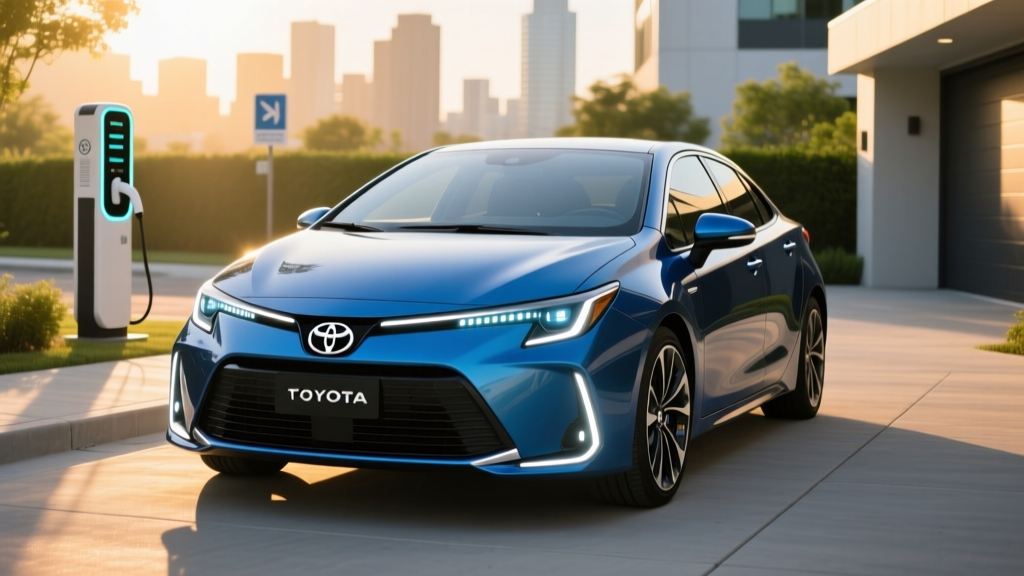
As of early 2026, Toyota has not released a fully electric Corolla in the United States. The Corolla lineup remains anchored by the conventional hybrid (HEV) Corolla, which delivers an EPA-estimated 50+ MPG combined. Toyota has announced broader EV expansion plans, and an electric Corolla—or a compact EV wearing a Corolla-adjacent nameplate—remains widely speculated for the late-2020s timeframe, but no official U.S. model, pricing, or specs have been confirmed.
If you are shopping today for an electrified Corolla, the 2026 Corolla Hybrid is the real, purchasable option. If you specifically want a battery-electric compact from Toyota, you would currently need to look at the bZ4X crossover or wait for future announcements.
Why the Electric Toyota Corolla Generates So Much Interest
The Corolla is the best-selling nameplate in automotive history, and U.S. buyers are increasingly searching for an "electric Toyota Corolla" because they want Corolla reliability, Corolla pricing, and Corolla simplicity—just with a plug. Monthly U.S. search volume for this term reflects a real gap in Toyota's lineup: affordable, compact, battery-electric sedans are scarce across all brands, not just Toyota.
Toyota's electrification strategy through 2026 has prioritized hybrids and plug-in hybrids across its volume models (Corolla, Camry, RAV4, Highlander) while reserving full battery-electric vehicles for the bZ crossover series and commercial applications. This approach has drawn criticism from EV advocates but aligns with Toyota's stated view that a diversified powertrain portfolio better serves global markets with uneven charging infrastructure.
For U.S. buyers, the practical result is straightforward: if you want a Corolla with electrification today, you are choosing a hybrid, not a BEV.
2026 Corolla Hybrid: The Electrified Corolla You Can Actually Buy
The 2026 Toyota Corolla Hybrid pairs a 1.8-liter four-cylinder engine with Toyota's fifth-generation hybrid system and a lithium-ion traction battery. Here are the key figures from fueleconomy.gov:
| Spec | Value |
|---|---|
| Powertrain | 1.8L I4 + electric motor (HEV) |
| Combined Horsepower | ~138 hp (net system) |
| EPA Fuel Economy (LE AWD) | 47 city / 41 hwy / 44 combined MPG |
| EPA Fuel Economy (FWD trims) | 50+ combined MPG (varies by trim) |
| Electric-Only Range | None (conventional HEV, not a plug-in) |
| Traction Battery | Lithium-ion, ~0.9 kWh (hybrid buffer) |
| 0-60 mph | ~9.0 seconds (est.) |
| Starting MSRP | ~$23,500 (LE trim, est.) |
| Hybrid Battery Warranty | 10 years / 150,000 miles |
| Federal Tax Credit (§30D) | Not eligible — HEVs do not qualify |
The Corolla Hybrid is a conventional hybrid (HEV), not a plug-in. You never plug it in; the battery charges through regenerative braking and engine operation. This means zero range anxiety and zero dependence on charging infrastructure—but also zero electric-only driving and zero federal EV tax credit eligibility under IRS §30D rules.
EV vs. Hybrid Corolla: Cost and Efficiency Comparison
Since a battery-electric Corolla does not yet exist, the most useful comparison is between the Corolla Hybrid and comparable compact BEVs already on the market. This table shows what an electric Corolla would need to compete on:
| Metric | 2026 Corolla Hybrid (HEV) | Compact BEV Benchmark (e.g., Chevy Equinox EV, Hyundai Kona Electric) |
|---|---|---|
| Starting MSRP | ~$23,500 | $33,000–$37,000 |
| Federal Tax Credit | $0 | Up to $7,500 (subject to §30D sourcing, income, and MSRP caps) |
| Effective After Credit | ~$23,500 | ~$25,500–$37,000 |
| EPA Range / Efficiency | 44 MPG combined (~$0.08/mile at $3.50/gal) | 250–320 mi range; ~110–120 MPGe (~$0.04–$0.06/mile at $0.15/kWh) |
| Fuel/Energy Cost (15,000 mi/yr) | ~$1,200/year | ~$600–$900/year (home charging) |
| Annual Maintenance | ~$400–$600 | ~$200–$350 (no oil changes, fewer wear items) |
| Home Charging Required? | No | Strongly recommended (Level 2 for daily use) |
| Cold-Weather Impact | Minimal MPG loss | 20–30% range reduction below freezing |
The math reveals a core tension: a BEV saves on fuel and maintenance, but the higher upfront cost (even after tax credits) takes years to recoup against a $23,500 hybrid that already sips fuel at 44+ MPG. For a buyer driving 15,000 miles per year, annual fuel savings of a BEV over the Corolla Hybrid might be $400–$600—meaning break-even on a $10,000 price premium could take over a decade, longer than many ownership cycles.
Real-World Ownership: What a First-Time EV Buyer Must Know
If Toyota does launch an electric Corolla in the coming years, first-time EV buyers will face the same ownership realities that apply to any compact BEV. Here is what matters:
Home Charging Access Is the Deciding Factor
Over 80% of EV charging happens at home. If you have a garage or driveway where a Level 2 (240V) charger can be installed, daily EV ownership is effortless—you wake up to a full battery every morning. A Level 2 home installation typically costs $800–$2,000 for equipment and electrician labor, potentially more if your electrical panel needs an upgrade to 200A service.
If you live in an apartment, rely on street parking, or lack access to a dedicated outlet, EV ownership becomes significantly more challenging. Public DC fast charging works but costs 2–3x more per kWh than home charging and adds time to your routine. The Corolla Hybrid sidesteps this entirely.
Climate and Range Reality
Battery-electric vehicles lose 20–30% of their EPA-rated range in sustained freezing temperatures due to increased battery resistance and cabin heating demands. A hypothetical electric Corolla with a 250-mile EPA range could deliver only 175–200 miles in a Minnesota January. The Corolla Hybrid experiences far less efficiency loss in cold weather because the gasoline engine generates waste heat that warms the cabin essentially for free.
Insurance and Depreciation
EVs currently carry higher insurance premiums than comparable gas or hybrid vehicles—typically 15–25% more, driven by higher repair costs for battery packs and specialized components. Depreciation data for EVs is still maturing, but early trends show steeper initial depreciation for some models compared to Toyota hybrids, which hold value exceptionally well.
Common Misconceptions About an Electric Corolla
| Myth | Fact |
|---|---|
| "The electric Corolla is available now." | No fully electric Corolla exists as of 2026. The Corolla Hybrid is the electrified option. |
| "Hybrids don't save much compared to EVs." | The Corolla Hybrid at 44+ MPG costs roughly $1,200/year in fuel. A compact BEV saves $400–$600/year but costs $10,000+ more upfront before credits. |
| "I'll get a $7,500 tax credit on any Toyota EV." | The §30D credit has strict battery-sourcing, critical-mineral, MSRP ($55,000 car cap), and buyer-income limits ($150K single / $300K joint). Always verify on IRS.gov before purchasing. |
| "EV batteries need replacing every few years." | Modern EV batteries are warranted for 8 years/100,000 miles (minimum federal requirement) and data shows most retain 85–90% capacity at 150,000 miles. Toyota's hybrid batteries carry a 10-year/150,000-mile warranty. |
| "An electric Corolla would charge in 10 minutes." | Even the fastest-charging compact BEVs take 18–25 minutes for a 10–80% DC fast charge at peak rates of 150–200 kW. Charging above 80% slows dramatically to protect battery health. |
Decision Framework: Should You Wait for an Electric Corolla or Buy Now?
Choose the 2026 Corolla Hybrid NOW if:
- Your budget is under $28,000 and you want a new, reliable, fuel-efficient sedan today.
- You lack home charging access (apartment, street parking, no garage).
- You live in a region with extreme cold, limited public charging, or frequent long road trips through charging deserts.
- You want Toyota's proven hybrid reliability and strong resale value with zero lifestyle adjustment.
- You drive under 15,000 miles per year—the fuel savings of a BEV over a 44-MPG hybrid are marginal at low mileage.
Consider a Compact BEV (from another brand) NOW if:
- You have home Level 2 charging access and a mostly predictable daily commute under 60 miles.
- You qualify for the full $7,500 federal tax credit (check income, sourcing, and MSRP caps on IRS.gov) and potentially state incentives.
- You want zero tailpipe emissions and lower per-mile energy costs, and you accept the higher upfront price.
- You are open to models like the Chevrolet Equinox EV, Hyundai Kona Electric, or Nissan Leaf as Corolla alternatives.
Wait for an Electric Toyota Corolla if:
- You are committed to the Toyota brand and want a BEV specifically from them.
- Your current vehicle is functional and you can afford to wait 1–3 years for potential announcements.
- You expect charging infrastructure in your area to improve significantly by the late 2020s.
What to Watch: Toyota's EV Roadmap
Toyota has committed to launching a broadened EV lineup globally, with next-generation battery-electric platforms expected later this decade. The company has also invested heavily in solid-state battery research, which could theoretically deliver faster charging and greater range—though commercial availability remains unconfirmed and timelines have slipped repeatedly.
For U.S. buyers tracking an electric Corolla specifically, the most reliable signals will come from Toyota's official U.S. pressroom announcements and EPA certification filings. Until a model is formally announced with specs, pricing, and a sale date, treat any "electric Corolla" coverage as speculative.
Is there a plug-in hybrid (PHEV) Toyota Corolla?
Not in the U.S. market as of 2026. Toyota offers the Prius Prime as a compact PHEV with approximately 40+ miles of electric-only range, which is the closest Toyota comes to a plug-in Corolla-sized vehicle.
How much would an electric Toyota Corolla cost if it launches?
Based on current compact BEV pricing trends and Toyota's positioning, a hypothetical electric Corolla would likely start in the $30,000–$35,000 range before incentives. This is speculative and not based on any confirmed Toyota announcement.
Does the Corolla Hybrid qualify for any tax credits?
No. The federal §30D clean vehicle credit applies only to battery-electric vehicles (BEVs) and plug-in hybrids (PHEVs) meeting specific battery-sourcing and MSRP requirements. Conventional hybrids like the Corolla HEV are not eligible. Some states offer hybrid incentives—check your local programs.
How does Corolla Hybrid fuel cost compare to a typical gas-only compact?
At 44 MPG combined and $3.50/gallon, the Corolla Hybrid costs roughly $1,193 per year to fuel (15,000 miles). A comparable gas-only compact at 30 MPG combined would cost about $1,750 per year—saving you approximately $557 annually with the hybrid.
What is Toyota's hybrid battery warranty?
Toyota covers the hybrid battery in the Corolla Hybrid for 10 years or 150,000 miles, whichever comes first. This is one of the strongest hybrid battery warranties in the industry and reflects Toyota's extensive experience with hybrid powertrains since the 1997 Prius.