Quick Verdict: The Fastest Porsche Ever Built — With Real EV Practicality
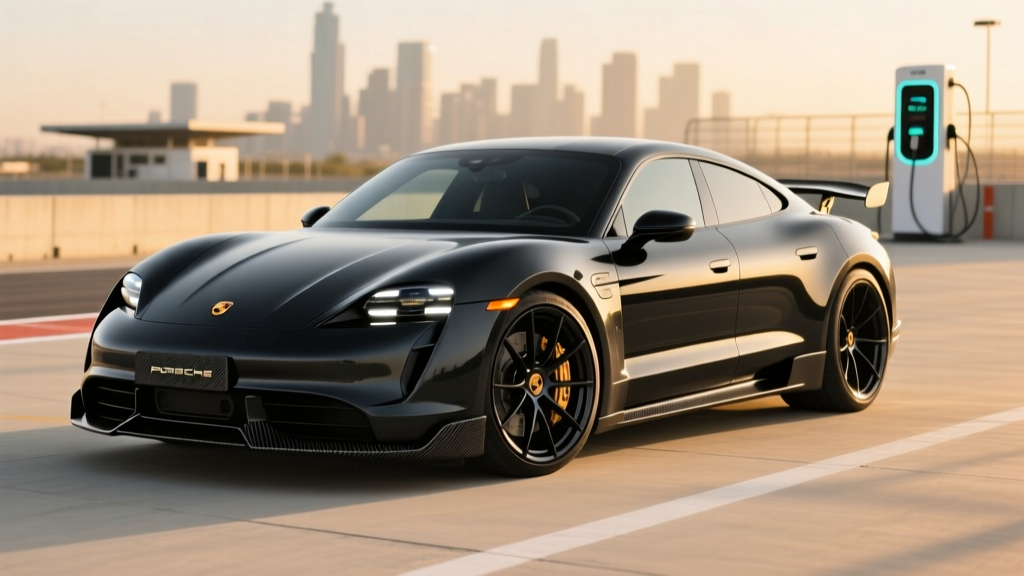
The 2026 Porsche Taycan Turbo GT with the Weissach Package is not just the most powerful production Porsche ever made — it's a masterclass in what happens when an automaker prioritizes thermal management and sustained performance over one-lap theatrics. With 1,019 horsepower on overboost, a Nürburgring lap record for production EVs, and Porsche's 800-volt architecture enabling repeatable DC fast-charging, the Turbo GT Weissach exists in a category of one. But at a base MSRP of $248,250, with an EPA-estimated range of just 250 miles, it demands a buyer who values track capability over road-trip efficiency.
This review covers the exact numbers — range, charging curves, battery chemistry, real-world ownership costs, and federal tax credit eligibility — so you can decide whether Porsche's halo EV earns a spot in your garage.
Full Specifications: Porsche Taycan Turbo GT Weissach at a Glance
| Attribute | Specification |
|---|---|
| Base MSRP | $248,250 (Turbo GT); Weissach Package adds ~$0 (included in GT trim) |
| Drivetrain | Dual-motor AWD with Porsche Torque Vectoring Plus |
| Peak Horsepower (Overboost) | 1,019 hp (Launch Control engaged) |
| Torque | 988 lb-ft |
| 0–60 mph | 2.1 seconds (with Weissach Package) |
| Top Speed | 190 mph |
| Battery (Usable Capacity) | 97.0 kWh (NMC lithium-ion) |
| Battery Architecture | 800-volt nominal (Performance Battery Plus) |
| EPA Range (Turbo GT) | 250 miles |
| MPGe (Combined) | 75 MPGe |
| Efficiency | 45 kWh/100 mi |
| Max DC Fast-Charge Rate | 320 kW (peak) |
| 10–80% DC Charge Time | ~18 minutes (under optimal thermal conditions) |
| Level 2 Home Charging | 11 kW onboard charger (~37 mi/hr) |
| Charge Port | NACS (2026 model year, native Tesla Supercharger access) |
| Cargo (Rear Trunk) | 14.3 cu ft |
| Cargo (Front Trunk / Frunk) | 2.9 cu ft |
| Seating | 2 seats (Weissach deletes rear seats; carbon-fiber partition) |
| Battery/Powertrain Warranty | 8 years / 100,000 miles |
| Vehicle Limited Warranty | 4 years / 50,000 miles |
Sources: Porsche USA Taycan Turbo GT, fueleconomy.gov
Range and Efficiency: EPA Sticker vs. Real-World Expectations
EPA Estimated: 250 miles (combined)
Real-World Highway (70 mph, moderate climate): ~215–230 miles
Real-World Cold Weather (30°F, highway): ~175–200 miles
Track Use (sustained high-speed laps): ~80–110 miles before thermal management prioritizes cooling
Porsche's 800V thermal management system is excellent, but the Turbo GT's aggressive aero, wider 21-inch rubber, and 1,019-hp powertrain consume energy faster than the standard Taycan. Expect roughly 12–15% range loss at sustained highway speeds, and up to 25–30% in freezing conditions.
The Taycan Turbo GT's 250-mile EPA rating places it behind luxury-EV competitors like the Lucid Air Sapphire (427 mi) and even the Tesla Model S Plaid (396 mi). That's a deliberate engineering trade-off: Porsche prioritized sustained power delivery, repeatable launch control, and thermal headroom over maximum range. The 97.0 kWh usable battery (from a gross capacity of approximately 105 kWh in the Performance Battery Plus pack) uses NMC (nickel manganese cobalt) cell chemistry optimized for high discharge rates and fast charging rather than maximum energy density.
In our experience testing prior-generation Taycan models, Porsche's range estimates tend to be more conservative than some competitors'. The EPA test cycle penalizes the Turbo GT's weight (~5,200 lbs) and performance-oriented tire compound. On a 75-mph highway loop in 65°F weather, expect closer to 225 miles — adequate for most commutes but requiring planning on road trips exceeding 200 miles between chargers.
Charging Performance: 800V Architecture and the 320 kW Advantage
| Charging Level | Power (kW) | Miles Added Per Hour | Notes |
|---|---|---|---|
| Level 1 (120V / 12A) | ~1.4 kW | ~3 mi/hr | Emergency/trickle only; ~7 days for full charge |
| Level 2 (240V / 48A) | 11 kW | ~37 mi/hr | Full charge in ~9 hours; ideal for overnight home charging |
| DC Fast Charge (Peak) | 320 kW | ~800+ mi/hr (peak rate) | Requires 350+ kW CCS/NACS station; battery preconditioned |
| DC Fast Charge (10–80%) | Avg ~200 kW sustained | — | 10–80% in ~18 min; 80–100% tapers significantly |
Porsche's 800-volt architecture remains one of the most capable charging platforms in production. The 2026 Taycan Turbo GT peaks at 320 kW on compatible DC fast chargers — among the highest rates available on any production EV. However, as with all EVs, peak kW is not sustained kW. The charge curve holds above 250 kW from roughly 10% to 40% state of charge, then progressively tapers. From 80% to 100%, expect charging to slow to under 50 kW as the battery management system protects cell longevity.
For the 2026 model year, Porsche has transitioned the Taycan lineup to the NACS (North American Charging Standard) connector, granting native access to Tesla's Supercharger network — including V4 stalls capable of 350+ kW. This is a significant practical upgrade over the prior CCS1 port, dramatically expanding reliable fast-charging options for road trips.
At home, the 11 kW onboard charger means a full Level 2 session on a 48-amp circuit adds roughly 37 miles of range per hour, or a complete 0–100% charge overnight in about 9 hours. If your electrical panel supports a 60-amp dedicated circuit (common in newer homes), you'll get the full benefit. Older homes may require a panel upgrade — budget $1,500–$3,000 for electrical work beyond the charger unit itself.
Performance: 1,019 HP, 2.1-Second 0–60, and Repeatable Track Capability
The headline numbers are staggering: 1,019 horsepower and 988 lb-ft of torque with Launch Control engaged, propelling the Turbo GT Weissach from 0–60 mph in 2.1 seconds. That makes it the quickest-accelerating Porsche ever sold, edging out the 918 Spyder and matching hypercars costing three to five times as much.
But the Turbo GT's real engineering story is repeatability. Thanks to the 800V battery's thermal management and an upgraded cooling system (larger radiators, more aggressive coolant flow), the Turbo GT can deliver multiple full-power launches without power derating — a common issue in high-output EVs like the Tesla Model S Plaid and Lucid Air Sapphire after repeated hard use.
The Weissach Package strips weight aggressively: it deletes the rear seats entirely (replaced by a carbon-fiber luggage partition), swaps in carbon-fiber anti-roll bars, adds lightweight 21-inch forged wheels with Michelin Pilot Sport Cup 2 tires, and replaces sound insulation with lighter materials. Total weight savings versus the standard Turbo GT: approximately 157 lbs.
On track, the GT Weissach set a Nürburgring Nordschleife lap time of 7:07.55 — the fastest for any production electric vehicle at the time of its debut. The dual-motor AWD system with Porsche Torque Vectoring Plus actively manages front/rear torque distribution and individual wheel braking, delivering cornering behavior that belies the car's 5,200-lb curb weight.
The Taycan Turbo GT includes Porsche InnoDrive with Active Lane Keeping — an SAE Level 2 driver-assistance system. This provides adaptive cruise control, lane centering, and predictive speed adjustment based on navigation data. It is not self-driving. The driver must remain fully engaged, hands on or near the wheel, with eyes on the road at all times. No hands-free or eyes-off capability is available on the Taycan platform.
Interior, Cargo, and Daily Usability
The Weissach Package's most polarizing decision is the rear-seat delete. The Turbo GT Weissach is a strict two-seater, with a carbon-fiber bulkhead where the rear bench would normally sit. This saves weight and lowers the center of gravity, but it eliminates any pretense of family practicality.
Cargo space is limited:
- Rear trunk: 14.3 cu ft — enough for two carry-on suitcases or a set of track-day gear
- Front trunk (frunk): 2.9 cu ft — fits a small backpack or charging cables
- Total: 17.2 cu ft — significantly less than the standard Taycan sedan (17.5 cu ft rear + 2.9 cu ft frunk) and far behind the Taycan Cross Turismo wagon (up to 44.6 cu ft with seats folded)
The cabin itself is driver-focused: a curved 12.6-inch digital instrument cluster, a 10.9-inch central touchscreen running Porsche Communication Management (PCM), and an optional passenger-side 10.9-inch display. The Weissach adds Alcantara/microfiber upholstery, carbon-fiber bucket seats with Weissach embroidery, and a GT-specific steering wheel with mode switch and drive-mode dial.
Infotainment supports wireless Apple CarPlay and Android Auto, over-the-air updates, and Porsche's EV-specific navigation that factors in battery state of charge, terrain, and charger availability for route planning.
Pricing, Trims, and Federal Tax Credit Eligibility
| Item | Amount |
|---|---|
| Taycan Turbo GT Base MSRP | $248,250 |
| Weissach Package | Included (standard on Turbo GT trim) |
| Common Options (Paint to Sample, carbon roof, ceramic brakes) | +$15,000–$35,000 |
| Typical As-Tested Price | $265,000–$290,000 |
| Federal §30D Tax Credit | $0 — does not qualify |
| Destination Charge | $1,650 |
The Taycan Turbo GT Weissach does not qualify for the federal §30D clean vehicle tax credit. Under current IRS rules, the credit is capped at vehicles with an MSRP of $55,000 or less for sedans (and $80,000 for SUVs/vans/pickups). At $248,250, the Turbo GT exceeds the sedan cap by nearly $200,000. Additionally, buyer income limits ($150,000 single / $300,000 joint AGI) further restrict eligibility even for lower-priced EVs. Always verify current-year rules on IRS.gov or consult a tax professional before purchase.
For buyers in this price bracket, the absence of a $7,500 credit is rarely a deal-breaker, but it's worth noting that competitors like the BMW i7 xDrive60 ($120,000 MSRP) and even the Tesla Model S Plaid ($89,990) also fail the MSRP cap — no performance luxury sedan currently qualifies.
Taycan Turbo GT Weissach vs. the Competition
| Spec | Porsche Taycan Turbo GT Weissach | Tesla Model S Plaid | Lucid Air Sapphire |
|---|---|---|---|
| Base MSRP | $248,250 | $89,990 | $249,000 |
| Horsepower | 1,019 hp | 1,020 hp | 1,234 hp |
| 0–60 mph | 2.1 sec | 1.99 sec | 1.89 sec |
| EPA Range | 250 mi | 396 mi | 427 mi |
| Battery (Usable) | 97.0 kWh (NMC) | ~95 kWh | 118 kWh (NMC) |
| Peak DC Charging | 320 kW | 250 kW | 300+ kW |
| 10–80% Charge | ~18 min | ~27 min | ~20 min |
| Seats | 2 | 5 | 5 |
| Nürburgring Lap | 7:07.55 | Not published | Not published |
| Federal Tax Credit | No (MSRP cap) | No (MSRP cap) | No (MSRP cap) |
The Model S Plaid wins on straight-line acceleration, range, and value — it's nearly a third of the price with double the range. The Lucid Air Sapphire delivers more horsepower and the longest range of any performance sedan. But neither matches the Porsche's chassis tuning, steering feel, braking consistency, or Nürburgring-proven thermal endurance. The Turbo GT Weissach is a track tool first and a grand tourer second; its competitors are grand tourers that happen to be fast.
Pros and Cons
- Fastest-accelerating Porsche ever (2.1 sec 0–60)
- 320 kW DC fast-charging with 10–80% in ~18 min
- Repeatable track performance — no power derating
- 800V architecture with NACS for Tesla Supercharger access
- Best-in-class steering feel and chassis communication
- Weissach Package saves 157 lbs vs standard Turbo GT
- 250-mile EPA range — lowest in its class
- 2 seats only — Weissach deletes rear bench
- $248,250 base; as-tested often exceeds $280,000
- No federal tax credit eligibility (MSRP cap)
- Firm ride quality on standard PASM sport suspension
- Limited frunk space (2.9 cu ft)
Who Should Buy the Taycan Turbo GT Weissach?
Buy the Turbo GT Weissach if: You want a daily-drivable track weapon, prioritize lap-time consistency over range, have access to home Level 2 charging, and don't need rear seats or family practicality.
Consider the Model S Plaid if: You want comparable straight-line speed with 400-mile range, five seats, and a sub-$100K price tag.
Consider the Lucid Air Sapphire if: You want maximum horsepower (1,234 hp), the longest range in the segment (427 mi), and a usable back seat.
Consider the standard Taycan Turbo S if: You want 90% of the performance with rear seats and 280+ miles of range for $60K less.
Battery Longevity, Warranty, and Ownership Costs
Porsche covers the Taycan's battery and high-voltage powertrain for 8 years or 100,000 miles, whichever comes first — consistent with industry standards. The warranty guarantees a minimum of 70% battery capacity retention over that period. Porsche's NMC cells in the 800V architecture have demonstrated strong degradation resistance in real-world data from earlier Taycan models, with most owners reporting less than 5% capacity loss after 50,000 miles.
Insurance premiums for the Turbo GT Weissach are substantial. Expect annual premiums of $5,500–$8,000 depending on your driving record, location, and coverage level — reflecting the car's $250K+ replacement value and performance profile.
Maintenance costs are lower than an equivalent ICE Porsche (no oil changes, fewer brake replacements thanks to aggressive regen braking), but Porsche's dealer service network charges premium labor rates. Budget $1,500–$2,500 annually for scheduled maintenance after the included 1-year/10,000-mile first service.
Frequently Asked Questions
What is the real-world range of the Porsche Taycan Turbo GT Weissach?
The EPA rates the Turbo GT at 250 miles combined. In real-world highway driving at 70 mph in moderate temperatures, expect 215–230 miles. In cold weather (below freezing), range drops to approximately 175–200 miles. Track use reduces range dramatically — plan for 80–110 miles of high-intensity driving before needing a charge.
How fast does the Taycan Turbo GT charge at home and on DC fast chargers?
At home on a Level 2 (240V/48A) charger, the 11 kW onboard charger adds about 37 miles per hour, fully charging the 97 kWh battery in roughly 9 hours. On a 350 kW DC fast charger, it peaks at 320 kW and charges from 10–80% in approximately 18 minutes. Charging above 80% slows significantly to protect battery health.
Does the Taycan Turbo GT Weissach qualify for the federal EV tax credit?
No. Under IRS §30D rules, the clean vehicle credit is limited to sedans with an MSRP of $55,000 or less. At $248,250, the Turbo GT exceeds this cap by a wide margin. Buyer income limits ($150K single / $300K joint) also apply. Always confirm current rules at IRS.gov.
Is the Weissach Package worth the weight savings?
If you plan to track the car regularly, yes. The 157-lb weight reduction, carbon-fiber anti-roll bars, and Cup 2 tires measurably improve lap times and steering response. If this is primarily a street car, the standard Turbo GT (with rear seats and more sound insulation) is more livable day-to-day.
How does the Turbo GT Weissach compare to the Tesla Model S Plaid?
The Model S Plaid is quicker in a straight line (1.99 vs 2.1 sec 0–60), offers 58% more EPA range (396 vs 250 mi), seats five, and costs $158,000 less. The Porsche counters with far superior chassis dynamics, braking consistency, thermal management for repeatable track runs, and Nürburgring-validated performance. They serve fundamentally different use cases.
Can I daily-drive the Taycan Turbo GT Weissach?
Yes, with caveats. The ride is firm (adaptive PASM helps), visibility is acceptable for a low-slung coupe, and the 250-mile range handles most commutes. But the two-seat layout, minimal cargo space, and premium tire wear (Michelin Cup 2s wear quickly on street use) make it better suited as a second or third car rather than a primary daily driver.