The Quick Answer: Do EVs Need Special Tires?
Yes, most EVs benefit significantly from EV-specific tires. Electric vehicles are 10–30% heavier than comparable gas cars, deliver instant torque that accelerates tread wear, and lack engine noise that would otherwise mask tire roar. An "electric tire" is engineered with reinforced sidewalls for extra load, low rolling resistance compounds to preserve range, and foam-lined cavities to cut cabin noise. Expect to pay $180–$320 per tire for a quality EV-specific model, and plan on replacement every 25,000–40,000 miles depending on driving style and vehicle weight.
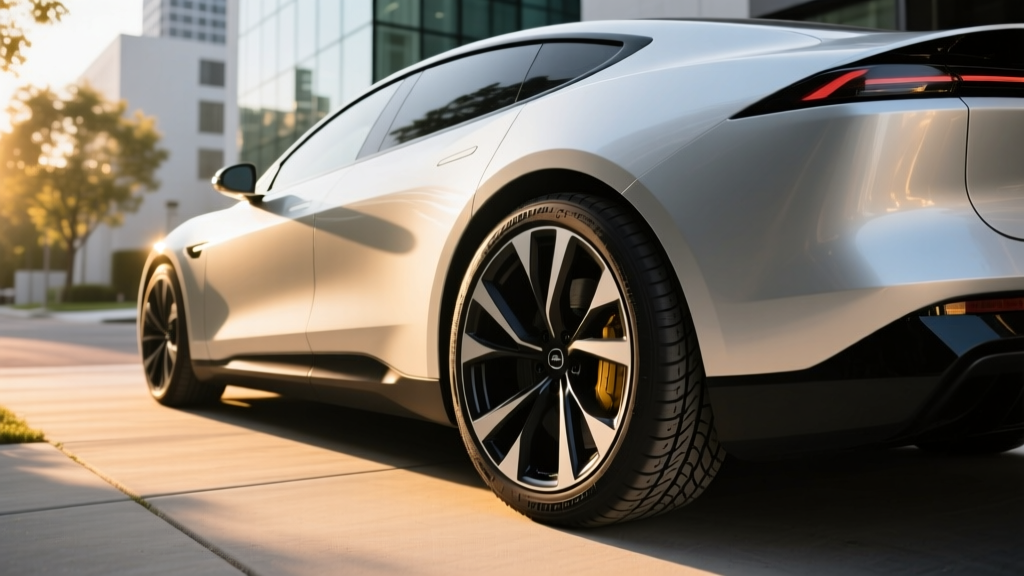
When we talk about an electric tire, we're referring to tires purpose-built for battery electric vehicles (BEVs) and, to a lesser extent, plug-in hybrids (PHEVs). Major manufacturers — Michelin, Hankook, Continental, Pirelli, Bridgestone — now offer dedicated EV tire lines with specific engineering choices that standard all-season tires simply don't provide. The question isn't whether you can put conventional tires on an EV (you can), but whether the trade-offs in range, noise, and longevity make it worth the savings.
Why EVs Put Unique Demands on Tires
Three physical realities separate EVs from internal combustion vehicles at the tire contact patch:
1. Weight and Load Rating
A 2026 Tesla Model Y Long Range weighs approximately 4,398 lbs. A comparably sized gas-powered Toyota RAV4 tips the scales at roughly 3,615 lbs — nearly 800 lbs lighter. That extra mass comes from the battery pack (typically 400–1,200 lbs depending on capacity). Tires must carry this load without excessive deflection or heat buildup. EV-specific tires carry an XL (Extra Load) or HL (High Load) rating, with reinforced carcasses and stiffer sidewalls to handle the weight safely. Running a standard-load tire on a heavy EV causes premature wear, heat degradation, and potentially compromised handling under emergency maneuvers.
2. Instant Torque and Tread Wear
Electric motors deliver peak torque from 0 RPM. A dual-motor EV producing 500+ lb-ft of torque at a standstill scrubs tread rubber far more aggressively than a gas car that needs to build revs before peak torque arrives. Owners who frequently accelerate hard — or who live in hilly terrain requiring repeated high-torque launches — report front tire wear in as little as 15,000–20,000 miles on non-EV tires. EV-specific compounds are formulated for higher abrasion resistance under these conditions.
3. Noise, Vibration, and Harshness (NVH)
Without an internal combustion engine generating 40–70 dB of background noise, tire roar becomes the dominant sound source in an EV cabin at highway speeds. Many electric tires incorporate polyurethane foam liners bonded to the inner tire cavity — this dampens the air-column resonance that occurs around 200–250 Hz, reducing perceived cabin noise by 3–9 dB depending on the manufacturer's testing. The difference is immediately noticeable on coarse-pavement highways.
Electric Tire vs. Standard Tire: Cost and Range Comparison
Here's where the math gets concrete. Below is a side-by-side comparison of what you can expect when choosing between an EV-specific tire and a conventional all-season tire on a popular midsize EV crossover (e.g., Hyundai Ioniq 5, Ford Mustang Mach-E, Tesla Model Y):
| Factor | EV-Specific Tire | Conventional All-Season |
|---|---|---|
| Cost per tire (235/55R19) | $220–$300 | $150–$210 |
| Set of 4 total | $880–$1,200 | $600–$840 |
| Expected tread life | 30,000–40,000 mi | 20,000–30,000 mi (on an EV) |
| Rolling resistance coefficient | 5.5–6.5 kg/t | 7.0–9.0 kg/t |
| Range impact (300-mi EPA EV) | Baseline | −8 to −18 miles (3–6% loss) |
| Cabin noise reduction (foam-lined) | 3–9 dB at highway speed | None |
| Load rating | XL / HL | SL or XL (varies) |
| Cost per mile driven (40k mi set life) | $0.022–$0.030 | $0.024–$0.042 (shorter EV life) |
Sources: Tire manufacturer spec sheets; fueleconomy.gov for baseline EV efficiency data.
The key insight: while EV-specific tires cost $250–$400 more per set upfront, their longer tread life on heavy, high-torque vehicles and the range preservation from lower rolling resistance often close the gap over a full ownership cycle. The range loss from higher rolling resistance is especially relevant if you regularly drive near your vehicle's range limit or live in a cold climate where battery efficiency already drops 15–30%.
EV vs. Gas Car: Tire Cost in Context
To understand whether tire costs should concern you as a prospective EV buyer, consider the broader maintenance picture:
| Maintenance Item | EV (e.g., Ioniq 5) | Gas (e.g., RAV4) |
|---|---|---|
| Tire sets needed | 1.5–2 sets | 1–1.5 sets |
| Total tire cost | $1,300–$2,400 | $600–$1,260 |
| Oil changes | $0 | $250–$500 |
| Brake pad replacement | $0–$200 (regen preserves pads) | $300–$600 |
| Transmission fluid | $0 (single-speed reducer) | $150–$300 |
| Coolant / filters / spark plugs | $50–$100 | $300–$600 |
| Total maintenance (5 yr) | $1,350–$2,700 | $1,600–$3,260 |
Even with higher tire costs, the EV's total maintenance spend remains competitive or lower because you eliminate oil changes, spark plugs, transmission fluid, and most brake wear (regenerative braking handles the majority of deceleration, often preserving brake pads past 100,000 miles). The tire premium is real but not disqualifying.
Common Electric Tire Myths — Fact-Checked
| Myth | Fact |
|---|---|
| "You must buy EV-specific tires or you'll damage your car." | No. You can mount any tire that meets your vehicle's load index and speed rating. However, non-EV tires will wear faster, reduce range, and increase cabin noise. |
| "EV tires cost twice as much as regular tires." | Typically 25–50% more per tire, not double. A set of Michelin Pilot Sport EV tires in 255/45R20 runs ~$280/tire vs. ~$200 for the non-EV Pilot Sport 5 in the same size. |
| "Low rolling resistance tires sacrifice wet grip." | Early-generation eco tires did. Modern EV-specific tires use silica-rich compounds that achieve strong wet braking (EU label A/B ratings) while maintaining low rolling resistance. |
| "Foam-lined tires can't be repaired." | Many tire shops can repair punctures in foam-lined tires by carefully cutting away the foam around the puncture area, applying a plug-patch, and re-bonding foam. Not all shops offer this — call ahead. |
| "EV tire wear is the same as gas cars." | Studies and owner data consistently show 15–30% faster tread wear on EVs due to weight and torque, especially on the drive axles. |
Real-World Ownership: What First-Time EV Buyers Should Know About Tires
Beyond the spec sheet, here are the practical tire considerations that affect your daily EV ownership experience:
Rotation Schedule Matters More on EVs
Because EVs are heavy and torque-dense, uneven wear between front and rear axles develops faster than on gas cars. Rotate tires every 5,000–6,250 miles (align with a convenient interval like every other charge-network subscription billing cycle). Skipping rotation on a dual-motor EV can result in needing replacement tires as early as 18,000 miles on the drive axle.
Alignment Checks After Pothole Impacts
The extra weight of an EV means alignment goes out of spec more readily after hitting potholes or curbs. A misaligned EV scrubs tires faster than a misaligned gas car due to the higher vertical load at each contact patch. Budget $80–$120 for an annual alignment check, or after any significant impact event.
Cold Climate Considerations
If you live where temperatures regularly drop below 45°F, you'll want dedicated winter tires regardless of EV or gas. EV-specific winter tires (like the Nokian Hakkapeliitta R5 EV) combine low rolling resistance with the siping and rubber compounds needed for ice traction. Expect a 5–10% range hit with winter tires mounted, on top of the 15–30% cold-weather battery efficiency loss — plan your winter range expectations accordingly.
Home Charging and Tire Care Synergy
Owners who charge at home (Level 2, ~7–11 kW) tend to drive more consistent daily routes and can better monitor tire condition during routine walk-arounds. If you rely solely on public DC fast charging (150–350 kW), you're likely making longer, less predictable trips — check tire pressure and tread depth at least monthly, as underinflation compounds range loss and accelerates wear.
Top Electric Tire Picks for 2026 EVs
Based on current availability, independent testing, and owner feedback across popular EV platforms:
- Michelin Pilot Sport EV — Performance-oriented, foam-lined, excellent wet grip. Popular on Tesla Model 3/Y Performance, Porsche Taycan. ~$260–$320/tire.
- Hankook iON evo — Low rolling resistance (EU label A-rated), HL load rating, competitive pricing. OEM fitment on several Hyundai/Kia EVs. ~$190–$240/tire.
- Continental EcoContact 6 Q — Quiet, efficient, strong OEM presence on European EVs. ~$200–$260/tire.
- Pirelli Elect (P Zero / Scorpion) – Marked with "Elect" for EV optimization, foam-lined PNCS option available. Premium pricing: ~$270–$340/tire.
- Bridgestone Turanza EV — Grand touring comfort with EV load ratings, strong treadwear warranty (up to 50,000 mi). ~$210–$260/tire.
Always verify the exact tire size, load index, and speed rating for your specific trim — a Model Y Long Range on 19" wheels uses 255/45R19, while the Performance trim on 21" wheels requires 275/35R21. Your owner's manual or the placard on the driver's door jamb lists the correct specification.
Decision Framework: Which Tire Should You Buy?
Choose an EV-specific tire if:
- You drive a heavy EV (5,000+ lbs) like a Rivian R1T, GMC Hummer EV, or Tesla Model X
- You want to maximize EPA range and minimize charging stops on road trips
- Cabin quietness is a priority (especially without engine noise masking)
- You plan to keep the vehicle 4+ years and want tires that last to their warranty mileage
- You frequently drive at highway speeds where tire noise dominates
A conventional all-season tire may be acceptable if:
- You drive a lighter EV or PHEV (under 4,000 lbs) like a Chevrolet Bolt EV or Prius Prime
- You're on a tight budget and can commit to more frequent rotation and earlier replacement
- You primarily drive in-city at lower speeds where tire noise is less noticeable
- You can find a conventional tire that meets the XL load index your EV requires
Frequently Asked Questions
Can I put regular tires on my Tesla or other EV?
Yes, as long as the tire meets the vehicle's required load index and speed rating. However, you'll likely experience faster wear (15–30% shorter life), 3–6% range reduction from higher rolling resistance, and more cabin noise. Many owners find the range and noise trade-offs make EV-specific tires worth the 25–50% price premium.
How often should I replace tires on an EV?
With EV-specific tires and proper rotation every 5,000–6,250 miles, expect 30,000–40,000 miles of service life. With conventional tires on an EV, plan for 20,000–30,000 miles. Aggressive driving, frequent high-torque launches, and poor alignment can reduce these figures by 20–40%.
Do EV tires improve range?
Compared to a standard all-season tire with higher rolling resistance, an EV-optimized low-rolling-resistance tire can recover 8–18 miles of range on a 300-mile EPA-rated vehicle. That's meaningful on road trips where it may eliminate a charging stop, but less impactful for daily commuting within your battery's comfortable margin.
Are foam-lined tires worth it?
If cabin quietness matters to you, yes. The polyurethane foam liner reduces tire cavity resonance by 3–9 dB, which is perceptible as a noticeably quieter highway cruise. The trade-off is slightly higher cost and some tire shops' reluctance to perform puncture repairs — though most major chains now service foam-lined tires.
Does the federal EV tax credit cover tires?
No. The IRS §30D clean vehicle credit (up to $7,500 for new EVs, subject to MSRP caps, buyer income limits, and battery sourcing requirements) applies only to the vehicle purchase. Tires, maintenance, and charging equipment are not covered by §30D. Some state or utility incentive programs may offer rebates for energy-efficient tires — check your local programs. For current §30D eligibility details, see IRS.gov clean vehicle credits.
What tire pressure should I run in my EV?
Follow the placard on your driver's door jamb — typically 38–45 PSI for EVs, higher than many gas cars due to the extra vehicle weight. Running 2–3 PSI above the placard recommendation can marginally reduce rolling resistance (and gain 2–5 miles of range) but at the cost of ride comfort and center-tread wear. Never exceed the max PSI molded on the tire sidewall.
For tire safety standards and load-rating guidance, refer to NHTSA's tire safety resources. Real-world EV efficiency and range data sourced from fueleconomy.gov.