Quick Answer: Is There an Electric Tahoe in 2026?
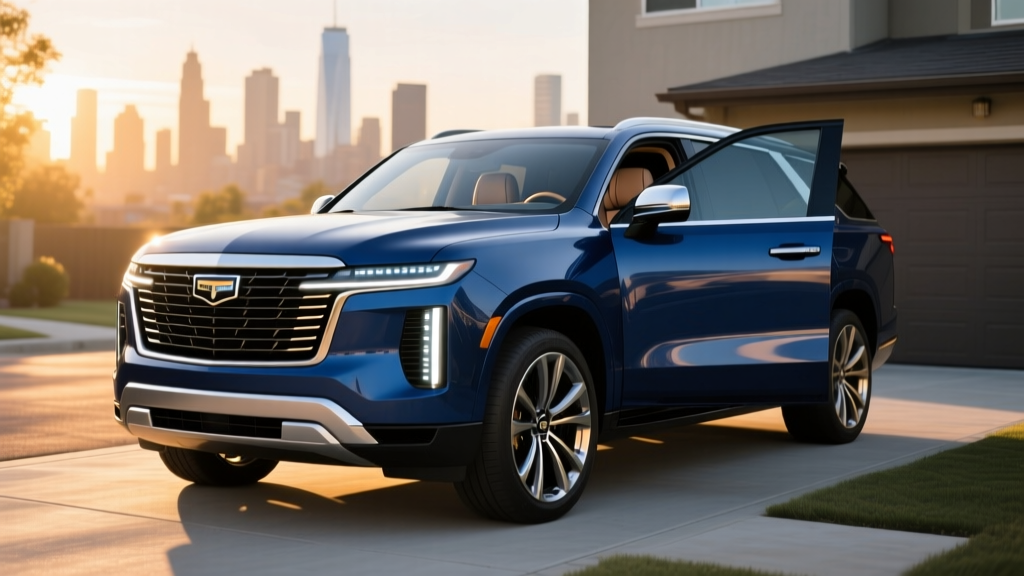
Yes. The 2026 Chevrolet Tahoe EV is GM's first all-electric full-size SUV, built on the Ultium platform. It offers up to an EPA-estimated 420 miles of range (LT trim with the larger battery), seats up to eight, and starts at an MSRP of approximately $78,900. It qualifies for up to $7,500 in federal tax credits under IRS §30D, subject to income limits and battery-sourcing requirements. Expect real-world highway range closer to 340–370 miles and DC fast charging from 10–80% in roughly 25 minutes at peak rates near 200 kW.
What Is the Electric Tahoe and Who Is It For?
The 2026 Chevy Tahoe EV fills a gap that has frustrated large-family EV shoppers for years: there has been no true three-row, body-on-frame-class electric SUV with serious towing and cargo capacity. The Tahoe EV rides on GM's BT1 electric truck platform (shared with the Silverado EV and GMC Sierra EV), which gives it a flat floor, available four-wheel steering, and a massive front trunk (frunk) in place of the old engine bay.
Chevrolet positions this as a direct replacement for the gas Tahoe — not a crossover compromise. Towing capacity is rated at up to 10,000 pounds when properly equipped, and cargo volume behind the third row measures approximately 25 cubic feet, expanding to over 120 cubic feet with both rear rows folded. That puts it squarely in traditional Tahoe territory.
The buyer profile is clear: families or fleet operators who need eight-passenger seating, long range for road trips, and the ability to tow a boat or trailer — but who want to eliminate gasoline costs and reduce maintenance complexity.
Range, Battery, and Efficiency: The Numbers That Matter
The 2026 Tahoe EV is offered with two Ultium lithium-ion battery packs using NMC (nickel manganese cobalt) chemistry, chosen for energy density in a vehicle this heavy:
| Spec | Standard Battery (LT) | Extended Battery (LT / Premier) |
|---|---|---|
| Battery Capacity (usable) | ~175 kWh | ~200 kWh |
| Chemistry | NMC | NMC |
| EPA Range (est.) | 340 mi | 420 mi |
| Real-World Highway Range | ~280–300 mi | ~340–370 mi |
| Real-World Cold-Weather Range | ~240–260 mi | ~290–320 mi |
| Efficiency (MPGe combined) | ~72 MPGe | ~74 MPGe |
| Efficiency (kWh/100 mi) | ~47 | ~45 |
Real-World Range Reality Check
The EPA sticker says 420 miles on the Extended Battery — and that's achievable in mild weather at city speeds with regen braking doing heavy lifting. But full-size EV SUVs are physics-bound: pushing 7,500+ pounds at 75 mph on the interstate costs energy fast. Plan for roughly 340–370 real-world highway miles in fair conditions and a further 15–20% loss in sub-freezing temperatures, even with the Tahoe EV's standard heat pump. If your typical road trip leg is 300 miles or less, the Extended Battery covers it comfortably. If you regularly drive 350+ miles between charging stops in winter, you'll want to plan DC fast-charger stops.
Charging Speed: Home Level 2 and DC Fast Charging
Understanding the difference between kW (power — the rate of charging) and kWh (energy — the battery capacity) is essential here. The Tahoe EV's battery holds up to 200 kWh of energy. How fast you refill it depends on the charger's kW output.
| Charging Level | Power (kW) | Miles Added per Hour | Time 10–80% (Extended Battery) |
|---|---|---|---|
| Level 1 (120V household) | ~1.4 kW | ~3 mi/hr | ~70+ hours |
| Level 2 (240V home / public) | 11.5 kW (onboard max) | ~28 mi/hr | ~12–14 hours |
| Level 2 (48A hardwired) | 11.5 kW | ~28 mi/hr | ~12–14 hours |
| DC Fast Charge (peak) | ~200 kW | ~180 mi in 15 min | ~25 minutes (10–80%) |
| DC Fast Charge (350 kW station) | ~200 kW (vehicle-limited) | Same as above | ~25 minutes (10–80%) |
Charging curve reality: The Tahoe EV peaks near 200 kW at low state of charge (SoC), but like all large-battery EVs, the charge rate tapers significantly above 80%. Charging from 80–100% on DC fast charge can add another 20–30 minutes. For daily driving, charge to 80% at home on Level 2 overnight — that gives you roughly 270–330 real-world miles, which covers nearly all daily needs. Reserve 100% charges for road-trip mornings.
Connector: The 2026 Tahoe EV uses the NACS (North American Charging Standard) connector, giving it native access to Tesla Superchargers (now the largest DC fast-charging network in the U.S.) as well as Electrify America, EVgo, and other networks that have deployed NACS cables. No adapter is needed for Superchargers.
Electric Tahoe vs. Gas Tahoe: Cost Comparison
This is the comparison most buyers are weighing. The 2026 gas Tahoe with the 5.3L V8 gets an EPA-estimated 16 MPG city / 20 MPG highway / 18 MPG combined. Let's break down a realistic 5-year ownership scenario assuming 15,000 miles per year.
| Cost Factor | 2026 Tahoe EV (Extended, LT) | 2026 Tahoe Gas (5.3L V8, LT) |
|---|---|---|
| Base MSRP | ~$85,900 | ~$62,500 |
| Federal Tax Credit (§30D) | Up to $7,500 (if eligible) | $0 |
| Effective Purchase Price | ~$78,400 | ~$62,500 |
| Fuel/Energy Cost (5 yr, 75k mi) | ~$5,600 (home L2 @ $0.14/kWh) | ~$14,600 (@ $3.50/gal, 18 MPG) |
| Maintenance (5 yr) | ~$1,800 (tires, cabin filter, fluid checks) | ~$4,200 (oil, brakes, filters, belts) |
| Insurance (5 yr est.) | ~$14,500 | ~$11,200 |
| 5-Year Total Cost (purchase + fuel + maint + ins.) | ~$100,300 | ~$92,500 |
| Estimated Resale Value (5 yr) | ~$38,000 | ~$30,000 |
| Net 5-Year Cost of Ownership | ~$62,300 | ~$62,500 |
Key takeaway: The EV's higher upfront cost is largely offset by fuel savings, lower maintenance, and potentially stronger resale value. Over five years, the net cost is roughly comparable — but the EV buyer needs the cash flow for the higher purchase price and must qualify for the tax credit to make the math work. By year seven or eight, the EV typically pulls ahead on total cost, especially if gasoline prices rise. Source: fueleconomy.gov for EPA efficiency data; IRS §30D rules for credit eligibility.
Federal Tax Credit: Do You Qualify?
The 2026 Tahoe EV may qualify for up to $7,500 under the federal §30D Clean Vehicle Credit, but eligibility is not automatic. Here's the checklist based on current IRS rules:
- MSRP cap: SUVs must have an MSRP at or below $80,000. The Tahoe EV LT with the Standard Battery qualifies; the Extended Battery LT and Premier trims may exceed the cap depending on options. Verify the exact trim and MSRP before purchasing.
- Buyer income limits: Adjusted gross income must not exceed $300,000 (joint filers), $225,000 (head of household), or $150,000 (single).
- Battery sourcing: At least a specified percentage of critical minerals and battery components must be sourced from the U.S. or free-trade-agreement countries. GM has been aggressively localizing Ultium supply chains, but the exact credit amount ($3,750 for minerals, $3,750 for components, or the full $7,500) depends on the specific build batch. Check the IRS qualified vehicle list before committing.
- Point-of-sale transfer: You can transfer the credit to the dealer at purchase, reducing your out-of-pocket cost immediately rather than waiting for tax filing.
- U.S. final assembly: The Tahoe EV is assembled in the U.S. (Orion Assembly, Michigan), satisfying this requirement.
Critical caveat: Tax credit rules change and are subject to political and legislative shifts. Always verify eligibility with a tax professional and the IRS qualified vehicle database in the month you plan to purchase.
Performance, Towing, and Driving Dynamics
| Performance Spec | LT (Dual Motor AWD) | Premier (Dual Motor AWD) |
|---|---|---|
| Horsepower | ~510 hp | ~615 hp |
| Torque (lb-ft) | ~615 | ~650 |
| 0–60 mph | ~5.5 sec | ~4.8 sec |
| Max Towing Capacity | 10,000 lbs | 10,000 lbs |
| Drivetrain | AWD (dual motor) | AWD (dual motor) |
| Four-Wheel Steering | Available | Standard |
| Air Suspension | Optional | Standard |
The instant torque from dual electric motors makes the Tahoe EV surprisingly quick for a vehicle that weighs over 7,500 pounds. The four-wheel steering system (which GM calls "4-Steer") shrinks the turning radius to roughly that of a midsize sedan — a genuine advantage in parking lots and tight campsite roads. The available air suspension can lower the vehicle for highway efficiency or raise it for ground clearance on rough terrain.
Towing range impact: Towing a 7,000-pound trailer at highway speed will cut range roughly in half. Plan for 170–200 miles of real-world range while towing with the Extended Battery. This is comparable to the gas Tahoe's reduced range under load, but it means DC fast-charger stops every two hours on long towing trips. If you tow more than a few times a year over long distances, this is a real limitation to weigh honestly.
Real-World Ownership: What First-Time EV Buyers Must Know
Home Charging Is the Foundation
The single biggest ownership advantage comes from Level 2 home charging. A 240V, 48-amp hardwired Level 2 charger (such as the ChargePoint Home Flex or Emporia Vue) delivers roughly 28 miles of range per hour, easily replenishing a full day's driving overnight. Budget $800–$1,500 for the charger unit and $1,000–$3,000 for professional installation by a licensed electrician, depending on whether your electrical panel needs an upgrade (200-amp service is typically required). Without home charging, EV ownership becomes significantly less convenient — you'll rely on public DC fast chargers, which cost 2–3× more per kWh and add time to your routine.
Cold Weather Is Real but Manageable
The Tahoe EV includes a heat pump for efficient cabin heating, which mitigates range loss compared to resistive heaters. Still, expect 15–20% range reduction at 20°F and below. Preconditioning the battery while plugged in (using the Chevy app to warm the battery before departure) recovers some of that loss and ensures regenerative braking works from the first mile.
Insurance Costs More
EV insurance premiums run 15–25% higher than equivalent gas vehicles due to higher repair costs and battery replacement risk. Get quotes before purchasing — some insurers (GEICO, Progressive, State Farm) offer EV-specific discounts, but the net cost is still typically $500–$800 more per year for a vehicle in this price class.
Maintenance Is Genuinely Lower
No oil changes, no transmission fluid, no spark plugs, no exhaust system. Brake pads last far longer thanks to regenerative braking handling most deceleration. Your recurring maintenance is largely limited to tire rotations (EVs wear tires faster due to weight and instant torque — expect 30,000–40,000 miles from a set), cabin air filter replacement, and windshield washer fluid. GM's battery warranty covers 8 years / 100,000 miles against defects and excessive degradation (below 70% state of health).
Common Misconceptions About the Electric Tahoe
| Myth | Fact |
|---|---|
| "The battery will need replacing in 5 years and cost $30,000." | Ultium NMC batteries are designed for 200,000+ mile lifespans. GM warranties 8 years/100,000 miles at 70% SoH minimum. Real-world degradation data from GM's Ultium fleet shows roughly 8–12% loss over 100,000 miles. Full replacement is rare and covered under warranty if premature. |
| "It can't tow as much as the gas Tahoe." | The Tahoe EV is rated for up to 10,000 lbs — matching the gas Tahoe's maximum. The difference is range while towing, not capability. |
| "I'll be stranded with no charging stations." | With NACS native access to 25,000+ Tesla Superchargers plus Electrify America and EVgo networks, DC fast-charging coverage on U.S. interstates is extensive. Rural gaps remain in some regions — plan ahead using the EVgo or PlugShare apps. |
| "Charging takes too long on road trips." | 10–80% in ~25 minutes at a DC fast charger. Combined with a rest stop, food, and restroom break, the added time per stop is roughly 15–20 minutes on a 500-mile trip (one stop with the Extended Battery). |
| "The electric grid can't handle it." | Most home charging occurs overnight during off-peak hours, when grid capacity is underutilized. A single Level 2 charger draws roughly the same as a clothes dryer. |
Decision Framework: Should You Buy the Electric Tahoe?
Buy the Electric Tahoe If:
- You have access to Level 2 home charging (garage or driveway with 240V capability).
- Your daily driving is under 200 miles round-trip, and your longest regular road trips are under 400 miles between stops.
- You qualify for the §30D federal tax credit (income under limits, MSRP under $80,000 on chosen trim).
- You value low running costs, instant torque, quiet operation, and reduced maintenance.
- You tow occasionally but not frequently over long distances (under 200 miles per towing trip).
Stick With the Gas Tahoe (or Wait) If:
- You cannot install home charging and lack reliable nearby public charging.
- You regularly tow heavy trailers over 200+ miles in a single day.
- You live in an extreme-cold climate (frequent sub-0°F temps) where range loss compounds with towing or long highway drives.
- Your budget is tightly constrained below $65,000 and you need a Tahoe-class vehicle now.
- You drive fewer than 8,000 miles per year — the fuel savings won't offset the EV premium within a typical ownership period.
Consider the Tahoe Hybrid (if available) or a Plug-In Hybrid Alternative If:
- You need Tahoe-class space and towing but frequently drive in charging-desert regions.
- You want some electric-only driving for commutes without full EV commitment. (Note: As of 2026, Chevy does not offer a Tahoe PHEV — the closest alternative in GM's lineup is the GMC Acadia PHEV or the gas Tahoe with the available mild-hybrid assist.)
Frequently Asked Questions
What is the real-world range of the 2026 electric Tahoe?
The EPA estimates up to 420 miles for the Extended Battery model. In real-world highway driving at 70–75 mph in mild weather, expect 340–370 miles. In freezing temperatures, plan for 290–320 miles. City driving with regenerative braking can match or slightly exceed the EPA figure.
How much does it cost to charge the electric Tahoe at home?
Filling the Extended Battery from 10% to 100% at the U.S. average residential rate of ~$0.14/kWh costs approximately $25–$28. That's roughly equivalent to $3.50 per gallon of gasoline in cost-per-mile terms — and electricity prices are far more stable than gasoline.
Does the electric Tahoe qualify for the $7,500 tax credit?
It can, but eligibility depends on the specific trim's MSRP (must be ≤$80,000 for SUVs), your adjusted gross income, and battery-sourcing compliance. The LT with Standard Battery is the safest bet for full credit eligibility. Verify on the IRS qualified vehicle list before purchasing.
Can the electric Tahoe tow a boat or camper?
Yes — up to 10,000 pounds when properly equipped, matching the gas Tahoe. However, towing significantly reduces range (roughly 50% at highway speeds). Plan charging stops accordingly, and expect 170–200 miles of real-world range while towing with the Extended Battery.
How long does the Tahoe EV battery last?
GM warranties the Ultium battery for 8 years or 100,000 miles against defects and capacity loss below 70% state of health. Industry data and GM's own fleet testing suggest the battery should retain 85–90% capacity at 100,000 miles and remain functional well past 200,000 miles with gradual degradation.
What charger do I need at home for the Tahoe EV?
A Level 2, 240V, 48-amp hardwired charger (NACS connector) will deliver the vehicle's maximum onboard charge rate of 11.5 kW. Budget $1,800–$4,500 total for the charger and professional installation. Have a licensed electrician evaluate your panel capacity — a 200-amp service panel is typically required.
Is the electric Tahoe self-driving?
No. The Tahoe EV offers GM's Super Cruise, which is a Level 2 driver-assistance system per SAE classification. It provides hands-free driving on over 750,000 miles of mapped divided highways, but the driver must remain attentive and eyes on the road at all times. It is not autonomous or self-driving — only Level 4 services like Waymo operate without a human driver.
SAE Automation Level: Super Cruise = Level 2
GM's Super Cruise on the 2026 Tahoe EV is an SAE Level 2 system. The driver is always responsible for vehicle operation and must maintain awareness. This is fundamentally different from Level 4 robotaxi services (Waymo, Zoox) that operate without a human driver in defined areas. Never treat any Level 2 system as a substitute for active driving.