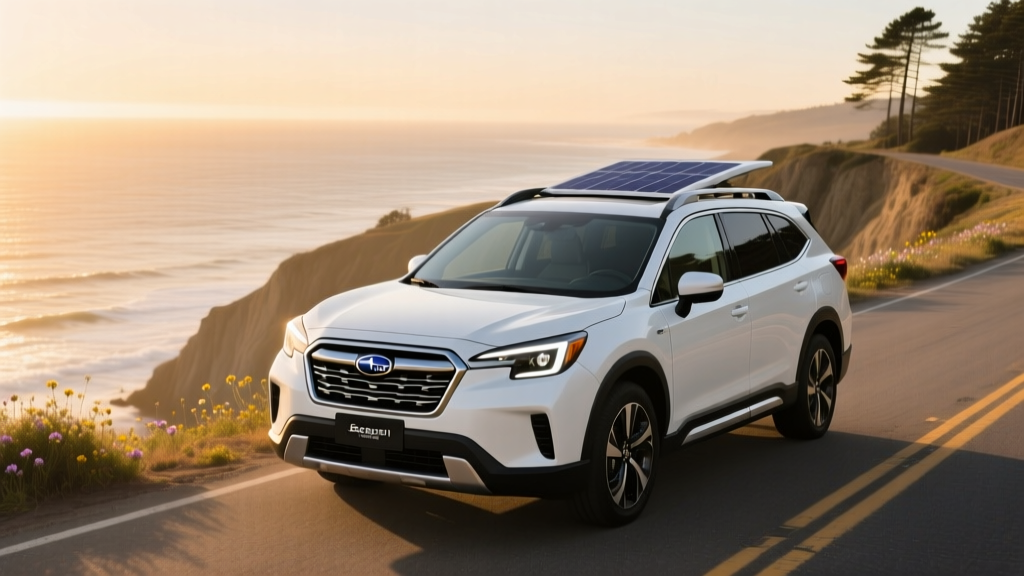
Quick Answer: Subaru currently offers one electric car: the Solterra, a compact electric SUV co-developed with Toyota (bZ4X). For 2026, it delivers an EPA-estimated 222–228 miles of range (depending on trim), DC fast charging up to ~100 kW (10–80% in roughly 35 minutes), and starts around $38,000 MSRP before incentives. It best suits buyers who want Subaru's standard symmetrical AWD, solid ground clearance (8.3 inches), and strong safety tech — but its range and charging speed lag behind rivals like the Hyundai Ioniq 5 and Tesla Model Y. If you need 300+ miles or fast road-trip charging, look elsewhere. If you want an electric Subaru car for daily commuting with occasional outdoor-adventure capability, it's a compelling package.
The 2026 Subaru Solterra: What You're Actually Buying
The Solterra is Subaru's first and only battery-electric vehicle (BEV), built on the e-Subaru Global Platform shared with the Toyota bZ4X. For the 2026 model year, Subaru has refined the lineup with updated software, slightly improved thermal management, and standard dual-motor all-wheel drive across all trims — a signature Subaru trait that sets it apart from many EV competitors offering FWD or RWD base models.
| Specification | 2026 Solterra (All Trims) |
|---|---|
| EPA Range | 222 mi (Touring) / 228 mi (Premium) |
| Battery (Usable) | ~65 kWh (71.4 kWh gross), NMC lithium-ion |
| Drivetrain | Dual-motor AWD, 215 hp / 248 lb-ft torque |
| 0–60 mph | ~6.5 seconds |
| DC Fast Charge (Peak) | ~100 kW (CCS1 connector) |
| 10–80% DC Charge Time | ~35 minutes |
| Level 2 AC Charging | 6.6 kW onboard charger (~10 hrs 10–100%) |
| Ground Clearance | 8.3 inches |
| Efficiency (Combined) | ~102–104 MPGe |
| Battery/Powertrain Warranty | 8 years / 100,000 miles |
| Starting MSRP | ~$38,495 (Premium) – $45,495 (Touring) |
Real-World Range Reality: The EPA rates the Solterra at 228 miles (Premium trim with 18-inch wheels). In real-world highway driving at 70 mph, expect roughly 185–200 miles. In freezing temperatures (below 32°F), range can drop 20–30%, putting you closer to 160–175 miles. The Solterra's smaller usable battery capacity is the primary limiter. Plan road trips with charging stops every ~170 miles to maintain a comfort buffer.
Solterra vs Gas Outback: The Real Cost Comparison
Most Subaru shoppers cross-shop the Solterra against the Outback, the brand's best-selling wagon/SUV. Here's how five years of ownership stacks up, assuming 15,000 miles/year and national average energy prices.
| Cost Category | 2026 Solterra (Premium) | 2026 Outback (2.5i Premium) |
|---|---|---|
| MSRP (before incentives) | $38,495 | $34,995 |
| Estimated Federal Tax Credit (§30D) | Up to $7,500* | $0 |
| Effective Purchase Price | ~$30,995 | $34,995 |
| Fuel/Energy (5 yrs, 75k mi) | ~$3,900 (home L2, $0.14/kWh) | ~$10,125 (28 MPG, $3.78/gal) |
| Maintenance (5 yrs) | ~$1,200 | ~$3,800 |
| Insurance (5 yrs, avg) | ~$9,500 | ~$7,800 |
| 5-Year Total Cost | ~$45,595 | ~$56,720 |
*Federal §30D tax credit eligibility depends on your taxable income, vehicle MSRP caps, and battery critical-mineral sourcing requirements. The Solterra has qualified for the full $7,500 in prior years, but IRS rules change — verify with a tax professional before purchasing. Point-of-sale transfer is available, reducing your dealer price directly.
The Solterra's lower fueling and maintenance costs create meaningful long-term savings. Over five years, you'll save roughly $6,225 on fuel and $2,600 on maintenance compared to the Outback — but you'll pay approximately $1,700 more in insurance, as EV premiums run 15–25% higher on average.
Charging the Solterra: Home, Public, and the Speed Limitation
This is where the Solterra faces its toughest criticism. Its peak DC fast-charging rate of ~100 kW is significantly slower than competitors:
| Charging Level | Power (kW) | Miles Added per Hour | Typical Use Case |
|---|---|---|---|
| Level 1 (120V household) | ~1.2 kW | ~4–5 miles | Overnight trickle, emergencies |
| Level 2 (240V home/public) | 6.6 kW (max) | ~24–26 miles | Daily home charging |
| DC Fast Charge | Up to ~100 kW peak | ~150+ mi/hr (at peak) | Road trips (10–80% in ~35 min) |
Home charging is essential for Solterra ownership. A full Level 2 charge from 10% to 100% takes roughly 10 hours — fine for overnight replenishment. If you lack home charging access (apartment, street parking), the Solterra's limited public charging speed and ~228-mile range make daily logistics significantly harder.
Level 2 installation costs typically break down as follows:
| Item | Estimated Cost |
|---|---|
| Level 2 EVSE hardware (ChargePoint, Emporia, etc.) | $350–$700 |
| Electrician labor (240V/40A circuit) | $500–$1,500 |
| Permit and inspection | $50–$200 |
| Electrical panel upgrade (if needed, 100A→200A) | $1,500–$3,000 |
| Total (no panel upgrade) | $900–$2,400 |
The Solterra uses a CCS1 connector for DC fast charging, compatible with Electrify America, EVgo, and ChargePoint DC stations. Subaru includes a limited complimentary charging period with Electrify America on new purchases. Note: Subaru has not adopted the NACS (Tesla) connector as of the 2026 model year, though future models may transition.
Charging Curve Reality: The Solterra's ~100 kW peak rate is not sustained. Expect peak speeds only between roughly 10–40% State of Charge. Above 60%, the charge rate tapers significantly, and charging from 80–100% on DC is slow by design (to protect battery health). On a road trip, plan to disconnect at 80% and drive on — charging the last 20% can take as long as the first 70%.
EV vs Gas vs Hybrid: Where the Solterra Fits
Subaru doesn't yet offer a hybrid variant of the Solterra, but many buyers consider a PHEV (like the Toyota RAV4 Prime, which shares corporate DNA) or a conventional hybrid Outback. Here's how the powertrain options compare:
| Factor | Solterra (BEV) | Outback Hybrid (HEV) | Outback Gas (2.5i) |
|---|---|---|---|
| EPA Efficiency | ~103 MPGe combined | ~35 MPG combined (est.) | 28 MPG combined |
| Annual Fuel/Energy Cost (15k mi) | ~$780 | ~$1,620 | ~$2,025 |
| Tailpipe Emissions | Zero | Low | Standard |
| Home Fueling Possible? | Yes (Level 2) | No | No |
| Road-Trip Convenience | Requires planning (35-min stops) | Gas station, 5 min | Gas station, 5 min |
| Cold-Weather Range Loss | 20–30% | Minimal (~5%) | Minimal (~5%) |
| Federal Tax Credit | Up to $7,500 | $0 (HEV) | $0 |
The Solterra wins on operating cost and emissions but loses on road-trip convenience and cold-weather range. If your driving is 90% local commuting under 50 miles round-trip, the EV advantage is substantial. If you regularly drive 300+ miles in rural areas or tow (the Solterra is rated for only ~2,000 lbs towing vs the Outback's 3,500 lbs), a gas or hybrid Subaru remains more practical.
Federal Tax Credit and Incentive Eligibility
The IRS §30D Clean Vehicle Credit can reduce the Solterra's effective price by up to $7,500, but qualification is not automatic. Here's what you need to verify:
- MSRP Cap: SUVs must be under $80,000 — the Solterra qualifies at all trims.
- Buyer Income Cap: Modified AGI must not exceed $150,000 (single), $225,000 (head of household), or $300,000 (joint filing).
- Battery Sourcing: Critical minerals and battery components must meet phased-in percentage thresholds from US/free-trade-agreement countries. Subaru has confirmed prior-year Solterra models qualify for the full credit, but verify the specific VIN with the dealer and fueleconomy.gov before signing.
- Point-of-Sale Transfer: You can transfer the credit to the dealer at purchase, reducing your out-of-pocket cost immediately rather than waiting for a tax refund.
- New vs Used: The used-EV credit (§25E) offers up to $4,000 for pre-owned Solterras under $25,000, subject to separate income caps.
Many states also offer additional rebates (California's CVRP, Colorado's state credit, etc.), but amounts and eligibility vary by jurisdiction. Check your state energy office for current programs.
Common Solterra Misconceptions, Corrected
| Myth | Fact |
|---|---|
| "Subaru has multiple electric cars to choose from." | The Solterra is Subaru's only EV as of 2026. A larger three-row electric SUV has been announced for ~2027 but is not yet available for purchase. |
| "It charges as fast as a Tesla or Ioniq 5." | At ~100 kW peak, the Solterra charges roughly half as fast as a Hyundai Ioniq 5 (240 kW peak, 10–80% in ~18 min). Road-trip stops take noticeably longer. |
| "The battery will need expensive replacement soon." | Subaru warranties the battery for 8 years/100,000 miles with a minimum 70% capacity retention threshold. NMC batteries in modern EVs typically retain 85–90% capacity after 100,000 miles based on industry degradation data. |
| "AWD makes it a serious off-roader." | The dual-motor AWD provides excellent traction in snow and on dirt roads, with X-MODE and 8.3 inches of clearance. But it's not a Wrangler — approach/departure angles and low-speed torque control limit technical trail use. |
| "I don't need home charging." | Without home Level 2 charging, relying solely on public DC stations at ~100 kW with ~228-mile range becomes impractical for daily ownership. Home charging is strongly recommended. |
Decision Framework: Should You Buy the Solterra?
Buy the Solterra if:
- You have access to home Level 2 charging (garage or driveway with 240V).
- Your daily commute is under 80 miles round-trip.
- You want standard AWD and 8.3 inches of ground clearance for snow, dirt roads, or light trails.
- You value Subaru's safety suite (EyeSight driver-assist, standard across trims) and strong IIHS crash-test performance.
- You qualify for the federal tax credit and/or state incentives, bringing the effective price below $32,000.
Look elsewhere if:
- You regularly drive 300+ miles between stops or live in a charging desert.
- You need fast DC charging for frequent road trips (consider Ioniq 5, Tesla Model Y, or Kia EV6).
- You need more than 228 miles of EPA range (consider the Tesla Model Y at 310+ mi or Chevy Equinox EV at 315+ mi).
- You tow more than 2,000 lbs (the Outback gas/hybrid tows 3,500 lbs).
- You cannot install home charging and lack reliable workplace or public Level 2 access nearby.
Frequently Asked Questions
Does Subaru make any other electric cars besides the Solterra?
Not yet. The Solterra is Subaru's only production EV for 2026. Subaru has announced plans for additional electric models, including a larger three-row SUV expected around 2027, but those are not currently available to purchase. If you see references to other "electric Subarus," they are either concepts or future announcements with preliminary specs.
How does the Solterra compare to the Toyota bZ4X?
They share the same e-Subaru Global Platform, battery pack, and powertrain. Key differences: the Solterra comes with standard AWD on all trims (the bZ4X offers FWD as a base option), more ground clearance (8.3" vs ~7.0"), Subaru's X-MODE for low-traction surfaces, and Subaru's EyeSight safety system. Range and charging speeds are nearly identical. The Solterra typically carries a ~$1,500–$2,500 price premium over an equivalently equipped bZ4X.
What does it cost to charge a Solterra at home per month?
At the US average residential electricity rate of ~$0.16/kWh (as of early 2026, per EIA data), fully recharging the 65 kWh usable battery from 10% costs about $9.40. If you drive 1,250 miles per month (15,000/year) at the Solterra's efficiency of ~3.2 miles/kWh, you'll use roughly 390 kWh monthly — about $62/month in electricity. Compare that to ~$170/month in gasoline for a 28-MPG Outback at $3.78/gallon.
Is the Solterra good in cold weather?
The Solterra's standard AWD, heated seats (available on higher trims), and heat pump (standard on 2026 models) make it capable in snow and cold. However, expect 20–30% range loss in sub-freezing temperatures due to battery chemistry limitations and cabin heating demands. A 228-mile EPA range becomes roughly 160–175 real-world miles in harsh winter conditions. Preconditioning the battery while plugged in helps mitigate this loss and improves DC charging speeds in cold weather.
What's the Solterra's EyeSight system — is it self-driving?
No. EyeSight is a SAE Level 2 driver-assistance system offering adaptive cruise control, lane-centering, automatic emergency braking, and blind-spot monitoring. The driver must remain fully engaged with hands on the wheel and eyes on the road at all times. It is not autonomous driving (Level 4/5). Subaru's system is competitive with Toyota Safety Sense and Honda Sensing but does not offer hands-free highway driving like GM's Super Cruise or Ford's BlueCruise.
Can I use Tesla Superchargers with the Solterra?
As of 2026, the Solterra uses a CCS1 connector. Tesla has begun opening select Supercharger stations to non-Tesla EVs via the Tesla app (stations equipped with a built-in CCS cable), but availability is limited and varies by location. Subaru has not announced a NACS adapter or native NACS port for the 2026 Solterra. For the broadest public charging network access, CCS1 remains your primary connector on Electrify America, EVgo, and ChargePoint networks.