Quick Answer: Electric Steering in EVs
Every modern EV uses an Electric Power Steering (EPS) system — a small electric motor assists your steering input, replacing the old hydraulic pump and fluid found on gas cars. EPS draws roughly 50–150 watts during normal driving (a negligible ~0.1–0.3 kWh per 100 miles), adds zero routine maintenance (no fluid changes, no belts), and typically lasts 150,000+ miles. When replacement is needed, expect to pay $800–$2,200 depending on the vehicle, compared to $400–$1,100 for a hydraulic rack on a gas car. The trade-off: EPS feels lighter and less communicative than hydraulic, but it enables features like lane-keep assist, self-parking, and hands-off highway driving (SAE Level 2).
What Is an Electric Steering System?
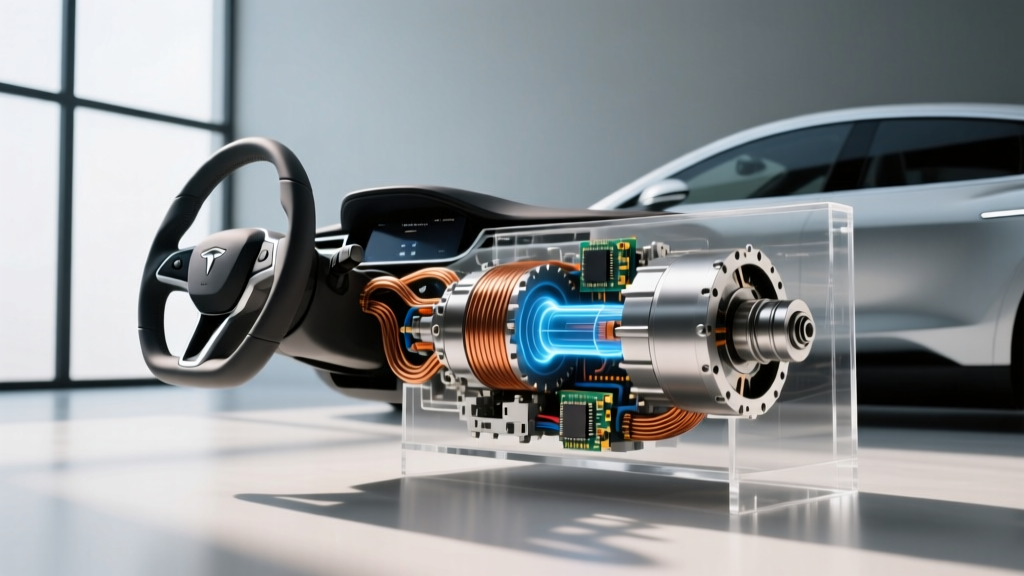
An electric steering system — formally called Electric Power Steering (EPS) — uses a dedicated brushless DC motor mounted either on the steering column, the pinion gear, or directly on the steering rack to multiply the force you apply to the wheel. A torque sensor reads how hard you're turning, and an electronic control unit (ECU) calculates the right assist level based on vehicle speed, steering angle, and driving mode.
On EVs, EPS is standard because the vehicle has no engine-driven accessories. There's no serpentine belt spinning a hydraulic pump. The 12V auxiliary system (or a DC-DC converter tied to the traction battery) powers the EPS motor, which typically draws between 50W at highway cruising and 150W during low-speed parking maneuvers.
This matters for range calculations: at 150W continuous (worst case), EPS consumes about 0.15 kWh per hour. Over a 300-mile highway trip at 65 mph (~4.6 hours), that's roughly 0.7 kWh — about 2–3 miles of range on a typical 75 kWh battery. It's a rounding error compared to HVAC (which can draw 2–6 kW) or battery heating (up to 6 kW in extreme cold).
Electric Steering vs. Hydraulic: EV vs. Gas Car Comparison
Gas cars built before ~2010 predominantly used hydraulic power steering (HPS), driven by an engine-mounted pump circulating pressurized fluid. Most gas cars built after 2015 have switched to EPS for fuel-economy reasons. Here's how the two systems stack up in real ownership:
| Factor | EPS (EVs & Modern Gas Cars) | Hydraulic (Older Gas Cars) |
|---|---|---|
| Routine maintenance | None — sealed unit | Fluid change every 30k–50k mi (~$80–$150) |
| Fluid | N/A | Power steering fluid (leaks common past 100k mi) |
| Belt/pump wear | N/A | Serpentine belt & pump ($200–$600 replacement) |
| Energy draw | 50–150W (on demand) | 2–5 HP from engine (~1.5–3.7 kW continuous) |
| Typical rack replacement cost | $800–$2,200 | $400–$1,100 |
| Expected lifespan | 150,000–200,000+ mi | 100,000–150,000 mi (pump/seals) |
| ADAS compatibility | Full (lane-keep, self-park, Level 2) | Limited or none |
| Steering feel | Lighter, less road feedback | Heavier, more communicative |
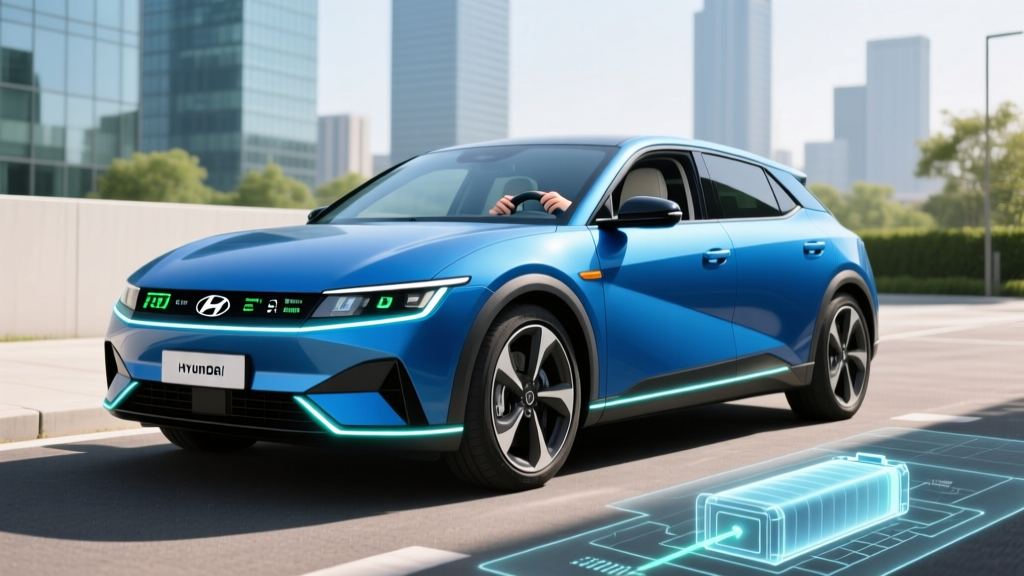
The cost gap on rack replacement is real: EV steering racks integrate the motor, torque sensor, and ECU into one sealed assembly, so a failure usually means replacing the whole unit. On a Tesla Model 3, the EPS rack runs ~$1,500–$2,000 at a service center. On a Hyundai Ioniq 5, expect $1,200–$1,800. On a Ford F-150 Lightning, the larger rack and motor can push $1,800–$2,200.
Real Cost of EPS Ownership Over 5 Years
Let's model a realistic 5-year / 75,000-mile ownership window comparing an EV with EPS against a gas car with hydraulic steering:
| Cost Item | EV (EPS) | Gas Car (Hydraulic) |
|---|---|---|
| Power steering fluid changes | $0 | $160–$300 (2 services) |
| Belt/pump replacement | $0 | $0–$600 (if pump fails) |
| EPS rack replacement (probability-weighted) | ~$50 (3–5% chance × $1,500) | N/A |
| Energy cost (steering system only) | ~$8–$15 (electricity) | ~$60–$120 (parasitic fuel loss) |
| Total 5-year steering cost | ~$58–$65 | $220–$1,020 |
The probability-weighted EPS replacement figure deserves context: electric steering racks fail at a rate of roughly 3–5% over 150,000 miles, per industry warranty data. Most failures stem from water intrusion into the motor housing or ECU connector corrosion — not motor burnout. If you live in a region with heavy road salt (Midwest, Northeast), the risk skews toward the higher end. In dry climates (Southwest, California), failures are rare within a typical ownership period.
What First-Time EV Buyers Should Know About Steering
Steering feel is different — and that's normal
If you're coming from a gas car with hydraulic steering, the EPS in an EV will feel noticeably lighter, especially at low speeds. This is by design: EPS systems are tuned for easy parking and low-effort commuting, not feedback-heavy canyon carving. Some EVs (Porsche Taycan, BMW i4) offer variable-ratio racks and sport modes that firm up the steering at speed, narrowing the feel gap. Most mainstream EVs (Model 3, Ioniq 5, Chevrolet Equinox EV) prioritize lightness.
EPS enables the ADAS features you're paying for
Every Level 2 driver-assistance system — Tesla Autopilot, Ford BlueCruise, GM Super Cruise, Hyundai Highway Driving Assist — relies on EPS to execute steering corrections. Without electric steering, lane-centering, automatic lane changes, and self-parking are impossible. If you value these features, EPS is the enabling hardware.
Reminder: All current consumer ADAS features (Autopilot, FSD Supervised, BlueCruise, Super Cruise) are SAE Level 2 — the driver must remain engaged and ready to take over. Only driverless robotaxi services (Waymo, Zoox) operate at Level 4. Never treat Level 2 steering assist as "self-driving."
Warranty coverage protects you early
Most EV powertrain warranties cover the EPS rack for 5 years / 60,000 miles (basic warranty) or longer under the high-voltage component warranty if the ECU is integrated. Hyundai/Kia cover steering components under their 5-year/60,000-mile new vehicle warranty. Tesla covers the EPS rack under its 4-year/50,000-mile basic warranty, with the New Vehicle Limited Warranty terms applying. After warranty, you're paying out of pocket — which is why the probability-weighted cost model above matters for long-term owners.
Common Misconceptions About Electric Steering
| Myth | Fact |
|---|---|
| "EPS drains the EV battery significantly" | At 50–150W, EPS uses ~0.1–0.3 kWh per 100 miles — about 0.3–0.8% of a typical battery's capacity. HVAC uses 15–40× more energy. |
| "Electric steering is unreliable" | EPS failure rates are 3–5% over 150k miles, comparable to hydraulic pump/seal failure rates. Most failures are connector corrosion, not motor death. |
| "You can't drive an EV if EPS fails" | You can — steering reverts to manual (heavy but functional), similar to losing power steering on a gas car. Pull over safely, but the car remains steerable. |
| "EPS makes EVs less fun to drive" | Subjective, but modern variable-ratio racks (Porsche, BMW, Lucid) deliver sharp response. The "numb" reputation comes from early-2010s EPS implementations. |
| "Aftermarket steering mods are easy on EVs" | They're not. EPS calibration is tied to the ECU; aftermarket quick-ratio racks or steering feel mods often trigger fault codes or disable ADAS. |
Decision Framework: Does Steering Type Affect Your EV Choice?
Choose an EV with premium EPS (variable ratio, sport-tuned) if:
- You prioritize steering feel and drive engagement (Porsche Taycan, BMW i4, Lucid Air)
- You frequently drive winding roads and want speed-dependent weight buildup
- You're willing to pay $55,000+ MSRP for the chassis tuning that accompanies premium EPS
Choose a mainstream EV with standard EPS if:
- Your priority is low-effort commuting, parking ease, and ADAS capability (Model 3, Ioniq 5, Equinox EV)
- You value lowest total cost of ownership over steering feedback
- You plan to keep the car past warranty and want the simplest sealed system
Don't let steering type block your EV purchase if:
- You're coming from any gas car built after 2015 — it likely already has EPS
- Your main concern is range: EPS range impact is under 3 miles per full charge
- You rely on lane-keep assist or self-parking — these require EPS regardless of brand
Real-World Ownership Considerations
Cold climate
EPS motors and ECUs are sealed and unaffected by cold. However, steering effort may feel slightly heavier in the first 1–2 minutes below 0°F as the grease in the rack thickens. This resolves as friction warms the components. No range penalty beyond normal cold-weather battery losses (expect 20–30% range reduction at 20°F, per fueleconomy.gov testing).
Flooded roads and water intrusion
The EPS rack sits low on the subframe. While sealed to IP67 or IP6K9K standards, repeated exposure to standing water above the wheel center can eventually compromise seals, leading to motor or sensor corrosion. If you drive through frequent flooding (Gulf Coast, monsoon regions), inspect the rack boot and connector during routine service.
Home charging has no interaction with steering
EPS runs off the 12V system, which is maintained by the DC-DC converter whenever the car is "on" or charging. You do not need to change your charging habits to preserve steering system health. The 12V battery (typically a small AGM or, increasingly, a lithium-iron-phosphate unit) is the only component that affects EPS availability — if the 12V dies, steering assist is lost until it's restored, but manual steering remains possible.
Frequently Asked Questions
How long does an electric steering system last in an EV?
Most EPS racks last 150,000–200,000+ miles. Failures before 100,000 miles are uncommon and typically covered under the basic warranty (4–5 years / 50,000–60,000 miles, depending on manufacturer).
Can I replace an EV steering rack at an independent shop?
Yes, but the new rack often requires ECU calibration and ADAS recalibration (lane-keep, self-park). Shops without OEM diagnostic tools may not be able to complete this. Budget $200–$400 extra for calibration on top of the $800–$2,200 rack cost.
Does electric steering affect my EV's range?
Minimally. At 50–150W draw, EPS consumes ~0.1–0.3 kWh per 100 miles. On a 75 kWh battery with 300 miles of EPA range, that's roughly 2–3 miles of range attributable to steering assist — far less than tire pressure, speed, or temperature effects.
Is electric steering covered under the federal EV tax credit?
No. The §30D Clean Vehicle Credit applies to the vehicle purchase, not individual components. However, the EPS is part of the vehicle's qualifying powertrain architecture. The credit itself is up to $7,500, subject to MSRP caps ($55,000 sedans / $80,000 SUVs and trucks), buyer income limits ($150k single / $300k joint), and battery critical-mineral sourcing requirements. Always verify current-year eligibility on IRS.gov or with a tax professional.
Why does my EV steering feel different in Sport vs. Comfort mode?
The EPS ECU adjusts assist levels based on drive mode. In Comfort, the motor provides maximum assist (lightest feel). In Sport, assist is reduced, requiring more driver effort and simulating heavier, more connected steering. This is a software change — no mechanical difference.