The Quick Answer: Who Should Buy an Electric Sprinter Van?
Bottom line: An electric Sprinter van — specifically the Mercedes-Benz eSprinter — makes financial sense in 2026 if your routes are under 180 miles per day, you can install depot-based Level 2 charging, and your business qualifies for the IRS §45W Commercial Clean Vehicle Credit (up to $7,500). If you regularly drive 250+ miles daily, operate in extreme cold, or lack depot charging access, a diesel Sprinter remains the more practical choice for now.
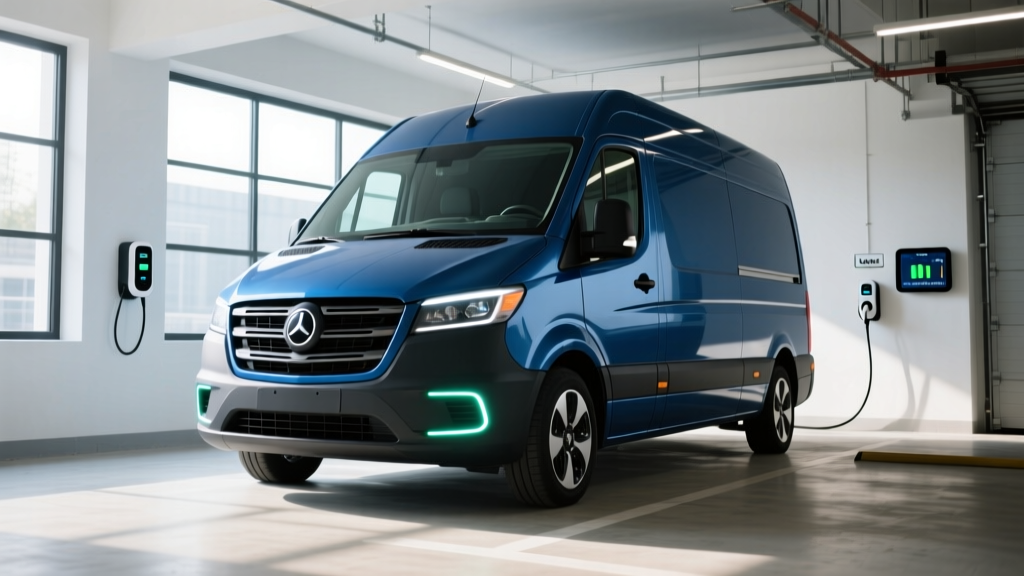
The commercial van market has shifted significantly since Mercedes-Benz launched the second-generation eSprinter for the U.S. market. With the 2026 model year, the eSprinter offers an EPA-estimated range of up to 248 miles (with the 113 kWh usable battery pack), DC fast charging up to 115 kW, and a starting MSRP around $74,990 before incentives. But sticker price is only half the story — total cost of ownership (TCO), route predictability, and charging infrastructure determine whether going electric actually saves your fleet money.
2026 eSprinter Specs: Range, Battery, and Charging at a Glance
| Specification | eSprinter 150" WB (Standard Roof) | eSprinter 170" WB (High Roof) |
|---|---|---|
| EPA Est. Range | ~248 miles | ~200-220 miles (heavier, more aero drag) |
| Battery (Usable) | 113 kWh (NMC) | 113 kWh (NMC) |
| Motor Output | 201 hp / 273 lb-ft torque | 201 hp / 273 lb-ft torque |
| Max DC Fast Charge | 115 kW | 115 kW |
| 10–80% DC Charge Time | ~42 minutes | ~42 minutes |
| Level 2 AC Charge Rate | 9.6 kW (est. ~11 hrs 10-100%) | 9.6 kW |
| Payload Capacity | ~2,600 lbs | ~2,400 lbs |
| Cargo Volume | 373 cu ft | 533 cu ft |
| Starting MSRP (2026) | ~$74,990 | ~$78,500 |
| Battery Warranty | 8 years / 100,000 miles | 8 years / 100,000 miles |
Real-World Range Reality: The EPA's 248-mile figure assumes mixed driving at moderate temperatures. In real-world testing, expect approximately 170–200 miles on the highway at 70 mph with a partial load, and as low as 140–160 miles in sub-30°F winter conditions. The eSprinter's large frontal area creates significant aerodynamic drag at highway speeds, which disproportionately cuts range compared to a sedan or crossover. For urban delivery routes averaging 25–35 mph, hitting 210–230 miles is achievable.
Electric vs. Diesel Sprinter: 5-Year Cost Comparison
The headline MSRP gap between the eSprinter (~$75K) and a comparable diesel Sprinter 2500 (~$52K–$58K) is substantial — roughly $17,000–$23,000 more upfront for electric. But commercial buyers need to look at fuel, maintenance, and incentive savings over a typical 5-year/100,000-mile ownership cycle.
| Cost Factor (5 yr / 100K mi) | eSprinter (Electric) | Sprinter 2500 (Diesel) |
|---|---|---|
| Purchase Price (MSRP) | $74,990 | $55,000 |
| Federal Tax Credit (§45W) | −$7,500 | $0 |
| Net Purchase Cost | $67,490 | $55,000 |
| Fuel/Energy Cost | $4,800 (at $0.14/kWh avg) | $16,500 (at $4.10/gal, 20 mpg) |
| Maintenance (est.) | $2,200 | $6,800 |
| Insurance (est. 5-yr) | $12,500 | $10,500 |
| Total 5-Year Cost | $86,990 | $88,800 |
| Cost Per Mile | $0.87 | $0.89 |
The numbers reveal a near-parity scenario: the eSprinter saves roughly $11,700 in fuel and $4,600 in maintenance over five years, which nearly offsets the higher net purchase price. The break-even point typically arrives around year 4 for high-mileage urban fleets. However, this calculation assumes reliable access to depot charging at commercial electricity rates ($0.10–$0.18/kWh). If you're forced to rely on public DC fast charging at $0.35–$0.55/kWh, the energy cost advantage collapses.
Note: The §45W Commercial Clean Vehicle Credit applies to vehicles used in business with a GVWR under 14,000 lbs (the eSprinter qualifies). Eligibility depends on battery component sourcing and your tax liability. Consult a tax professional and review current IRS guidance on §45W before purchasing.
Depot Charging: The Make-or-Break Factor
Unlike consumer EVs where public charging networks can supplement home charging, commercial electric vans live and die by depot infrastructure. Here's what a realistic eSprinter charging setup costs:
| Component | Estimated Cost |
|---|---|
| Level 2 EVSE (9.6 kW, commercial-grade, per unit) | $800 – $1,500 |
| Electrical panel upgrade (if needed, 200A service) | $2,500 – $6,000 |
| Conduit, wiring, and installation labor (per stall) | $2,000 – $5,000 |
| Permitting and inspection | $500 – $1,500 |
| Smart charging management software (annual) | $200 – $600/yr |
| Total per charging stall (typical) | $5,800 – $14,600 |
For a small fleet of 3 eSprinters, budget $18,000–$45,000 for depot charging infrastructure before the first van arrives. The 9.6 kW Level 2 rate means a full 10–100% charge takes approximately 11 hours — perfectly suited to overnight depot charging, but insufficient for mid-day top-ups on tight schedules. The 115 kW DC fast-charge capability (10–80% in ~42 minutes) provides a safety net, but repeated DCFC use accelerates battery degradation slightly and costs 2–4× more per kWh than depot power.
Mercedes-Benz Pro Connect services include remote charge management and preconditioning scheduling. Preconditioning the battery before a scheduled fast charge is critical — a cold battery may accept only 40–50 kW initially, stretching that 42-minute estimate to 60+ minutes.
Common Misconceptions About the Electric Sprinter
| Myth | Fact |
|---|---|
| "The eSprinter can't handle real delivery routes." | With 200+ real-world urban miles, it covers the vast majority of last-mile delivery routes (USPS averages ~70 miles/day for delivery vehicles). |
| "Battery replacement will bankrupt me." | The 113 kWh NMC battery carries an 8-year/100,000-mile warranty against degradation below 70% capacity. Full replacement (rare) is estimated at $18,000–$25,000, but modular repair of individual cell groups may cost far less. |
| "It qualifies for the $7,500 consumer EV tax credit." | The consumer §30D credit does NOT apply to commercial fleet purchases. Businesses use §45W (Commercial Clean Vehicle Credit), which offers up to $7,500 for vehicles under 14,000 lbs GVWR — but sourcing rules and tax-liability requirements apply. |
| "Electric vans are slower and less capable." | The eSprinter's 273 lb-ft of instant torque actually outperforms the diesel inline-4 in city driving. Payload is lower (~2,400–2,600 lbs vs. ~3,000+ lbs for diesel), which matters for heavy-cargo operations. |
| "I can tow with the eSprinter." | Towing capacity is limited (estimated 5,000 lbs max) and towing dramatically reduces range — expect a 30–40% range hit at highway speeds with a loaded trailer. |
Real-World Ownership: What Fleet Managers Actually Report
Early fleet adopters — including Amazon (via Rivian EDV, a competitor) and various last-mile delivery contractors — have established a playbook for electric van ownership that applies directly to eSprinter buyers:
Route optimization is non-negotiable. Unlike diesel, where you can simply refuel in 5 minutes anywhere, electric van routes must be planned around remaining range, ambient temperature, and cargo weight. Mercedes-Benz's integrated navigation includes range prediction based on route topography and traffic, but dispatchers should build in a 15–20% range buffer for unexpected detours.
Cold weather demands planning. At 20°F, expect 25–35% range reduction compared to 70°F operation. The eSprinter includes a heat pump for cabin heating (more efficient than resistive heating), but battery chemistry inherently loses efficiency in cold. Fleets in Minnesota, Chicago, or the Northeast should size routes to 140–160 miles maximum in winter, or invest in heated depot parking.
Driver training pays dividends. Regenerative braking settings, speed management, and HVAC discipline can swing efficiency by 15–20%. The eSprinter offers adjustable regen levels; training drivers to use maximum regen in urban settings extends range and reduces brake wear (a meaningful maintenance savings).
Decision Framework: Should You Go Electric?
Choose the eSprinter (electric) if:
- Your daily routes are under 180 miles (urban/suburban last-mile delivery, airport shuttles, service calls)
- You have depot parking where Level 2 chargers can be installed
- Your fleet operates primarily in moderate-to-warm climates (or you can mitigate cold-weather range loss)
- Your business has sufficient tax liability to absorb the §45W credit
- You value lower operating costs, reduced noise (important for residential deliveries), and zero tailpipe emissions in urban areas
Stick with the diesel Sprinter if:
- Routes regularly exceed 220 miles per day or are unpredictable
- You operate in rural areas or regions with extreme winters and no charging infrastructure
- Payload requirements approach or exceed 3,000 lbs regularly
- You need to tow heavy trailers frequently
- Your business cannot absorb the higher upfront cost or lacks depot charging feasibility (rented lots, landlord restrictions, inadequate electrical service)
What First-Time Electric Van Buyers Must Know
If this is your fleet's first EV, prepare for a learning curve that extends beyond the vehicle itself:
Order lead times are long. Commercial EVs are often built to order, with lead times of 3–6 months. Plan infrastructure installation to begin when you place the vehicle order, not when it arrives.
Utility demand charges can surprise you. Commercial electricity bills include demand charges based on your peak kW draw. Simultaneously charging 5 eSprinters at 9.6 kW each pulls ~48 kW — your utility may impose significant demand charges. Smart charging software that staggers charge sessions can cut this cost by 30–50%.
Insurance costs more (for now). Commercial EV insurance typically runs 15–25% higher than equivalent diesel vehicles, driven by higher repair costs for battery-adjacent damage and limited collision-repair expertise. Get quotes before purchasing.
Resale value is uncertain. The used commercial EV market is immature. While battery warranties transfer to second owners, depreciation curves for electric vans are not yet well-established. Lease structures may reduce this risk.
Frequently Asked Questions
Does the eSprinter qualify for the $7,500 federal EV tax credit?
Not the consumer §30D credit. Commercial buyers may qualify for the §45W Commercial Clean Vehicle Credit, which offers up to $7,500 for qualifying vehicles under 14,000 lbs GVWR. Eligibility depends on battery component and critical-mineral sourcing requirements, plus your business's tax liability. Always verify current-year rules with a tax professional before relying on this credit in your purchase decision.
Can I charge the eSprinter on a standard 120V outlet?
Technically yes (Level 1, ~1.4 kW), but it would take approximately 80+ hours for a full charge — completely impractical for commercial use. A dedicated 240V Level 2 circuit (9.6 kW) is the minimum viable charging solution, requiring a licensed electrician and a 40–50 amp dedicated circuit.
How does the eSprinter compare to the Ford E-Transit and Rivian EDV?
The Ford E-Transit offers a lower MSRP (~$55,000) but with a smaller 68 kWh battery and roughly 126 miles of EPA range — suitable only for shorter urban routes. The Rivian EDV is built exclusively for Amazon and not available to general fleet buyers. The eSprinter's 113 kWh battery and ~248-mile range give it the longest range in the segment, justifying its premium price for high-mileage operations.
What happens if the battery degrades significantly?
Mercedes-Benz warrants the battery for 8 years or 100,000 miles against capacity loss below 70% of original. Real-world data from early European eSprinter fleets suggests approximately 8–12% degradation over the first 100,000 miles under normal use. If the battery does fall below the 70% threshold within warranty, Mercedes-Benz will repair or replace it at no cost.
Is the eSprinter available as a passenger van or only cargo?
For the 2026 model year, the U.S. eSprinter is offered primarily as a cargo van (150" and 170" wheelbase configurations). A cutaway version for upfitters (shuttle buses, RV conversions) is also available. Passenger van configurations may be limited — check with your local Mercedes-Benz commercial dealer for current availability.