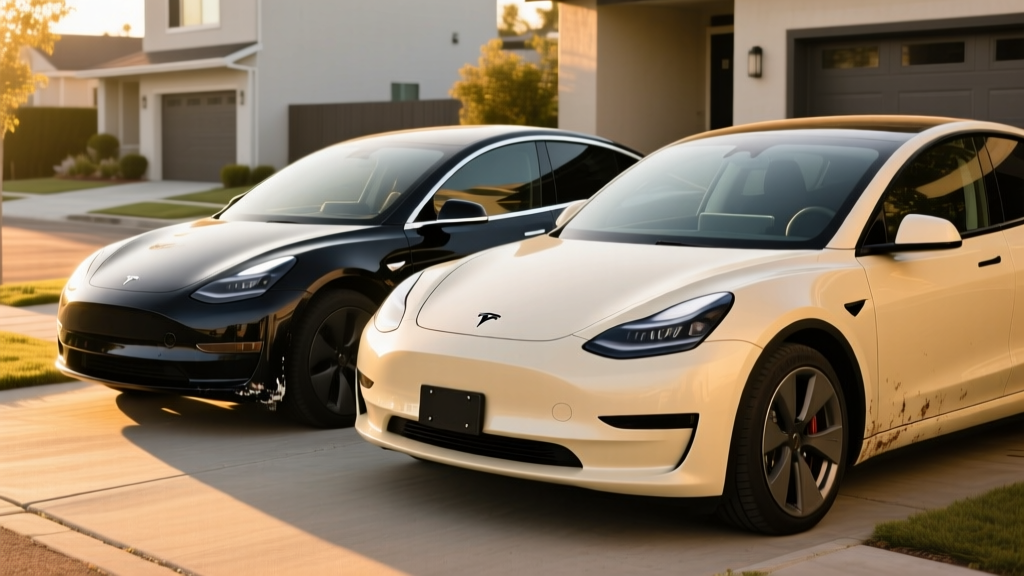
If you've been browsing secondhand EV listings, you've likely asked yourself: are used Teslas reliable? The short answer is that Tesla's powertrain and battery durability hold up remarkably well over 100,000+ miles, but the brand's build quality, suspension components, and out-of-warranty repair costs require careful evaluation before you sign on the dotted line.
This guide covers the two most common used Tesla models — the Model 3 sedan and Model Y crossover — with exact specs, real-world ownership data, and the financial picture including current tax-credit rules for used EVs under IRS §25E. Whether you're eyeing a 2021 Model 3 Long Range or a 2023 Model Y, here's what the numbers actually say.
Powertrain Reliability: What the Data Shows
Tesla's electric drivetrain has fewer moving parts than any internal-combustion vehicle — no transmission, no timing belt, no oil pump. The permanent-magnet synchronous motors in both the Model 3 and Model Y are rated for well beyond 300,000 miles in bench testing, and real-world fleet data supports this. Tesla's 2023 Impact Report showed that their battery packs retain approximately 85% of original capacity after 200,000 miles — a figure consistent with independent owner surveys from TeslaFi and Recurrent Auto.
The critical distinction for used buyers is battery chemistry:
| Attribute | NMC (Nickel Manganese Cobalt) | LFP (Lithium Iron Phosphate) |
|---|---|---|
| Found in | Long Range, Performance (2018–present) | Standard Range / RWD (2021–present, Model 3 & Y) |
| Energy density | Higher (~260 Wh/kg) | Lower (~170 Wh/kg) |
| Typical degradation at 100k mi | ~8–12% | ~5–8% |
| Charge to 100% regularly? | No — Tesla recommends 80% daily | Yes — Tesla recommends 100% at least weekly |
| Cold-weather range loss | ~25–30% | ~30–35% |
| Cycle life | ~1,500–2,000 cycles | ~3,000+ cycles |
If you're buying a used Model 3 RWD from 2022 onward, you likely have an LFP pack — which is excellent news for longevity. Long Range and Performance models use NMC, which degrades slightly faster but offers more range per kWh.
Model 3 Used Specs: Range, Charging, and Performance
Here's the spec breakdown for the most common used Model 3 trims you'll encounter on the market:
| Spec | 2021 Model 3 SR+ | 2022 Model 3 RWD (LFP) | 2022 Model 3 Long Range | 2022 Model 3 Performance |
|---|---|---|---|---|
| EPA Range | 263 mi | 272 mi | 358 mi | 315 mi |
| Battery (usable) | ~50 kWh (NMC) | ~57.5 kWh (LFP) | ~75 kWh (NMC) | ~75 kWh (NMC) |
| Drivetrain | RWD | RWD | Dual-Motor AWD | Dual-Motor AWD |
| Horsepower | 283 hp | 283 hp | 346 hp | 450 hp |
| 0–60 mph | 5.3 sec | 5.8 sec | 4.2 sec | 3.1 sec |
| MPGe (combined) | 142 MPGe | 132 MPGe | 131 MPGe | 125 MPGe |
| kWh/100 mi | 24 | 25 | 26 | 27 |
| Max DC Fast Charge | 170 kW | 170 kW | 250 kW | 250 kW |
| 10–80% DC Time | ~30 min | ~30 min | ~27 min | ~27 min |
| Level 2 Home Rate | 11.5 kW (~44 mi/hr) | 11.5 kW (~44 mi/hr) | 11.5 kW (~44 mi/hr) | 11.5 kW (~44 mi/hr) |
| Cargo Volume | 23 cu ft (trunk + frunk combined) | |||
| Rear Legroom | 35.2 inches | |||
Model Y Used Specs: What Families Need to Know
The Model Y is the best-selling EV in America for good reason — crossover utility with sedan-like efficiency. Here's how the common used trims stack up:
| Spec | 2022 Model Y LR | 2023 Model Y LR | 2023 Model Y Performance | 2023 Model Y RWD (LFP) |
|---|---|---|---|---|
| EPA Range | 330 mi | 330 mi | 303 mi | 260 mi |
| Battery (usable) | ~75 kWh (NMC) | ~75 kWh (NMC) | ~75 kWh (NMC) | ~57.5 kWh (LFP) |
| Drivetrain | Dual-Motor AWD | Dual-Motor AWD | Dual-Motor AWD | RWD |
| Horsepower | 384 hp | 384 hp | 456 hp | 295 hp |
| 0–60 mph | 4.8 sec | 4.8 sec | 3.5 sec | 6.6 sec |
| MPGe (combined) | 122 MPGe | 122 MPGe | 117 MPGe | 129 MPGe |
| kWh/100 mi | 28 | 28 | 29 | 26 |
| Max DC Fast Charge | 250 kW | 250 kW | 250 kW | 170 kW |
| 10–80% DC Time | ~27 min | ~27 min | ~27 min | ~32 min |
| Level 2 Home Rate | 11.5 kW (~37 mi/hr) | 11.5 kW (~37 mi/hr) | 11.5 kW (~37 mi/hr) | 11.5 kW (~37 mi/hr) |
| Cargo Volume | 76.2 cu ft (rear seats folded); 30.2 cu ft behind rear seats | |||
| Rear Legroom | 41.6 inches | |||
For families, the Model Y's 76.2 cu ft of cargo space with seats folded rivals midsize SUVs, and the optional third row (though cramped — best for small children) gives it flexibility no Model 3 can match. Efficiency remains strong at 28 kWh/100 mi, making it one of the cheapest EVs per mile to drive in its class.
What Commonly Fails on Used Teslas?
Tesla's drivetrain is bulletproof, but the car around it isn't always. Here's what used buyers should budget for based on owner-reported data from Consumer Reports and Tesla owner forums:
High-Probability Issues (Pre-2022 Models)
- Panel gaps and paint defects: Common on 2018–2021 Fremont-built cars. Cosmetic, but affects resale value.
- Control arm and suspension wear: Upper control arms on Model 3/Y are known to develop clunking noises around 50,000–70,000 miles. Replacement runs $400–$800 per side at an independent shop.
- Heat pump failures (2021–2022 Model Y): Early heat pump assemblies had reliability issues causing reduced cabin heating and range loss in cold weather. Tesla issued service bulletins; check whether yours was replaced under warranty.
- 12V battery failures: The small 12V lead-acid battery (pre-2022 models) typically dies every 3–4 years. Tesla switched to a lithium 12V battery in late 2021, which lasts significantly longer.
- Touchscreen delamination: Some 2018–2020 Model 3 screens develop yellowing or bubbling at the edges. Replacement out of warranty: ~$1,500–$2,000.
Low-Probability (But Expensive) Failures
- Battery pack replacement: Catastrophic failure is rare (well under 1% of packs). But if it happens out of warranty, expect $12,000–$16,000 for a Model 3/Y pack. This is where warranty status matters enormously.
- Drive unit replacement: Also rare. Approximately $5,000–$8,000 out of warranty.
Warranty Coverage on a Used Tesla
Tesla's factory warranty is fully transferable to second owners, which is a significant advantage over some competitors. Here's what's covered:
| Warranty Component | Model 3 RWD | Model 3 LR / Performance | Model Y (All Trims) |
|---|---|---|---|
| Basic Vehicle | 4 yr / 50,000 mi | 4 yr / 50,000 mi | 4 yr / 50,000 mi |
| Battery & Drive Unit | 8 yr / 100,000 mi | 8 yr / 120,000 mi | 8 yr / 120,000 mi |
| Battery Capacity Threshold | 70% retention | 70% retention | 70% retention |
The 70% retention threshold means Tesla will replace or repair the battery if it degrades below 70% of original capacity within the warranty period. In practice, most packs retain 85–90% at 100,000 miles, so hitting that threshold is uncommon.
Key used-buyer tip: If you're looking at a 2020 Model 3 Long Range with 60,000 miles, you still have roughly 4 years and 60,000 miles of battery/drivetrain warranty remaining. That's substantial coverage for a used EV.
Used Tesla Pricing and the Federal Used EV Tax Credit
Used Tesla prices have dropped significantly since the 2022–2023 peak. Here's what the market looks like in 2026, and how the federal used EV tax credit (IRS §25E) factors in:
| Model | Typical Used Price (2026) | §25E Credit (30%, max $4,000) | Effective Cost After Credit |
|---|---|---|---|
| 2020 Model 3 SR+ (50k mi) | $18,000–$22,000 | $4,000 | $14,000–$18,000 |
| 2021 Model 3 LR (40k mi) | $24,000–$28,000 | $4,000 | $20,000–$24,000 |
| 2022 Model Y LR (35k mi) | $28,000–$33,000 | $4,000 | $24,000–$29,000 |
| 2023 Model Y LR (20k mi) | $33,000–$38,000 | $4,000 | $29,000–$34,000 |
- Credit equals 30% of the sale price, up to a maximum of $4,000
- Vehicle must cost $25,000 or less (sale price cap)
- Vehicle must be at least 2 model years old (so 2024 or older in 2026)
- Buyer income caps: $75,000 single / $112,500 head of household / $150,000 joint (modified AGI)
- Must purchase from a licensed dealer (private-party sales don't qualify)
- Can be taken as a point-of-sale rebate or claimed on your tax return
- Vehicle must have a battery capacity of at least 7 kWh
The $25,000 sale price cap is the critical constraint. A 2021 Model 3 Long Range at $24,500 from a dealer qualifies; the same car at $25,500 does not. Negotiate hard on price — staying under the cap can save you $4,000 instantly.
Note: The §25E used-EV credit is separate from the §30D new-EV credit. New Teslas purchased in 2026 are subject to §30D rules including the $55,000 sedan / $80,000 SUV MSRP cap, buyer income limits, and critical-mineral/battery-sourcing requirements. Consult IRS §30D guidance or a tax professional for your specific situation.
Charging a Used Tesla: Home and On the Road
One of Tesla's biggest advantages in the used market is access to the Supercharger network — the most reliable DC fast-charging infrastructure in North America. Even as Tesla opens Superchargers to non-Tesla EVs via NACS adapters, Tesla owners still enjoy seamless plug-and-charge functionality with no adapters required.
| Charging Level | Power | Miles Added per Hour | Best For |
|---|---|---|---|
| Level 1 (120V outlet) | ~1.4 kW | ~4–5 mi/hr | Overnight top-ups, emergencies |
| Level 2 (240V, 48A Wall Connector) | 11.5 kW | ~37–44 mi/hr | Daily home charging |
| DC Fast Charge (Supercharger V3) | Up to 250 kW | ~1,000+ mi/hr (peak) | Road trips; 10–80% in ~27 min |
| DC Fast Charge (older V2 Supercharger) | Up to 150 kW | ~600 mi/hr (peak) | Slower road-trip stops |
Charging curve reality: A Model 3 Long Range peaks at 250 kW only briefly (typically between 10–30% SoC). From 30–60%, expect ~150–180 kW sustained. Above 80%, charging slows dramatically to protect the battery — roughly 30–50 kW. This is why Tesla quotes 10–80% times rather than 0–100%. For road trips, plan your stops around 10–80% to minimize time plugged in.
Home charging setup: A Tesla Wall Connector ($475) on a 60-amp circuit delivers the full 11.5 kW. Installation typically costs $800–$2,500 depending on your electrical panel's capacity and the run distance. If your panel is maxed out at 100 amps, a panel upgrade to 200 amps can add $1,500–$3,000. Always get a quote from a licensed electrician before purchasing.
Pros and Cons of Buying a Used Tesla
✅ Pros
- Superior battery longevity: 85–92% capacity retention at 100k miles is among the best in the industry
- Supercharger network access: 6,000+ V3 stations across North America with plug-and-charge simplicity
- Over-the-air updates: Used Teslas still receive software improvements — a 2020 Model 3 in 2026 has features it didn't ship with
- Industry-leading efficiency: 24–29 kWh/100 mi means lower electricity costs than nearly any competitor
- Transferable warranty: 8-year battery/drivetrain coverage carries over to second owners
- Used EV tax credit: Up to $4,000 off qualifying purchases under §25E
- Strong parts and service ecosystem: Independent EV shops are increasingly familiar with Tesla repairs
❌ Cons
- Build quality variability: Pre-2022 Fremont cars have inconsistent panel gaps, paint, and interior trim quality
- Suspension wear: Control arms and bushings wear faster than average due to vehicle weight; budget $800–$1,600
- Out-of-warranty repair costs: Tesla service pricing is premium; a failed touchscreen or heat pump is a $1,500+ bill
- Insurance costs: Teslas are 20–40% more expensive to insure than comparable gas cars due to repair complexity and parts cost
- Limited service centers: If you live far from a Tesla Service Center, mobile service availability varies
- No Apple CarPlay/Android Auto: Tesla's infotainment is proprietary — if you prefer phone projection, this is a dealbreaker
- Phantom drain: Expect 1–3% battery drain per day when parked, more if Sentry Mode is active
Used Tesla vs. Key Competitors: Is It the Best Used EV?
The used EV market has expanded considerably. Here's how the Model 3 and Model Y compare to the alternatives you should cross-shop:
| Attribute | 2022 Tesla Model 3 LR | 2022 Hyundai Ioniq 5 SEL | 2022 Ford Mustang Mach-E ER AWD | 2022 Chevrolet Bolt EUV |
|---|---|---|---|---|
| EPA Range | 358 mi | 303 mi | 312 mi | 247 mi |
| Used Price (2026) | $24,000–$28,000 | $22,000–$26,000 | $23,000–$27,000 | $16,000–$19,000 |
| DC Fast Charge | 250 kW | 233 kW (800V) | 150 kW | 55 kW |
| 10–80% Time | ~27 min | ~18 min | ~45 min | ~65+ min |
| Battery Warranty | 8 yr / 120k mi | 10 yr / 100k mi | 8 yr / 100k mi | 8 yr / 100k mi |
| Charging Network | Supercharger (native) | CCS (NACS adapter needed for SC) | CCS (NACS adapter needed for SC) | CCS (NACS adapter needed for SC) |
| Efficiency | 26 kWh/100mi | 28 kWh/100mi | 31 kWh/100mi | 28 kWh/100mi |
- You road-trip frequently and want the most reliable DC fast-charging network
- You value efficiency (lowest cost per mile in the segment)
- You want OTA software updates that keep an older car feeling current
- You prioritize range — the Model 3 LR's 358 mi EPA is hard to beat at any used price
- You want a longer basic warranty (Hyundai's 10-year/100k powertrain is best-in-class)
- You prefer Apple CarPlay/Android Auto for infotainment
- You're on a tight budget — the Bolt EUV under $19k with the $4k credit is the cheapest long-range EV available
- You want faster peak charging (Ioniq 5's 800V architecture does 10–80% in ~18 min)
Pre-Purchase Checklist for a Used Tesla
Before handing over cash, run through these steps:
- Check battery health: On the car's touchscreen, go to Software → Battery Health (on newer software versions) or use a third-party tool like TeslaFi or Scan My Tesla with an OBD-II adapter. Compare current rated range at 100% charge to original EPA figures.
- Verify warranty status: Enter the VIN on Tesla's website or call Tesla support to confirm remaining battery/drivetrain warranty.
- Inspect suspension: Drive over speed bumps and listen for clunking from the front control arms. This is the most common mechanical wear item.
- Test the heat pump: In cold weather, set cabin temp to 72°F and confirm warm air flows within 2–3 minutes. Slow heating may indicate a heat pump issue.
- Check for open recalls and service campaigns: Enter the VIN at NHTSA.gov/recalls to verify all recall work was completed.
- Review service history: Ask for Tesla service records. A car with documented software updates and any preemptive part replacements is preferable.
- Test Autopilot/FSD: If the car has Full Self-Driving (Supervised) capability, confirm it's transferred to the vehicle. Note: FSD transfers are not guaranteed on all used sales — Tesla's policy has changed multiple times. Verify before purchase.
Remember: Tesla's Autopilot and FSD (Supervised) are SAE Level 2 driver-assistance systems. You must keep your hands on the wheel and eyes on the road at all times. These are not self-driving systems.
Frequently Asked Questions
What is the real-world range of a used Tesla Model 3?
A 2022 Model 3 Long Range with an EPA rating of 358 miles will typically deliver 290–320 miles on a highway road trip at 70 mph in moderate weather. In city driving with regenerative braking, owners report 340–370 miles. In freezing temperatures, expect 230–270 miles on a full charge. A 3-year-old pack with 50,000 miles may have lost 5–8% capacity, reducing these figures proportionally.
How fast does a used Tesla charge at home and on the road?
At home on a 240V Level 2 Tesla Wall Connector (48A), a Model 3 or Y charges at 11.5 kW — adding roughly 37–44 miles per hour. A full overnight charge from 20% to 100% takes about 6–7 hours. On a V3 Supercharger, peak rate is 250 kW with a 10–80% charge in approximately 27 minutes. Older V2 Superchargers peak at 150 kW and take about 35–40 minutes for the same session.
How much does a used Tesla cost after the federal tax credit?
Under the IRS §25E used EV credit, you can claim 30% of the purchase price up to $4,000 — but only if the sale price is $25,000 or less, you buy from a licensed dealer, and your income is below the cap ($75k single / $150k joint). A 2021 Model 3 Standard Range Plus at $22,000 from a dealer nets an effective price of $18,000 after the credit. Many 2020–2021 Model 3s now fall under the $25k cap.
Is a used Tesla worth buying vs. a Hyundai Ioniq 5 or Ford Mach-E?
It depends on your priorities. The Tesla wins on range, efficiency, Supercharger access, and software. The Ioniq 5 wins on charging speed (18-min 10–80%), warranty length (10yr/100k), and CarPlay support. The Mach-E offers a more traditional car feel and strong dealer service network. For road-trippers, Tesla remains the path of least resistance. For city commuters who rarely fast-charge, the Ioniq 5 or even a Bolt EUV may offer better value.
What are the biggest risks of buying a used Tesla?
The three biggest risks are: (1) out-of-warranty battery replacement at $12,000–$16,000 (rare but expensive), (2) suspension component wear requiring $800–$1,600 in repairs, and (3) higher-than-average insurance premiums. Mitigate these by buying a car with remaining battery warranty, getting a pre-purchase inspection, and shopping insurance quotes before you buy.
Does a used Tesla still qualify for any federal tax credit?
Yes — under IRS §25E, a used Tesla qualifies for up to $4,000 (30% of sale price) if the sale price is ≤$25,000, the car is at least 2 model years old, you buy from a dealer, and your income is under the cap. The new-EV credit (§30D) does not apply to used purchases. State and local incentives vary — check your state's energy office or fueleconomy.gov for details.
How long will a Tesla battery last before needing replacement?
Data from Tesla's fleet and independent tracking shows most Model 3/Y battery packs retain 85–90% capacity at 100,000 miles and 80–85% at 200,000 miles. LFP packs (in RWD/Standard Range models from 2021+) degrade even less. At this rate, most packs will outlast 300,000 miles before dropping to 70% capacity — the threshold where you'd notice meaningful range reduction. Catastrophic failures requiring full replacement are well under 1% of vehicles.