The Bottom Line on Electric Speed Boats
Electric speed boats in 2026 top out between 40–60 mph with typical run times of 45–90 minutes depending on throttle usage and battery capacity (60–250 kWh). Base pricing starts around $50,000 for runabout models and climbs past $300,000 for high-performance craft. You'll recharge a depleted pack for roughly $8–$25 at home (depending on local kWh rates) versus $60–$120 in gasoline for an equivalent gas-powered boat — but expect 2–4 hours on a Level 2 dock charger and limited DC fast-charging infrastructure at most marinas. Electric boats eliminate engine maintenance, oil changes, and winterization, but they are not a drop-in replacement for long-distance cruising or saltwater use without careful planning.
What Exactly Is an Electric Speed Boat?
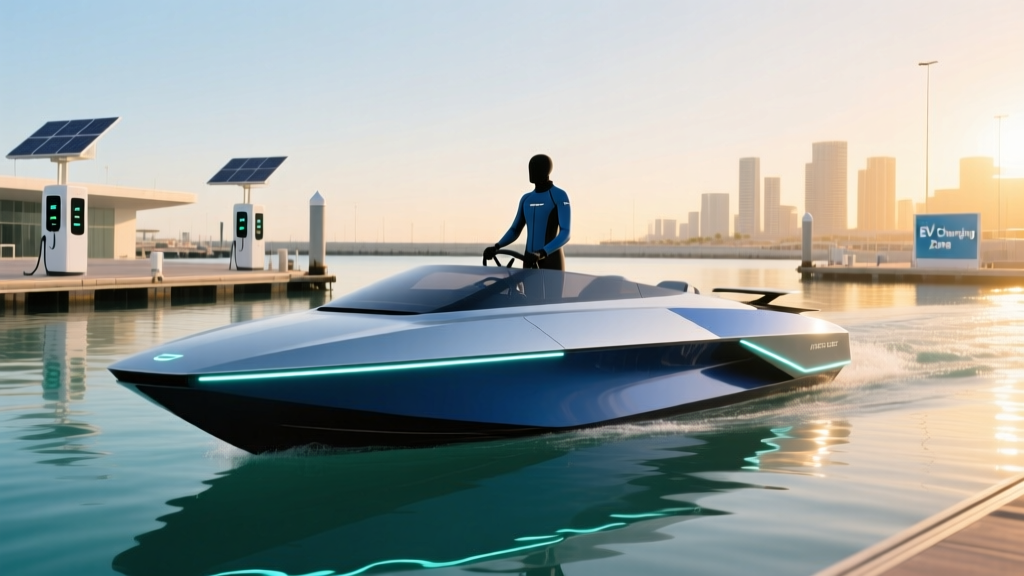
An electric speed boat replaces the internal combustion engine (ICE) with one or more electric motors drawing from a large lithium-ion or LFP (lithium iron phosphate) battery bank. Unlike electric cars, which benefit from a mature national charging network, electric boats operate in a marine environment where charging infrastructure, weight sensitivity, and water exposure create unique engineering challenges.
Leading manufacturers in 2026 include Candela (hydrofoiling hulls that reduce drag by 80%), Navier (autonomous-capable foiling boats), X Shore (Swedish luxury runabouts), and Vision Marine Technologies (the E-Motion outboard platform retrofittable to existing hulls). Tesla has not entered the marine market, and no mainstream automaker has adapted an EV platform for boats — these are purpose-built marine products.
For clarity: we're discussing planing-hull and hydrofoiling electric boats capable of 30+ mph, not slow-displacement electric pontoons or trolling-motor fishing boats. If you're looking for electric car guidance, our EV review hub covers that territory.
Electric Speed Boat vs. Gas Boat: The Numbers
The comparison isn't as simple as EPA window stickers. Marine efficiency is measured differently, and real-world conditions (current, wind, hull loading) dramatically affect range. Here's how a representative electric speed boat stacks up against a comparable gas runabout:
| Metric | Electric Speed Boat (2026 typical) | Gas Speed Boat (200–300 HP) |
|---|---|---|
| Top Speed | 40–60 mph | 50–70 mph |
| Battery / Tank | 60–250 kWh battery | 30–60 gallon fuel tank |
| Run Time (mixed use) | 45–90 minutes | 3–6 hours |
| Energy Cost Per Hour | $5–$15 (home charging) | $40–$80 (premium marine fuel) |
| Annual Maintenance | $200–$500 | $1,500–$3,500 |
| Purchase Price | $50,000–$300,000+ | $35,000–$120,000 |
| Noise at Cruise | ~60 dB (conversation level) | ~85–95 dB |
| Winterization Needed | No engine winterization | Full engine winterization required |
The run-time gap is the defining trade-off. A gas boat with a 40-gallon tank burning 8–12 gallons per hour at cruise can run all day with a midday refuel. An electric boat at similar speeds depletes its pack in under 90 minutes — and you can't simply pull up to a "marine charger" at most lakes. This matters enormously for your use case.
Charging Realities: Dock Power and Limitations
Unlike EVs, which tap into a growing network of DC fast chargers delivering 150–350 kW, electric boats mostly rely on Level 2 AC charging at the dock — typically 7–19 kW via marine-grade shore power connections (30A or 50A). Here's what that means in practice:
| Charging Method | Power (kW) | Time to Full (120 kWh pack) | Availability |
|---|---|---|---|
| Standard 120V Outlet (Level 1) | 1.4 kW | 85+ hours | Anywhere — impractical |
| Dock Shore Power 30A (Level 2) | 7.2 kW | ~17 hours | Most marinas |
| Dock Shore Power 50A (Level 2) | 12–19 kW | 6–10 hours | Upgraded marinas |
| DC Fast Charge (marine) | 50–150 kW | 45–90 min (10–80%) | Rare — select marinas only |
Key insight: Most electric boat owners charge overnight at their dock or home slip, exactly like home EV charging. If your marina doesn't offer 50A shore power, you're looking at very slow refills. Some owners install dedicated 240V marine-rated chargers on their private docks — budget $3,000–$8,000 for a licensed marine electrician to run the circuit, including GFCI protection and corrosion-resistant hardware.
DC fast charging for boats exists but is extremely limited. A handful of forward-thinking marinas in Scandinavia, California, and Florida have installed 50–150 kW marine DC chargers, but this is not the national norm. Candela's hydrofoiling boats can accept up to 100 kW DC, charging a 63 kWh pack from 10–80% in roughly 30 minutes — but only where the infrastructure exists.
Total Cost of Ownership: 5-Year Breakdown
The higher purchase price of an electric boat can be offset by dramatically lower operating costs — if your usage pattern fits. Here's a realistic 5-year comparison assuming 100 hours of annual use:
| Cost Category | Electric Speed Boat ($85,000) | Gas Speed Boat ($55,000) |
|---|---|---|
| Purchase Price | $85,000 | $55,000 |
| Fuel/Energy (5 yrs, 500 hrs total) | $2,500–$5,000 | $15,000–$25,000 |
| Maintenance (5 yrs) | $1,500–$2,500 | $10,000–$17,500 |
| Winterization (5 yrs) | $0 | $1,500–$2,500 |
| Insurance (annual avg) | $1,800–$3,000/yr | $1,200–$2,000/yr |
| Dock Charging Install | $3,000–$8,000 | $0 |
| 5-Year Total | ~$101,000–$118,500 | ~$88,700–$112,000 |
The electric boat's operating savings ($15,000–$25,000 over five years) nearly close the $30,000 purchase-price gap, but don't fully eliminate it at current pricing. The calculus improves if you boat more than 150 hours annually, if gas prices spike, or if you can access a used electric hull.
Important caveat: There is currently no federal §30D tax credit for electric boats — the IRS clean vehicle credit applies to highway-capable vehicles with four wheels. Some states and local utilities offer marine electrification rebates (California's CEC has explored programs), but check your specific jurisdiction. Do not assume a $7,500 credit applies.
Real-World Ownership: Who Should (and Shouldn't) Buy Electric
Decision Framework: Is an Electric Speed Boat Right for You?
Choose electric if:
- You boat primarily on a single lake or protected waterway within 20–30 miles of your dock
- Your typical outing is 1–3 hours with a return to your slip
- You have (or can install) 240V / 50A shore power at your dock
- You value silence — electric boats are transformative for wildlife viewing, conversation, and not disturbing neighbors
- You want to eliminate engine maintenance, fuel-system issues, and winterization
- You boat in freshwater (saltwater adds corrosion complexity to high-voltage marine systems)
Stick with gas (or wait) if:
- You regularly cruise 50+ miles from your home marina or do multi-day trips
- You need sustained high-speed runs exceeding 90 minutes
- Your marina lacks 30A+ shore power and upgrading isn't feasible
- You operate primarily in saltwater without access to specialized marine EV service
- Your budget is under $50,000 — the used electric boat market is still very thin
- You tow watersports aggressively for hours (wakeboarding/surfing demands sustained high kW draw)
Climate and Water Conditions Matter
Just as cold weather reduces EV range by 20–30%, cold water and headwinds hit electric boat efficiency hard. Expect 15–25% range reduction in choppy conditions or strong currents versus calm-water testing. Hydrofoiling designs (Candela, Navier) mitigate this by lifting the hull above the water, reducing drag dramatically — but foiling systems add complexity and cost.
Common Misconceptions: Myth vs. Fact
| Myth | Fact |
|---|---|
| "Electric boats are slow." | Modern electric speed boats hit 40–60 mph. Vision Marine's E-Motion platform produces up to 300 HP equivalent. They're not slow — they're range-limited. |
| "You can charge anywhere." | Marine DC fast charging is extremely rare. Most charging happens overnight at your dock on Level 2 AC. Plan accordingly. |
| "Batteries won't last in water." | Marine battery packs are IP67/IP68 sealed with active thermal management. ABYC standards govern high-voltage marine installations. Warranties typically cover 8–10 years. |
| "Electric boats qualify for the $7,500 EV tax credit." | The federal §30D credit applies to on-road vehicles. Boats do not qualify. Check your state for separate marine incentives. |
| "It's zero emissions." | Electric boats produce zero tailpipe emissions, but upstream electricity generation varies by grid. On a coal-heavy grid, the well-to-wake advantage shrinks — though it still beats two-stroke marine engines. |
What First-Time Electric Boat Buyers Should Know
1. Battery chemistry matters. Most premium electric boats use NMC (nickel manganese cobalt) cells for energy density — similar to long-range EVs. Some builders are moving to LFP (lithium iron phosphate) for longer cycle life and thermal stability, at the cost of heavier packs. Ask the manufacturer which chemistry is in the hull.
2. Depreciation is uncertain. The used electric boat market is young. Early models may depreciate faster than proven gas hulls until the secondary market matures. Budget for this risk.
3. Service networks are thin. Unlike gas marine engines serviced at hundreds of dealerships, high-voltage electric marine systems require specialized technicians. Confirm service availability in your region before purchasing — some manufacturers offer mobile service, others require shipping the boat to a factory center.
4. Insurance is higher. Expect marine insurance premiums 20–50% above comparable gas boats, reflecting the replacement cost of battery packs ($15,000–$50,000+) and limited actuarial data. Get quotes before committing.
5. Resale and battery health. Just as with EVs, request a State of Health (SoH) report on any used electric boat. Battery degradation in marine applications is less studied than automotive, but thermal management quality and charge-cycle history are critical indicators.
Frequently Asked Questions
How far can an electric speed boat go on a charge?
At moderate cruise speeds (20–30 mph), expect 30–60 nautical miles from a 120–200 kWh pack. At wide-open throttle, range drops to 20–35 miles. Hydrofoiling designs like the Candela C-8 extend this to roughly 50 nautical miles at 22 knots by dramatically reducing hull drag. Always plan with a 20% reserve.
Can I retrofit my gas boat with an electric motor?
Yes — companies like Vision Marine Technologies sell the E-Motion electric outboard (180–300 HP equivalent) for repowering existing hulls. Expect $25,000–$60,000 for the conversion including battery banks and control systems. Results vary by hull design; planing hulls optimized for gas engines may not achieve the same efficiency as purpose-built electric hulls.
Do electric boats work in saltwater?
They can, but saltwater adds corrosion risk to electrical connections and requires more rigorous sealing and maintenance. Most early adopters use electric boats in freshwater lakes and protected bays. If you're in a saltwater environment, prioritize manufacturers with proven marine-grade corrosion protection and ask about their IP ratings and anode-replacement schedules.
How long do electric boat batteries last?
Manufacturers typically warrant battery packs for 8–10 years or 2,000–3,000 charge cycles (whichever comes first) with a capacity retention threshold of 70–80%. Real-world marine data is still accumulating, but NMC and LFP chemistries used in EVs suggest 10–15 year functional lifespans with moderate use. Replacement costs range from $15,000 for smaller packs to $50,000+ for large systems.
Is an electric speed boat practical for watersports?
For short wakeboarding or tubing sessions (30–60 minutes), yes — electric boats deliver instant torque and consistent wake. For all-day watersports with repeated high-power pulls, the limited run time becomes a real constraint. Some owners pair an electric boat for casual cruising with a gas tow-boat for heavy sports use.
Sources consulted: manufacturer specifications from Candela, Vision Marine Technologies, and marine safety standards from the American Boat & Yacht Council (ABYC). Federal tax credit rules referenced from IRS §30D guidance.