The short answer: Electric snowmobiles for adults are a niche but growing segment in 2026, led by models like the Taiga TS2 and emerging prototypes from manufacturers exploring electric powertrains for winter recreation. Expect a real-world range of 45–70 miles on a full charge (depending on temperature, terrain, and riding style), battery packs in the 15–25 kWh range, and purchase prices starting around $15,000–$20,000. They are not yet eligible for the federal §30D EV tax credit, which applies to on-road vehicles. If you ride primarily on trails near a home base with charging access and value instant torque and near-silent operation, an electric sled may work. If you need 150+ mile backcountry range or ride in extreme cold below -20°F, a gas snowmobile remains the practical choice.
What Is an Electric Snowmobile and Who Makes Them?
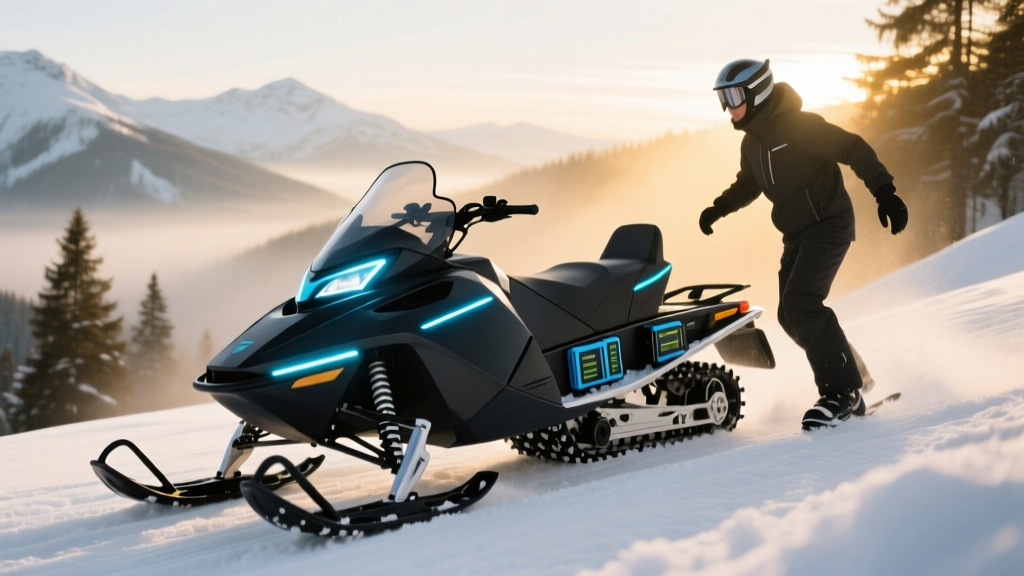
Electric snowmobiles replace the traditional 2-stroke or 4-stroke gasoline engine with a battery pack and electric motor driving the track. The result is instant torque delivery, significantly lower noise output (typically 60–75 dB vs. 85–100+ dB for gas sleds), and zero tailpipe emissions — a meaningful advantage on groomed trails and in noise-sensitive areas near residential zones or wildlife habitats.
As of early 2026, the adult electric snowmobile market is small but real:
- Taiga Motors TS2 (Canada-based) — the most established player, offering the TS2 Orca (personal watercraft) and TS2 electric snowmobile platform with ~20 kWh battery options
- Emerging/startup prototypes — several smaller companies have announced electric sled concepts, though most remain in pre-order or limited-production status
- Major OEM announcements — Polaris, Ski-Doo (BRP), and Yamaha have signaled R&D investment in electric winter platforms, but no mass-market adult electric snowmobile from a Big Three OEM is widely available at dealerships as of model year 2026
This is fundamentally different from the EV car market. You cannot walk into a typical Polaris or Ski-Doo dealer and test-drive an electric snowmobile the way you can a Tesla or Hyundai Ioniq. Availability is limited, lead times are long, and the dealer service network for electric sleds is still forming.
Range, Battery, and Cold-Weather Reality
This is where expectations need the sharpest adjustment. Electric snowmobiles face a compounding disadvantage: cold temperatures reduce lithium-ion battery performance, and snowmobile riding is inherently energy-intensive due to track friction, snow resistance, and elevation changes.
| Specification | Typical Range |
|---|---|
| Battery Capacity | 15–25 kWh (lithium-ion, typically NMC chemistry) |
| Claimed Range (ideal conditions) | 60–100 miles |
| Real-World Trail Range (20–35°F) | 45–70 miles |
| Extreme Cold Range (below 0°F) | 30–50 miles (25–40% loss) |
| Motor Output | 80–180 HP equivalent |
| Top Speed | 60–90 mph (model dependent) |
| Weight (with battery) | 450–600 lbs |
| Charge Time (Level 2, 240V) | 2–4 hours (0–100%) |
| Charge Time (Level 1, 120V) | 8–15 hours |
Cold-weather range loss is real and significant. Lithium-ion batteries lose 20–40% of usable capacity in sub-freezing temperatures due to increased internal resistance. Unlike EVs with active thermal management (heat pumps, battery preconditioning), most electric snowmobiles lack sophisticated battery heating systems. A sled rated for 80 miles at 50°F may deliver only 45–55 miles at 10°F with aggressive riding. Plan routes accordingly and never rely on the manufacturer's best-case range figure in winter conditions.
For context on battery chemistry: most current electric snowmobiles use NMC (nickel manganese cobalt) cells for their higher energy density — critical when you're trying to keep total sled weight under 600 lbs. LFP (lithium iron phosphate) chemistry, popular in EVs like the Tesla Model 3 Standard Range for its longevity and lower cost, is heavier per kWh and less common in weight-sensitive recreational applications.
Electric vs Gas Snowmobile: Cost and Performance Comparison
The decision between electric and gas snowmobiles comes down to how you ride, where you ride, and what you value. Here's how the numbers stack up.
| Factor | Electric Sled | Gas Sled (4-stroke, 600–900cc) |
|---|---|---|
| Purchase Price (new) | $15,000–$20,000+ | $9,000–$17,000 |
| Fuel/Energy Cost per Hour | $1.50–$4.00 (electricity) | $15–$30 (gasoline at $3.50/gal) |
| Range per Tank/Charge | 45–70 miles (real-world) | 120–200+ miles |
| Refuel/Recharge Time | 2–4 hours (Level 2) | 3–5 minutes |
| Noise Level | 60–75 dB | 85–105 dB |
| Instant Torque | Yes — full torque at 0 RPM | No — builds with RPM |
| Maintenance (annual) | $100–$300 (minimal) | $400–$1,200 (belts, plugs, oil, clutch) |
| Trailside Repairability | Limited — high-voltage system | Good — established dealer network |
| Cold-Start Reliability | Excellent (no choke, no flooding) | Variable (carbureted worse, EFI better) |
| Emissions (tailpipe) | Zero | Significant (2-stroke especially) |
Total Cost of Ownership: 5-Year Breakdown
Upfront cost favors gas. Operating cost heavily favors electric. Here's what five years of ownership looks like for a rider averaging 500 miles per season.
| Cost Category | Electric Sled | Gas Sled (4-stroke 800cc) |
|---|---|---|
| Purchase Price | $17,000 | $13,000 |
| Fuel/Energy (5 years) | $750 (at $0.15/kWh) | $7,500 (at 10 mpg, $3.50/gal) |
| Maintenance (5 years) | $1,000 | $4,000 |
| Insurance (5 years) | $2,500 | $2,500 |
| Estimated Resale (Year 5) | -$7,000 (uncertain market) | -$6,500 |
| Net 5-Year Cost | $14,250 | $20,500 |
The electric sled saves roughly $6,250 over five years in fuel and maintenance, partially offsetting the higher purchase price. However, the resale value column carries a major asterisk: the used electric snowmobile market is virtually nonexistent, making depreciation highly uncertain. A gas sled from a major OEM has a well-established depreciation curve; an electric sled from a startup does not.
Important note on tax credits: The federal §30D Clean Vehicle Credit applies to qualified on-road plug-in electric vehicles — cars, trucks, SUVs, and vans meeting MSRP, income, and battery-sourcing requirements as outlined by the IRS. Off-road recreational vehicles, including snowmobiles, do not qualify. Check your state for any off-road EV incentives; a few states offer rebates for electric off-highway vehicles, but these are uncommon.
Charging Logistics: Home Base vs Trail
Charging is the single biggest ownership variable for an electric snowmobile, and it's where most prospective buyers underestimate the challenge.
Home/garage charging: This is the ideal scenario. If you store your sled in a garage or heated shop with a 240V outlet (NEMA 14-50 or similar), you can fully recharge a 20 kWh battery in roughly 2–3 hours using a Level 2 portable EVSE. Installation of a 240V circuit by a licensed electrician typically runs $500–$1,500 depending on panel capacity and distance. This is the same infrastructure used for home EV charging.
Trailside charging: This is the hard part. Unlike the EV road-trip network of DC fast chargers along highways, there is essentially no public charging infrastructure at snowmobile trailheads, warming huts, or remote lodges as of 2026. A few forward-thinking resorts and clubs in Quebec, British Columbia, and parts of the Upper Midwest have begun installing Level 2 chargers at trail-access points, but these are rare exceptions.
The practical implication: an electric snowmobile is a day-trip vehicle radiating from a home base with charging. Multi-day backcountry touring, point-to-point trail rides exceeding your battery range, or sled vacations where you ride different areas each day are not realistic without advance planning and confirmed charging access at every stop.
Common Misconceptions — Myth vs Fact
| Myth | Fact |
|---|---|
| "Electric sleds have no power" | Modern electric snowmobile motors produce 80–180 HP equivalent with instant peak torque. Acceleration off the line often exceeds comparable gas sleds. |
| "The battery will die in extreme cold" | Cold reduces range by 20–40%, but the battery still functions. The motor itself generates heat during operation, and some models include battery thermal management. The sled won't strand you at -20°F — but your range will be significantly shorter. |
| "I can charge it at any trail stop" | Public charging at snowmobile trailheads is extremely rare. Plan around home-base charging or confirm 240V access at your destination before committing to a ride. |
| "It qualifies for the $7,500 federal EV tax credit" | The §30D credit applies to on-road vehicles only. Snowmobiles are classified as off-road recreational vehicles and do not qualify under current IRS rules. |
| "Electric means zero maintenance" | Track tensioning, suspension greasing, ski wear bars, brake pads, and battery health monitoring still require attention. Maintenance is lower, not zero. |
| "It's just as easy to refuel as a gas sled" | Carrying spare fuel in a jerry can adds 50+ miles of range in 2 minutes. There is no equivalent portable solution for electric sleds — you cannot "carry" extra kWh on the trail. |
Decision Framework: Should You Buy an Electric Snowmobile?
Choose an electric snowmobile if:
- You ride day trips of 40–60 miles or less, returning to a home base with 240V charging
- Noise reduction matters — you ride near residences, in noise-restricted areas, or value a quieter experience for hearing wildlife and conversing with riding partners
- You want minimal maintenance and never want to deal with fuel stabilization, carburetor cleaning, belt replacement, or oil changes
- You have a heated garage or shop for storage and charging
- You accept the higher upfront cost and uncertain resale as the price of early adoption
- Your typical riding temperatures stay above -10°F
Stick with a gas snowmobile if:
- You ride multi-day backcountry trips, point-to-point trail systems exceeding 80 miles, or sled vacations to remote areas
- You need trailside refueling capability (jerry can in 2 minutes vs. hours at a plug)
- You ride frequently in extreme cold below -20°F where battery range loss is severe
- You need a proven dealer service network within driving distance
- Resale value certainty matters — the gas sled secondary market is deep and predictable
- Your budget is under $12,000 for a new sled
First-Time Electric Snowmobile Buyer Checklist
If you've decided an electric sled fits your riding profile, here's what to verify before placing an order:
- Confirm your charging setup. Do you have a 240V outlet in your garage or shop? If not, budget $500–$1,500 for a licensed electrician to install a NEMA 14-50 or hardwired Level 2 circuit. Verify your electrical panel has capacity (a 40A circuit is typical).
- Audit your typical ride distance. Track your last season's rides. If more than 80% of your rides are under 50 miles round-trip, electric range is adequate. If you regularly exceed 70 miles, it's not.
- Verify dealer/service support. Who services the sled if something fails? Startup manufacturers may offer mail-in warranty service but lack local technicians. Confirm the service model before purchase.
- Ask about battery warranty. Look for a minimum 3-year/3,000-mile battery warranty with a stated capacity retention threshold (e.g., 80% of original capacity). Battery replacement costs for a 20 kWh pack could exceed $5,000–$8,000 out of warranty.
- Check insurance availability. Not all recreational insurers have actuarial data on electric snowmobiles. Get quotes from providers like Progressive, Allstate, or specialty off-road insurers before committing.
- Understand the wait time. Most electric snowmobile manufacturers operate on pre-order or limited-production models. Lead times of 6–18 months are common. Plan your purchase well ahead of the season you intend to ride.
Frequently Asked Questions
How far can an electric snowmobile go on a single charge?
In real-world trail riding at temperatures between 20–35°F, expect 45–70 miles from a typical 20 kWh battery pack. Manufacturer claims of 80–100 miles assume moderate speeds, flat terrain, and temperatures above 40°F — conditions rarely encountered on a real snowmobile ride. In extreme cold (below 0°F), range may drop to 30–50 miles.
Can I ride an electric snowmobile in deep powder or backcountry?
Current electric snowmobiles are best suited for groomed trails and moderate conditions. Deep powder riding dramatically increases energy consumption (the track works harder to stay afloat), which can cut range by 40–50%. Backcountry riding also means no charging access if you deplete the battery. For deep-snow and mountain riding, gas sleds remain the practical choice in 2026.
Do electric snowmobiles qualify for any tax credits or incentives?
The federal §30D Clean Vehicle Credit does not apply to off-road recreational vehicles including snowmobiles. Some states or local utilities may offer rebates for electric off-highway vehicles, but these programs are uncommon and vary by jurisdiction. Check with your state energy office or utility provider for any available incentives.
How long do electric snowmobile batteries last?
Lithium-ion batteries in electric snowmobiles are expected to retain 80% or more of original capacity after 500–1,000 full charge cycles, depending on chemistry and thermal management. For a rider averaging 30–40 charge cycles per season, this translates to 15–25+ years of use before significant degradation. However, long-term field data on electric snowmobile batteries specifically is still limited given the category's youth.
What happens if the battery runs out on the trail?
Unlike a gas sled where a trail companion can share fuel, a depleted electric snowmobile must be towed or trailered to a charging source. This is the single biggest operational risk and the primary reason electric sleds are recommended only for riders who stay within range of their home base. Always ride with a charged phone, inform someone of your route, and carry a tow strap.
Are electric snowmobiles reliable in extreme cold?
The electric motor itself is extremely reliable in cold — no choke, no fuel gelling, no flooded engine. The battery is the limiting factor: internal resistance increases in cold temperatures, reducing available energy and charge acceptance. Most riders find electric sleds start and run reliably down to -20°F, but range is meaningfully reduced. Battery preconditioning (warming the pack before riding) helps if your model supports it and you're starting from a heated garage.