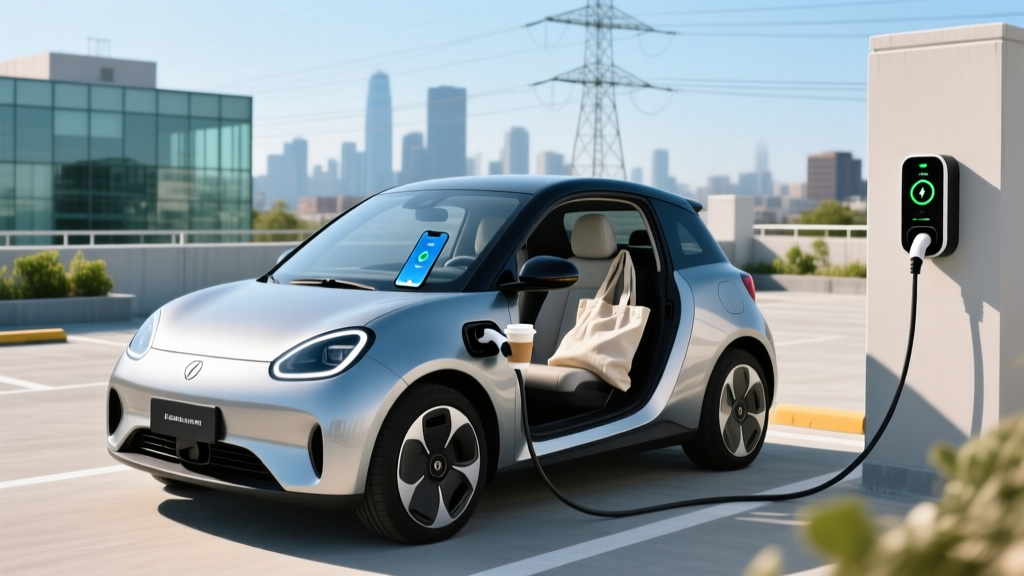
If you're researching an electric smart car, you likely want a compact, tech-forward EV that's easy to park, cheap to run, and loaded with driver-assistance features. In 2026, the best small EVs—like the Chevrolet Equinox EV, Hyundai Kona Electric, and Volvo EX30—deliver 250–320 miles of EPA range, cost $30,000–$45,000 before incentives, and can save the average driver $1,200–$1,800 annually in fuel and maintenance versus a comparable gas car. But the real answer depends on your charging access, driving patterns, and whether you qualify for federal tax credits.
Quick Answer
An electric smart car makes financial sense if you can charge at home (Level 2), drive under 80 miles daily, and qualify for some portion of the §30D federal tax credit. Expect to pay $30,000–$45,000 upfront, save $100–$150/month in fuel, and spend roughly 60% less on maintenance than a gas car. If you rely solely on public charging or regularly drive over 300 miles in cold weather, a plug-in hybrid may be the smarter bridge.
What Qualifies as an Electric Smart Car in 2026?
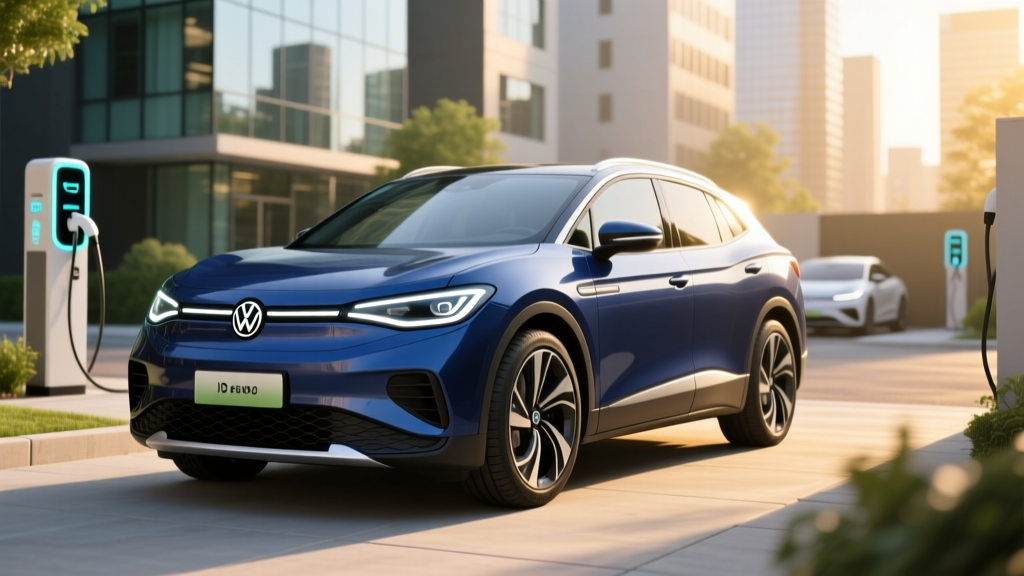
The term "electric smart car" has evolved well beyond the discontinued Smart ForTwo Electric Drive. Today, buyers use it to describe compact-to-midsize battery electric vehicles (BEVs) that combine efficient electric powertrains with advanced driver-assistance systems (ADAS), over-the-air updates, and connected infotainment. The segment spans affordable crossovers like the Hyundai Kona Electric (EPA 261 mi, ~$33,000) to premium entries like the Volvo EX30 (EPA 265 mi, ~$36,000) and the Chevrolet Equinox EV (EPA 319 mi, ~$33,000).
What ties them together:
- Battery capacity: 58–85 kWh usable (typically NMC chemistry; some LFP in base trims)
- DC fast charging: 100–175 kW peak, reaching 10–80% in 20–35 minutes
- Level 2 charging: 7.2–11.5 kW onboard charger (25–45 miles of range per hour)
- ADAS: SAE Level 2 driver-assist standard—lane centering, adaptive cruise, automatic emergency braking (not self-driving; you must stay engaged)
- Efficiency: 100–120 MPGe combined, or 28–34 kWh/100 mi
Electric Smart Car vs Gas Car: The Real Cost Comparison
Let's put a 2026 Hyundai Kona Electric (base MSRP ~$33,000) against its gas sibling, the Hyundai Kona 1.6T (MSRP ~$26,500). We'll use national averages: electricity at $0.16/kWh, gas at $3.40/gallon, and 12,000 miles driven annually.
| Cost Factor | Kona Electric (EV) | Kona Gas (1.6T) | Annual Difference |
|---|---|---|---|
| Purchase Price | $33,000 | $26,500 | +$6,500 upfront |
| Federal Tax Credit (§30D) | Up to $7,500* | $0 | –$7,500 for EV |
| Net Purchase After Credit | ~$25,500 | $26,500 | –$1,000 for EV |
| Fuel/Energy (12k mi/yr) | ~$540/yr | ~$1,360/yr | –$820/yr for EV |
| Maintenance (avg/yr) | ~$350/yr | ~$900/yr | –$550/yr for EV |
| Insurance (avg/yr) | ~$1,700/yr | ~$1,400/yr | +$300/yr for EV |
| 5-Year Total Cost | ~$35,450 | ~$40,000 | –$4,550 for EV |
*§30D credit eligibility depends on MSRP caps ($55,000 for SUVs, $25,000 for sedans), buyer income limits ($150k single / $300k joint), battery critical-mineral and North American assembly rules. Verify at IRS.gov or via the point-of-sale transfer option at the dealer.
The EV wins on operating costs, but only if you can charge at home at residential electricity rates. Public DC fast charging at $0.40–$0.60/kWh erases much of the fuel savings.
Home Charging: The Make-or-Break Factor
Over 80% of EV charging happens at home. If you can install a Level 2 charger (240V, 32–48 amps), you'll wake up every morning with a full battery—typically 25–45 miles of range added per hour of charging. Here's what installation actually costs in 2026:
| Item | Low End | High End | Notes |
|---|---|---|---|
| Level 2 Charger (hardware) | $400 | $750 | ChargePoint Home Flex, Emporia, Wallbox |
| Electrician labor | $500 | $1,500 | Depends on panel proximity |
| Permit & inspection | $100 | $400 | Varies by municipality |
| Electrical panel upgrade | $0 | $2,500 | Required if panel is 100A or less |
| Total install | $1,000 | $5,150 | Most homes: $1,200–$2,000 |
Before committing, check your electrical panel. A 200-amp panel with spare breaker slots can usually support a 40-amp circuit (for a 32-amp charger). Homes with older 100-amp panels may need an upgrade—or consider a lower-amperage 16-amp Level 2 unit that still adds ~15 miles/hour.
Real-World Range: What the EPA Sticker Doesn't Tell You
EPA range estimates are useful baselines, but real-world results depend on speed, temperature, and terrain. Here's what to actually expect from popular electric smart cars:
| Model | EPA Range | Highway (70 mph) | Cold Weather (20°F) | Battery |
|---|---|---|---|---|
| Chevy Equinox EV 3RS | 319 mi | ~260 mi | ~210 mi | 85 kWh, NMC |
| Hyundai Kona Electric | 261 mi | ~215 mi | ~175 mi | 64.8 kWh, NMC |
| Volvo EX30 | 265 mi | ~220 mi | ~180 mi | 69 kWh, NMC |
| Kia Niro EV | 239 mi | ~195 mi | ~160 mi | 64.8 kWh, NMC |
Cold weather reduces range by 20–35% due to cabin heating demands and slower battery chemistry. Models with a heat pump (standard on most 2026 Hyundai/Kia/Volvo EVs) lose less range than those using resistive heaters. Preconditioning the battery while plugged in—available on most modern EVs—mitigates some of this loss and also improves DC fast-charging speeds in cold weather.
For highway-heavy drivers: sustained 70+ mph driving cuts range roughly 15–20% below the EPA combined figure. If your commute is 60 miles each way at highway speed in winter, you'll want at least a 300-mile EPA-rated EV to maintain a comfortable buffer.
Charging Speed and Public Network Reality
DC fast-charging specs tell only part of the story. Peak kW is the maximum rate the car can accept—but it's only sustained between roughly 10–40% state of charge. Above 80%, charging slows dramatically to protect battery health (the "charge curve taper"). Here's what a typical stop looks like:
| Model | Peak DC kW | 10–80% Time | 80–100% Time | Connector |
|---|---|---|---|---|
| Chevy Equinox EV | 150 kW | ~30 min | ~40 min | NACS (2025+) |
| Hyundai Kona Electric | 100 kW | ~43 min | ~50 min | CCS1 |
| Volvo EX30 | 153 kW | ~26 min | ~35 min | NACS (2025+) |
| Kia Niro EV | 85 kW | ~48 min | ~55 min | CCS1 |
The industry is rapidly transitioning to the North American Charging Standard (NACS), pioneered by Tesla. Most 2025+ GM, Volvo, Ford, and Rivian models ship with NACS ports and can access Tesla Superchargers. Hyundai/Kia retain CCS1 but include NACS adapters. Public charging reliability has improved—networks like Electrify America, EVgo, and Tesla Superchargers report 92–97% uptime—but rural charging deserts remain a real concern for road-trippers.
Myths vs Facts: Clearing Up Common Misconceptions
| Myth | Fact |
|---|---|
| "EV batteries need replacing every 5 years" | Federal warranty mandates 8 years / 100,000 miles minimum capacity retention (≥70%). Real-world data shows most NMC batteries retain 85–90% capacity at 100k miles. Full replacements cost $8,000–$18,000 but are rarely needed. |
| "EVs are worse for the environment" | Even on a coal-heavy grid, lifecycle emissions are 50–70% lower than gas cars per EPA analysis. On cleaner grids, the advantage grows to 80%+. |
| "You can't drive an EV in winter" | You can, but expect 20–35% range loss. EVs with heat pumps and battery preconditioning handle cold far better. Winter tires and preheating while plugged in help significantly. |
| "Home charging is too expensive to install" | Most homes with 200A panels need $1,200–$2,000 for a Level 2 install. Many utilities offer $300–$1,000 rebates. The investment pays back in 2–3 years through fuel savings. |
| "Autopilot/FSD means the car drives itself" | All consumer ADAS (Tesla Autopilot, GM Super Cruise, Ford BlueCruise) are SAE Level 2—you must remain attentive and hands-available or eyes-on-road. No consumer vehicle sold in 2026 is Level 4 autonomous. |
Decision Framework: Should You Buy an Electric Smart Car?
Choose a Battery EV If:
- You have reliable home charging (garage, driveway, or workplace Level 2)
- Your daily driving is under 80 miles round-trip
- You can take a 25–35 minute DC fast-charge break on longer trips
- You qualify for at least partial §30D tax credits or state rebates
- You want the lowest per-mile operating cost (~$0.04–$0.05/mi at home)
Choose a Plug-in Hybrid (PHEV) If:
- You lack reliable home or workplace charging
- You regularly drive 200+ miles in areas with sparse DC fast-charging
- You live in extreme cold climates (below 0°F regularly) and want range security
- You want EV-like daily commuting (25–40 mi electric range) with gas backup
Stick With Gas (for Now) If:
- You live in an apartment with zero charging access and no workplace option
- Your budget is under $25,000 and you need a new vehicle (used EV market is more accessible)
- You tow heavy loads regularly (EVs can tow, but range drops 40–60% under load)
Frequently Asked Questions
How long does an electric car battery actually last?
Modern NMC and LFP batteries are engineered for 1,500–3,000 charge cycles before significant degradation. At an average of 300 miles per full cycle, that's 450,000–900,000 miles—far beyond the life of most vehicles. Federal law requires EV battery warranties of at least 8 years / 100,000 miles with a capacity retention floor (typically 70%). Real-world fleet data from fueleconomy.gov and owner surveys show most EVs retain 85–92% battery capacity at 100,000 miles.
Do electric smart cars qualify for the $7,500 tax credit?
Some do, but eligibility is complex. Under IRS §30D rules for 2026, the vehicle must: have an MSRP under $55,000 (SUVs/trucks) or $25,000 (sedans), be assembled in North America, meet critical-mineral and battery-component sourcing thresholds, and the buyer must fall under income caps ($150,000 single / $225,000 head of household / $300,000 joint). Credits can now be transferred to the dealer as a point-of-sale discount. Always verify current eligibility at IRS.gov before purchasing.
What happens if I can't charge at home?
Public-only charging is viable but significantly more expensive and less convenient. DC fast charging costs $0.35–$0.60/kWh (roughly $0.10–$0.16/mile), which is only marginally cheaper than gas. Level 2 public chargers at workplaces, grocery stores, or gyms are better—often free or $0.15–$0.25/kWh. If you're apartment-dwelling, look for buildings installing shared Level 2 chargers, or ask your employer about workplace charging programs. A PHEV may be more practical if none of these options exist.
Are electric cars more expensive to insure?
Yes, typically 15–25% more than comparable gas cars, due to higher repair costs (specialized labor, battery protection requirements) and higher purchase prices. On average, expect $1,500–$2,000/year for a compact EV versus $1,200–$1,600 for its gas equivalent. Shop quotes from multiple insurers—some (like State Farm and GEICO) have narrowed the EV premium gap, while others still price EVs aggressively.
Is an electric smart car good for road trips?
Yes, with planning. A 300-mile-range EV with 150+ kW DC fast charging can handle road trips if you map charging stops using apps like A Better Routeplanner or PlugShare. Expect a 20–30 minute stop every 200–250 miles. The Tesla Supercharger network (now open to NACS-equipped non-Tesla EVs) remains the most reliable. The main limitation is rural areas in the Mountain West and Great Plains, where chargers are spaced 80–120+ miles apart.
The electric smart car segment in 2026 offers genuine value—lower operating costs, strong daily-driver range, and increasingly mature charging infrastructure. The math works for most buyers who can charge at home. Run your own numbers with our framework above, and test-drive with your actual commute route in mind.