What Is the Electric Scout SUV, and Should You Buy One?
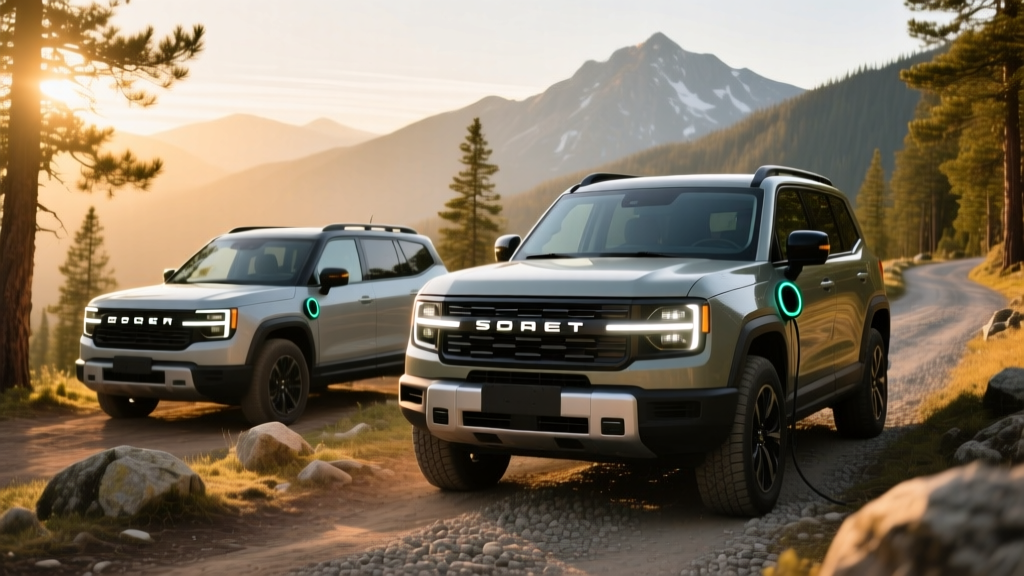
Scout Motors — a standalone EV brand backed by Volkswagen Group and reviving the iconic International Harvester Scout nameplate — begins production of two vehicles in 2026 at its new Blythewood, South Carolina factory: the Scout Traveler (a midsize SUV) and the Scout Terra (a midsize pickup). Both are body-on-frame, off-road-oriented electric vehicles built on VW Group's dedicated RBE (Robust Body-on-frame Electric) platform with an 800-volt architecture. Pricing is expected to start in the mid-$50,000s before incentives, with over 300 miles of EPA-estimated range, dual-motor AWD standard, and DC fast-charging speeds targeting 350 kW peak. Reservations opened in late 2023 with a fully refundable $100 deposit, and Scout has reported exceeding 100,000 reservations. If you want a rugged, body-on-frame EV with genuine off-road chops and don't need third-row seating, the Scout is worth a serious look — but final EPA numbers, real-world efficiency, and federal tax credit eligibility won't be confirmed until production vehicles are certified.
Scout Traveler vs. Scout Terra: Which Electric Scout SUV Fits You?
Scout is launching two body styles on the same platform. Here's how they break down based on announced preliminary specifications:
| Specification | Scout Traveler (SUV) | Scout Terra (Truck) |
|---|---|---|
| Body Style | Midsize 5-passenger SUV | Midsize crew-cab pickup |
| Platform | RBE (body-on-frame, 800V) | RBE (body-on-frame, 800V) |
| Drivetrain | Dual-motor AWD (standard) | Dual-motor AWD (standard) |
| Horsepower | Up to ~450 hp (est.) | Up to ~450 hp (est.) |
| 0–60 mph | ~5.5 seconds (est.) | ~5.5 seconds (est.) |
| EPA Range (target) | 300–350+ miles | 300–350+ miles |
| Battery Chemistry | NMC (announced) | NMC (announced) |
| DC Fast Charge Peak | Up to 350 kW (target) | Up to 350 kW (target) |
| Towing Capacity | ~7,500 lbs (target) | ~10,000 lbs (target) |
| Ground Clearance | ~11+ inches (est.) | ~11+ inches (est.) |
| Estimated Starting MSRP | Mid-$50,000s | Mid-$50,000s |
The Traveler is the model most buyers searching for an "electric Scout SUV" will want. It offers a traditional enclosed cargo area, a more comfortable rear seat, and better everyday practicality. The Terra trades some rear-seat and cargo flexibility for a 5-foot bed and higher towing capacity, making it a competitor to the Rivian R1T and Ford F-150 Lightning. Both share the same powertrain, battery architecture, and off-road hardware.
Range, Charging, and Battery: What the Numbers Actually Mean
Scout has targeted 300–350+ miles of EPA-estimated range for both vehicles. That's competitive with the Rivian R1S (up to 410 miles with the Max Pack) and well ahead of the base Jeep Wrangler 4xe's 22 miles of electric-only range — but the critical detail is that Scout hasn't yet received EPA certification. Final numbers could shift.
Charging speed is where the 800V architecture pays off. Scout's target of 350 kW peak DC fast-charging capability means that at a compatible 350 kW charger (like Electrify America's latest stations), you could add roughly 10–80% in approximately 20–25 minutes — assuming the battery thermal management performs well and the charge curve sustains. Note the distinction: kW (kilowatts) measures the rate of power delivery, while kWh (kilowatt-hours) measures total energy stored. A 350 kW peak doesn't mean you charge at that rate the entire session — the charge curve tapers significantly above 80% State of Charge (SoC) to protect battery longevity.
For Level 2 home charging, expect an 11.5 kW onboard charger (common for 800V platforms), which would replenish a ~100 kWh battery from empty to full in roughly 9–10 hours — ideal for overnight charging.
How Does the Scout Compare to Gas and Hybrid Off-Road SUVs?
The Scout Traveler enters a space dominated by the Jeep Wrangler, Ford Bronco, and Toyota 4Runner. Here's a data-driven comparison against both gas and plug-in hybrid rivals:
| Metric | Scout Traveler (Est.) | Jeep Wrangler 4xe (PHEV) | Ford Bronco (Gas, Badlands) | Toyota 4Runner (Gas, 2025) |
|---|---|---|---|---|
| Powertrain | BEV (Dual-motor AWD) | PHEV (2.0L turbo + electric) | Gas (2.7L turbo I4) | Gas (2.4L turbo I4) |
| Electric-Only Range | 300–350+ mi (full EV) | ~22 mi | 0 mi | 0 mi |
| Total Range | 300–350+ mi | ~370 mi (gas + electric) | ~340 mi | ~400 mi |
| Horsepower | ~450 hp | 375 hp | 330 hp | 278 hp |
| 0–60 mph | ~5.5 sec | ~6.0 sec | ~6.5 sec | ~7.5 sec |
| Fuel/Energy Cost per Mile | ~$0.04–$0.06 (home charging) | ~$0.08–$0.14 (mixed) | ~$0.15–$0.20 | ~$0.14–$0.18 |
| Starting MSRP | Mid-$50,000s | ~$51,000 | ~$48,000 | ~$42,000 |
| Annual Maintenance (est.) | ~$300–$500 | ~$600–$900 | ~$600–$900 | ~$500–$700 |
The Scout's advantage is clear in performance and per-mile energy cost. Electric motors deliver instant torque — critical for off-road crawling — and home charging at the national average of ~$0.16/kWh yields roughly $0.04–$0.06 per mile versus $0.15–$0.20 for gas rivals burning 17–21 MPG combined. Over 15,000 miles per year, that's a potential fuel savings of $1,500–$2,100 annually. The trade-off: higher upfront cost and range uncertainty on long highway road trips through charging deserts (rural stretches of I-70, I-10, or I-80 where DC fast chargers remain sparse).
Real Costs of Ownership: Purchase Price, Charging, Insurance, and Tax Credits
Let's break down the five-year cost picture for a Scout Traveler at an estimated $55,000 base MSRP:
| Cost Category | Scout Traveler (Est.) | Gas SUV Baseline (e.g., Bronco) |
|---|---|---|
| Purchase Price (base MSRP) | $55,000 | $48,000 |
| Federal Tax Credit (§30D) | Up to $7,500 (if eligible) | $0 |
| Effective Purchase Price | ~$47,500 | $48,000 |
| 5-Year Fuel/Energy Cost | ~$3,500 (home charging) | ~$11,500 (gas at $3.50/gal, 19 MPG) |
| 5-Year Maintenance | ~$2,000 | ~$4,000 |
| 5-Year Insurance (est.) | ~$12,000 | ~$9,500 |
| 5-Year Total Cost of Ownership | ~$65,000 | ~$73,000 |
Federal Tax Credit Caveats: The IRS §30D Clean Vehicle Credit offers up to $7,500, but eligibility depends on multiple factors that change frequently: buyer income caps ($300,000 joint / $150,000 single for new vehicles), MSRP caps ($80,000 for SUVs/pickups), battery critical-mineral sourcing requirements, and North American final assembly. Scout's South Carolina production satisfies the assembly requirement, but battery sourcing rules are the wildcard. The credit can now be transferred to the dealer at point of sale, effectively reducing your purchase price upfront. Always verify current-year rules with a tax professional before counting on the full $7,500.
Insurance is the line item that often surprises first-time EV buyers. EVs typically cost 15–25% more to insure than comparable gas vehicles due to higher repair costs (specialized high-voltage components, aluminum body panels, recalibration of ADAS sensors after collisions). Budget $2,400–$2,800/year for a Scout Traveler depending on your state, driving record, and coverage level.
First-Time EV Buyer Checklist: What to Know Before You Reserve
If the Scout Traveler or Terra would be your first EV, here's a practical preparation framework:
Home Charging Access
Level 2 home charging (240V, typically 40–48 amps) is the backbone of convenient EV ownership. Expect to pay $800–$2,500 for a quality Level 2 wallbox (like a ChargePoint Home Flex or Emporia Vue) plus $500–$2,000 for professional electrical installation, depending on whether your panel needs an upgrade to 200 amps. Scout vehicles will use the NACS (North American Charging Standard) connector, which is becoming the industry standard — Tesla Superchargers, Electrify America, and most major networks now support or are adding NACS.
Apartment or Street-Parking Reality
If you lack access to home or workplace charging, EV ownership becomes significantly harder. Public DC fast charging costs $0.30–$0.50/kWh at most networks, roughly doubling or tripling the per-mile cost versus home charging and eating into the fuel-savings advantage. Before committing, map your daily routine: can you reliably charge 2–3 times per week at home, work, or a nearby Level 2 station?
Climate and Cold-Weather Range
Battery chemistry and thermal management matter. The Scout's NMC (nickel manganese cobalt) battery will lose roughly 20–35% of its range in sustained sub-freezing temperatures — a reality for buyers in the Mountain West, Midwest, and Northeast. Scout has indicated the platform will include a heat pump, which helps cabin heating efficiency but doesn't fully eliminate cold-weather range loss. If you live in Minnesota or Colorado, plan for a real-world winter range closer to 220–260 miles from a 340-mile EPA sticker.
Common Misconceptions About the Electric Scout SUV
| Myth | Fact |
|---|---|
| "The Scout is just a rebadged VW ID.4." | False. The Scout uses VW Group's purpose-built RBE body-on-frame platform, not the MEB unibody platform underpinning the ID.4. It shares no body panels, suspension, or drivetrain components with any existing VW consumer vehicle. |
| "EVs can't off-road." | Electric motors deliver instant, precise torque at zero RPM — ideal for rock crawling. The Rivian R1S/R1T and Hummer EV have already proven EV off-road capability. Scout's solid rear axle and 11+ inches of ground clearance target serious trail use. |
| "The battery will need replacing in 5 years." | Modern NMC batteries with active thermal management typically retain 85–90% capacity after 100,000 miles. Federal law mandates a minimum 8-year/100,000-mile battery warranty, and most manufacturers exceed this. Full battery replacement is rare and costs $10,000–$20,000 if needed out of warranty. |
| "I'll get the full $7,500 tax credit no matter what." | Eligibility depends on your income, the vehicle's MSRP, and battery sourcing compliance. The credit phases or reduces if critical-mineral and battery-component sourcing thresholds aren't met. Check IRS.gov for the current-year qualified vehicle list. |
| "Scout is a startup that might go under." | Scout Motors is wholly backed by Volkswagen Group, one of the world's largest automakers, with a $2 billion+ factory investment in South Carolina. This is not a venture-capital-funded startup — it's a legacy OEM's skunkworks EV brand. |
Decision Framework: Is the Electric Scout SUV Right for You?
Choose the Scout Traveler if:
- You want a rugged, body-on-frame SUV with genuine off-road capability and 300+ miles of range
- You have home charging access (garage or driveway with 240V circuit availability)
- You drive 30–60 miles daily and want to "fuel" at home for $0.04–$0.06/mile
- You value instant electric torque for trail crawling and towing
- You're willing to pay a premium over gas rivals for lower operating costs and performance
Choose the Scout Terra if:
- You need a truck bed for work or recreation but want electric daily driving
- You tow boats, trailers, or campers up to ~10,000 lbs
- You want Rivian R1T capability at a potentially lower price point
Look elsewhere (Rivian R1S, gas Wrangler, or a PHEV) if:
- You need a third row — the Scout is strictly a two-row, five-passenger vehicle
- You lack reliable home or workplace charging and your area has sparse public DC infrastructure
- You regularly drive 400+ miles between charging stops in rural areas with limited charger coverage
- Your budget is firmly under $45,000 and you need a vehicle today (Scout production starts in 2026)
Frequently Asked Questions
When will the Scout Traveler and Terra be available to buy?
Scout Motors targets production start in 2026 at its Blythewood, South Carolina facility. Reservation holders (who placed a $100 refundable deposit starting in late 2023) will receive priority ordering. Walk-up availability will depend on initial production ramp, which typically takes 6–12 months to reach full volume.
What connector does the Scout use — NACS, CCS, or CHAdeMO?
Scout has confirmed the NACS (North American Charging Standard) connector, the same plug used by Tesla. This gives Scout owners access to Tesla's Supercharger network (via native NACS compatibility) plus Electrify America, EVgo, and other networks that have deployed NACS cables. A CCS adapter may be available for legacy chargers.
Will the Scout qualify for the $7,500 federal EV tax credit?
Scout vehicles are assembled in South Carolina, satisfying the North American final assembly requirement. However, the full $7,500 credit also requires compliance with critical-mineral sourcing and battery-component manufacturing thresholds set by the IRS under §30D. Buyer income caps ($300K joint / $150K single) and the $80,000 MSRP cap for SUVs also apply. Scout's expected mid-$50,000s pricing clears the MSRP cap, but final credit eligibility won't be confirmed until the IRS validates the battery supply chain.
Can the Scout really off-road as well as a Wrangler?
Scout's body-on-frame architecture, solid rear axle, 11+ inches of ground clearance, and dual-motor torque vectoring are designed for serious trail use. Electric drivetrains offer advantages in low-speed crawling (instant, controllable torque with no transmission lag). However, real-world trail credibility will depend on approach/departure/breakover angles, aftermarket support, and long-term durability data — all of which will only be proven once owners put miles on the vehicles.
What happens if Scout's production is delayed?
Automotive production timelines slip frequently, especially for new brands. Scout's VW Group backing and $2B+ factory investment reduce the risk of cancellation, but a 6–12 month delay from the 2026 target is plausible. Your $100 reservation deposit is fully refundable if you choose to walk away.