Quick Answer
Electric scooters that go 100 mph are not practical alternatives to electric vehicles for daily transportation. High-speed electric scooters (80–100 mph capable) typically cost $4,000–$8,000, offer just 30–60 miles of real-world range, lack basic crash protection, and are illegal to operate at those speeds on public roads in virtually every U.S. state. If you're researching 100 mph electric scooters as a commuting solution, a used or new entry-level EV like the 2026 Chevrolet Equinox EV (EPA 319 miles, starting ~$33,600 before incentives) delivers dramatically more utility, safety, and total-cost savings. Read on for the numbers.
At AutoEdgeView, we test and analyze electric vehicles — cars, trucks, SUVs, and plug-in hybrids — because that's where the real electrified-transportation value lies for most buyers. We occasionally get questions from readers researching electric scooters that go 100 mph, usually from people looking for a low-cost, zero-emissions commute option. This guide explains why that search almost always leads to a dead end, and what you should consider instead.
What 100 MPH Electric Scooters Actually Offer (and What They Don't)
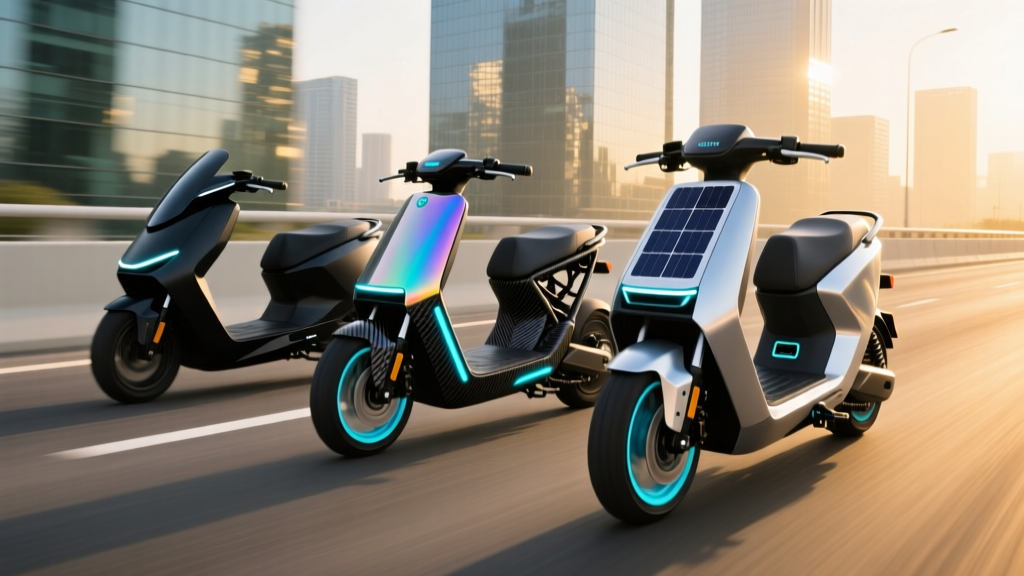
A handful of manufacturers produce electric scooters capable of reaching 80–100 mph. These are typically stand-up or seated two-wheelers with hub motors rated between 5 kW and 12 kW (peak), dual battery packs totaling 2–5 kWh, and curb weights of 70–140 lbs. Here's what the spec sheets look like in practice:
| Spec Category | Typical 100 MPH Scooter | Entry-Level 2026 EV (e.g., Equinox EV) |
|---|---|---|
| Top Speed | 80–100 mph (unrestricted) | 115–130 mph (governed) |
| Battery Capacity | 2–5 kWh (NMC or Li-ion) | 85 kWh usable (NMC) |
| Real-World Range | 25–50 miles at 45+ mph | 270–319 miles (EPA combined) |
| Charging (0–100%) | 4–8 hours (Level 1, 120V) | ~9.5 hrs L2; 10–80% DC in ~30 min |
| Purchase Price | $4,000–$8,000 | $33,600–$43,400 MSRP |
| Crash Protection | None (helmet only) | NHTSA-rated, airbags, crumple zones |
| Weather Capability | Poor (rain, wind, cold) | Full climate control, heated seats |
| Cargo Capacity | Backpack or small rack | 25–30 cu ft (rear seats up) |
| Passenger Seating | 0–1 | 4–5 |
| Federal Tax Credit (§30D) | Not eligible | Up to $7,500 (eligibility varies) |
The range discrepancy is the most important line in that table. A scooter advertised with "60 miles of range" at 25 mph may deliver only 25–35 miles when ridden at 45–60 mph, because aerodynamic drag increases with the square of velocity. At 80+ mph, expect that range to collapse to 15–20 miles before the battery is depleted. This is basic physics — the same principle that reduces an EV's highway range compared to its city EPA estimate — but it hits scooters far harder because their battery packs are so small.
The Legal Reality: Where You Can (and Can't) Ride at 100 MPH
Most U.S. states classify electric scooters under low-speed vehicle or e-bike regulations, typically limiting legal operation to 15–25 mph on bike paths and 30–35 mph on roads with posted speed limits under 35 mph. A scooter capable of 100 mph does not become street-legal simply because you can throttle it to that speed. In states like California, New York, and Texas, operating an unregistered, uninsured motor vehicle at highway speeds on public roads exposes you to:
- Citations for unregistered vehicle operation
- No insurance coverage in the event of a crash
- Impoundment of the scooter
- Potential misdemeanor charges if involved in an accident
Electric cars, by contrast, are fully street-legal, insurable, and registrable in all 50 states. The National Highway Traffic Safety Administration (NHTSA) crash-tests them, and the Insurance Institute for Highway Safety (IIHS) rates them. No equivalent safety framework exists for high-speed electric scooters.
Real Cost Comparison: Scooter vs. Used EV vs. New EV
The appeal of a 100 mph electric scooter is usually price. At $5,000–$7,000, it seems like a bargain compared to a new EV. But the total-cost picture is more nuanced when you factor in range limitations, replacement cycles, and what you actually get.
| Cost Factor | 100 MPH E-Scooter | Used EV (e.g., 2022 Bolt EUV) | New 2026 EV (Equinox EV 2LT) |
|---|---|---|---|
| Purchase Price | $5,500 | $18,000–$22,000 | $36,400 (avg. trim) |
| Federal Tax Credit | $0 | Up to $4,000 (used EV credit, §25E) | Up to $7,500 (§30D, varies) |
| Effective Purchase | $5,500 | $14,000–$18,000 | $28,900–$36,400 |
| Annual Insurance | $0–$200 (if available) | $1,200–$1,800 | $1,400–$2,000 |
| Annual "Fuel" (Electricity) | $80–$150 | $400–$600 | $500–$750 |
| Annual Maintenance | $100–$250 (tires, brakes) | $200–$400 | $150–$350 |
| Battery Replacement (est.) | $1,500–$3,000 at 3–5 yrs | Rare under 8-yr/100k warranty | Rare under 8-yr/100k warranty |
| 5-Year Total Cost | $10,000–$14,000 | $22,000–$29,000 | $37,000–$48,000 |
| Cost Per Mile (12k mi/yr) | $0.14–$0.19 | $0.15–$0.24 | $0.15–$0.27 |
| What You Get | 1 rider, 30 mi range, no weather protection, no cargo | 5 seats, 247 mi range, full car utility | 5 seats, 319 mi range, full car utility, warranty |
The per-mile cost is surprisingly similar. The scooter "wins" only if you never need to carry a passenger, never drive in rain or cold, never haul groceries, and never travel more than 30 miles round-trip. For the vast majority of commuters, those are significant compromises.
Home Charging: What Both Require
One area where the scooter comparison breaks down is charging infrastructure. A 100 mph electric scooter charges on a standard 120V household outlet, drawing about 300–600 watts and taking 4–8 hours for a full charge. That sounds convenient — until you realize that a Level 2 home charger (240V, 32–48 amps) for an EV delivers roughly the same overnight convenience with dramatically more range.
A typical Level 2 installation costs $800–$2,500 (equipment plus licensed electrician, depending on panel capacity and run length). Once installed, an EV gains 25–40 miles of range per hour of charging. That means an overnight 8-hour session fully replenishes even a large 85 kWh battery pack. Per fueleconomy.gov, the average EV costs roughly $0.04–$0.06 per mile to "fuel" at residential electricity rates, compared to $0.12–$0.16 per mile for a 30 MPG gas car at current fuel prices.
Scooter owners who live in apartments without dedicated parking face the same charging-access challenges as EV owners — but with fewer public-charging options, since DC fast-charging networks (Tesla Supercharger, Electrify America, EVgo) are designed for cars, not scooters.
EV vs. Gas vs. Scooter: The Decision Matrix
If you're cross-shopping transportation options, here's how the three categories stack up on the metrics that matter:
| Factor | 100 MPH E-Scooter | Compact EV (2026) | Gas Car (30 MPG) |
|---|---|---|---|
| Real-World Commute Range | 25–50 miles | 250–340 miles | 350–450 miles |
| Road-Trip Capability | Not viable | Viable with DC fast-charge planning | Easy (5-min gas stop) |
| Cold-Weather Range Loss | 30–50% (no thermal mgmt) | 15–30% (heat pump equipped) | Minimal |
| Safety Rating | None | NHTSA 5-star / IIHS Top Safety Pick | NHTSA rated |
| Passenger + Cargo | 1 person, minimal cargo | 4–5 people, 25–30 cu ft | 4–5 people, 15–20 cu ft |
| Fuel/Energy Cost Per Mile | $0.01–$0.02 | $0.04–$0.06 | $0.12–$0.16 |
| Maintenance (Annual) | $100–$250 | $150–$350 | $600–$1,200 |
| Tailpipe Emissions | Zero | Zero | ~4.6 metric tons CO₂/year |
The electric scooter's only clear advantage is fuel cost per mile — but the absolute dollar savings are small because the scooter's range is so limited. A rider covering 30 miles per day spends roughly $0.30–$0.60 on electricity. An EV driver covering the same distance spends $1.20–$1.80. Over a year, that's a savings of roughly $300–$450 — which is quickly consumed by the scooter's battery replacement cycle and lack of utility.
Common Misconceptions, Addressed
| Myth | Fact |
|---|---|
| "A 100 mph scooter can replace my car for commuting." | Only if your commute is under 25 miles each way, you never carry passengers or cargo, you never drive in rain or cold, and your route has no highway segments requiring vehicle registration. |
| "Electric scooters qualify for the $7,500 federal tax credit." | They do not. The §30D credit applies only to new qualified plug-in electric motor vehicles with four wheels and a gross vehicle weight under 14,000 lbs. Per IRS guidelines, two- and three-wheelers are excluded. |
| "Scooter batteries last as long as EV batteries." | EV batteries are warrantied for 8 years/100,000 miles minimum (federal mandate). Scooter batteries typically degrade noticeably within 2–4 years and cost $1,500–$3,000 to replace — a major percentage of the vehicle's value. |
| "I can ride a 100 mph scooter on the highway legally." | In most states, electric scooters are restricted to roads with speed limits of 35 mph or less. Highway operation requires registration, insurance, and a vehicle that meets Federal Motor Vehicle Safety Standards — which no electric scooter does. |
| "It's more environmentally friendly than an EV." | Per mile, yes — a scooter uses less energy. But a scooter that can't replace car trips (because of range, weather, or cargo limits) doesn't reduce emissions if you still need a second vehicle. |
Actionable Decision Framework: What Should You Actually Buy?
Choose Based on Your Real Needs
- Choose a 100 mph electric scooter IF: You want a recreational toy for private property, closed courses, or last-mile use in fair weather, AND you already have a primary vehicle for real commuting. Budget: $5,000–$8,000. Understand it's a hobby purchase, not a car replacement.
- Choose a used EV (2021–2024 model) IF: You need a real daily driver with full utility, want to minimize upfront cost, and qualify for the §25E used-EV credit (up to $4,000, income caps apply). Best values: Chevrolet Bolt EUV (~$18,000–$22,000 used), Hyundai Kona Electric (~$20,000–$24,000 used), Nissan Leaf (~$16,000–$20,000 used).
- Choose a new 2026 EV IF: You want full warranty coverage, the latest battery/charging tech, and potential §30D credit eligibility. Best values: Chevrolet Equinox EV ($33,600+, EPA 319 mi), Hyundai Ioniq 5 ($42,000+, EPA 303 mi), Tesla Model 3 ($39,990+, EPA 341 mi Long Range).
- Choose a PHEV (plug-in hybrid) IF: You lack reliable home charging or frequently take road trips beyond EV range. A PHEV like the Toyota RAV4 Prime (42 miles electric-only, then 38 MPG hybrid) gives you short EV commutes with gas-car road-trip freedom.
What a First-Time EV Buyer Should Know Instead
If your search for electric scooters that go 100 mph was driven by a desire for affordable, efficient, zero-emission transportation — congratulations, you're asking the right questions. The EV market in 2026 has answers that a scooter simply can't match:
- Range is solved. Most 2026 EVs deliver 250–350 EPA-rated miles. Real-world highway driving at 70 mph typically yields 80–90% of that figure; cold weather (below 32°F) can reduce range 15–30% without a heat pump.
- Charging is fast enough. Modern EVs on 150–250 kW DC fast chargers can go from 10–80% State of Charge in 18–35 minutes. That's a rest-stop bathroom break and a coffee.
- Home charging is the game. 80%+ of EV charging happens at home. A Level 2 charger ($500–$700 unit + $500–$1,500 installation) means you start every morning with a "full tank."
- Total cost of ownership favors EVs. Despite higher sticker prices, EVs typically break even with gas cars within 4–6 years when you factor in fuel savings, reduced maintenance (no oil changes, fewer brake replacements due to regenerative braking), and available tax credits.
- Battery longevity is proven. Data from fleets of Teslas, Nissan Leafs, and Chevrolet Bolts shows typical battery degradation of 10–15% over 100,000 miles. Federal warranty mandates cover 8 years/100,000 miles with a minimum 70% capacity retention threshold.
Frequently Asked Questions
Are there any electric scooters that legally go 100 mph on public roads?
Not in the United States. High-speed electric scooters (anything above 20–25 mph) fall into a legal gray area in most states. To operate legally at highway speeds, a vehicle must be registered, insured, and compliant with Federal Motor Vehicle Safety Standards — requirements that no production electric scooter meets. Some riders use them on private property or in jurisdictions with lax enforcement, but this carries significant legal and financial risk.
Why don't electric scooters qualify for the federal EV tax credit?
The IRS §30D Clean Vehicle Credit applies specifically to four-wheeled motor vehicles with a gross vehicle weight rating under 14,000 pounds. Two-wheeled and three-wheeled vehicles, including all electric scooters and most electric motorcycles, are excluded by statute. There is a separate, smaller credit (§30D does not cover them) that was available for two/three-wheelers but expired and has not been renewed as of 2026. Always check current IRS guidance before making a purchase decision based on tax incentives.
What's the cheapest practical electric vehicle I can buy in 2026?
The least expensive new EV is typically the Nissan Leaf (starting ~$28,140, EPA 149–212 miles depending on battery pack) or the Chevrolet Equinox EV (starting ~$33,600, EPA 319 miles). On the used market, a 2022–2023 Chevrolet Bolt EV or EUV can be found for $16,000–$22,000 and may qualify for the §25E used clean vehicle credit (up to $4,000, subject to income caps of $75,000 single / $150,000 joint and a vehicle sale price cap of $25,000).
Can I use a high-speed electric scooter for food delivery or gig work?
Some gig workers do use electric scooters and e-bikes for urban delivery in dense cities, but typically at 20–30 mph, not 100 mph. Platforms like Uber Eats and DoorDash generally require a registered, insured vehicle for car-based delivery. Scooter-based delivery is limited to bicycle-legal routes and is most viable in flat, dense urban cores with mild weather. For gig workers covering suburban or highway routes, a used EV is a more practical and legally sound choice.
What about electric motorcycles — are they a better option than a scooter?
Electric motorcycles from manufacturers like Zero Motorcycles and LiveWire offer legitimate highway performance (100+ mph, 150–200 mile range, full street legality) starting around $20,000–$30,000. They are registered, insurable, and legal on all public roads. However, they still lack weather protection, cargo space, and passenger capacity compared to an EV, and they do not qualify for the §30D tax credit. For riders specifically seeking two-wheeled electric transportation, they are a far more viable option than a 100 mph scooter.
Note: This article focuses on electric vehicles (cars, trucks, SUVs, and plug-in hybrids), which is AutoEdgeView's core coverage area. We do not review electric scooters, e-bikes, or motorcycles. The data in this guide is provided to help readers who arrive searching for high-speed electric scooters understand why an EV is typically a more practical, legal, and cost-effective choice for real-world transportation needs.