If you have been searching for electric RVs for sale, the honest answer in 2026 is that the market remains extremely limited. There are currently no mass-produced, fully electric Class A, Class B, or Class C motorhomes available for retail purchase from major manufacturers. The physics of moving a 10,000–30,000 lb vehicle with the energy density of current lithium-ion batteries means real-world range for a fully electric large RV would be under 100 miles, making the concept impractical for the road-trip use case most RV buyers demand.
However, there are electrified options emerging in the adjacent camper-van and light-truck-camper space, as well as a handful of announced concepts. This guide covers what actually exists, what is announced, the real numbers behind them, and how to think about the economics of towing an RV with an electric truck versus fueling a gas or diesel motorhome.
Why Fully Electric RVs Are So Rare: The Physics Problem
Understanding why electric RVs are scarce requires a quick look at energy density. A typical Class C motorhome weighs between 12,000 and 16,000 lbs and achieves roughly 6–8 MPG on diesel. To replicate a 300-mile diesel range electrically, you would need a battery pack in the range of 400–600 kWh — roughly five to seven times the size of a Ford F-150 Lightning's extended-range pack. That battery alone would weigh over 12,000 lbs and cost upwards of $60,000 at current cell prices, before considering the chassis, living quarters, and payload.
Current lithium-ion energy density sits at approximately 250–300 Wh/kg at the cell level (source: U.S. Department of Energy). Until solid-state batteries reach commercial scale — likely in the late 2020s or early 2030s for passenger vehicles and later for heavy-duty applications — a fully electric Class A or Class C motorhome with usable range simply is not viable.
What Electric RVs and Camper Vans Are Actually Available?
While full motorhomes are off the table, the electrified camper and RV-adjacent space has real options if you know where to look.
Electric Camper Vans (Class B Equivalent)
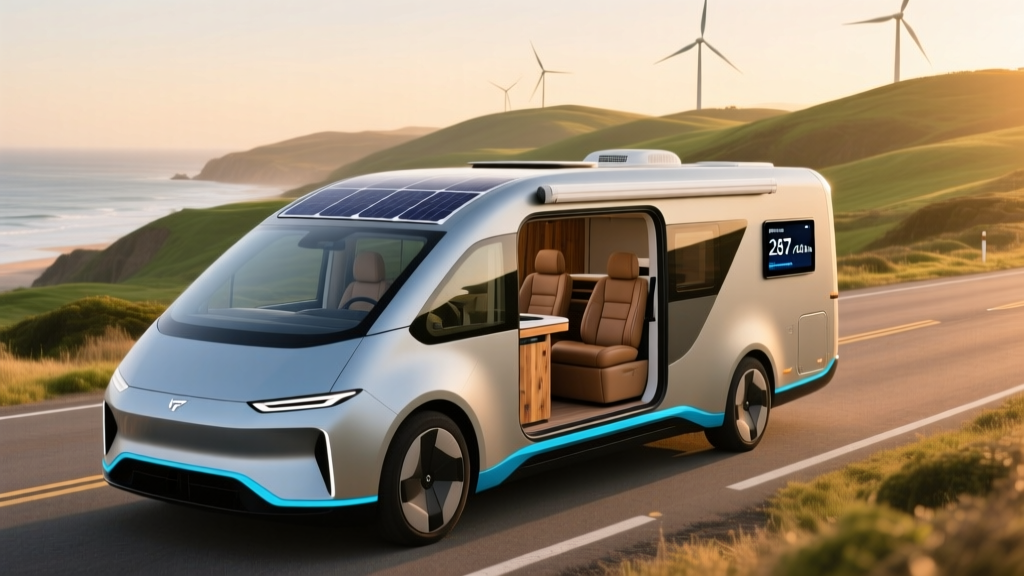
The most practical electrified RV you can buy today is a camper conversion built on the Ford E-Transit cutaway or cargo van platform. The E-Transit carries a 68 kWh usable battery (NMC chemistry) and has an EPA-estimated range of 126 miles in its standard cargo configuration. A camper conversion adds 1,500–3,000 lbs of interior buildout, which realistically cuts that range to 80–100 miles depending on terrain, climate control use, and driving speed.
| Spec | Value |
|---|---|
| Battery (usable) | 68 kWh, NMC |
| EPA Range (cargo van) | 126 mi |
| Real-World Range (camper build) | ~80–100 mi |
| Peak DC Fast Charge | 115 kW (10–80% in ~45 min) |
| Level 2 Charge Rate | 10.5 kW (~7 hr full charge) |
| Motor Output | 266 hp / 317 lb-ft torque |
| Base E-Transit MSRP | ~$45,000 (before conversion) |
| Camper Conversion Cost | $40,000–$90,000+ |
| Total Estimated Cost | $85,000–$135,000+ |
The E-Transit camper makes sense only for a specific use case: weekend trips within 80 miles of home, with access to Level 2 or DC fast charging at your destination. It is a poor fit for cross-country boondocking. Ford's commercial warranty covers the battery for 8 years/100,000 miles with a 70% capacity retention threshold.
Electric Pickup Trucks Towing Travel Trailers
The most common way RV buyers are going electric in 2026 is by pairing an electric truck with a travel trailer or fifth wheel. Here the range penalty is significant and must be planned for:
| Truck | Unladen EPA Range | Est. Towing Range (5,000 lb trailer) | Gas/Diesel Equiv. Towing Range |
|---|---|---|---|
| Ford F-150 Lightning (Ext. Range, 131 kWh) | 320 mi | ~130–160 mi | ~400–450 mi (gas F-150, 36-gal tank) |
| Rivian R1T (Dual Max, 149 kWh) | 410 mi | ~170–210 mi | N/A (no gas R1T) |
| Chevy Silverado EV (4WT, 200 kWh) | 440 mi | ~180–220 mi | ~450–500 mi (diesel Silverado HD) |
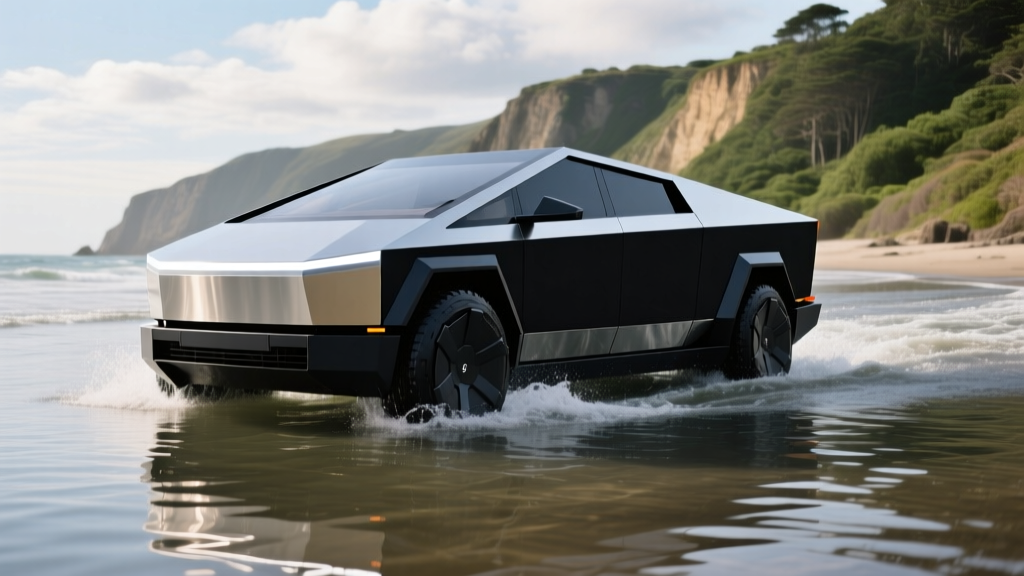
| Tesla Cybertruck (AWD, 123 kWh) | 340 mi | ~140–170 mi | N/A |
Announced and Concept Electric RVs
Several companies have announced electric RV concepts or prototypes. As of 2026, none are available for retail purchase:
- Winnebago e-RV: Unveiled in 2022 on the E-Transit platform. Remains a concept/limited fleet vehicle. Not available for consumer purchase.
- Thor Industries / Airstream e-Stream: A battery-electric travel trailer concept with a self-propulsion system to reduce tow-vehicle strain. Still in development; no retail pricing or availability announced.
- Lightship L1: An all-electric travel trailer with solar integration and an estimated 100+ kWh battery pack, designed to be towed by EVs without range penalty due to its own propulsion system. Announced for production, but not yet delivered to customers as of early 2026. Expected MSRP: ~$125,000+.
Cost Breakdown: Electric Truck + Trailer vs. Gas Motorhome
Since the most viable electric RV strategy today is an electric truck towing a travel trailer, let's compare the total cost of that setup against a comparable gas-powered Class C motorhome over five years of ownership, assuming 6,000 miles driven annually (typical RV use).
| Cost Category | F-150 Lightning + 5,000 lb Travel Trailer | Gas Class C Motorhome (e.g., Thor Four Winds) |
|---|---|---|
| Purchase Price (MSRP) | $75,000 (truck) + $35,000 (trailer) = $110,000 | $95,000–$115,000 |
| Federal Tax Credit (§30D) | $0 (F-150 Lightning does not qualify — MSRP/battery sourcing rules; verify at irs.gov) | $0 (not a qualified EV) |
| Fuel/Energy (5 yr, 30,000 mi) | ~$3,600 (home charging at $0.13/kWh, 2.2 kWh/mi towing avg) | ~$12,850 (7 MPG avg, $3.00/gal gas) |
| Maintenance (5 yr) | ~$1,500 (truck) + ~$1,000 (trailer) = $2,500 | ~$4,500 (oil changes, engine, transmission, generator) |
| Insurance (5 yr) | ~$12,000 (truck + trailer) | ~$9,000 |
| Depreciation (est. 5 yr) | ~$38,000 (truck ~40%, trailer ~35%) | ~$42,000 (~40%) |
| 5-Year Total Cost of Ownership | ~$167,100 | ~$172,350 |
The electric truck + trailer setup saves approximately $9,250 in fuel and maintenance over five years but carries higher insurance costs and comparable depreciation. The total cost of ownership is slightly lower, but the trade-off is significantly reduced range per trip leg and more complex charging logistics on the road.
Charging Logistics: The Biggest Ownership Challenge
Home charging is straightforward: a Level 2 charger (40–48 amp, 9.6–11.5 kW) installed on a 240V circuit will fully recharge an F-150 Lightning extended-range pack overnight in roughly 12–14 hours. Installation costs typically range from $800 to $2,500 depending on your electrical panel capacity, per U.S. DOE home charging guidelines.
The real challenge is public DC fast charging while towing. Most DC fast charging stations are designed for passenger vehicles, with pull-through lanes being rare. This means you often need to unhitch your trailer to charge — a significant inconvenience. Networks like Tesla Supercharger, Electrify America, and EVgo have begun adding pull-through stalls at select locations, but coverage remains sparse, particularly in rural areas and national park corridors where RV travel is most popular.
| Charging Level | Power (kW) | Miles of Towing Range per Hour |
|---|---|---|
| Level 1 (120V outlet) | 1.4 kW | ~2–3 mi/hr |
| Level 2 (240V, 48A) | 11.5 kW | ~18–22 mi/hr |
| DC Fast (150 kW station) | ~120 kW sustained | ~100 mi in 25–30 min |
| DC Fast (350 kW station) | ~150 kW sustained (truck-limited) | ~120 mi in 25–30 min |
Remember: kW (kilowatts) measures power — how fast energy flows into the battery. kWh (kilowatt-hours) measures energy capacity — the size of the battery. A 131 kWh battery charging at a sustained 120 kW would theoretically fill in just over an hour, but real-world charging curves taper significantly above 80% state of charge, which is why manufacturers quote 10–80% times rather than 0–100%.
Common Misconceptions About Electric RVs
| Myth | Fact |
|---|---|
| "Electric RVs are widely available for sale." | No mass-market electric motorhome is available in 2026. The only electrified RV options are E-Transit camper conversions, electric truck + trailer combos, and a handful of prototypes. |
| "An electric truck can tow a camper 300+ miles." | Towing cuts range by 50–60%. A truck rated at 320 miles unladen will deliver 130–160 miles towing a typical travel trailer at highway speeds. |
| "I'll save a fortune on fuel." | Fuel savings are real (~$9,000 over 5 years), but higher insurance, potential home charging installation costs ($800–$2,500), and limited public charging infrastructure offset some savings. |
| "The federal tax credit covers electric RVs." | The §30D credit applies to qualified light-duty EVs under specific MSRP caps ($80,000 for trucks/vans), income limits, and battery-sourcing requirements. Most electric trucks that could tow RVs are near or above MSRP caps, and the trailer itself does not qualify. Always verify at irs.gov. |
| "Solar panels on an RV can fully recharge the battery." | Typical RV roof solar (400–800W) generates roughly 1.5–3.5 kWh per day in good sun — enough to power interior lights and a fridge, not to recharge a 131 kWh traction battery. That would take 40–80 days of peak sun. |
Decision Framework: Is an Electric RV Setup Right for You?
- You have Level 2 home charging and can install a 240V/48A circuit
- Your typical trips are within 100–150 miles of home, or you're willing to plan DC fast charging stops (and unhitch at stations without pull-through lanes)
- You value lower fuel/maintenance costs and quiet, zero-tailpipe-emission operation at the campsite
- You already want an electric truck for daily driving and can use it as your tow vehicle
- You camp primarily in regions with adequate charging infrastructure (Northeast, West Coast, major Interstate corridors)
- You regularly travel 300+ miles between stops or boondock in remote areas
- You need the convenience of a single integrated vehicle (no hitching/unhitching)
- You travel in regions with sparse DC fast charging (rural Mountain West, Great Plains, parts of the South)
- You need maximum range per fuel stop — a diesel Class C can cover 400–500 miles on a tank
- Upfront budget is a primary concern — a used gas motorhome can be had for $30,000–$60,000
What First-Time EV Buyers Towing RVs Should Know
If you are new to electric vehicles and considering an EV truck for RV towing, keep these practical realities in mind:
- Preconditioning matters. Most electric trucks can precondition (warm) the battery before arriving at a DC fast charger, which significantly improves charge speed. In cold weather, a non-preconditioned battery may charge at half its peak rate.
- Regenerative braking is a safety asset on descents. When towing downhill, regen braking can slow the truck and trailer without riding the friction brakes, reducing brake fade — a genuine safety advantage over gas trucks on mountain passes.
- Payload and tongue weight still apply. Electric trucks have payload limits just like gas trucks. An F-150 Lightning's payload ranges from approximately 1,800–2,235 lbs depending on trim. A 5,000 lb trailer with 12% tongue weight puts 600 lbs on the hitch, leaving room for passengers and cargo — but always check your specific truck's door-jamb sticker.
- Battery warranty provides long-term security. The F-150 Lightning's battery is warranted for 8 years/100,000 miles. Rivian covers the R1T battery for 8 years/175,000 miles. These warranties guarantee the battery retains at least 70% of its original capacity.
- Insurance will cost more. EV trucks typically carry 15–25% higher insurance premiums than their gas equivalents, due to higher repair costs and parts pricing. Get quotes before purchasing.
Frequently Asked Questions
Are there any fully electric motorhomes I can buy right now?
No. As of 2026, there are no fully electric Class A, B, or C motorhomes available for retail purchase. The closest options are Ford E-Transit-based camper van conversions (80–100 mile real-world range) and electric pickup trucks towing travel trailers.
What electric truck has the best towing range for RV use?
The Chevrolet Silverado EV with the 200 kWh battery pack offers the longest unladen range (440 miles EPA) and the best estimated towing range at approximately 180–220 miles with a 5,000 lb trailer. However, it is also the most expensive option, with MSRPs starting above $90,000 for the long-range configurations.
Can I charge my electric truck while it's hooked up to the trailer?
Only at charging stations with pull-through lanes, which are still uncommon. At most DC fast charging stations, you will need to unhitch the trailer to position the truck at the charger. Tesla has begun adding pull-through Supercharger stalls, and Electrify America has added some at travel centers, but plan your routes carefully.
How much does it cost to charge an electric truck at home for RV trips?
At the U.S. average residential electricity rate of approximately $0.16/kWh (EIA, 2025 data), fully charging a 131 kWh F-150 Lightning battery costs about $21. For comparison, filling a gas F-150's 36-gallon tank at $3.00/gal costs $108. Over a year of weekend RV trips (approximately 6,000 miles), expect to spend $500–$800 on home electricity vs. $2,000–$2,800 on gasoline.
Will solid-state batteries make electric RVs practical?
Solid-state batteries promise roughly 2x the energy density of current lithium-ion cells, which could theoretically double EV range or halve battery weight. However, commercial availability for heavy-duty applications like RVs is not expected before the early 2030s at the earliest. Even then, the cost premium will be significant in early production.
Does the federal EV tax credit apply to electric trucks used for towing?
The §30D tax credit can apply to qualified electric trucks, but eligibility depends on MSRP caps ($80,000 for vans/pickups), buyer income limits ($300,000 joint / $150,000 single), battery-sourcing requirements, and critical-mineral sourcing rules. Many electric truck trims exceed the MSRP cap. The travel trailer itself does not qualify for any EV tax credit. Always verify current eligibility rules at irs.gov and consult a tax professional before relying on credit availability.