Why Are People Still Searching for a 2004 F-150 Lightning?
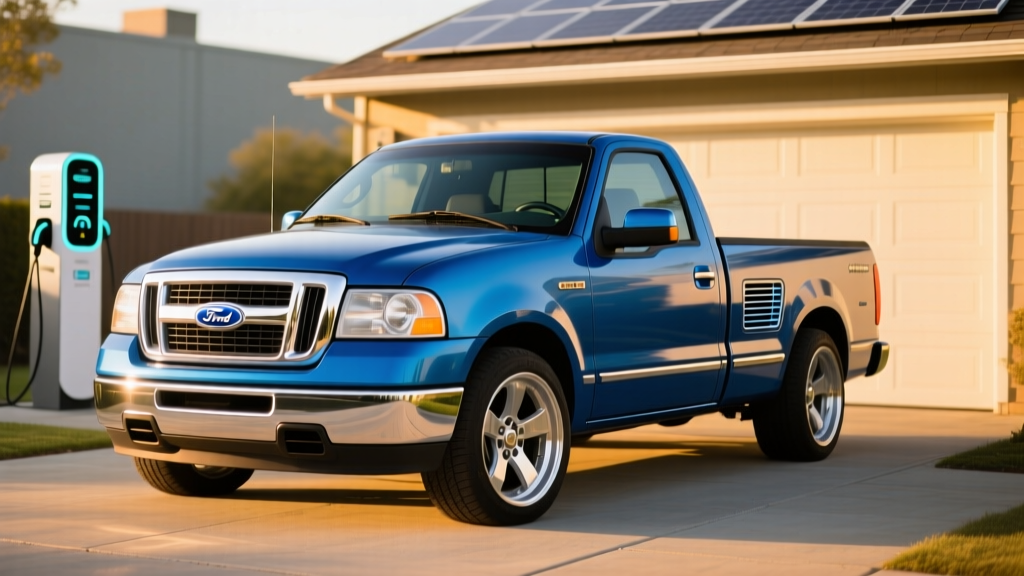
If you've been browsing EV forums or used-truck listings, you may have encountered the search term "2004 F-150 Lightning" and wondered: did Ford actually build an electric Lightning two decades before the current production model? The short answer is no — there was no production electric F-150 Lightning in 2004. What did exist was the 2004 Ford F-150 Lightning concept, a supercharged V8 performance truck that carried the Lightning nameplate forward from the SVT Lightning era (1993–2004). That gasoline-powered muscle truck was eventually succeeded, in spirit and in name, by the Ford F-150 Lightning EV that launched for the 2022 model year.
This article clears up the confusion, then gives you a comprehensive review of what you can actually buy today: the current-generation Ford F-150 Lightning EV, now in its 2026 model year. If you're a classic-truck enthusiast cross-shopping a used SVT Lightning against a modern electric pickup, we'll cover that comparison too.
2026 Ford F-150 Lightning: Full EV Review
The 2026 Ford F-150 Lightning continues as Ford's flagship electric pickup, competing directly with the Rivian R1T, Chevrolet Silverado EV, and Tesla Cybertruck. Built on a dedicated EV platform with a body-on-frame architecture adapted for battery integration, the Lightning offers full-size truck capability with zero tailpipe emissions.
| Specification | Standard Range (Pro/XLT) | Extended Range (Lariat/Platinum) |
|---|---|---|
| EPA Range | 240 miles | 320 miles |
| Battery Capacity (usable) | 98 kWh | 131 kWh |
| Battery Chemistry | NMC (Nickel Manganese Cobalt) | NMC |
| Drivetrain | Dual-motor AWD | Dual-motor AWD |
| Horsepower | 452 hp | 580 hp |
| Torque | 775 lb-ft | 775 lb-ft |
| 0-60 mph | ~3.8 sec | |
| Max DC Fast Charge | 150 kW | 150 kW |
| 10-80% DC Charge Time | ~44 min | ~41 min |
| Level 2 Home Charge Rate | 11.3 kW (~22 mi/hr) | 11.3 kW (~22 mi/hr) |
| MPGe (combined) | 68 MPGe | 66 MPGe |
| Efficiency (kWh/100 mi) | 49 kWh/100mi | 51 kWh/100mi |
| Max Towing | 7,700 lbs | 10,000 lbs |
| Max Payload | 2,235 lbs | 1,952 lbs |
| Base MSRP | $54,995 | $69,995 |
Real-World Range: What the EPA Sticker Doesn't Tell You
EPA Estimated: 240 mi (Standard) / 320 mi (Extended)
Real-World Expectation: In mixed driving, expect approximately 210–225 miles from the Standard Range pack and 275–300 miles from the Extended Range pack. At sustained highway speeds (70-75 mph), range drops roughly 10-15% below EPA due to the truck's large frontal area and aerodynamic drag. In cold weather (below 30°F), expect an additional 20-30% range reduction — bringing the Extended Range model down to roughly 220–250 miles in winter conditions.
The Lightning's NMC battery chemistry provides strong energy density, but NMC cells are more sensitive to extreme temperatures than LFP alternatives. Ford's liquid thermal management system helps mitigate this — preconditioning the battery via the FordPass app while plugged in is essential for preserving range and enabling peak DC charge rates in cold weather. According to fueleconomy.gov, the Extended Range Lightning achieves 66 MPGe combined, which translates to about 51 kWh per 100 miles — a reasonable figure for a 6,500-pound truck, but one that means high-speed road trips will require strategic charging stops.
Charging Speed: DC Fast Charging and Home Setup
Charging speed remains one of the Lightning's most debated specs. Ford equipped the truck with a maximum DC fast-charge rate of 150 kW — adequate but noticeably behind competitors like the Rivian R1T (up to 220 kW) and the Hyundai Ioniq 5 (up to 240 kW on 800V architecture). Here's the breakdown:
| Charging Level | Power | Charge Speed (mi/hr) | Notes |
|---|---|---|---|
| Level 1 (120V) | ~1.4 kW | ~2-3 mi/hr | Emergency/trickle only; ~4 days for full charge |
| Level 2 (240V, 48A) | 11.3 kW | ~22 mi/hr | Home charger; ~10-14 hours for full charge |
| Level 2 (240V, 80A w/ Ford Charge Station Pro) | 19.2 kW | ~30 mi/hr | Requires 100A circuit; ~8-10 hours full charge |
| DC Fast Charge | 150 kW peak | ~150-190 mi/hr (at peak) | 10-80% in ~41 min (Extended Range); tapers significantly above 80% |
The charge curve is the critical detail most spec sheets omit. The Lightning peaks near 150 kW only between roughly 15-40% State of Charge, then tapers progressively. From 80-100%, charging slows to under 30 kW. For road-trip planning, budget roughly 45-50 minutes per 10-80% session on a 150 kW+ Electrify America or EVgo station. The truck uses the NACS (Tesla) connector as of the 2025 model year, granting access to Tesla Supercharger V3 and V4 stations with an adapter — a significant real-world advantage for charging-network reliability.
Pricing, Trims, and Federal Tax Credit Eligibility
The 2026 F-150 Lightning lineup spans four trims. Pricing has stabilized after the supply-chain markups of 2022-2023:
| Trim | Base MSRP | Est. As-Tested | §30D Credit Eligible? |
|---|---|---|---|
| Pro (Standard Range) | $54,995 | $57,000-$60,000 | Up to $7,500 (subject to sourcing rules) |
| XLT (Standard Range) | $59,995 | $62,000-$68,000 | Up to $7,500 (subject to sourcing rules) |
| Lariat (Extended Range) | $69,995 | $73,000-$78,000 | Up to $7,500 (subject to sourcing rules) |
| Platinum (Extended Range) | $84,995 | $88,000-$95,000 | Up to $7,500 (subject to sourcing rules) |
Federal tax credit (§30D) caveats: The F-150 Lightning qualifies as a light-duty truck under the MSRP cap of $80,000, meaning Pro, XLT, and Lariat trims fall within the limit. The Platinum trim's base MSRP of $84,995 exceeds the cap, potentially disqualifying it unless optioned below the threshold. Buyer income limits apply: $150,000 single / $300,000 joint modified AGI. Battery component and critical-mineral sourcing requirements must also be met — Ford has worked to domesticate supply chains, but the exact credit amount ($3,750 or $7,500) depends on current-year IRS sourcing determinations. Always verify eligibility with a tax professional before purchase. The point-of-sale transfer option allows dealers to apply the credit as a down-payment reduction at purchase.
Performance, Cargo, and Technology
The dual-motor AWD powertrain delivers all 775 lb-ft of torque from zero RPM, making the Lightning feel startlingly quick for a truck that weighs over three tons. The Extended Range model's 3.8-second 0-60 time rivals sports cars from just a decade ago, while the Standard Range version's 5.0-second run still outpaces most V8 gas trucks.
Cargo and space:
- Bed length: 5.5 ft (67.1 inches)
- Bed volume: 52.8 cu ft
- Front trunk (frunk): 14.1 cu ft — lockable, weatherproof, with a drain plug and 400W power outlet
- Rear legroom: 43.6 inches (SuperCrew cab)
- Pro Power Onboard: 2.4 kW standard / 9.6 kW available (powers tools, appliances, or a home during outages via bi-directional charging)
Technology highlights: The Lightning features SYNC 4 with a 12-inch touchscreen (15.5-inch on Lariat/Platinum), wireless Apple CarPlay and Android Auto, over-the-air updates, and Ford BlueCruise — a hands-free highway driving assist on pre-mapped divided highways. BlueCruise is a SAE Level 2 system, meaning the driver must remain attentive and ready to take over at any time. It is not autonomous driving.
Notable drawbacks: The 5.5-foot bed is shorter than most gas F-150 configurations, limiting utility for contractors or those hauling long materials. The ride quality, while improved with the independent rear suspension, can feel firm when unloaded. And at 6,500+ lbs curb weight, tire wear accelerates faster than on gas trucks — budget for replacement rubber every 25,000-35,000 miles.
Warranty and Battery Longevity
Ford provides an 8-year / 100,000-mile warranty on the high-voltage battery pack and electric drivetrain components, with a capacity-retention threshold of 70%. If the battery degrades below 70% of original capacity within the warranty period, Ford will repair or replace it. The bumper-to-bumper warranty covers 3 years / 36,000 miles, and the powertrain warranty (covering motors, onboard chargers, and reduction gears) runs 5 years / 60,000 miles.
NMC batteries in the Lightning have shown moderate degradation in real-world fleet data — typically losing 5-8% capacity over the first 60,000 miles before the curve flattens. For buyers planning to keep the truck 150,000+ miles, expect roughly 80-85% state of health at that point. Out-of-warranty battery replacement currently runs $20,000-$30,000 depending on pack size and labor — a figure that's expected to decline as the supply chain matures.
F-150 Lightning vs. Key Competitors
| Category | F-150 Lightning | Rivian R1T | Chevy Silverado EV | Tesla Cybertruck |
|---|---|---|---|---|
| Max EPA Range | 320 mi | 410 mi (Max Pack) | 440 mi (4WT) | 340 mi |
| Max DC Charge | 150 kW | 220 kW | 200 kW | 250 kW |
| Starting MSRP | $54,995 | $69,900 | $57,900 | $60,990 |
| Max Towing | 10,000 lbs | 11,000 lbs | 12,500 lbs | 11,000 lbs |
| Bed Length | 5.5 ft | 4.5 ft + tunnel | 5.5 ft | 6.0 ft |
| Dealer Network | Yes (nationwide) | Direct only | Yes (nationwide) | Direct only |
The Lightning's advantage lies in Ford's dealer network, the massive frunk, and Pro Power Onboard's home-backup capability. The Rivian R1T offers superior range and charging speed but at a higher entry price and without traditional dealer service. The Silverado EV leads in range and towing but launched with limited trim availability. The Cybertruck's polarizing design and build-quality inconsistencies make it a niche pick.
Who Should Buy the F-150 Lightning?
Choose the F-150 Lightning if:
- You need a full-size truck for daily commuting with home Level 2 charging and a round trip under 200 miles
- You value the frunk and Pro Power Onboard for job-site or tailgate power
- You want dealer-supported service in rural or suburban areas
- You're interested in bi-directional home backup (Intelligent Backup Power, requires Ford Charge Station Pro and home transfer switch)
Look elsewhere if:
- You regularly tow heavy loads over 300+ miles — range while towing drops 40-50%
- You need a long bed (6.5 ft+) for construction materials
- You lack access to home charging and depend solely on public DC fast chargers (the 150 kW peak is slower than competitors)
- Massive 14.1 cu ft frunk with power outlet
- Pro Power Onboard (up to 9.6 kW) for tools and home backup
- Smooth, quiet ride with independent rear suspension
- NACS connector grants Supercharger access
- Strong dealer network for service and warranty work
- 150 kW peak DC charge rate lags competitors
- Short 5.5-ft bed limits utility
- Heavy tire wear due to vehicle weight and instant torque
- Extended Range trims push past §30D MSRP cap
- Real-world highway and cold-weather range falls significantly below EPA
What About the Original 2004 SVT Lightning?
For collectors and enthusiasts, the 2004 Ford SVT F-150 Lightning was the final model year of the supercharged 5.4L V8 performance truck producing 380 hp and 470 lb-ft of torque. It was a gasoline-powered street-performance truck — not an EV. Clean examples now trade in the $25,000-$45,000 collector market. If you're cross-shopping: the SVT Lightning is a weekend show car with 12 MPG and rising maintenance costs; the EV Lightning is a daily-drivable workhorse with a $55K+ entry but dramatically lower operating costs. They share a name, but serve entirely different purposes.
Frequently Asked Questions
Was there actually a 2004 F-150 Lightning electric truck?
No. The 2004 F-150 Lightning was the final year of Ford's SVT supercharged V8 gasoline performance truck. The electric F-150 Lightning debuted for the 2022 model year. The nameplate was reused for the EV as a nod to the performance heritage.
What is the real-world range of the 2026 F-150 Lightning?
Expect 210-225 miles from the Standard Range (98 kWh) pack and 275-300 miles from the Extended Range (131 kWh) pack in normal conditions. Highway driving at 70+ mph and cold weather below 30°F will reduce these figures by 10-30%.
How fast does the F-150 Lightning charge at home and on the road?
At home on a Level 2 (240V, 48A) charger, expect roughly 22 miles of range per hour, or a full charge in 10-14 hours. With the optional 80A Ford Charge Station Pro, that increases to ~30 mi/hr. On DC fast chargers, the truck peaks at 150 kW, completing a 10-80% charge in approximately 41-44 minutes depending on pack size.
Does the 2026 F-150 Lightning qualify for the $7,500 federal tax credit?
Pro, XLT, and Lariat trims fall under the $80,000 MSRP cap for trucks and may qualify for up to $7,500 under IRS §30D, subject to buyer income limits ($150K single / $300K joint), battery sourcing requirements, and point-of-sale or tax-filing election. The Platinum trim's MSRP may exceed the cap. Always verify current rules at irs.gov and consult a tax professional.
Is the F-150 Lightning worth buying over the Rivian R1T or Silverado EV?
The Lightning wins on dealer service access, frunk utility, Pro Power Onboard, and starting price. It loses on DC charge speed (150 kW vs. 200-250 kW for competitors) and maximum range. If you prioritize road-trip charging speed and maximum range, the R1T or Silverado EV may serve you better. If you want a workhorse with home backup power and nationwide dealer support, the Lightning remains the pragmatic choice.
What is the battery warranty on the F-150 Lightning?
Ford covers the high-voltage battery for 8 years or 100,000 miles against capacity loss below 70% of original. Electric drivetrain components are covered for 5 years / 60,000 miles.