Quick Answer: Should You Buy an EV Motorhome in 2026?
True electric motorhomes (fully integrated Class A, B, or C RVs with all-electric drivetrains) remain extremely limited in 2026. The Winnebago e-RV remains in limited production, and several startups have announced models, but most buyers are better served by towing a smaller EV trailer behind an electric truck or SUV, or using an electric van conversion for shorter trips. If you drive under 150 miles per day, can charge at home or at campgrounds with Level 2 access, and don't need to tow heavy loads, an electric RV setup may work. For cross-country road trips or boondocking, gas and diesel RVs still dominate.
The Current EV Motorhome Landscape
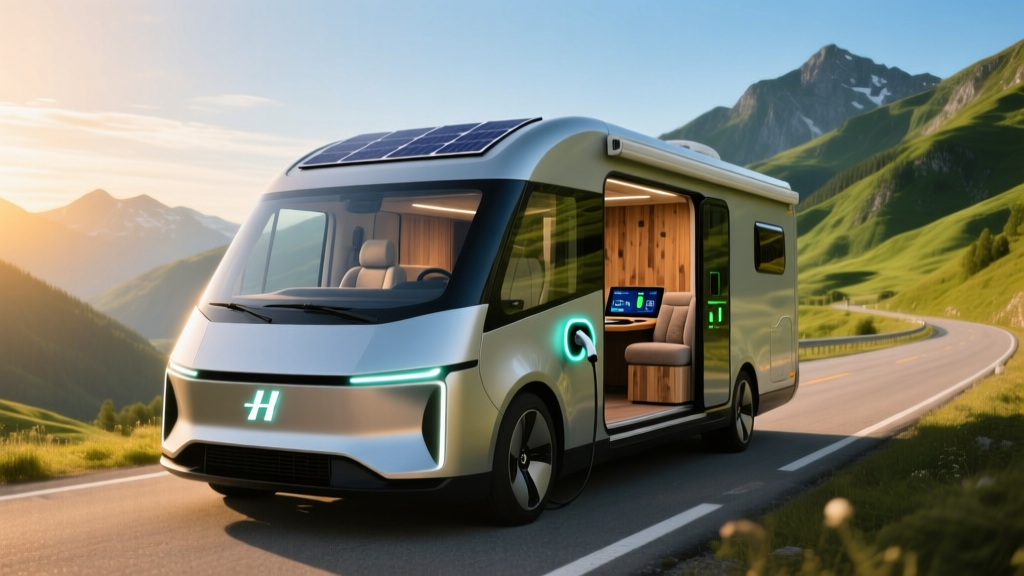
The term "EV motorhome" covers a spectrum that most shoppers don't fully appreciate. At one end, you have purpose-built electric RVs like the Winnebago e-RV, built on the Ford E-Transit chassis with an 89 kWh usable battery (LFP chemistry). At the other end, you have electric van conversions and electric truck-and-trailer combos that approximate the motorhome experience without being true motorhomes.
As of early 2026, here's what's actually available or in limited production:
| Model | Type | Battery (kWh) | EPA Range | MSRP | Status |
|---|---|---|---|---|---|
| Winnebago e-RV | Class B (E-Transit chassis) | 89 kWh (LFP) | ~108 mi | ~$125,000+ | Limited production |
| Lightship L1 | Electric travel trailer (aero, solar-equipped) | 80 kWh (trailer battery) | N/A (towed) | ~$125,000 | Pre-orders/deliveries beginning |
| Grounded G1 (announced) | Electric travel trailer | ~80 kWh | N/A (towed) | ~$100,000+ | Announced/pre-order |
| Various E-Transit van conversions | Class B custom | 68–89 kWh | 100–126 mi | $90,000–$150,000+ | Available through converters |
Notice what's missing: large Class A motorhomes with 300+ mile range. The physics of moving a 10,000–20,000 lb vehicle with living quarters requires enormous battery packs that add cost and weight, which is why the market has focused on Class B vans and electric trailers instead.
Range Reality: EPA Sticker vs. the Campground
Range is the single biggest concern for any EV motorhome buyer, and it's where marketing claims collide with physics. An RV's aerodynamic profile (essentially a rolling brick), heavy weight, and accessory power draw all work against efficiency.
Real-World Range Expectations for Electric RVs
Winnebago e-RV (E-Transit chassis, 89 kWh): EPA-rated at approximately 108 miles. In real-world RV use — loaded with gear, driving at 65 mph on highways, with HVAC running — expect 70–90 miles before needing a charge. In cold weather (below 40°F), that drops to 55–75 miles.
Electric van conversions (68 kWh packs): EPA-rated 100–126 miles depending on the build. Real-world loaded highway driving: 65–95 miles.
For context, a typical gas Class B motorhome on a Sprinter or Transit chassis delivers 350–500 miles on a tank. That's a 4–5x range gap that charging infrastructure hasn't closed for RV-sized vehicles.
The challenge compounds when you consider that DC fast charging an 89 kWh pack at a peak rate of ~115 kW (the E-Transit's maximum) still takes roughly 45 minutes for a 10–80% charge, and most RV parks only offer Level 2 (240V) connections at 30 or 50 amps. A full Level 2 charge from empty on a 50-amp campground pedestal takes 7–9 hours.
EV Motorhome vs. Gas RV: The Cost Breakdown
Let's compare what ownership actually looks like over five years, assuming 8,000 miles driven annually (typical for recreational RV use).
| Cost Factor | Electric RV (e-RV class) | Gas Class B RV (Transit chassis) |
|---|---|---|
| Purchase price (MSRP) | $125,000 | $95,000 |
| Federal tax credit (§30D) | Up to $7,500 (if eligible)* | $0 |
| Effective purchase price | ~$117,500 | $95,000 |
| Fuel/energy cost (5 yrs, 40,000 mi) | ~$4,800 (at $0.15/kWh avg) | ~$10,000 (at $3.80/gal, 14 MPG) |
| Maintenance (5 yrs) | ~$1,200 | ~$3,500 |
| Insurance (annual avg) | ~$2,400/yr | ~$1,800/yr |
| 5-year total cost of ownership | ~$135,500 | ~$109,000 |
*The §30D federal EV tax credit has income caps ($150K single / $300K joint), MSRP caps ($80K for vans, though some RVs may qualify under different classifications), and battery sourcing requirements. Consult IRS guidelines and a tax professional for your specific eligibility.
The numbers show a clear pattern: the electric RV saves roughly $5,200 on fuel and $2,300 on maintenance over five years, but the $30,000 higher purchase price and $3,000 extra in insurance premiums mean the gas RV still wins on total cost for most buyers. The math only flips if you drive significantly more miles annually, have access to very cheap electricity, or if electric RV prices drop substantially.
Charging Logistics: The Real Bottleneck
Charging is where EV motorhome ownership diverges sharply from EV car ownership. Consider the practical realities:
Home charging: If you store your RV at home and have a 240V/50-amp outlet (common for RV owners who already have a "shore power" hookup), you can add roughly 15–20 miles of range per hour of Level 2 charging. A full overnight charge (10 hours) restores most of the battery. If you lack home 240V access, Level 1 (120V) charging adds only ~2–3 miles per hour — essentially unusable for an RV battery.
Campground charging: Most RV parks offer 30-amp or 50-amp 240V pedestals designed for shore power, not EV charging. You'll need a compatible adapter, and charging speed depends on the amperage available. A 50-amp pedestal can deliver up to ~12 kW, meaning a full charge of an 89 kWh battery takes roughly 7–8 hours.
Public DC fast charging: Networks like Electrify America and Tesla Superchargers can replenish an E-Transit-based e-RV from 10–80% in about 45 minutes at peak rate (~115 kW). However, many charging stations have tight parking layouts not designed for vehicles towing trailers or measuring 20+ feet long. Pull-through chargers remain rare.
| Scenario | Electric RV | Gas/Diesel RV |
|---|---|---|
| Refueling/recharging time | 45 min (DC fast, 10–80%) or 7–9 hrs (Level 2) | 10–15 min (gas station) |
| Range per fill/charge | 70–108 mi (real-world) | 350–500 mi |
| Infrastructure availability | Limited for RV-sized vehicles | Ubiquitous |
| Boondocking (off-grid) | Severely limited by battery capacity | Generator + fuel tank = days of autonomy |
| Cold-weather impact | 20–30% range loss below 40°F | Minimal (5–10% fuel economy loss) |
Common Misconceptions About Electric RVs
| Myth | Fact |
|---|---|
| "Solar panels on the roof will keep the EV motorhome charged." | Typical RV roof solar (400–800W) generates roughly 2–4 kWh per day in good sun — enough to power the living area appliances, but only ~2–4 miles of driving range. You cannot solar-charge an 89 kWh traction battery meaningfully while parked. |
| "You'll save a fortune on fuel." | At $0.15/kWh (national average), driving an electric RV costs roughly $0.12/mile vs. $0.27/mile for a gas RV at 14 MPG and $3.80/gal. That's real savings, but at 8,000 miles/year, it's ~$1,200/year — not enough to offset the higher purchase price quickly. |
| "The federal tax credit makes electric RVs affordable." | The §30D credit is up to $7,500, but MSRP caps, income limits, and battery mineral sourcing rules disqualify many buyers and some models. A $7,500 credit on a $125,000 vehicle is a 6% discount — helpful, not transformative. |
| "Electric RVs are self-driving on the highway." | Any driver-assist system (Ford BlueCruise, etc.) in an RV is SAE Level 2 — you must remain attentive and ready to take over at all times. It is not autonomous driving. |
Decision Framework: Is an EV Motorhome Right for You?
Choose an Electric RV If:
- Your typical trips are under 100 miles one-way (day trips, local campgrounds, tailgating)
- You have reliable 240V charging at home or at your storage location
- You camp at RV parks with 50-amp shore power and don't mind overnight charging
- You want silent, zero-tailpipe-emission operation in campgrounds and nature areas
- You value lower maintenance (no oil changes, no transmission service, fewer moving parts)
- You're willing to accept range limitations and plan routes around charging
Stick with Gas/Diesel RV If:
- You regularly drive more than 150 miles between stops
- You boondock (camp off-grid) for multiple days
- You travel in cold climates where range loss compounds
- You tow a vehicle behind your motorhome (dinghy towing adds weight and drag)
- You need the 350–500 mile range for cross-country trips
- You don't have 240V home charging access
Consider the Hybrid Alternative:
- Electric truck + conventional trailer: A Ford F-150 Lightning or Rivian R1T can tow a travel trailer, giving you electric daily driving with the flexibility to unplug and use the trailer at camp. Towing cuts EV truck range by 30–50%, so plan accordingly.
- Electric trailer (Lightship L1): These trailers have their own battery pack that preserves the tow vehicle's range by powering the trailer's axle. They're promising but early-stage and expensive (~$125,000).
What First-Time Electric RV Buyers Should Know
If you're seriously considering an electric motorhome or electric RV setup, here are the practical realities that brochures don't emphasize:
1. Battery degradation is real but manageable. LFP batteries (used in the E-Transit and most electric RV platforms) degrade more slowly than NMC chemistries, typically retaining 90%+ capacity after 1,000 charge cycles. Ford warranties the E-Transit battery for 8 years / 100,000 miles with a minimum 70% capacity retention threshold. For recreational use, you'll likely never hit the mileage cap.
2. Weight matters more than you think. Every 1,000 lbs of cargo, water, and passengers reduces range by roughly 5–8%. A fully loaded RV with full freshwater tanks (40+ gallons = 330+ lbs) and gear can easily shed 10–15 miles from your real-world range.
3. Plan for charging deserts. While the public charging network has expanded significantly, many rural areas and national parks still lack DC fast chargers. Use tools like the Alternative Fuels Data Center to map charging along your routes before you go.
4. The house battery and the drive battery are separate. Your RV's living-area power (lights, fridge, outlets) draws from a separate house battery system, not the traction battery that moves the vehicle. Some electric RVs can use the traction battery as a backup power source (similar to V2L — vehicle-to-load), but this feature isn't universal and draws down your driving range.
5. Insurance costs more. Electric RVs carry higher insurance premiums due to the replacement cost of the battery pack and limited repair-network familiarity. Expect to pay 25–40% more than an equivalent gas RV policy. Get quotes before you buy.
The Bottom Line
Electric motorhomes in 2026 are a niche product for a specific use case: shorter trips, reliable charging access, and a willingness to trade range for silent, emission-free operation. The Winnebago e-RV and electric van conversions prove the concept works, but the 70–108 mile real-world range and $100,000+ price tags mean they aren't yet practical for the majority of RV buyers.
The more viable path for most people is the electric-truck-plus-trailer approach, or waiting for the next generation of electric trailers like the Lightship L1 to mature. Battery energy density improvements and charging infrastructure expansion will close the gap, but we're likely 3–5 years from electric motorhomes that can match gas RVs on range and convenience for long-distance travel.
Can you tow a car behind an electric motorhome?
Technically yes, but dinghy towing adds 2,500–4,000 lbs and dramatically reduces already-limited range. Most electric RV owners do not tow additional vehicles. If you need a car at your destination, consider driving it separately or using an electric truck to tow a trailer with the car inside.
How long does it take to charge an electric motorhome at a campground?
On a 50-amp, 240V campground pedestal (the most common RV shore power connection), expect a full charge of an 89 kWh battery in approximately 7–9 hours. This works well for overnight charging but means you can't quickly "top up" during a short stop.
Do electric motorhomes qualify for the federal EV tax credit?
It depends on the specific model and your tax situation. The §30D credit requires the vehicle to meet MSRP caps, buyer income limits, and battery component/mineral sourcing rules. Some electric RVs built on commercial chassis may fall into different classification categories. Always verify eligibility on IRS.gov and consult a tax professional before purchasing.
What happens if an electric RV runs out of charge on the road?
You'll need a flatbed tow to the nearest charger — you cannot flat-tow most electric vehicles without risking drivetrain damage. Roadside assistance plans that cover EV towing are essential. AAA and some insurers now offer EV-specific roadside coverage with flatbed dispatch.
Are electric travel trailers better than electric motorhomes?
For most buyers in 2026, electric travel trailers (like the Lightship L1) offer more flexibility because they can be towed by different vehicles, don't require you to commit to a single drivetrain, and their battery packs can preserve tow-vehicle range. However, they're equally expensive and still early in production.