Quick Answer: Does an Electric Royal Enfield Exist in 2026?
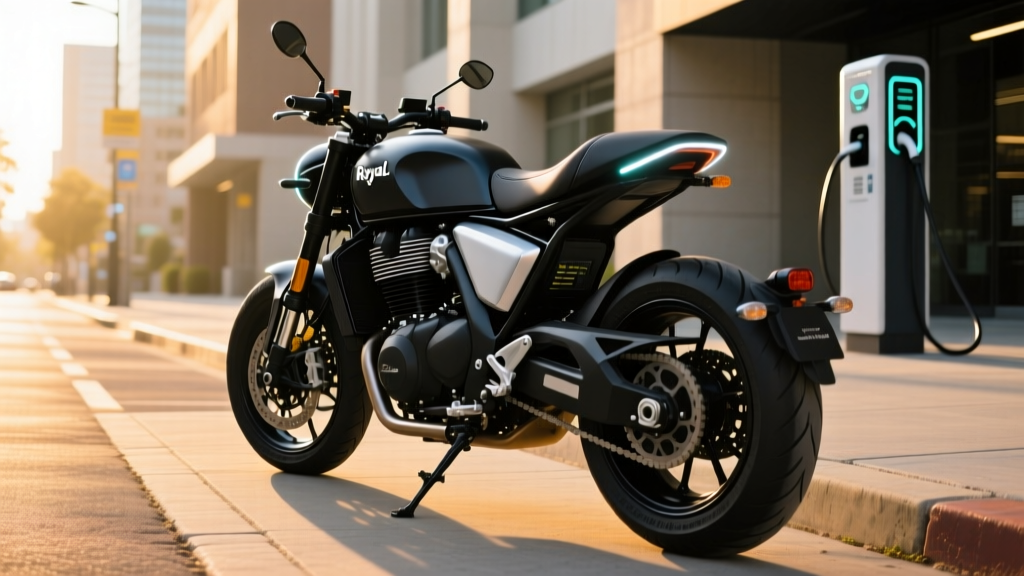
As of early 2026, Royal Enfield has not yet released a production electric motorcycle for global sale. The brand has confirmed an electric platform is in development — showcased through concepts and patent filings — but no EPA-rated, street-legal electric Royal Enfield is available for purchase in the United States. Riders searching for an "electric Royal Enfield" today are looking at either announced/preliminary models expected no earlier than late 2026 or 2027, or electric motorcycles from competitors like Zero, LiveWire, and Energica that deliver a similar classic or cruiser riding experience.
This guide covers what we know about Royal Enfield's electric plans, what comparable electric motorcycles cost and deliver today, and how to decide whether to wait or buy now from an established EV motorcycle maker.
What We Know About Royal Enfield's Electric Motorcycle Plans
Royal Enfield's parent company, Eicher Motors, has publicly stated that an electric motorcycle is part of the brand's long-term roadmap. CEO Siddhartha Lal confirmed in 2024 that the company is developing an electric platform, with testing underway in India. However, Royal Enfield has historically taken a deliberate approach to new powertrains — the brand waited years after announcing the 650 Twin platform before bringing it to market.
Based on patent filings and industry reporting, the expected electric Royal Enfield will likely target the equivalent of the 350cc class — the brand's core volume segment — rather than chasing high-performance superbike territory. This means an estimated:
- Battery capacity: ~4–6 kWh (estimated, based on class competitors)
- Range: 70–100 miles city / 50–70 miles highway (preliminary estimate)
- Top speed: ~65–75 mph
- Target price (India): ₹2.5–3.5 lakh (~$3,000–$4,200 USD, before tariffs and US distribution costs)
- Estimated US MSRP if imported: $5,500–$7,500 (speculative, based on RE's current US pricing strategy)
Important caveat: These figures are preliminary estimates based on competitor benchmarks and patent analysis. Royal Enfield has not published official EPA range, battery chemistry, or charging specifications. Any buyer should treat these numbers as directional until official specs are released.
Electric Motorcycle vs. Gas Royal Enfield: The Cost Comparison
Since an electric Royal Enfield isn't yet available, the most useful comparison is between Royal Enfield's current gas lineup (the Classic 350, Meteor 350, and Hunter 350) and established electric motorcycles in the same price and performance class. Here's how the numbers stack up:
| Metric | Royal Enfield Classic 350 (Gas) | Zero S (Electric, Comparable Class) | LiveWire ONE (Electric, Cruiser) |
|---|---|---|---|
| Base MSRP | $4,650 | $12,995 | $14,999 |
| EPA Range | ~200 mi (3.4 gal tank, ~58 MPG) | 156 mi city / 82 mi highway | 146 mi city / 78 mi highway |
| Fuel/Energy Cost per Mile | ~$0.055 (gas at $3.50/gal) | ~$0.015 (home charging at $0.14/kWh) | ~$0.015 |
| Annual Fuel/Energy (6,000 mi) | $330 | $90 | $90 |
| Annual Maintenance | $250–$400 (oil, filters, chain) | $50–$100 (tires, brake fluid, belt) | $50–$100 |
| 0–60 mph | ~11.5 sec | 3.3 sec | 3.0 sec |
| Peak Power | 20.2 HP | 46 HP (34 kW) | 105 HP (78 kW) |
| Weight (wet) | 430 lbs | 386 lbs | 470 lbs |
The gap is immediately clear: electric motorcycles from Zero and LiveWire deliver dramatically more performance but at 2.5× to 3× the purchase price of a gas Royal Enfield. A future electric Royal Enfield would need to price near $5,500–$7,500 to remain competitive with its own gas lineup and undercut established EV brands — a challenging target given battery costs.
Real Ownership Costs: Electric Motorcycle 5-Year Breakdown
For riders deciding between waiting for an electric Royal Enfield or buying an established electric motorcycle now, the 5-year total cost of ownership tells a different story than MSRP alone. Below is a realistic projection based on 6,000 miles per year:
| Cost Category (5 Years / 30,000 mi) | RE Classic 350 (Gas) | Zero S (Electric) | LiveWire ONE (Electric) |
|---|---|---|---|
| Purchase Price | $4,650 | $12,995 | $14,999 |
| Fuel / Electricity | $1,650 | $450 | $450 |
| Maintenance | $1,500 | $350 | $350 |
| Insurance (avg) | $1,800 | $2,400 | $2,600 |
| Tax Credit (§30D eligible) | $0 | Up to $2,500* | Up to $2,500* |
| 5-Year Net Cost | $9,600 | $13,795 | $15,799 |
*Federal tax credit for electric motorcycles under IRS §30D and the qualified commercial clean vehicle credit (§45W) can provide up to $2,500 for electric two-wheelers meeting battery sourcing requirements. Income caps and MSRP limits apply. Consult a tax professional for your specific eligibility.
Even with lower operating costs, the Zero S and LiveWire ONE remain significantly more expensive over 5 years than a gas Royal Enfield, primarily due to the higher purchase price. An electric Royal Enfield would need to launch at or below $7,000 MSRP to close this gap — feasible only with aggressive battery cost reduction or manufacturing subsidies.
Charging Reality: What Electric Motorcycle Owners Actually Face
One of the biggest ownership considerations that spec sheets don't convey is charging logistics. Here's what real-world electric motorcycle charging looks like in 2026:
Level 1 (Standard 120V Outlet)
Every electric motorcycle can charge from a standard household outlet. A 5 kWh battery (estimated RE electric class) would take approximately 5–7 hours from empty to full. This works well for overnight charging if your daily ride is under 50 miles.
Level 2 (240V — Home or Public)
Most electric motorcycles accept Level 2 charging at 1.3–3.3 kW (note: kW is the charge rate, kWh is the battery capacity). A full charge takes 2–4 hours. Home Level 2 installation for a dedicated motorcycle circuit typically costs $300–$800 for a simple 240V outlet, or $800–$2,000 for a hardwired smart charger with a panel that can support it.
DC Fast Charging
This is where electric motorcycles lag significantly behind EVs. Most electric motorcycles do not support DC fast charging — Zero offers it as a paid accessory (Charge Tank, adding ~1.3 kW of Level 2 speed, not true DCFC). LiveWire ONE supports Level 2 at 1.92 kW but no DC fast charging. A 0–80% charge on Level 2 takes roughly 1.5–2.5 hours depending on the model.
Real-world implication: Electric motorcycles in 2026 are primarily commuter and weekend machines. Highway road trips require significant planning around multi-hour charging stops — a limitation that a future electric Royal Enfield will likely share unless it adopts automotive-grade DC fast-charging architecture (NACS or CCS), which is unlikely in this price class.
Common Misconceptions About Electric Motorcycles
| Myth | Fact |
|---|---|
| "Electric motorcycles have no maintenance." | Tires, brake pads, brake fluid, suspension, and belt/chain still require service. Savings come from eliminating oil changes, spark plugs, and valve adjustments — roughly 60–70% less maintenance, not zero. |
| "The range is the same in all conditions." | Cold weather (below 40°F) reduces lithium-ion battery capacity by 15–25%. Highway riding at 70+ mph cuts range by 35–45% compared to city riding due to aerodynamic drag. A 156-mile city rating may deliver only 70–85 miles on a cold highway. |
| "I can charge at any EV station." | Most public DC fast chargers (Electrify America, EVgo) are designed for cars. Motorcycle charging typically requires Level 2 (J1772) stations, which are slower and less common at highway rest stops. Plan routes carefully. |
| "Federal tax credits cover electric motorcycles fully." | The §30D new clean vehicle credit of up to $7,500 applies to four-wheeled vehicles. Electric motorcycles may qualify for the qualified commercial clean vehicle credit (up to $2,500 for two/three-wheelers) or the used clean vehicle credit, with strict income, price, and sourcing requirements. |
| "An electric Royal Enfield is available now." | As of early 2026, no production electric Royal Enfield is on sale. Any listings claiming otherwise are either third-party EV conversions (not factory) or pre-order deposits for unreleased models. |
Should You Wait for Royal Enfield's Electric or Buy Now?
This is the decision every interested rider faces. Here's a practical framework based on your situation:
Decision Framework: Wait or Buy Now?
Wait for the electric Royal Enfield if:
- Your budget is under $8,000 and you want a classic-styled electric motorcycle at a Royal Enfield price point
- You ride primarily in the city (under 40 miles/day) and can charge at home overnight on a standard outlet
- You don't need a motorcycle within the next 12–18 months
- You value Royal Enfield's dealer network and parts availability in your area
- You're comfortable with the risk that the final product may not meet range or price expectations
Buy an established electric motorcycle now if:
- You want verified EPA range data, real-world owner reviews, and proven reliability
- Your budget extends to $12,000–$16,000 for a Zero S, LiveWire ONE, or Energica Experia
- You want performance well beyond what a 350cc-class bike offers (electric motorcycles deliver instant torque from 0 RPM)
- You need a motorcycle within the next 6 months
- You want to take advantage of current federal tax credits before rules potentially change
Stick with a gas Royal Enfield for now if:
- You regularly ride more than 100 miles in a day and need quick refueling
- You don't have reliable home charging access (apartment/condo without outlet access)
- You ride in extreme cold (below 20°F) frequently, where battery range loss is most severe
- Your budget is strictly under $5,000
What a First-Time Electric Motorcycle Buyer Should Know
If you're coming from a gas motorcycle or are new to riding entirely and considering electric, these ownership realities matter more than spec-sheet numbers:
1. Battery degradation is real but slow. Most electric motorcycle batteries (NMC chemistry) lose roughly 10–15% capacity over 5 years or 50,000 miles. Zero Motorcycles warranties their batteries for 5 years with unlimited mileage. Battery replacement costs $3,000–$5,000 out of warranty — a significant portion of the vehicle's value.
2. Insurance costs more. Electric motorcycles carry 20–40% higher insurance premiums than comparable gas bikes, driven by higher repair costs and battery replacement risk. Get quotes before purchasing — the annual difference ($200–$500/year) adds up.
3. Resale value is uncertain. The used electric motorcycle market is still thin. Depreciation data is limited, but early indicators suggest electric motorcycles depreciate faster than gas equivalents in the first 3 years, partly due to battery health uncertainty for second owners.
4. Home charging access is essential. Unlike electric cars, which can rely on a growing DC fast-charging network, electric motorcycles depend almost entirely on home charging. If you live in an apartment without garage outlet access, electric motorcycle ownership is impractical in 2026.
5. Regenerative braking changes your riding. Most electric motorcycles offer adjustable regen that slows the bike when you roll off the throttle. This enables "one-throttle" riding similar to one-pedal driving in EVs — a significant learning curve but one most riders come to prefer within a week.
Frequently Asked Questions
When will the electric Royal Enfield be available in the US?
Royal Enfield has not announced an official US release date. Based on the brand's typical development timeline and the fact that India will likely be the launch market first, a US availability date before 2028 is uncertain. The earliest global reveal of a production model is expected in late 2026 or 2027.
Will the electric Royal Enfield qualify for the $7,500 federal tax credit?
No. The IRS §30D new clean vehicle credit of up to $7,500 applies only to four-wheeled vehicles with a gross vehicle weight rating under 14,000 lbs. Electric motorcycles may qualify for a separate credit of up to $2,500 under different provisions, subject to income limits and battery sourcing requirements.
What electric motorcycle is closest to a Royal Enfield in style and price?
The closest match in classic styling is the Ryvid Anthem (~$8,000) or the Maeving RM1 (~$6,500, UK-based, limited US availability). In the cruiser segment, the LiveWire ONE offers a low-slung riding position similar to the Royal Enfield Meteor, but at $14,999 — roughly 3× the Classic 350's price. No current electric motorcycle matches Royal Enfield's combination of classic styling, sub-$5,000 pricing, and global dealer support.
Can I convert a gas Royal Enfield to electric?
Aftermarket EV conversion kits exist, but they typically cost $4,000–$8,000 (parts and labor), void all factory warranties, require custom fabrication, and result in a bike that cannot be registered as a factory EV for tax credit purposes. For most riders, buying a purpose-built electric motorcycle is a better path than converting a gas Royal Enfield.
How does cold weather affect electric motorcycle range?
Lithium-ion batteries lose efficiency in cold temperatures. At 32°F (0°C), expect a 15–20% range reduction. Below 20°F (-7°C), the loss can reach 25–35%. Unlike electric cars, most electric motorcycles lack active battery thermal management (liquid cooling/heating), making them more vulnerable to cold-weather range loss. If you ride year-round in northern US climates, plan for significantly reduced winter range.