If you have been searching for an electric rocket pocket, you are likely weighing ultra-compact, budget-friendly electric vehicles against their gas-powered counterparts — and wondering whether a micro-EV actually makes financial sense. The short answer: it depends entirely on your daily mileage, charging access, and climate. Small-format EVs excel for urban commuters logging under 40 miles per day with reliable home charging, where they can deliver fuel-equivalent savings of $1,200–$1,800 annually. However, if you regularly drive over 200 highway miles per week, live in a region with harsh winters, or lack access to a Level 2 home charger, a plug-in hybrid or conventional vehicle may serve you better.
Quick Answer: Is an Electric Rocket Pocket Right for You?
Yes, if: You drive under 50 miles/day, have Level 2 home charging, live in a mild-to-moderate climate, and prioritize low operating costs over highway range.
Consider alternatives if: You frequently road-trip over 150 miles, lack reliable charging access, or endure winters below 20°F where range drops 20–30%.
What Exactly Is an "Electric Rocket Pocket"?
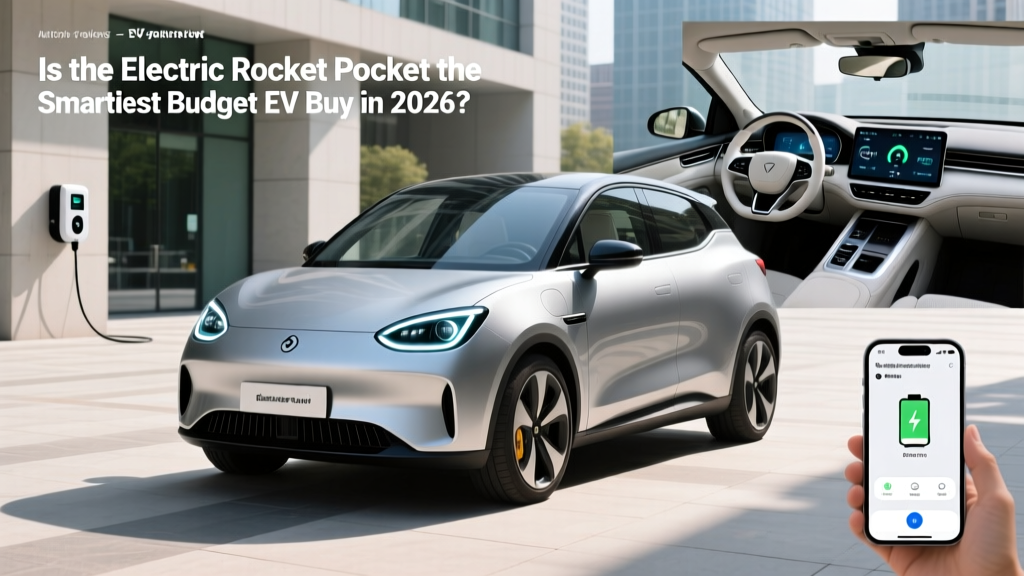
The term electric rocket pocket has emerged in EV enthusiast communities to describe a category of compact, affordable electric vehicles that punch above their weight in efficiency and urban usability. Think of models like the Chevrolet Equinox EV (starting around $33,000 MSRP), the Nissan Leaf (from ~$28,140), or the Hyundai Kona Electric (~$32,675). These vehicles typically offer 200–300 miles of EPA-rated range, 130–200 horsepower, and DC fast charging between 70–150 kW.
What makes them "rocket pockets" is the power-to-price ratio: instant electric torque in a lightweight, affordable package. A Kona Electric, for example, delivers 201 hp and a 0–60 mph time of approximately 6.5 seconds from a 64.8 kWh NMC battery — performance that rivals many gas compacts costing $10,000 more.
EV vs Gas vs Hybrid: The Real Cost Comparison
Numbers matter more than marketing. Here is a side-by-side comparison of a representative "rocket pocket" EV against a comparable gas compact and a plug-in hybrid, based on 15,000 annual miles driven (60% city / 40% highway) and 2026 energy prices:
| Category | Compact EV (~$33k) | Gas Compact (~$26k) | PHEV (~$35k) |
|---|---|---|---|
| Purchase Price (MSRP) | $33,000 | $26,000 | $35,000 |
| Fed. Tax Credit (§30D)* | Up to $7,500 | $0 | Up to $7,500 |
| Effective Purchase | $25,500 | $26,000 | $27,500 |
| Annual Fuel/Energy | $540 (home L2) | $1,680 (30 MPG @ $3.36/gal) | $960 (mixed) |
| 5-Year Fuel Total | $2,700 | $8,400 | $4,800 |
| Annual Maintenance | ~$300 | ~$750 | ~$550 |
| 5-Year Maintenance | $1,500 | $3,750 | $2,750 |
| 5-Year Insurance (avg) | $8,400 | $6,600 | $7,800 |
| Total 5-Year Cost | $38,100 | $44,750 | $42,850 |
*Federal §30D credit eligibility requires meeting income caps ($150k single / $300k joint), MSRP limits ($55k cars / $80k SUVs), and battery critical-mineral/sourcing rules. Verify current rules at IRS.gov. Point-of-sale transfer available at participating dealers.
Real-World Range and Charging: Beyond the EPA Sticker
Every EV buyer encounters the gap between EPA-rated range and what they actually see on the dashboard. For the compact EV segment, here is what data from fueleconomy.gov and real-world testing reveals:
Range Reality Check
EPA Rating: 250–300 miles (typical for 2026 compact EVs)
Real-World Highway (70 mph): ~210–260 miles
Cold Weather (below 30°F): ~175–220 miles (20–30% loss without heat pump)
Best Case (city, mild weather, regen): ~280–310 miles
Charging speed is the second most misunderstood spec. A vehicle advertising "up to 150 kW DC fast charging" does not sustain 150 kW for the full session. The charge curve tapers significantly above 80% State of Charge (SoC) to protect the battery. Here is a realistic breakdown:
| Level | Power (kW) | Miles Added/Hour | Typical Use |
|---|---|---|---|
| Level 1 (120V) | 1.4 kW | 3–5 mi/hr | Overnight trickle, emergencies |
| Level 2 (240V, 32A) | 7.7 kW | 22–28 mi/hr | Home daily charging |
| Level 2 (240V, 48A) | 11.5 kW | 33–40 mi/hr | Home, faster daily top-ups |
| DC Fast (peak) | 70–150 kW | ~180–350 mi/hr (peak) | Road trips, 10–80% in 25–40 min |
A critical note for first-time buyers: kW is power (how fast energy flows), while kWh is energy (how much the battery stores). A 65 kWh battery charging at 100 kW for 30 minutes receives roughly 50 kWh — not 100 kWh — because the rate tapers. Understanding this distinction prevents unrealistic expectations at public chargers.
Home Charging Access: The Make-or-Break Factor
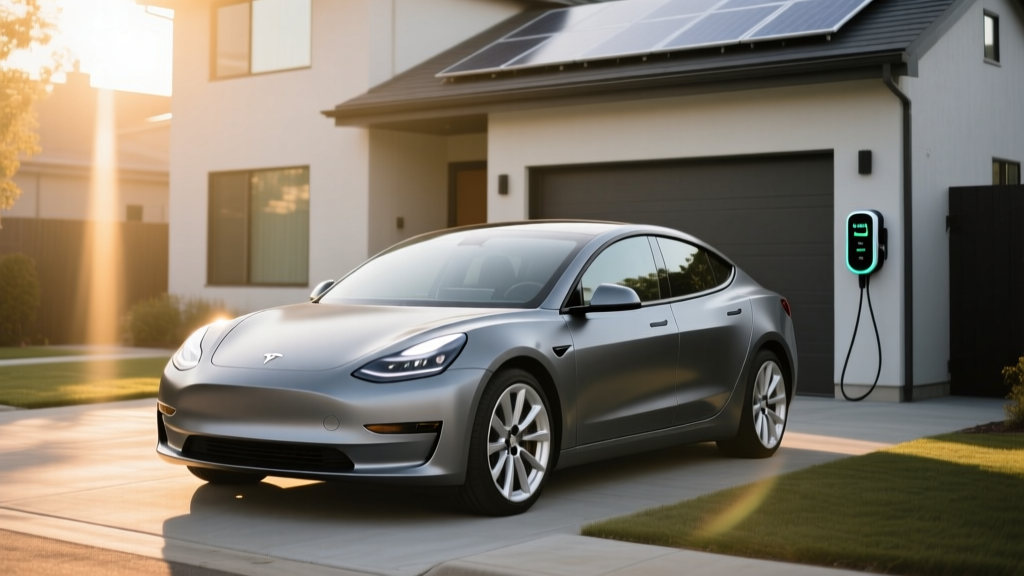
The single biggest determinant of EV satisfaction is reliable home charging. According to industry surveys, roughly 70–80% of EV charging happens at home. If you can install a Level 2 charger, an electric rocket pocket becomes remarkably convenient — plug in at night, wake up "full" every morning.
| Item | Cost Range |
|---|---|
| Level 2 Charger (hardware) | $300–$700 |
| Electrician (240V/50A circuit) | $600–$2,000 |
| Permit (local) | $50–$200 |
| Panel Upgrade (if needed) | $1,500–$3,500 |
| Total (no panel upgrade) | $950–$2,900 |
| Total (with panel upgrade) | $2,450–$6,400 |
If you live in an apartment, rent without a garage, or rely on street parking, your calculus changes. Public DC fast charging costs roughly 2–3× more per kWh than home charging ($0.35–$0.55/kWh vs. $0.12–$0.18/kWh residential), and session availability can be inconsistent. Before buying, map your daily routine honestly: can you charge at home or work at least 4–5 days per week?
Common Misconceptions — Separated from Facts
| Myth | Fact |
|---|---|
| "EV batteries need replacing every 5 years" | Most 2026 EV batteries carry 8-year/100,000-mile warranties (10 years in CARB states). Degradation averages 1–2% per year; most packs retain 80–90% capacity at 100k miles. |
| "EVs are worse in cold weather" | Range drops 20–30% in sub-freezing temps, but preconditioning (warming the battery while plugged in) recovers much of this. EVs start instantly in cold — no cranking, no warm-up idle. |
| "I'll save $7,500 no matter what" | The §30D credit has MSRP caps, income limits, and battery-sourcing requirements that change annually. Many vehicles qualify for partial or no credit. Always check current IRS guidance before committing. |
| "Charging takes too long" | Home Level 2 adds 25–35 miles per hour — more than enough to replenish a daily commute overnight. DC fast charging reaches 80% in 25–40 minutes on most modern compact EVs. |
| "EVs cost more to insure" | Premiums are typically 10–25% higher due to repair costs and battery value. Shop quotes before purchasing — the gap is narrowing as the EV fleet matures. |
Decision Framework: Which Electrified Vehicle Fits Your Life?
Choose Your Path
→ Buy a compact EV (electric rocket pocket) if:
• Daily driving is under 50 miles round-trip
• You have or can install Level 2 home charging
• Your climate is moderate (or your EV has a heat pump)
• You rarely drive more than 200 miles in a single day
• You want the lowest operating cost and qualify for §30D credits
→ Buy a PHEV if:
• You want 25–40 miles of electric-only range for daily commuting
• You regularly road-trip beyond EV range comfort
• You have limited charging access but can plug in at home some nights
• You want to hedge against charging-infrastructure gaps
→ Stick with a gas vehicle (for now) if:
• You have zero home or workplace charging access
• You regularly tow or drive over 300 miles per day
• Your budget cannot absorb the higher upfront cost even after credits
• You live in a region with very limited public charging infrastructure
What First-Time EV Buyers Must Know Before Signing
Beyond the purchase price and range sticker, here are the ownership realities that experienced EV drivers wish they had known upfront:
- Preconditioning matters enormously. Warming or cooling the battery while still plugged in preserves range and enables faster DC charging. Most EVs let you schedule this via an app.
- Tire wear accelerates. EVs are heavier and deliver instant torque. Expect to replace tires 20–30% sooner than on a comparable gas car. Budget $800–$1,400 for a set of EV-optimized tires every 30,000–40,000 miles.
- Regenerative braking changes your driving. One-pedal driving (using regen to slow the car when you lift off the accelerator) becomes second nature within a week and extends range in stop-and-go traffic.
- Insurance comparison is essential. Get quotes from at least three insurers before purchase. Some companies offer EV-specific discounts; others price premiums 20%+ higher.
- Battery health monitoring is simple. Most EVs display State of Health (SoH) in the settings menu. A drop below 70% within the warranty period typically qualifies for a replacement under the 8-year/100,000-mile federal battery mandate.
- Public charging reliability varies by network. Tesla Superchargers (now open to NACS-equipped non-Tesla EVs) consistently report 97%+ uptime. Other networks like Electrify America and EVgo have improved but check NHTSA forums and owner communities for regional reliability data.
Frequently Asked Questions
What is the actual cost per mile to drive a compact EV vs. a gas car?
At the U.S. average residential electricity rate of ~$0.16/kWh and a compact EV efficiency of 3.5 miles/kWh, you pay roughly $0.046 per mile. A gas car averaging 30 MPG at $3.36/gallon costs $0.112 per mile — more than double. Over 15,000 miles annually, that is a savings of approximately $990 per year on energy alone.
Will the battery in a budget EV last as long as a premium EV?
Battery longevity depends more on chemistry and thermal management than price. LFP (lithium iron phosphate) batteries, now used in several affordable EVs, offer 3,000+ charge cycles with minimal degradation — potentially outlasting NMC packs. The key factors are avoiding frequent DC fast charging above 80% SoC and not letting the battery sit at 0% or 100% for extended periods.
Can I road-trip in a compact EV with 250 miles of range?
Yes, with planning. Apps like A Better Routeplanner and PlugShare map DC fast chargers along your route. A 10–80% charge in 25–35 minutes at a 100+ kW station means you stop for 30 minutes every 2–3 hours — similar to gas-trip rest stops. The tradeoff is real but manageable for 2–4 road trips per year.
Do I need to upgrade my electrical panel for a home charger?
Not always. If your home has a 200-amp panel with available capacity, a 40-amp or 50-amp circuit for Level 2 charging typically installs without a panel upgrade. Older homes with 100-amp service may need an upgrade costing $1,500–$3,500. Always get a licensed electrician's assessment before purchasing equipment.
Is a used EV a better value than a new budget EV?
Used EVs can be excellent value — especially with the §25E used-EV tax credit (up to $4,000 or 30% of sale price, whichever is lower, for vehicles under $25,000). However, verify battery State of Health, remaining warranty, and whether the model supports DC fast charging at modern speeds. A 2021–2023 model with under 40,000 miles often hits the sweet spot.