The Quick Answer: Should You Buy an Electric Roadster?
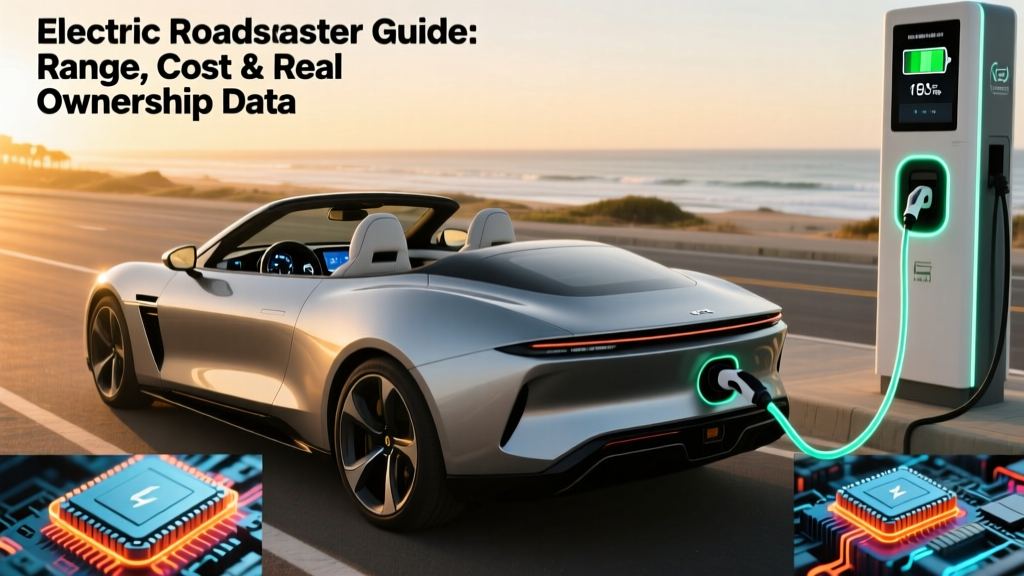
An electric roadster delivers instant torque, near-silent acceleration, and lower per-mile energy costs than a gas sports car — but the market remains small, expensive, and impractical for most buyers. Current options like the Tesla Roadster (announced, repeatedly delayed) and niche builds such as the Lotus Emeya or converted classics start above $100,000, often exceed IRS §30D MSRP caps (meaning no $7,500 federal credit), and suffer from limited cargo, low ground clearance, and real-world range that can drop 20-30% on highway drives or in cold weather. Buy one if you prioritize 0-60 thrills and have home Level 2 charging; skip it if you need daily practicality or live in a charging desert.
What Exactly Is an Electric Roadster?
An electric roadster is a battery-electric vehicle (BEV) built on a two-seat or 2+2 convertible/sports-car platform, prioritizing acceleration, handling, and open-air driving. Unlike electric sedans or crossovers, roadsters sacrifice range efficiency for aggressive aerodynamics, low ride height, and performance tires that increase rolling resistance. The result: EPA range figures often trail similarly sized EVs, and real-world highway driving at 75+ mph can erode that range further.
As of 2026, the electric roadster segment is thin. Tesla's second-generation Roadster remains in "announced" status with preliminary specs (targeted 0-60 under 2.0 seconds, 620-mile EPA estimate). MG's Cyberster launched in select global markets with a ~310-mile WLTP range (~260 EPA equivalent) and a starting price around $55,000, though U.S. availability is uncertain. Enthusiasts also commission EV conversions of classic roadsters (Miata, Porsche 550) using 30-60 kWh battery packs yielding 100-180 miles of range at costs of $40,000-$90,000 all-in.
Electric Roadster vs Gas Roadster: The Data
Let's compare a representative electric roadster (using MG Cyberster figures and Lotus Emeya R where applicable) against a conventional gas roadster like the Mazda MX-5 Miata and a Porsche 718 Boxster.
| Metric | MG Cyberster (EV) | Mazda MX-5 Miata (Gas) | Porsche 718 Boxster (Gas) |
|---|---|---|---|
| Base MSRP | ~$55,000 (global) | $30,170 | $68,300 |
| 0-60 mph | ~5.0 sec | 5.8 sec (manual) | 4.7 sec |
| Horsepower | ~536 hp (AWD) | 181 hp | 300 hp |
| EPA Range / MPG | ~260 mi (est.) | 26 mpg combined | 24 mpg combined |
| Fuel/Energy Cost per Mile | $0.045 (home L2) | $0.14 (gasoline) | $0.15 (premium) |
| Annual Fuel/Energy (12k mi) | $540 | $1,680 | $1,800 |
| Cargo Volume | ~7 cu ft | 4.6 cu ft | 9.7 cu ft (frunk+trunk) |
| Weight | ~4,200 lbs | 2,341 lbs | 3,000 lbs |
The EV roadster dominates in straight-line acceleration and per-mile energy cost but carries 1,000-2,000 lbs of extra mass from the battery pack, which hurts cornering feel — the traditional roadster virtue. According to fueleconomy.gov, the Miata's combined 26 mpg at $3.50/gallon works out to $0.135/mile, while an electric roadster charging at the U.S. average residential rate of $0.16/kWh and averaging 3.5 miles/kWh costs $0.046/mile. That's roughly $1,140 in annual savings over 12,000 miles — but it takes 8-10 years to recoup the EV's higher purchase price through fuel savings alone.
Real Costs of Electric Roadster Ownership
Buyers often fixate on MSRP and ignore the full ownership picture. Here's a five-year cost projection for an electric roadster priced at $75,000 (a realistic mid-market figure if U.S. models arrive) versus a gas roadster at $40,000.
| Cost Category (5 Years, 60k Miles) | Electric Roadster ($75k) | Gas Roadster ($40k) |
|---|---|---|
| Purchase Price (after incentives) | $75,000 (no §30D credit — over MSRP cap for sports cars) | $40,000 |
| Energy/Fuel | $2,700 (home L2 average) | $8,400 |
| Maintenance | $1,200 (tires, cabin filter, fluid top-offs) | $3,800 (oil, brakes, belts, plugs) |
| Insurance (annual avg × 5) | $14,000 ($2,800/yr — performance EV surcharge) | $7,500 ($1,500/yr) |
| Depreciation (est. 50% EV, 45% gas) | $37,500 | $18,000 |
| Total 5-Year Cost | $130,400 | $77,700 |
The electric roadster costs roughly $53,000 more over five years, driven primarily by higher depreciation (EV sports cars have uncertain resale trajectories), insurance premiums that run 60-80% higher than gas equivalents due to repair costs and performance classification, and the lack of a federal tax credit. The IRS §30D credit applies only to vehicles under MSRP caps ($55,000 for sedans, $80,000 for SUVs/trucks/vans — roadsters typically fall under the sedan cap or are excluded as sports cars), with buyer income limits ($150k single, $300k joint) and critical-mineral/battery-sourcing requirements that shift annually.
Charging Costs and Home Setup
Most electric roadster owners will charge at home. A Level 2 (240V, 40-amp) home charger adds roughly 25-30 miles of range per hour and costs $800-$2,500 installed depending on panel capacity and conduit runs. For a 75 kWh battery (common in this segment), a full 10-100% charge at $0.16/kWh runs about $12. DC fast charging at public stations costs $0.35-$0.50/kWh, pushing a road trip fill-up to $25-$35 — still cheaper than premium gasoline, but the gap narrows significantly.
Roadsters with 800V architectures (like the Lotus Emeya) can peak at 350 kW on DC fast chargers, reaching 10-80% in roughly 18 minutes. However, sustained charge rates taper sharply above 80% SoC — expect the final 20% to take as long as the first 60%. In cold weather (below 32°F), battery preconditioning is essential; without it, peak charge rates can drop by 40-50% and range can fall 20-30%.
Common Misconceptions About Electric Roadsters
| Myth | Fact |
|---|---|
| "Electric roadsters handle better because of low center of gravity." | While battery placement lowers CoG, the 1,500-2,000 lb weight penalty increases tire scrub, brake fade, and momentum in direction changes. A 2,300-lb Miata still out-handles most EV roadsters on a tight autocross course. |
| "You'll save money going electric." | Energy savings are real (~$1,100/yr), but insurance premiums, depreciation, and lack of tax credits on high-MSRP sports cars often erase those savings over 5 years. |
| "Range doesn't matter in a roadster — it's a weekend car." | Even weekend drives average 200-300 miles round-trip. A roadster with 260 miles EPA range delivers ~190-210 real-world highway miles, requiring mid-trip DC fast charging on longer outings. |
| "Electric roadsters don't need maintenance." | Tire wear accelerates due to instant torque and heavy weight — expect 15,000-20,000 miles per set of performance tires ($1,200-$2,000). Brake fluid, coolant, cabin filters, and 12V battery replacement still apply. |
| "The Tesla Roadster is available." | As of 2026, the Tesla Roadster remains in announced/preliminary status. Deposits are refundable, but delivery timelines have slipped multiple times since 2017. |
Real-World Ownership Considerations
Home Charging Access
If you rent, live in a condo without dedicated parking, or lack a garage with 240V circuit access, an electric roadster becomes significantly less practical. Public DC fast charging works for occasional use but costs 3-4× more per kWh than home charging and requires 20-40 minute stops. Roadsters with smaller battery packs (50-75 kWh) will need more frequent charging stops than larger EVs, compounding the inconvenience.
Climate Impact
Cold weather is the enemy of EV range. In sub-freezing temperatures, expect 20-30% range loss due to battery chemistry resistance and cabin heating demands. A roadster with a fabric top compounds this — soft tops insulate poorly, forcing the HVAC system to work harder. Owners in northern climates should budget for heated seats/steering wheel (reduces HVAC load) and plan for 180-200 real-world winter miles from a 260-mile EPA roadster.
Driving Patterns
Electric roadsters reward owners who drive mostly in stop-and-go traffic or moderate-speed backroads where regenerative braking recaptures energy and low-end torque shines. Sustained 80+ mph highway driving drains the battery 30-40% faster than EPA estimates suggest. If your typical drive is a 200-mile highway commute, a roadster with sub-300 mile EPA range will require careful planning or mid-route charging.
Decision Framework: Is an Electric Roadster Right for You?
Buy an Electric Roadster If:
- You have reliable home Level 2 charging (garage or dedicated driveway circuit)
- Your typical drive is under 200 miles round-trip, or you're willing to DC fast charge on longer trips
- You prioritize 0-60 acceleration and instant torque over corner-carving agility
- You can absorb $2,500-$3,000/year in insurance premiums without strain
- You view the car as a passion purchase, not a cost-optimization decision
- You live in a mild climate or accept winter range penalties
Choose a Gas Roadster or Different EV If:
- You lack home charging access and rely on public infrastructure
- You want a sub-$40,000 purchase price and low insurance costs
- Track days and lightweight handling are your priority (Miata, GR86, Cayman)
- You regularly drive 300+ miles in a day and don't want to plan charging stops
- You need cargo space for weekend trips (consider an EV hatchback or wagon instead)
- Federal tax credits matter to your purchase math — most roadsters won't qualify
What First-Time EV Buyers Should Know
If the electric roadster is your first EV, understand these fundamentals before signing:
- kW vs kWh: kW (kilowatts) measures power — how fast you charge or accelerate. kWh (kilowatt-hours) measures energy — how much the battery holds. A 75 kWh battery charged at 11 kW (Level 2) takes ~7 hours from empty; at 150 kW (DC fast), it takes ~30 minutes to 80%.
- Charge curve taper: Peak DC charge rates (e.g., "250 kW") only apply between roughly 10-50% SoC. Above 80%, rates drop dramatically to protect battery health. Plan road trips around 10-80% charges, not 0-100%.
- Battery degradation: Modern NMC and LFP batteries lose roughly 5-10% capacity over 100,000 miles. Roadster batteries are typically NMC for energy density, which degrades slightly faster than LFP but offers more range per pound.
- Warranty coverage: Federal law mandates 8 years/100,000 miles on battery and powertrain for EVs. This protects against catastrophic failure but doesn't cover gradual capacity loss unless it exceeds ~30%.
- Tax credit reality: The §30D credit requires the vehicle to meet MSRP caps, buyer income limits, and battery sourcing requirements. Check the latest rules at irs.gov before assuming eligibility — many high-performance EVs fall outside the caps.
Frequently Asked Questions
How much does it cost to insure an electric roadster?
Insurance for electric roadsters typically runs $2,400-$3,500 per year, compared to $1,200-$1,800 for gas equivalents. The premium reflects higher repair costs (battery damage, specialized body panels), performance classification, and limited collision data on newer models. Get quotes from at least three insurers before purchasing — rates vary wildly by carrier.
Can I take an electric roadster on a road trip?
Yes, but with planning. A roadster with 260 miles EPA range realistically delivers 190-210 highway miles before needing a charge. Use apps like PlugShare or A Better Routeplanner to identify DC fast chargers along your route. Expect 20-30 minute stops every 180 miles. Cold weather and high speeds reduce this further.
Do electric roadsters qualify for the $7,500 federal tax credit?
Most do not. The §30D credit caps MSRP at $55,000 for sedans (the classification most roadsters fall under), and many electric roadsters exceed this. Additionally, buyer income limits ($150k single / $300k joint) and battery critical-mineral sourcing requirements eliminate many buyers. Always verify current eligibility on irs.gov before counting the credit into your budget.
What happens to the battery after 10 years?
Based on current degradation data from NMC batteries, expect 85-92% state of health after 10 years / 100,000 miles. This means a 260-mile roadster might deliver 220-240 miles when new-equivalent. Replacement costs for a 75 kWh roadster battery run $12,000-$18,000 out of warranty, though most manufacturers warranty the battery for 8 years/100,000 miles against excessive capacity loss.
Is a used electric roadster a better deal?
Potentially, but selection is extremely limited given how few have been produced. A used EV under $25,000 may qualify for the §25E used-EV credit (up to $4,000, with income caps). However, verify battery state of health (request a diagnostic report from the dealer or use an OBD-II reader with EV-compatible software) before purchasing. Degradation beyond 15% should lower the price significantly.
The electric roadster segment in 2026 remains a niche for enthusiasts willing to trade practicality and cost-efficiency for instant torque and open-air EV driving. The energy savings are real, the performance is undeniable, but the total ownership math rarely favors the EV over a gas roadster unless you're already budgeting for a passion vehicle. Charge at home, drive within the battery's real-world envelope, and buy it for the experience — not the spreadsheet.