Quick Answer: Is an Electric Refuse Truck Right for Your Fleet?
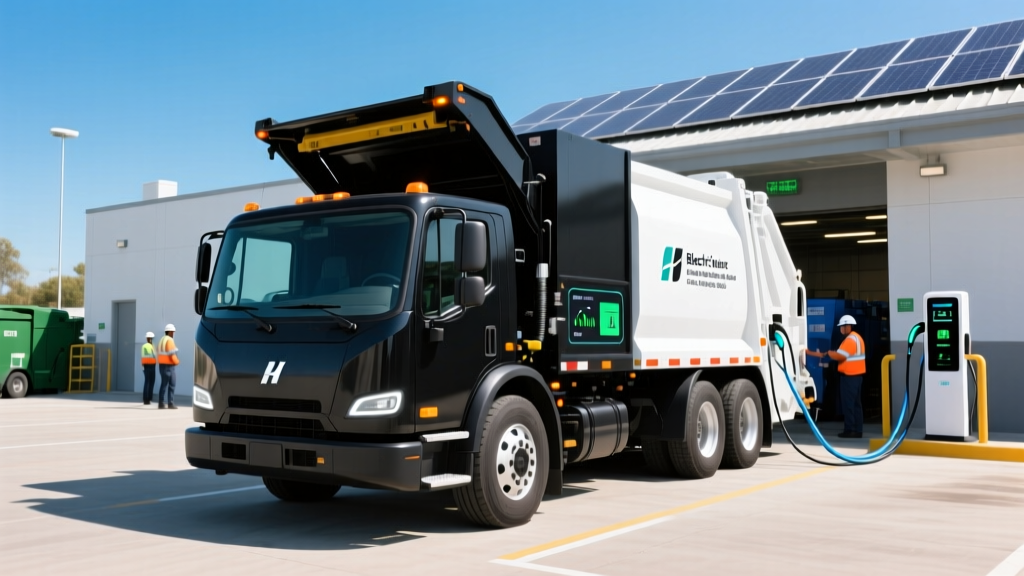
An electric refuse truck replaces a diesel Class 8 side-loader or rear-loader on fixed municipal or commercial routes. In 2026, expect 120–200 miles of real-world range, 2–4 hours of depot DC fast charging, and 50–70% lower per-mile energy costs versus diesel. Upfront cost runs $350,000–$550,000 per unit (versus ~$250,000 for diesel), but federal commercial clean-vehicle credits (IRC §45W), state HVIP-style vouchers, and fuel/maintenance savings typically close the payback gap within 6–9 years for trucks running 5 days a week. They're best suited to stop-and-go routes under 100 miles per shift, with overnight depot charging.
Why Fleets Are Evaluating Electric Refuse Trucks in 2026
Refuse collection is one of the most punishing duty cycles in commercial trucking: constant starts and stops, heavy payloads, hydraulic compactor cycles, and tight urban streets. That same duty cycle is where battery-electric drivetrains shine. Regenerative braking recovers energy that a diesel truck wastes as brake heat on every stop, and electric motors deliver peak torque from zero RPM — exactly what a loaded truck needs pulling away from a curb.
Class 8 electric refuse trucks from manufacturers like Mack (LR Electric), Peterbilt (520EV), Autocar (E-ACX), BYD, and Lion Electric (Lion8 refuse variant) are now in active fleet service across North America. The technology has moved past pilot programs into serial production, though the economics still require careful route-matching and incentive stacking.
Electric Refuse Truck Specs: What 2026 Models Deliver
| Spec | Typical 2026 Class 8 Refuse BEV | Diesel Equivalent |
|---|---|---|
| Battery capacity | 250–440 kWh (NMC lithium-ion) | N/A (diesel tank: 60–100 gal) |
| EPA-equivalent range | 120–200 mi (loaded, mixed route) | 300–500 mi |
| Motor output | 400–550 HP (peak), 2,500–3,800 lb-ft torque | 350–500 HP, 1,250–1,850 lb-ft |
| DC fast charge (peak kW) | 150–250 kW (CCS1) | N/A |
| 10–80% charge time | 90–150 min (at 150+ kW) | 10–15 min (diesel refill) |
| Level 2 depot charging | 19.2–40 kW AC (overnight, 6–10 hr) | N/A |
| 0–30 mph (loaded) | ~8–12 sec | ~12–18 sec |
| GVWR | 60,000–66,000 lbs | 60,000–66,000 lbs |
| Base MSRP (truck only) | $350,000–$550,000 | $230,000–$280,000 |
| Warranty (battery) | 5–7 yr / 100,000–150,000 mi | Powertrain: 5 yr / 100,000 mi |
Sources: Mack LR Electric, Peterbilt 520EV, manufacturer spec sheets. Range varies with payload, terrain, climate, and compactor use.
Range Reality: What the Sticker Doesn't Tell You
A refuse truck's range isn't measured in highway miles — it's measured in stops per route and compactor cycles. Most municipal residential routes cover 40–80 miles per shift with 400–800 stops. A 300 kWh battery pack delivers enough energy for most single-shift routes, but there are critical caveats:
- Cold-weather range loss: Expect 20–35% range reduction at 20°F and below. Battery heating and cab HVAC draw from the same pack. Northern-climate fleets should spec larger batteries or plan mid-shift opportunity charging.
- Compactor energy draw: The hydraulic compactor runs off the traction battery (via an electric PTO). Aggressive compaction cycles in dense commercial routes can add 15–25% to energy consumption.
- Terrain: Hilly routes consume significantly more energy. Regenerative braking recovers some on descents, but loaded uphill segments are costly.
- Payload weight: A fully loaded truck at 66,000 lbs GVWR uses 25–40% more energy per mile than an empty truck heading out in the morning.
Real-world expectation: A truck rated at 160 miles EPA-equivalent will reliably complete a 70-mile, 600-stop residential route with 30–40% battery remaining in moderate weather. In deep cold or on a long commercial route, that buffer shrinks to 10–15%.
Cost Breakdown: Electric Refuse Truck vs. Diesel
| Cost Category | Electric Refuse Truck (BEV) | Diesel Refuse Truck |
|---|---|---|
| Purchase price (truck) | $400,000–$550,000 | $230,000–$280,000 |
| Federal tax credit (IRC §45W) | Up to $40,000 (GVWR > 14,000 lbs) | $0 |
| State/local incentives (varies) | $50,000–$265,000 (e.g., CA HVIP) | Rarely applicable |
| Depot charger (DC fast, 150 kW) | $60,000–$120,000 per unit installed | $0 (fueling off-site or on-site diesel) |
| Energy/fuel cost per mile | $0.25–$0.45/mi (electricity at $0.08–$0.15/kWh) | $0.80–$1.30/mi (diesel at $3.50–$4.50/gal, 4–6 MPG) |
| Annual fuel/energy (20,000 mi/yr) | $5,000–$9,000 | $16,000–$26,000 |
| Maintenance cost per mile | $0.10–$0.18/mi | $0.25–$0.40/mi |
| Annual maintenance (20,000 mi/yr) | $2,000–$3,600 | $5,000–$8,000 |
| Estimated 10-year total cost | $650,000–$900,000 (with incentives) | $750,000–$1,100,000 |
Fuel costs based on 2026 national averages. Electricity rates vary by utility and time-of-use tariff. See IRS §45W Commercial Clean Vehicle Credit for current credit rules. State incentive availability varies — consult your state energy office or AFDC.
Charging Infrastructure: What Your Depot Needs
Refuse trucks return to the depot nightly on predictable schedules — making them ideal for managed depot charging. Here's what a fleet depot typically requires:
Depot Charging Options
| Level | Power (kW) | Charge Time (250 kWh pack, 10–100%) | Infrastructure Cost |
|---|---|---|---|
| Level 2 AC (overnight) | 19.2–40 kW | 6–12 hours | $8,000–$25,000 per stall installed |
| DC Fast (CCS1) | 60–150 kW | 2–4 hours | $60,000–$120,000 per stall installed |
| DC Ultra-Fast | 180–350 kW | 1–2 hours | $120,000–$250,000 per stall installed |
Key depot planning factors:
- Electrical service upgrade: A 10-truck fleet charging at 150 kW simultaneously needs ~1.5 MW of capacity — likely requiring a new medium-voltage utility feed and transformer ($150,000–$500,000+).
- Smart charge management software: Staggered charging (not all trucks peak simultaneously) can cut required capacity by 40–60%. Systems like ChargePoint, EV Connect, or Tritium's fleet software manage this.
- Utility demand charges: Commercial electricity bills include demand charges ($10–$25/kW/month in many regions) based on peak draw. Unmanaged charging can spike these costs. Negotiate an EV-specific tariff with your utility.
- Future-proofing conduit: Run conduit for 2x your initial charger count during construction. Retrofitting is 3–5x more expensive.
Common Misconceptions About Electric Refuse Trucks
| Myth | Fact |
|---|---|
| "They can't handle a full route." | Most single-shift residential routes (40–80 mi, 400–800 stops) are within range of current 250–440 kWh packs, with buffer. Double-shift or 150+ mi commercial routes may need mid-shift charging or are not yet suitable. |
| "Batteries won't last the life of the truck." | NMC packs in heavy-duty applications are warrantied for 5–7 years / 100,000–150,000 miles at 70–80% capacity retention. Refuse trucks typically run 20,000–25,000 mi/yr, meaning the battery should cover the first major service interval. Repowering at year 8–10 costs $80,000–$150,000. |
| "Charging takes too long for fleet operations." | Overnight depot charging (6–10 hours on Level 2 or DC) covers the next shift for most fleets. Trucks are parked 10–14 hours between shifts — charging time isn't downtime if managed correctly. |
| "The grid can't handle a fleet of electric trucks." | A 20-truck depot draws ~1–3 MW — comparable to a small industrial facility. With utility coordination, demand management, and possible on-site solar/storage, this is solvable. Plan 12–24 months ahead for service upgrades. |
| "They're always more expensive." | Without incentives, BEV refuse trucks cost 50–100% more upfront. With §45W credits + state vouchers + fuel/maintenance savings, total cost of ownership often reaches parity by year 6–9. |
Tax Credits and Incentives: Stacking the Deck
Federal and state incentives are the single biggest factor in making electric refuse trucks financially viable for most fleets in 2026:
- IRC §45W Commercial Clean Vehicle Credit: Up to $40,000 for vehicles over 14,000 lbs GVWR. The truck must meet battery component and critical mineral sourcing requirements. This is a business credit claimed on your tax return — consult a tax professional for eligibility.
- State voucher programs: California's HVIP, New York's Truck Voucher Incentive Program, and similar programs in NJ, CO, and other states can provide $50,000–$265,000 per truck. Funding is competitive and subject to annual appropriation.
- Utility make-ready programs: Many utilities cover 50–100% of depot electrical infrastructure costs (conduit, panels, transformers) for fleet electrification. Check with your local utility's EV fleet program.
- EPA Clean School Bus / Clean Heavy-Duty programs: Federal grant funding (when appropriated) can cover additional percentage of vehicle and infrastructure cost for public fleets.
- IRA §30C charging infrastructure credit: Up to $100,000 per charger for commercial charging equipment placed in eligible census tracts (low-income or non-urban).
Always verify current incentive availability at AFDC Incentive Search and with a qualified tax professional. Rules change annually.
Decision Framework: Should Your Fleet Go Electric?
Choose an electric refuse truck if:
- Routes are single-shift, under 100 miles/day with predictable return-to-depot schedules
- Your depot has (or can get) adequate electrical service for overnight charging
- You operate in a state with strong voucher/incentive programs
- Your fleet runs 5+ days/week (higher utilization = faster payback on fuel savings)
- You face local zero-emission mandates or community noise/air-quality pressure
- You plan to hold trucks 8–12+ years (maximizes TCO advantage)
Stick with diesel (or evaluate hybrid/CNG) if:
- Routes exceed 120+ miles per shift or include double-shift operations without mid-day charging windows
- Your depot is leased or lacks utility upgrade feasibility within your timeline
- No state incentives are available and federal credits don't offset enough premium
- You operate in extreme cold climates (below 0°F regularly) without heated depot storage
- Your fleet turnover cycle is under 7 years (insufficient time to recoup premium)
What First-Time Fleet EV Buyers Should Know
If your fleet has never operated battery-electric trucks, plan for a learning curve that goes beyond the trucks themselves:
- Start with 1–3 trucks, not a full fleet replacement. Run them on your easiest, shortest routes first. Collect real energy-per-mile data before committing to larger orders.
- Engage your utility early. Depot electrical upgrades can take 12–24 months from application to energization. Start this conversation before you order trucks.
- Train drivers and mechanics. EV refuse trucks drive differently (instant torque, regen braking, quieter operation). Mechanics need high-voltage safety certification — OEM training programs typically run 1–2 weeks.
- Budget for charger maintenance. DC fast chargers have 92–97% uptime on average. Plan for 3–8% annual maintenance cost on charging equipment.
- Track energy data obsessively. kWh per mile, kWh per stop, and charge-session data will inform your future orders and route assignments. Most OEM telematics platforms (Mack GuardDog Connect, Peterbilt SmartLINQ) include EV-specific dashboards.
Frequently Asked Questions
How long does an electric refuse truck battery last?
Most manufacturers warrant NMC battery packs for 5–7 years or 100,000–150,000 miles at 70–80% of original capacity. In refuse service (20,000–25,000 mi/yr), that's the majority of the truck's first service life. Battery replacement (repower) costs $80,000–$150,000 depending on pack size and chemistry.
Can electric refuse trucks use the hydraulic compactor?
Yes. Electric PTO (power take-off) systems drive the hydraulic compactor directly from the traction battery. Compaction energy is factored into range estimates, but aggressive compaction on commercial routes does reduce range by 15–25%.
What's the per-mile cost advantage over diesel?
Combined fuel and maintenance savings typically run $0.40–$0.70 per mile versus diesel. At 20,000 miles per year, that's $8,000–$14,000 in annual operating savings per truck — the core of the TCO payback equation.
Do electric refuse trucks qualify for the $7,500 consumer tax credit?
No. The §30D consumer credit applies to light-duty vehicles under 14,000 lbs GVWR. Refuse trucks qualify under the separate §45W Commercial Clean Vehicle Credit, which offers up to $40,000 for heavy-duty vehicles. Different sourcing, use, and claiming rules apply — consult IRS guidance and a tax professional.
How does cold weather affect an electric refuse truck?
At 20°F, expect 20–35% range reduction due to battery chemistry limitations and HVAC/defrost load. At 0°F or below, losses can reach 40%. Fleets in northern climates should spec larger battery packs, use depot pre-conditioning (plugging in to warm the battery before departure), and plan shorter winter routes.