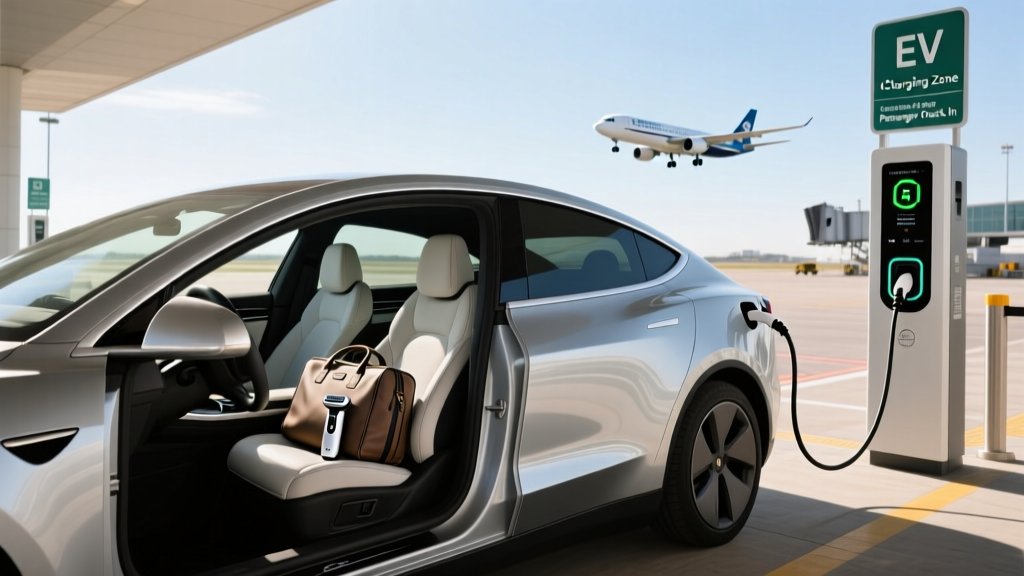
Quick Answer: Yes, you can take an electric razor on a plane. The TSA allows electric razors in both carry-on and checked luggage. However, if your razor contains a lithium-ion battery, it's safer (and often required) to keep it in your carry-on. Spare lithium batteries must always go in carry-on bags. This rule exists because lithium batteries pose a fire risk in the cargo hold — the same reason airlines scrutinize larger battery-powered devices.
Electric Razor on a Plane: What You Need to Know
- Carry-on: Allowed — electric razors, including those with lithium batteries
- Checked bag: Allowed for corded or NiMH razors; lithium-battery razors should go in carry-on per FAA guidance
- Spare batteries: Carry-on only, terminals protected from short-circuiting
- Wet razors (cartridge/safety): Cartridge razors OK in carry-on; safety razor blades must be checked
While this is fundamentally a TSA and airline question, EV owners who travel frequently encounter similar battery-related logistics — from planning road trips around DC fast charging to understanding what happens to your EV while you fly. Below, we connect the dots between travel-day essentials and the bigger picture of EV ownership for frequent travelers.
Why Lithium Battery Rules Matter — From Razors to EVs
The FAA restricts spare lithium batteries in checked luggage because thermal runaway events in the cargo hold are difficult to suppress. Your electric razor's battery is typically 2–5 watt-hours (Wh) — tiny compared to an EV's 60–100+ kWh (kilowatt-hour) traction battery. But the chemistry is similar: lithium-ion cells that can overheat if damaged or short-circuited.
This same chemistry is what powers your electric vehicle. And just as airlines require you to protect small batteries from damage, EV manufacturers engineer multiple layers of thermal management, cell isolation, and structural protection into battery packs. When you're evaluating an EV for a lifestyle that includes frequent travel, understanding battery fundamentals helps you make better ownership decisions.
| Myth | Fact |
|---|---|
| "EVs can't handle long road trips" | Modern EVs with 250+ miles EPA range and 150–250 kW DC fast charging add 150–200 miles in 15–25 minutes at highway rest stops. |
| "Airport parking will drain my EV battery" | A typical EV loses 1–2% state of charge per week parked (vampire drain). A 10-day trip uses ~2–3% — negligible. |
| "You can't rent an EV at most airports" | Hertz, Enterprise, and Avis offer EVs at major US airports; availability varies by location and booking lead time. |
| "Cold weather ruins EV range" | Expect 20–30% range reduction in sub-freezing temps; preconditioning while plugged in recovers 10–15% of that loss. |
EV Ownership Costs: The Numbers for Frequent Travelers
If you're weighing whether an EV fits a travel-heavy lifestyle, the economics matter. Below is a real-world cost comparison for a mid-range EV (2026 Tesla Model Y Long Range, ~$44,990 MSRP before incentives) versus a comparable gas SUV (2026 Toyota RAV4 AWD, ~$33,000 MSRP) over 5 years and 75,000 miles.
| Category | 2026 Tesla Model Y LR | 2026 Toyota RAV4 AWD |
|---|---|---|
| Purchase Price | $44,990 | $33,000 |
| Federal Tax Credit (§30D) | –$7,500 (if eligible, point-of-sale) | $0 |
| Effective Purchase | $37,490 | $33,000 |
| Fuel/Energy (75k mi) | $3,200 (home L2, $0.14/kWh avg) | $9,750 (30 MPG avg, $3.90/gal) |
| Maintenance | $1,200 | $3,500 |
| Insurance (5 yr avg) | $9,500 | $7,000 |
| Estimated Depreciation | $18,000 | $14,000 |
| 5-Year Total | $69,390 | $67,250 |
Source: Fuel costs based on fueleconomy.gov data and national averages. Tax credit eligibility depends on income caps, MSRP limits, and battery sourcing rules per IRS §30D guidelines. Consult a tax professional for your specific situation.
The gap narrows significantly when you factor in fuel and maintenance savings — and if your utility offers off-peak EV rates ($0.08–$0.10/kWh), the Model Y's energy cost drops to ~$2,100 over 75,000 miles, putting the EV ahead on total cost.
Real-World EV Range and Charging: What Travelers Actually Experience
EPA range stickers don't tell the full story, especially for road-trippers. Here's what to expect from a 2026 EV with a ~320-mile EPA rating in real-world travel conditions:
Real-World Range Expectations (320-mi EPA rated EV)
- City/suburban, mild weather: ~310–340 miles (regen braking helps)
- Highway at 70 mph, mild weather: ~250–280 miles (aerodynamic drag dominates)
- Highway, 30°F winter: ~200–240 miles (battery resistance + cabin heat)
- Mountain passes (net elevation gain): ~220–260 miles (climbing consumes; regen recovers on descent)
DC fast charging on road trips follows a charge curve: the battery charges fastest between 10–80% state of charge (SoC), then tapers dramatically to protect cell health. A 2026 Hyundai Ioniq 5 (84 kWh battery, NMC chemistry) peaks at 240 kW and hits 10–80% in ~18 minutes on a 350 kW charger. But the final 80–100% can take another 20+ minutes. Smart road-trippers charge to 80% and move on.
EV vs. Hybrid vs. Gas: Which Fits a Travel-Heavy Lifestyle?
Not every frequent traveler is best served by a battery-electric vehicle (BEV). Here's a data-driven comparison across powertrain types:
| Factor | BEV (e.g., Model Y LR) | PHEV (e.g., RAV4 Prime) | Gas (e.g., RAV4 AWD) |
|---|---|---|---|
| EPA Range / MPG | 320 mi / 120 MPGe | 42 mi electric + 38 MPG gas | 30 MPG combined |
| Refuel Time | 18–30 min (DC fast, 10–80%) | 5 min (gas) / 2.5 hr (Level 2) | 5 min |
| Road-Trip Convenience | Requires route planning around chargers | Gas for long trips, electric for daily | Universal fueling |
| Daily Commute Cost (30 mi) | ~$1.20 (home L2) | ~$1.20 (electric) or ~$3.90 (gas) | ~$3.90 |
| Cold-Weather Penalty | 20–30% range loss | 15–20% electric-range loss; gas unaffected | 5–10% MPG loss |
| Maintenance (5 yr) | ~$1,200 | ~$2,800 | ~$3,500 |
First-Time EV Buyer Checklist: What to Know Before You Buy
If you're considering an EV and travel often, these practical factors will determine whether ownership is seamless or frustrating:
Home Charging Access
~80% of EV charging happens at home. If you have a garage or driveway where a Level 2 charger (240V, 7–11 kW) can be installed, daily ownership is effortless — wake up to a full battery every morning. Installation costs range from $500–$2,500 depending on panel capacity and run length. If you're in an apartment or lack dedicated parking, public charging dependency increases costs and friction significantly.
Your Driving Patterns
If 90% of your driving is under 60 miles round-trip with occasional long road trips, a BEV with 280+ miles of range works well. If you regularly drive 200+ miles in rural areas with sparse charging infrastructure, a PHEV offers electric daily driving without range anxiety on long hauls.
Climate Considerations
Cold-climate buyers (sustained sub-30°F winters) should prioritize EVs with a heat pump (standard on 2026 Tesla, Hyundai, and Kia models) rather than resistive cabin heating, which draws 2–4 kW from the battery. A heat pump cuts winter range loss roughly in half compared to resistive heating.
Tax Credit Eligibility
The federal §30D credit offers up to $7,500 at point of sale, but eligibility depends on:
- Income caps: $150K single / $300K joint modified AGI
- MSRP caps: $55K for cars, $80K for SUVs/trucks/vans
- Battery sourcing: Critical minerals and battery components must meet phased-in domestic/content requirements per current-year IRS rules
Always verify current-year eligibility on IRS.gov before purchasing — rules tighten annually.
Decision Framework: Should You Buy an EV, Hybrid, or Stick with Gas?
If X, Then Y
- If you have home Level 2 charging AND drive under 250 miles daily AND live in a mild-to-moderate climate → choose a BEV (lowest operating cost, minimal maintenance)
- If you have home charging BUT regularly drive 300+ miles in charging-sparse areas → choose a PHEV (electric daily, gas for road trips)
- If you lack reliable home charging AND your area has limited public DC fast chargers → choose a HEV or gas vehicle (avoid charging frustration)
- If you live in extreme cold (sub-0°F winters) AND lack a heated garage → lean PHEV or HEV unless the BEV has a heat pump and you can precondition while plugged in
- If total cost of ownership is your top priority AND you qualify for the §30D credit → a BEV often wins on 5-year cost despite higher purchase price
FAQ: Electric Travel Essentials
Can I take my electric razor on a plane in 2026?
Yes. The TSA permits electric razors in both carry-on and checked bags. If your razor has a lithium-ion battery, packing it in your carry-on is recommended per FAA guidance on personal electronic devices with lithium cells.
Do I need to remove the battery from my electric razor before flying?
No. Built-in batteries in personal grooming devices are fine installed. Only spare (loose) lithium batteries have carry-on-only requirements and must have terminals protected.
Can I bring a power bank for my EV key fob or phone on a plane?
Yes, in carry-on only. The FAA allows portable chargers up to 100 Wh without airline approval (100–160 Wh requires approval; over 160 Wh is prohibited). Most consumer power banks are 10–30 Wh.
Will airport parking drain my EV battery while I travel?
Minimally. Expect ~1–2% SoC loss per week from standby systems. A 10-day trip costs roughly 2–3% of your battery. Avoid leaving climate preconditioning active while parked unplugged.
Should I rent an EV at my destination instead of a gas car?
It depends on destination charging access. If your hotel has Level 2 charging or the area has reliable DC fast chargers (check PlugShare or A Better Routeplanner), an EV rental saves on fuel. In rural areas with sparse infrastructure, a gas or hybrid rental is more practical.