The Quick Answer: Yes, You Can Bring an Electric Razor on an Airplane
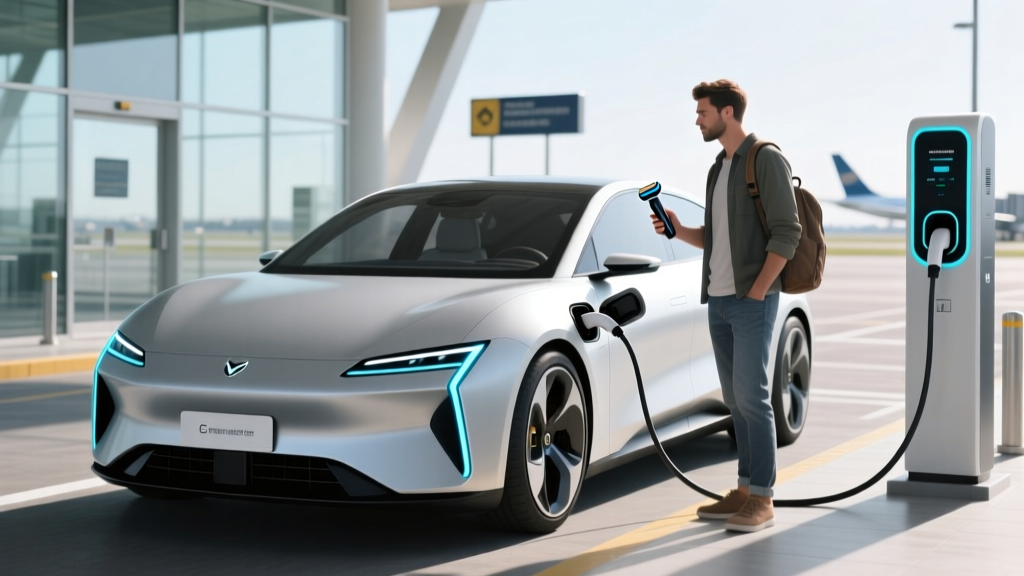
Yes, you can bring an electric razor on an airplane in 2026. The TSA permits electric razors in both carry-on and checked luggage. However, if your razor contains a lithium-ion battery (most modern cordless models do), it must follow the FAA's lithium-battery rules: spare (loose) batteries must go in carry-on only, and batteries must be under 100 watt-hours (Wh). Installed batteries inside the device are fine in either bag, but carry-on is recommended to prevent damage and allow inspection.
While this question seems far removed from electric vehicles, it actually touches on the same lithium-ion battery regulations that govern everything from your phone to your EV's traction pack. If you're an EV owner planning a road trip that involves a flight, or you're simply navigating the expanding world of battery-powered devices, understanding these rules matters. This guide covers the razor question in detail, then connects it to the broader EV-travel landscape — including how to manage your electric car while you're away and what charging looks like when you land.
TSA and FAA Rules for Electric Razors and Lithium Batteries
The TSA's WhatCanIBring tool lists electric razors as permitted in both carry-on and checked bags. There's no special declaration required at security. You do not need to remove an electric razor from your bag at the checkpoint (unlike laptops or large electronics).
The complication arises with lithium-ion batteries, which power nearly every cordless razor sold today. The FAA regulates these under hazardous-materials rules:
- Installed batteries (inside the razor): Allowed in carry-on or checked luggage. No watt-hour limit applies to typical consumer devices under 100 Wh.
- Spare/uninstalled lithium batteries: Must be in carry-on baggage only. Each battery must be under 100 Wh. Batteries between 100–160 Wh require airline approval (max two spare batteries).
- Battery protection: Terminals on spare batteries must be protected from short-circuiting (original packaging, tape, or a battery case).
Most electric razors use batteries rated between 2–10 Wh — far below the 100 Wh threshold. For reference, a typical smartphone battery is around 12–16 Wh, and a laptop battery is 50–99 Wh. You won't come close to the limit with a razor.
Common Misconceptions About Flying with Battery-Powered Devices
| Myth | Fact |
|---|---|
| "All lithium batteries are banned in checked luggage" | Only spare/uninstalled lithium batteries are banned from checked bags. Batteries installed inside devices are permitted. |
| "You must declare your electric razor at security" | No declaration needed. It can stay in your bag through the X-ray. |
| "Cordless razors are treated like power tools" | Power tools with batteries over 100 Wh face restrictions. Razors (2–10 Wh) do not. |
| "International flights have different razor rules" | ICAO/IATA global standards align with FAA rules on consumer lithium batteries under 100 Wh. |
From Razors to EVs: How Lithium-Battery Rules Scale Up
The same lithium-ion chemistry inside your cordless razor powers modern electric vehicles — just at a dramatically different scale. Understanding this connection helps EV owners navigate travel, shipping, and safety questions.
| Device | Battery Chemistry | Capacity (kWh or Wh) | FAA Airline Status |
|---|---|---|---|
| Electric razor (cordless) | Li-ion (NMC) | ~5 Wh (0.005 kWh) | Permitted (carry-on or checked) |
| Smartphone | Li-ion (NMC/LCO) | ~15 Wh (0.015 kWh) | Permitted (installed); spare in carry-on |
| Laptop | Li-ion (NMC/LCO) | ~70 Wh (0.07 kWh) | Permitted; spare in carry-on only |
| Portable power station (e.g., Jackery 1000) | NMC | ~1,000 Wh (1 kWh) | Banned from passenger aircraft |
| Electric vehicle (e.g., Tesla Model Y) | NMC or LFP | ~75,000 Wh (75 kWh) | N/A — shipped as cargo/freight under UN3171 |
This scale difference matters practically. When you fly, your EV stays behind — and its large NMC or LFP traction battery is classified as a Class 9 hazardous material for any shipping or transport outside of normal driving. You can't fly with an EV battery, ship one via standard courier, or check one as luggage. The razor, by contrast, is trivially compliant.
EV Ownership While You Travel: Parking, Charging, and Battery Health
If you're flying out for a week or two, your EV needs some basic preparation — especially regarding its high-voltage battery and 12V auxiliary system.
What to Do Before a Trip (3+ Days Away)
- Set charge level to 50–60% State of Charge (SoC). Lithium-ion batteries degrade fastest at extremes (below 10% or above 90%). Parking at 50–60% for a week or two is ideal for NMC batteries. LFP batteries (found in standard-range Tesla Model 3/Y and some BYD models) tolerate higher SoC better, but 50–70% is still a safe parking target.
- Disable Sentry Mode or cabin-overheat protection if you're parking at an airport long-term lot. These features draw 200–400W continuously and can drain 3–8 miles of range per day.
- Plug in if possible. If you have home Level 2 charging (240V, typically 7.7–11.5 kW), leave the car plugged in with the charge limit set to 50%. The car's battery management system (BMS) will maintain optimal SoC and keep the thermal management system active.
- Check tire pressure. EVs are 500–1,000 lbs heavier than comparable gas cars due to the battery pack. Sitting on underinflated tires for weeks can cause flat-spotting.
Real-World Vampire Drain Numbers
Modern EVs lose 1–3% of battery per week when parked unplugged with all standby features disabled. In cold weather (below 32°F / 0°C), this can increase to 3–5% due to the BMS periodically warming the battery. Over a two-week airport parking stint, expect to return to a car with roughly 45–55% SoC if you left it at 60% — perfectly safe and drivable.
EV vs. Gas: Cost Comparison for the Frequent Flyer
If you travel often enough to ask about packing electric razors, you may also be weighing whether an EV or gas car makes more financial sense for your lifestyle. Here's a data-driven comparison based on a driver who flies 6+ times per year, drives 10,000 miles annually, and parks at airport long-term lots.
5-Year Cost of Ownership: EV vs. Gas Sedan (10,000 mi/year)
| Category | 2026 Tesla Model 3 RWD (EV) | 2026 Toyota Camry LE (Gas) |
|---|---|---|
| Base MSRP | $38,990 | $28,400 |
| Federal tax credit (§30D) | Up to $7,500 (income/MSRP/sourcing rules apply — see IRS) | $0 |
| Effective purchase price | ~$31,490 | $28,400 |
| Fuel/energy (5 years) | $2,750 (home L2 at $0.14/kWh, 28 kWh/100mi) | $7,500 (32 MPG combined, $3.00/gal avg) |
| Maintenance (5 years) | $1,200 (cabin filter, wipers, tire rotation) | $3,500 (oil changes, brakes, filters) |
| Insurance (5-year avg) | $9,500 ($1,900/yr avg) | $7,000 ($1,400/yr avg) |
| Airport parking impact | No fuel evaporation; minor vampire drain | Fuel sits fine; 12V battery risk if >3 weeks |
| 5-Year Total | ~$44,940 | ~$46,400 |
Source: EPA fueleconomy.gov, IRS §30D guidelines, AAA maintenance cost averages. Actual costs vary by state, driving pattern, and electricity rate.
The EV wins on fuel and maintenance savings — roughly $4,750 less over five years — but loses on insurance premiums, which run 15–35% higher for EVs due to repair-cost data. The federal §30D tax credit narrows the purchase-price gap, but eligibility depends on your modified adjusted gross income (AGI ≤ $150,000 single / $300,000 joint), the vehicle's MSRP cap ($55,000 for sedans), and battery-critical-mineral sourcing requirements that shift annually.
Charging at Your Destination: What EV Owners Need to Know When Flying
If you're flying to a destination and renting an EV (increasingly common via Hertz, Avis, and Turo), or if you're shipping your own car ahead, charging logistics matter.
Renting an EV at the Airport
Major rental agencies now offer EVs at most US hub airports. Before accepting one, confirm:
- Charging network access: Does the rental include a ChargePoint, EVgo, or Electrify America account? Tesla rentals typically include Supercharger access billed post-return.
- Return charge policy: Most agencies require 70%+ SoC at return or charge $0.50–$1.00/kWh for shortfall — far above public charging rates of $0.30–$0.48/kWh.
- Connector type: In 2026, most new EVs use the NACS (North American Charging Standard) connector, but older rental fleet vehicles may still have CCS1. Confirm which DC fast-charging networks are compatible.
Shipping Your EV Long-Distance
If you're relocating or taking an extended trip, auto transport companies can ship your EV. Key considerations:
- The EV must be at 30–50% SoC for transport — carriers require this for safety (reduces thermal-runaway risk).
- Shipping cost runs $0.50–$1.20 per mile depending on distance and enclosed vs. open transport.
- The vehicle is classified under UN3171 (battery-powered vehicle) for hazmat logistics, but the carrier handles this — you just need to disclose it's an EV when booking.
Decision Framework: EV, Hybrid, or Gas for Frequent Travelers
Which Powertrain Fits Your Travel Pattern?
| If Your Situation Is... | Best Choice | Why |
|---|---|---|
| Home Level 2 charging + fly 6–12x/year + daily commute under 40 miles | BEV (battery-electric) | Lowest operating cost; car sits fine at 50% SoC while you fly; no fuel to degrade |
| No home charging + fly monthly + airport lot parking for 1–2 weeks at a time | PHEV (plug-in hybrid) | Gas engine acts as backup; no range anxiety from vampire drain; electric-only covers short errands (25–45 mi EPA) |
| Rural area + limited public charging + frequent long road trips to airports 100+ miles away | HEV (standard hybrid) | No charging needed; 50+ MPG combined; no battery-health worries during extended parking |
| Urban apartment dweller + fly 2–3x/year + drive under 8,000 miles/year | BEV with public charging plan | Low mileage keeps costs manageable; public DC fast charging (150–350 kW) covers occasional needs |
The critical variable most buyers overlook is home charging access. If you can install a Level 2 charger (240V, 32–48 amps, adding 25–45 miles of range per hour), a BEV is almost always the lowest total-cost option. Without home charging, a PHEV or HEV eliminates the public-charging dependency that frustrates apartment-dwelling EV owners.
Frequently Asked Questions
Do I need to take my electric razor out of my bag at airport security?
No. The TSA does not require you to remove electric razors from your carry-on or personal item during screening. Only electronics larger than a cell phone (laptops, tablets, full-size gaming consoles) must be placed in separate bins.
Can I pack a cordless razor with a lithium battery in checked luggage?
Yes, as long as the battery is installed inside the razor. Spare or loose lithium batteries must go in carry-on baggage only. This is the same rule that applies to laptops, cameras, and power banks.
Will my EV battery degrade if I leave it at the airport parking lot for two weeks?
Minimally. Expect 2–5% total SoC loss over two weeks if parked at 50–60% SoC with standby features disabled. This is well within normal operating parameters and causes no meaningful long-term degradation. Avoid leaving the car above 90% or below 10% SoC for extended periods.
Is it cheaper to drive my EV to the airport or take a rideshare?
For a 30-mile round trip, your EV uses roughly 8.4 kWh of energy — about $1.18 at $0.14/kWh residential rates. A rideshare for the same distance typically costs $35–$65 each way. Driving and parking is dramatically cheaper unless airport parking exceeds $25/day and your trip lasts more than a week.
Does the federal EV tax credit apply if I buy a used EV?
Yes, but under different rules. The used clean vehicle credit offers up to $4,000 (or 30% of the sale price, whichever is lower) for qualifying used EVs priced at $25,000 or less. Income caps apply ($75,000 single / $150,000 joint), and the vehicle must be at least two model years old. This credit can also be transferred to the dealer as a point-of-sale discount.
Are electric razors with NiMH batteries treated differently on planes?
Nickel-metal hydride (NiMH) batteries face no airline restrictions — they're not classified as hazardous materials the way lithium-ion is. If you have an older razor with NiMH cells, you can pack it in any bag without concern. However, nearly all razors manufactured after 2020 use lithium-ion for lighter weight and faster charging.
Always verify current TSA and FAA regulations before travel at tsa.gov and faa.gov. Battery rules can be updated, and individual airlines may impose stricter policies than the federal minimum.