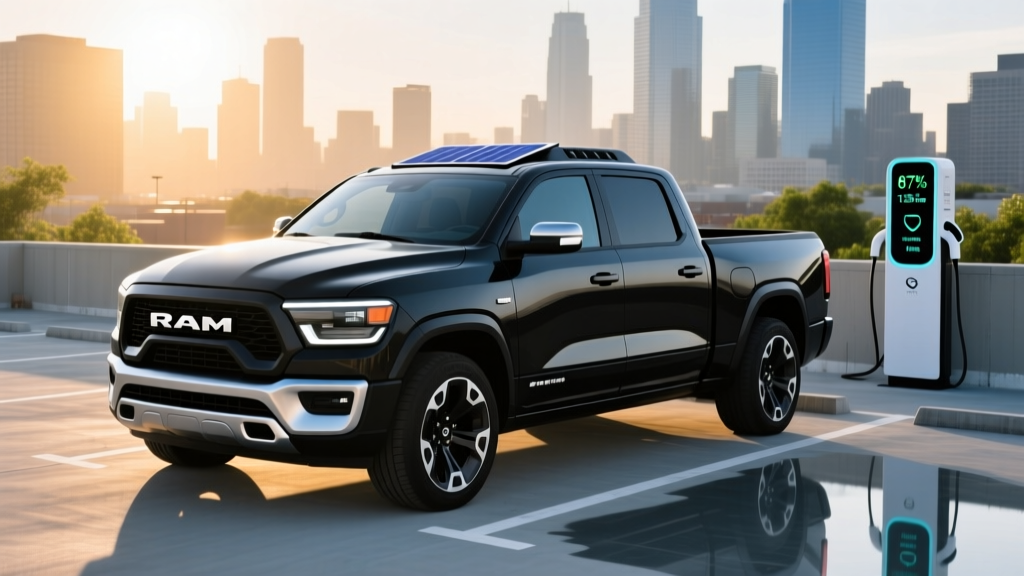
Quick Answer: The 2026 Ram 1500 REV is Ram's first fully electric half-ton pickup, offering up to an EPA-estimated 350 miles of range (Standard Range) or an estimated 500 miles with the available range-extender battery. Pricing starts around $58,095 before incentives. Real-world highway range drops 15-25% depending on speed, payload, and temperature. Towing will significantly reduce range — expect roughly 50-60% of EPA figures when pulling near max capacity. Home Level 2 charging is nearly essential for daily ownership; relying solely on public DC fast charging adds cost and time that erode the EV advantage.
Ram's Electric Truck Lineup: What's Actually Available
The 2026 Ram 1500 REV (Revolution Electric Vehicle) represents Stellantis's entry into the electric pickup segment, competing directly against the Ford F-150 Lightning, Rivian R1T, Chevrolet Silverado EV, and Tesla Cybertruck. Ram has taken a notably different approach by offering two distinct battery configurations — and a range-extender option — rather than a single battery size.
| Specification | REV Standard Range (168 kWh) | REV Extended Range (229 kWh) |
|---|---|---|
| Battery Capacity (usable) | ~168 kWh | ~229 kWh |
| EPA Est. Range | ~350 miles | ~500 miles |
| Max DC Fast Charge Rate | ~200 kW | ~200 kW |
| 10-80% DC Charge Time | ~41 minutes | ~55 minutes |
| Level 2 Charge Rate | 11.5 kW (standard) | 11.5 kW (standard) |
| Horsepower | 654 hp | 654 hp |
| 0-60 mph | ~4.4 seconds | ~4.4 seconds |
| Max Towing Capacity | ~14,000 lbs | ~14,000 lbs |
| Max Payload | ~2,700 lbs | ~2,600 lbs |
| Starting MSRP | ~$58,095 | ~$68,095 |
| Battery Warranty | 8 yr / 100,000 mi | 8 yr / 100,000 mi |
The Ram 1500 REV uses an NMC (nickel manganese cobalt) lithium-ion battery pack supplied in partnership with Samsung SDI. The dual-motor all-wheel-drive powertrain is standard across all trims, delivering 654 horsepower and an estimated 620 lb-ft of torque. That's competitive with the F-150 Lightning's extended-range output of 580 hp but trails the Cybertruck Cyberbeast's 845 hp.
Real-World Range Reality Check: The EPA-estimated 350-mile range for the Standard Range model assumes mixed driving conditions. On sustained highway trips at 70-75 mph, expect approximately 270-300 miles. In cold weather (below 32°F), range can drop an additional 15-30% due to battery resistance and cabin heating demands. When towing a 7,000-lb trailer, plan for roughly 175-210 miles between charges. The Extended Range model's 500-mile EPA figure is exceptional on paper, but real-world highway driving with payload should be expected around 375-425 miles.
Electric Ram vs Gas Ram 1500: The Numbers
For buyers cross-shopping the Ram 1500 REV against the conventional gas-powered Ram 1500, the comparison involves more than just fuel savings. Here's how the two stack up on the metrics that matter to truck buyers:
| Metric | 2026 Ram 1500 REV (Standard Range) | 2026 Ram 1500 Gas (5.7L HEMI V8, 4WD) |
|---|---|---|
| Starting MSRP | ~$58,095 | ~$46,095 |
| Federal Tax Credit (§30D) | Up to $7,500 (eligibility varies) | $0 |
| Effective Starting Price | ~$50,595 (if eligible) | ~$46,095 |
| Energy/Fuel Cost per Mile | ~$0.04-$0.06 (home charging) | ~$0.16-$0.20 (at $3.50/gal, 17 MPG combined) |
| Annual Fuel/Energy (15k mi) | ~$600-$900 | ~$2,400-$3,000 |
| 5-Year Fuel/Energy Cost | ~$3,000-$4,500 | ~$12,000-$15,000 |
| Maintenance (5-year est.) | ~$1,500-$2,500 | ~$3,500-$5,000 |
| Combined MPGe / MPG | ~70 MPGe (est.) | ~17 MPG combined |
| Max Towing | ~14,000 lbs | ~12,750 lbs |
The upfront price gap is real — roughly $12,000 before incentives. However, the IRS §30D clean vehicle credit can reduce the REV's effective price by up to $7,500 if you meet income thresholds (adjusted gross income under $150,000 single / $300,000 joint), the truck's MSRP falls within the $80,000 cap for pickups, and the battery meets critical-mineral and component sourcing requirements. The credit is now available as a point-of-sale transfer, meaning the dealer can apply it directly to your purchase price rather than waiting for a tax refund.
Critical caveat: §30D eligibility depends on battery sourcing rules that change annually. Always verify current-year eligibility on the IRS website or with your tax professional before assuming you'll receive the full credit.
Charging the Ram 1500 REV: What You Actually Need
Owning a 168+ kWh battery pack means charging logistics are the single most important factor in whether the REV fits your lifestyle. Here's what each charging level looks like in practice:
| Charging Level | Power (kW) | Miles Added per Hour | Full Charge Time (168 kWh) | Best For |
|---|---|---|---|---|
| Level 1 (120V outlet) | ~1.4 kW | ~3-4 miles | ~120+ hours | Emergency/trickle only |
| Level 2 (240V home) | 11.5 kW | ~28-32 miles | ~15-16 hours | Daily overnight charging |
| DC Fast Charge | Up to ~200 kW | ~180-200 miles (peak) | 10-80% in ~41 min | Road trips, quick top-ups |
Home charging is practically mandatory. A Level 1 standard outlet adds roughly 3-4 miles per hour — meaning a depleted 168 kWh battery would take over five days to charge. That's not viable for anyone driving more than 30-40 miles per day. A Level 2 home charger at 11.5 kW is the realistic daily solution: plug in overnight, wake up to a full battery every morning.
Level 2 home installation typically costs $800-$2,500 for the charger hardware and basic electrical work, but can reach $3,000-$5,000+ if your home requires a panel upgrade (common in older homes with 100-amp service). The Ram 1500 REV's large battery means you'll want a dedicated 60-amp circuit with a 48-amp continuous charger for optimal Level 2 speeds. Budget for a licensed electrician to assess your panel capacity before purchase.
On DC fast charging, the REV's ~200 kW peak rate is adequate but not class-leading. The Ford F-150 Lightning peaks around 150-195 kW depending on configuration, while the Silverado EV reaches up to 350 kW on its largest pack. The critical detail is the charge curve: peak kW is only sustained for a portion of the session. Expect the REV to charge aggressively from 10-50% SoC, then taper significantly above 80%. That 10-80% time of ~41 minutes is realistic for road-trip planning, but charging from 80-100% at a DC station is painfully slow and wasteful — plan to charge to 80% and drive on.
Real Costs of Ownership: 5-Year Breakdown
The sticker price is only the beginning. Here's a realistic five-year total cost of ownership comparison for a buyer putting 15,000 miles per year on the truck, charging primarily at home, and living in a region with average electricity rates (~$0.14/kWh):
| Cost Category | Ram 1500 REV (Standard Range) | Ram 1500 Gas (5.7L V8) |
|---|---|---|
| Purchase Price (after §30D credit) | ~$50,595 | ~$46,095 |
| State Registration/Taxes (avg) | ~$2,500 | ~$2,200 |
| Fuel/Energy (5 years) | ~$3,750 | ~$13,500 |
| Maintenance (5 years) | ~$2,000 | ~$4,200 |
| Insurance (5-year avg) | ~$11,500 | ~$9,000 |
| Home Charger Install | ~$1,500 | $0 |
| Estimated Depreciation (5 yr) | ~$22,000 | ~$18,000 |
| 5-Year Total Cost | ~$93,845 | ~$92,995 |
The five-year totals are remarkably close — within roughly $850 of each other in this scenario. The REV saves substantially on fuel and maintenance but costs more upfront (even after the tax credit), carries higher insurance premiums (EV insurance averages 15-25% higher than comparable gas vehicles), and may depreciate differently as the EV market matures. Your specific numbers will vary based on local electricity rates, gas prices, driving patterns, insurance quotes, and whether you qualify for the full federal credit plus any state incentives.
Where the REV wins clearly: If you drive more than 15,000 miles per year, have cheap home electricity (under $0.12/kWh), and qualify for the full §30D credit, the five-year math tips firmly in the EV's favor. High-mileage drivers can recoup the price premium in 3-4 years through fuel savings alone.
Where the gas Ram wins: If you frequently tow heavy loads long distances, live in an area with limited charging infrastructure, lack home charging access, or drive fewer than 10,000 miles per year, the fuel savings don't offset the higher purchase price and insurance costs.
Common Misconceptions About Electric Trucks
| Myth | Fact |
|---|---|
| "Electric trucks can't tow anything useful." | The REV is rated for up to ~14,000 lbs — more than most gas half-tons. The limitation isn't capability; it's range while towing. Expect 50-60% of EPA range when pulling near max capacity. |
| "The battery will need replacing in a few years." | Ram warranties the battery for 8 years/100,000 miles with a capacity retention threshold (typically 70% of original capacity). NMC packs in liquid-cooled systems are showing 10-15% degradation over 150,000+ miles in fleet data from similar platforms. |
| "You can charge from any regular outlet quickly." | A standard 120V outlet adds only 3-4 miles per hour. That's roughly 36-48 miles overnight — fine for a light day, inadequate for real use. Level 2 (240V) home charging is essential. |
| "Electric trucks are cheaper overall, no catch." | Higher insurance, potential panel upgrades, faster tire wear (due to instant torque and heavy weight), and public charging costs that can exceed gas prices are all real expenses that narrow the savings gap. |
| "The REV is self-driving with its assist features." | Ram's driver-assistance systems are SAE Level 2 — the driver must remain engaged and hands-on at all times. These are not autonomous systems. |
SAE Automation Level Reminder: Any driver-assistance features on the Ram 1500 REV (adaptive cruise, lane centering, hands-free highway assist) are SAE Level 2 systems. You are the driver. You must monitor the road, keep hands available, and remain ready to take over instantly. No production consumer vehicle sold in the US is "self-driving." Only Level 4 robotaxi services like Waymo operate without a human driver — and those are geofenced commercial services, not personal vehicles.
Who Should Buy the Electric Ram Truck — And Who Shouldn't
Choose the Ram 1500 REV if:
- You have access to home Level 2 charging (garage or driveway with 240V circuit capability)
- Your daily driving is under 200 miles round-trip, with occasional longer road trips
- You value instant torque, quiet operation, and a frunk (front trunk) for secure storage
- You qualify for the §30D tax credit (check IRS eligibility rules)
- You drive 15,000+ miles per year, making fuel savings meaningful
- You want a truck that can also serve as a backup power source (V2L/V2H capability expected)
Stick with a gas or hybrid Ram 1500 if:
- You regularly tow 8,000+ lbs over distances exceeding 150 miles
- You live in an apartment or lack reliable home charging access
- You frequently drive in extreme cold (below 0°F) where range loss compounds
- You drive fewer than 8,000 miles per year (fuel savings won't offset the premium)
- You need the flexibility to refuel in 5 minutes anywhere in rural America
- Your budget is strictly under $50,000 and you don't qualify for incentives
The Ram 1500 REV makes the most sense as a daily-driver truck that occasionally works — commuting, hauling gear, light towing around town, weekend trips within its comfortable range envelope. It's less ideal as a dedicated heavy-tow work truck that covers long rural routes daily. If your truck use splits between weekday commuting and weekend towing, the REV handles the weekday side brilliantly while requiring more planning on the towing side.
First-Time EV Truck Buyer Essentials
If the Ram 1500 REV would be your first electric vehicle, here are the non-obvious ownership realities that spec sheets don't highlight:
Tire wear accelerates. The REV's estimated 7,500+ lb curb weight combined with instant electric torque wears tires 20-30% faster than a comparable gas truck. Budget for replacement tires every 30,000-40,000 miles rather than the 50,000-60,000 miles typical on a gas Ram 1500. Truck-rated EV-specific tires (like the Michelin LTX series optimized for EVs) cost $300-$400 per corner.
Preconditioning matters for fast charging. When navigating to a DC fast charger using the REV's built-in navigation, the battery thermal management system will precondition the pack to optimal temperature. If you drive to a charger without preconditioning (using a third-party app or just showing up), your charge speeds will be noticeably slower for the first 10-15 minutes — especially in cold weather. Always use the truck's native routing to chargers when possible.
Public charging costs vary wildly. While home charging at $0.14/kWh yields roughly $0.04-$0.06 per mile, DC fast charging networks like Electrify America or EVgo charge $0.35-$0.55/kWh in many markets — pushing your per-mile cost to $0.12-$0.18, which approaches or exceeds gas costs. The economic case for the REV depends heavily on home charging. If you anticipate relying on public DC charging for more than 30% of your miles, run the numbers carefully.
Cold weather is a real range tax. Below freezing, NMC batteries lose 15-30% of their effective range due to increased internal resistance and energy consumed by battery and cabin heating. A 350-mile EPA truck becomes a 245-295 mile truck in January in Minnesota. The REV's available heat pump helps mitigate cabin heating losses, but battery chemistry limitations remain. If you live in a northern climate, the Extended Range model's larger buffer provides meaningful peace of mind.
Check fueleconomy.gov for the latest official EPA ratings once the REV begins deliveries, as final certification numbers may differ from preliminary estimates. The EPA's site also provides side-by-side comparison tools and annual fuel cost estimates tailored to your zip code and driving habits.
Frequently Asked Questions
Is the Ram 1500 REV actually available to buy now?
Ram has announced the 1500 REV with production targeted for 2026. Availability may initially be limited to certain markets and trim levels. Check with your local Ram dealer for current order status and delivery timelines. Reservations opened previously, and production ramp-up is expected throughout the model year.
Can the Ram 1500 REV power my house during an outage?
Ram has indicated vehicle-to-home (V2H) and vehicle-to-load (V2L) capability will be available, potentially through the Ram PowerBox accessory. This would allow the REV's massive battery to power home circuits during outages — a 168 kWh battery could run an average home's essential loads for several days. However, V2H requires compatible bidirectional charging equipment and home electrical panel integration. Confirm availability and requirements with your dealer.
How does the REV compare to the Ford F-150 Lightning on range?
The F-150 Lightning's Extended Range battery offers an EPA-estimated 320 miles, while the REV Standard Range targets ~350 miles. The REV Extended Range at ~500 miles significantly exceeds the Lightning. However, the Lightning has been on sale longer with proven real-world data, while the REV's figures remain to be independently validated. Both trucks offer similar towing and payload capabilities, with the REV holding an edge in maximum towing rating (~14,000 lbs vs ~10,000 lbs for the Lightning).
What happens if the battery degrades significantly?
Ram's battery warranty covers 8 years or 100,000 miles, guaranteeing the pack retains a specified percentage of its original capacity (typically 70%). If degradation exceeds that threshold within the warranty period, Ram is obligated to repair or replace the battery at no cost. Out-of-warranty replacement costs for a pack this size could range from $15,000-$25,000+, though industry trends show battery costs declining year over year. Most EV batteries are lasting well beyond their warranty periods in practice.
Do I need to upgrade my electrical panel for home charging?
Possibly. The REV's 11.5 kW Level 2 charging draws up to 48 amps continuously, which requires a dedicated 60-amp circuit. If your home has a 200-amp panel with spare capacity, installation is straightforward. Homes with 100-amp service or panels already near capacity may need a panel upgrade ($2,000-$4,000+) or a smart load-management system that shares capacity between the charger and other circuits. Have a licensed electrician evaluate your panel before committing to the truck.
Is insurance really more expensive for the electric Ram?
Yes, typically 15-25% higher than an equivalently priced gas truck. Factors include higher repair costs after collisions (specialized EV training, battery damage protocols), the vehicle's higher replacement cost, and the industry's still-developing actuarial data on EV claims. Get quotes from your insurer before purchasing — the difference could be $300-$600 per year, which affects the total-cost-of-ownership math.