Quick Answer: Is the Electric ProMaster Worth It?
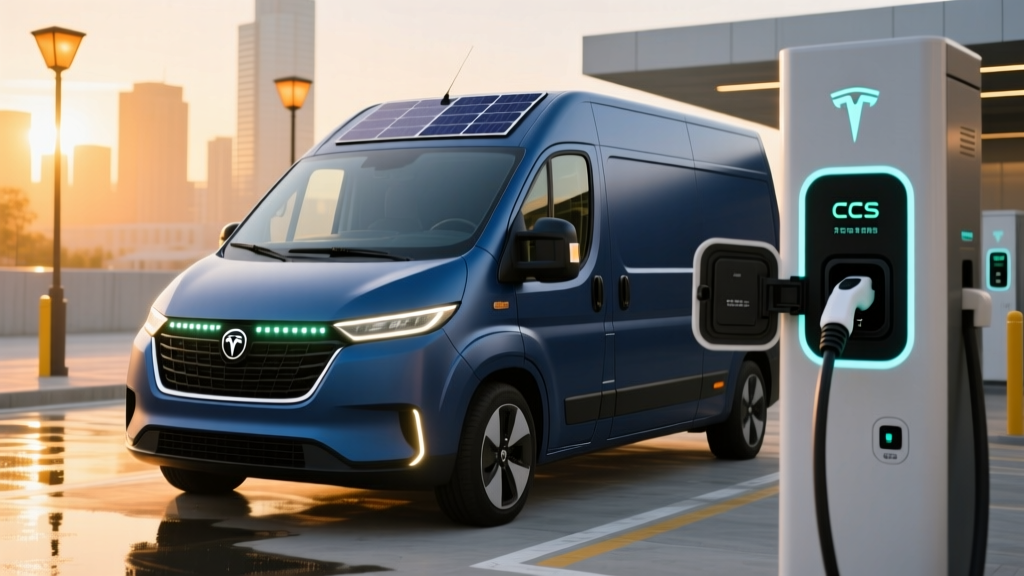
The 2026 Ram ProMaster EV (badged as the electric ProMaster) is a full-size commercial cargo van built on Stellantis' STLA Large platform with a 110 kWh usable battery, an estimated EPA range of 162–190 miles depending on roof and body length, and DC fast charging at up to 150 kW (10–80% in roughly 35–40 minutes). Starting MSRP sits around $58,000–$63,000 before incentives. It makes the strongest financial sense for fleets running predictable urban or suburban routes under 120 miles per day with access to overnight Level 2 depot charging. Long-haul or rural operators should stay with the gas ProMaster for now.
Range, Battery, and Real-World Expectations
The electric ProMaster uses a 110 kWh (usable) lithium-ion NMC battery pack mounted beneath the load floor. Ram targets an EPA-estimated range between 162 and 190 miles depending on configuration — the low-roof, short-wheelbase cargo variant achieves the highest figure, while the high-roof extended wheelbase drops to the lower end due to increased frontal area and weight.
Real-World Range Reality Check
EPA estimate: 162–190 miles
Expected real-world (mixed city/highway, moderate climate): 130–160 miles
Highway-heavy route at 70 mph: ~120–140 miles
Cold weather (below 30°F, cabin heat on): ~100–125 miles
Cargo vans are aerodynamically blunt. Highway speeds punish range harder than in a sedan or crossover. If your daily route exceeds 120 miles with highway segments, plan for mid-day charging or stick with the gas powertrain.
| Spec | Value |
|---|---|
| Battery (usable) | 110 kWh, NMC chemistry |
| EPA Range | 162–190 miles (config-dependent) |
| Motor Output | ~268 hp (200 kW), FWD |
| DC Fast Charge (peak) | 150 kW (CCS) |
| 10–80% DC Charge Time | ~35–40 minutes |
| Level 2 Charge Rate | ~11.5 kW (onboard charger) |
| Level 2 Full Charge Time | ~10–11 hours (0–100%) |
| Max Payload | ~3,200 lbs (cargo van, estimated) |
| Cargo Volume (max) | Up to 463 cu ft (extended high-roof) |
| Base MSRP | ~$58,000–$63,000 (before incentives) |
| Battery Warranty | 8 years / 100,000 miles |
Charging: Depot Level 2 vs Public DC Fast
Commercial van charging is fundamentally different from passenger EV charging. Most fleet electric ProMasters will charge overnight at a depot or warehouse on Level 2 equipment, and that's where the economics work best.
| Level | Power (kW) | Miles Added per Hour | Use Case |
|---|---|---|---|
| Level 1 (120V) | ~1.4 kW | ~3–4 mi/hr | Emergency only — impractical for 110 kWh pack |
| Level 2 (240V, 48A) | ~11.5 kW | ~28–33 mi/hr | Overnight depot charging; full charge in ~10 hrs |
| DC Fast (CCS) | Up to 150 kW | ~180+ mi/hr (peak) | Mid-day top-ups; 10–80% in ~35–40 min |
Depot charging economics: At a commercial electricity rate of ~$0.12/kWh, a full 110 kWh charge costs roughly $13.20. That delivers around 150 real-world miles — approximately $0.09 per mile in energy cost.
Charging curve caveat: The 150 kW peak rate applies only at low state-of-charge (roughly 10–30% SoC). Above 60%, the charge rate tapers significantly — expect ~60–80 kW from 60–80%, and even slower from 80–100%. Fleet managers should plan for 35–40 minute mid-day sessions to reach 80%, not 100%.
For depot installation, expect to budget $3,000–$7,000 per Level 2 charge point (commercial-grade EVSE, wiring, and conduit), plus potential panel or transformer upgrades for multi-van sites. Utility make-ready programs from companies like Con Edison, PG&E, or Xcel Energy can offset significant infrastructure costs — check with your local utility before signing contracts.
Electric ProMaster vs Gas ProMaster: Cost Comparison
The core purchase decision is whether the higher upfront cost of the electric ProMaster pays back through lower fueling and maintenance expenses. Here's how the numbers stack up over a 5-year / 75,000-mile ownership horizon.
| Cost Factor | Electric ProMaster | Gas ProMaster (V6) |
|---|---|---|
| Purchase Price (base MSRP) | ~$58,000–$63,000 | ~$44,000–$48,000 |
| Federal Commercial Clean Vehicle Credit (§45W) | Up to $7,500 | $0 |
| Estimated Incentive-Adjusted Price | ~$50,500–$55,500 | ~$44,000–$48,000 |
| Fuel / Energy (75,000 mi) | ~$6,750 (depot L2 at $0.12/kWh) | ~$14,000 (17 MPG avg, $3.20/gal) |
| Maintenance (5 years) | ~$2,500 (no oil, fewer brake jobs w/ regen) | ~$5,500 (oil changes, trans fluid, brakes) |
| Estimated Insurance (5 years) | ~$9,000–$11,000 | ~$7,500–$9,000 |
| Estimated 5-Year Total Cost | ~$68,750–$75,750 | ~$71,000–$76,500 |
Key takeaway: On a pure TCO basis, the electric ProMaster reaches cost parity or a slight advantage over 5 years for fleet operators who can charge at depot rates. The breakeven typically occurs around year 3–4, assuming consistent daily mileage of 50–120 miles and no expensive mid-day DC fast charging. Operators who rely heavily on public DC fast charging ($0.35–$0.50/kWh) will see that energy advantage shrink substantially.
According to U.S. Department of Energy data, electric commercial vehicles typically save $0.05–$0.12 per mile in fuel costs compared to gasoline equivalents, depending on local electricity rates and driving patterns.
Who Should Buy the Electric ProMaster?
The electric ProMaster is not a universal replacement for the gas van. It excels in specific operational profiles and falls short in others.
Decision Framework
Choose the Electric ProMaster if:
- Your daily routes are under 120 miles with predictable stops
- You operate primarily in urban or suburban areas with low average speeds (regenerative braking recaptures energy)
- You have (or can install) overnight Level 2 depot charging
- Your fleet qualifies for the §45W Commercial Clean Vehicle Credit or state-level incentives
- You operate in cities with clean-air-zone mandates or zero-emission delivery requirements
- Your drivers appreciate quiet, vibration-free operation for long in-city shifts
Stick with the Gas ProMaster if:
- Your routes regularly exceed 150 miles per day or include long highway segments
- You operate in extreme cold climates (northern Minnesota, Alaska) where range loss exceeds 35%
- You lack depot charging access and cannot install it
- You need maximum payload capacity — the battery pack adds ~1,500 lbs vs the gas powertrain
- You tow frequently (the electric ProMaster's towing capacity is limited vs gas models)
Tax Credits and Incentives for Commercial Buyers
The electric ProMaster is purchased primarily by businesses and fleets, which means it qualifies under IRC §45W (Commercial Clean Vehicle Credit) rather than the consumer §30D credit. Here's how it works:
- Credit amount: Up to $7,500 for vehicles with GVWR under 14,000 lbs (the ProMaster qualifies)
- Eligible buyers: Businesses, tax-exempt organizations, and qualified fleet operators
- Requirement: Vehicle must be placed in service for business use, not resale
- No MSRP cap or income cap (unlike the consumer §30D credit)
- Battery sourcing requirements: The credit amount phases based on critical-mineral and battery-component sourcing — full $7,500 is not guaranteed for every unit
- Point-of-sale transfer: Available for §45W starting in 2024, allowing dealers to apply credit at purchase
Many states also offer additional incentives. California's CEC and CARB programs, New York's NYTVoucher, and Colorado's fleet electrification grants can stack $5,000–$15,000 on top of the federal credit. Always verify current program availability — these funds are often allocated on a first-come, first-served basis.
For the most current federal rules, consult the IRS §45W guidance page directly.
Common Misconceptions About the Electric ProMaster
| Myth | Fact |
|---|---|
| "It can't handle a full work day." | The average commercial van drives 60–80 miles/day per DOE fleet data. The electric ProMaster's 130+ real-world miles covers most urban routes with margin. |
| "The battery will need replacing in a few years." | NMC packs in commercial applications are warrantied for 8 years/100,000 miles at 70%+ capacity retention. Degradation typically averages 1.5–2.5% per year in moderate climates. |
| "Charging takes too long for a work van." | Overnight Level 2 depot charging (10 hours) fully replenishes the pack. Most vans are parked 10–14 hours between shifts. Mid-day DC top-ups add 80+ miles in 20 minutes. |
| "It costs more to own." | Higher purchase price is offset by ~$7,250 less in fuel and ~$3,000 less in maintenance over 5 years. TCO reaches parity by year 3–4 for typical fleet duty cycles. |
| "Payload is the same as the gas van." | The battery pack adds significant weight. Expect roughly 500–1,000 lbs less max payload vs an equivalently configured gas ProMaster. Check your specific GVWR and cargo needs. |
Practical Ownership Considerations for First-Time EV Fleet Buyers
If your business is transitioning its first vehicles to electric, the ProMaster EV requires operational adjustments that go beyond the vehicle itself.
Depot charging infrastructure: Budget for a commercial electrician to assess your site's electrical panel. A single Level 2 charger on a 60-amp circuit is straightforward, but a fleet of 5+ vans may require a utility transformer upgrade — a $15,000–$50,000 project with lead times of 3–12 months. Start this process early.
Cold-weather planning: In climates where temperatures regularly drop below freezing, expect 25–40% range reduction. The ProMaster EV uses a heat pump for cabin heating (more efficient than resistive heaters), but battery chemistry itself is less efficient in cold. Preconditioning the battery while plugged in helps — schedule departure times in the vehicle's software to warm the pack before routes begin.
Driver training: Regenerative braking in the ProMaster EV is strong enough for near-one-pedal driving in city traffic. Drivers accustomed to gas vans need a 1–2 week adaptation period. Proper regen usage also reduces brake wear — fleet operators report 50–70% longer brake pad life on electric vans.
Insurance: Commercial EV insurance premiums typically run 15–25% higher than gas equivalents due to higher repair costs for battery-adjacent damage and specialized labor requirements. Get quotes from your commercial carrier before finalizing a purchase order.
Maintenance reality: The electric ProMaster eliminates oil changes, spark plugs, transmission fluid, and exhaust system repairs. The single-speed reduction gear requires minimal service. Tire wear may be slightly higher due to the vehicle's weight and instant torque — budget for tire rotation every 7,500 miles and expect 40,000–50,000 miles from a set of commercial-rated tires.
Frequently Asked Questions
Can the electric ProMaster tow a trailer?
Ram rates the electric ProMaster for light towing, but the capacity is significantly lower than the gas V6 ProMaster (which can tow up to 6,910 lbs when properly equipped). Expect the EV variant to handle roughly 2,000–3,000 lbs based on preliminary specs. If you tow daily, the gas model remains the better tool.
How long does the battery last before replacement?
Based on NMC degradation curves in commercial fleet data, expect 80–85% capacity retention at 100,000 miles (roughly 7–8 years of typical use). Ram warranties the battery for 8 years/100,000 miles against dropping below 70% capacity. Full battery replacement, if ever needed out of warranty, is estimated at $18,000–$25,000 including labor — though most fleet vehicles are retired or sold before this becomes necessary.
Does the electric ProMaster qualify for the $7,500 tax credit?
For business and fleet purchases, yes — under IRC §45W (Commercial Clean Vehicle Credit), the ProMaster EV can qualify for up to $7,500. This is separate from the consumer §30D credit. The exact amount depends on battery-component and critical-mineral sourcing compliance, which Stellantis has not fully detailed for every build configuration. Consult a tax professional and verify with the IRS §45W page before relying on a specific credit amount.
What happens if I run out of charge on a route?
The ProMaster EV supports CCS DC fast charging, so you can use Electrify America, EVgo, or other public networks for emergency top-ups. However, public DC charging at $0.35–$0.50/kWh is roughly 3–4x more expensive than depot Level 2 charging. Route planning with a 20% range buffer is strongly recommended. Stellantis' Uconnect EV services include route planning with integrated charging stops.
Is the electric ProMaster available in passenger or cutaway configurations?
For the 2026 model year, the electric ProMaster is offered primarily as a cargo van in multiple roof-height and wheelbase combinations. Passenger wagon and cutaway variants have been announced for future model years but are not yet available for order. Check with your Ram Commercial dealer for the latest configuration availability.