Can Electric Powered Construction Equipment Replace Diesel on Your Job Site?
Electric powered construction equipment — compact excavators, wheel loaders, telehandlers, and aerial lifts — has moved from pilot projects to production fleets in 2026. The core question for contractors and owner-operators is straightforward: does the higher upfront sticker price pay back through fuel, maintenance, and regulatory savings over a 5- to 8-year machine life?
Quick Answer
For most light-to-medium duty cycles (urban demo, indoor work, utility trenching, landscaping), electric powered construction equipment delivers a 3–5 year payback vs. diesel in 2026. Total cost of ownership (TCO) savings typically range from $15,000–$40,000 per machine over five years, driven by diesel displacement ($6,000–$14,000/year), near-zero scheduled maintenance, and zero idle-emissions compliance costs. Heavy earthmoving and remote-site work remain diesel-dominant due to battery energy-density limits and lack of fast-charging infrastructure off-grid.
This guide breaks down the real specs, real costs, and real limitations of electric powered construction equipment as it stands in 2026 — no marketing gloss, just the numbers a buyer needs to decide.
What Electric Powered Construction Equipment Actually Looks Like in 2026
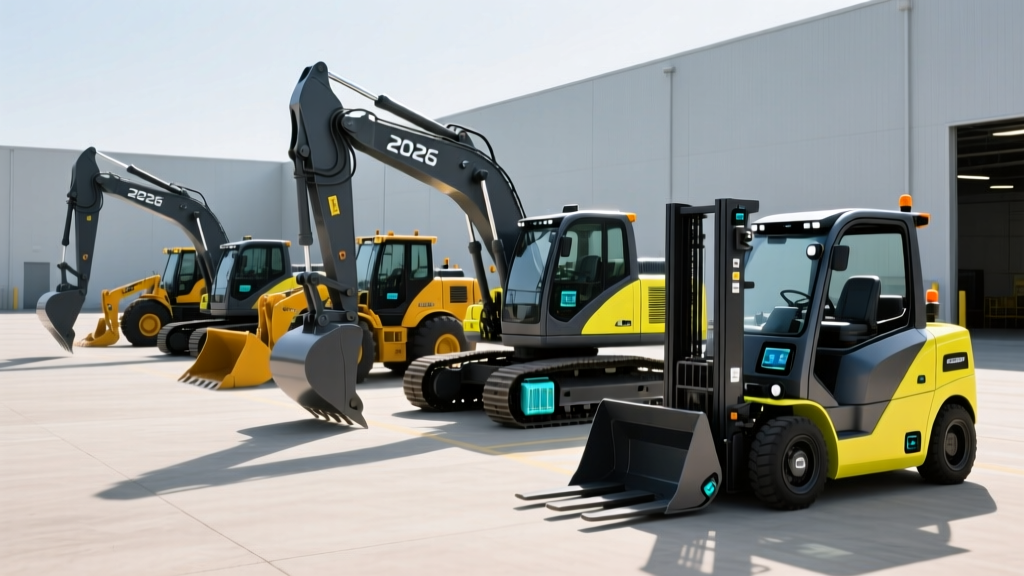
The category spans compact to mid-size machines. Full-size 30-ton excavators with battery-electric drivetrains remain in limited pilot phases. Here's what's actually orderable from major OEMs this year:
| Machine Class | Example Models (2026) | Battery (kWh) | Typical Runtime | Charge Time (0–80%) | Approx. Base MSRP |
|---|---|---|---|---|---|
| Mini/Compact Excavator (1.5–3.5 ton) | Volvo ECR25 Electric, Bobcat E10e, Caterpillar 301.9 Electric | 20–48 kWh (LFP) | 4–6 hrs active dig | 3–5 hrs L2 / 45–80 min DC | $65,000–$110,000 |
| Compact Wheel Loader | Volvo L25 Electric, JCB 505-20e | 40–64 kWh (LFP) | 5–7 hrs load cycles | 4–6 hrs L2 / 60–90 min DC | $130,000–$180,000 |
| Telehandler (compact) | JCB 525-60E, Manitou MRT e-Vision | 24–40 kWh | 4–6 hrs lift cycles | 3–5 hrs L2 | $95,000–$140,000 |
| Aerial/Scissor Lifts | JLG E-series, Genie FE/BE | 12–25 kWh | Full shift (intermittent) | Overnight L2 | $25,000–$55,000 |
| Dumpers / Site Carts | Volvo TA15 Electric, Mecalac eSite | 40–100 kWh | 5–8 hrs haul | 1–2 hrs DC fast | $120,000–$220,000 |
Note: nearly all electric powered construction equipment in this size range uses LFP (lithium iron phosphate) chemistry — chosen for cycle life (3,000–5,000 full cycles to 80% SoH), thermal stability in dusty/hot environments, and lower per-kWh cost vs. NMC. Energy density is lower than NMC, but construction machines aren't range-limited the way highway EVs are.
Electric vs. Diesel: Head-to-Head Cost Comparison
The purchase price of an electric compact excavator runs 1.5× to 2.5× its diesel equivalent. The payback comes from the operating side. Here's a 5-year TCO comparison for a typical 3-ton compact excavator used ~1,200 hours/year on urban utility work:
| Cost Line | Diesel Equivalent | Electric (e.g., Volvo ECR25) | 5-Year Delta |
|---|---|---|---|
| Base MSRP (2026) | $55,000 | $92,000 | +$37,000 (electric) |
| Fuel/Energy (1,200 hrs/yr × 5 yrs) | $28,500 (diesel @ $4.25/gal) | $5,800 (electric @ $0.14/kWh) | −$22,700 (electric wins) |
| Scheduled Maintenance (oil, filters, DEF, coolants) | $9,500 | $1,200 (grease, hydraulic fluid checks) | −$8,300 (electric wins) |
| Unplanned Downtime Cost (est.) | $6,000 | $2,500 | −$3,500 (electric wins) |
| Insurance (5 yrs) | $7,500 | $8,200 | +$700 (electric) |
| Resale Value (Year 5) | $22,000 | $30,000 (emerging demand) | −$8,000 (electric wins) |
| 5-Year Net TCO | $84,500 | $79,700 | −$4,800 electric |
At 1,200 hrs/year, the crossover is roughly Year 3–4. At 800 hrs/year, payback stretches to 5–6 years. At 1,800+ hrs/year, payback compresses to under 3 years. Hours-per-year is the single biggest variable — higher utilization favors electric more aggressively than diesel.
Charging Realities on the Job Site
This is where most first-time buyers of electric powered construction equipment get blindsided. A job site is not a Tesla Supercharger plaza. You need to plan power delivery before the machine arrives.
Level 2 (AC) Charging — The Default
- Typical input: 7–22 kW (208/240V or 480V 3-phase)
- Miles-equivalent: adds ~15–40 kWh per hour of plug-in time
- Best for: overnight top-ups at the yard, between-shift charging
- Install cost: $2,000–$12,000 per site depending on panel capacity and trenching distance
DC Fast Charging — The Productivity Unlock
- Typical input: 40–80 kW (CCS1 or proprietary)
- 0–80% in 45–90 minutes for a 40–60 kWh pack
- Cost per unit: $35,000–$90,000 installed (utility service upgrades common)
- Best for: multi-shift urban sites, rental yards with high turnover
The Grid Problem
Many urban job sites have only 120/208V service available from temporary panels. Running a 22 kW L2 charger may require a temporary service drop from the utility — a 4–12 week lead time in congested metro areas. Plan this in the pre-construction phase, not the week before equipment mobilization.
For remote sites (rural utility work, wind farm access roads, agricultural), electric powered construction equipment remains impractical without a towable battery pack or diesel generator acting as a site charger — at which point the emissions advantage erodes.
Incentives, Tax Credits, and Regulatory Tailwinds
Federal EV tax credits under IRS §30D apply to on-road vehicles, not off-road construction equipment. However, several other incentives stack meaningfully in 2026:
- IRA §45W Commercial Clean Vehicle Credit: up to $40,000 for qualifying heavy commercial EVs over 14,000 lbs GVWR — some larger electric powered construction equipment (site dumpers, loaders) qualifies when titled for on-road transit between sites. Confirm with a tax professional.
- EPA Clean Heavy-Duty Vehicle Program: grants to municipalities and contractors replacing diesel with zero-emission equipment in nonattainment air-quality zones.
- State voucher programs (notably California's CORE, New York's Truck Voucher Incentive, Colorado's fleet grants): often cover 40–70% of the incremental cost of electric over diesel.
- Utility make-ready programs: many IOUs (PG&E, ConEd, Xcel) fund 50–100% of site electrical upgrades for commercial EV/Equipment charging.
- Bonus depreciation (IRC §168): 60% first-year bonus depreciation in 2026 for qualifying equipment, applied to the full electric machine cost.
Always verify current-year rules on irs.gov and with your CPA — incentive stacks change annually and vary by jurisdiction.
Where Electric Wins, Where Diesel Still Rules
Decision Framework: Electric or Diesel?
Choose electric powered construction equipment if:
- Work is indoors or in enclosed spaces (warehouses, parking garages, tunnels) — zero exhaust is a safety and compliance requirement
- Job sites are in urban cores with noise ordinances (electric machines run 10–15 dB quieter, often enabling extended work hours)
- Annual utilization exceeds 1,000 hours
- You have yard-based overnight charging access or utility service at the site
- Your bid requirements include LEED, Buy Clean, or zero-emissions mandates (common on DOT, federal, and large GC contracts)
- Machines are compact-class (under 10 tons)
Stick with diesel (or hybrid) if:
- Sites are remote with no grid power within practical cable distance
- Machines are full-size excavators, dozers, or articulated haulers (electric options still pilot-stage in 2026)
- Annual utilization is under 500 hours — payback stretches beyond machine life
- Operations require sustained high-horsepower PTO (rock breakers, large hydraulic attachments running continuous)
- You run 2+ shifts/day with no charging window — unless you invest in DC fast chargers or swap-battery systems
Common Misconceptions About Electric Powered Construction Equipment
| Myth | Fact (with data) |
|---|---|
| "Electric machines can't match diesel torque" | Electric motors deliver peak torque at 0 RPM. Compact electric excavators routinely match or exceed diesel breakout force in the same weight class. |
| "Batteries won't last the life of the machine" | LFP packs in 2026 are rated 3,000–5,000 cycles to 80% capacity. At one cycle/day, that's 8–14 years — typically outlasting the machine's economic life. OEM battery warranties: 5 years / 5,000 hrs standard. |
| "Cold weather kills performance" | Yes, expect 15–30% runtime reduction at 20°F (−6°C), similar to road-going EVs. Machines with active thermal management (Volvo, JCB) retain ~85% capacity at freezing; passive-cooled packs fare worse. Preconditioning on shore power before shift start recovers most of the loss. |
| "Charging takes too long for a real job site" | Overnight L2 covers a full shift for 90%+ of compact-machine duty cycles. DC fast charging at lunch restores 60–80% in under an hour for high-utilization sites. |
| "Grid power is dirtier than diesel" | Even on the most coal-heavy U.S. grids, well-to-wheel CO₂ per operating hour is 40–65% lower for electric vs. diesel. On cleaner grids (CA, NY, PNW), the reduction exceeds 80%. Source: EPA equivalency data. |
First-Time Buyer Checklist: What to Know Before You Sign
- Audit your duty cycle. Pull telematics or operator logs. Average hours/day and peak-load days determine battery size needed.
- Survey site power. Have an electrician confirm available amperage at the yard and at typical job sites. Budget $3,000–$15,000 for L2 installs per site.
- Run your own TCO. Use your actual diesel price, hourly utilization, and maintenance invoices — don't rely on OEM marketing calculators.
- Check incentive eligibility. State voucher programs often require pre-approval before purchase — applying post-sale disqualifies you.
- Ask about battery replacement cost. 2026 pricing: ~$120–$180/kWh for LFP replacement packs, meaning a 40 kWh pack runs $4,800–$7,200 out of warranty.
- Confirm service network. Not every dealer is trained on high-voltage construction equipment. Verify certified tech availability within 50 miles.
- Negotiate telematics. Remote SoC monitoring, fault codes, and shift-energy reports are essential for fleet management — should be included, not a subscription upsell.
Bottom Line for 2026
Electric powered construction equipment has crossed from early-adopter to early-majority status in the compact segment. The math works for urban, indoor, and high-utilization applications — often decisively, once incentives are applied. The math does not work for remote, low-utilization, or heavy-class work in 2026. Buyers who skip the duty-cycle audit and buy on sticker shock alone will be disappointed; buyers who run the numbers and match the machine to the mission will find genuine 5-year savings, lower downtime, and a growing bidding advantage on emissions-sensitive contracts.
Frequently Asked Questions
Do I need a special license or certification to operate electric powered construction equipment?
No additional operator license beyond what the machine class requires (OSHA, CDL if on-road transit). However, maintenance technicians need high-voltage safety training — OEMs typically offer a 2-day certification course.
What happens if the battery dies mid-shift on a job site?
You tow or trailer it back to a charger, same as a diesel machine that runs out of fuel — but unlike diesel, you can't pour in a jerry can. This is why right-sizing the battery to your duty cycle and installing site charging matters. Most operators report this happens less than once a year after calibration.
Can I run electric powered construction equipment in the rain or wet conditions?
Yes. Production machines are IP67-rated for battery and drive components and operate in the same weather conditions as diesel equivalents. Follow OEM guidance on high-pressure washdown — avoid direct spray on HV junction boxes.
How does resale value compare to diesel?
Emerging data from 2024–2026 auction results shows electric compact excavators retaining 55–65% of MSRP at Year 5, vs. 35–45% for diesel equivalents in the same class. The gap is widening in favor of electric as municipal and large-GC zero-emissions mandates expand.
What about hydrogen or hybrid construction equipment as an alternative?
Diesel-electric hybrids (e.g., JCB, Fendt) are shipping today and offer 20–30% fuel reduction with no charging infrastructure — a pragmatic bridge for remote sites. Hydrogen fuel-cell machines remain in pilot phases in 2026 and are not commercially orderable at scale.