Quick Answer: Do EVs Use an Electric Power Steering Rack?
Yes — virtually every modern battery-electric vehicle uses an electric power steering (EPS) rack, specifically a rack-and-pinion system driven by an electric motor rather than a hydraulic pump. Unlike gas cars that historically relied on engine-driven hydraulic power steering, EVs have no engine to spin a pump, so EPS is mandatory. The good news for owners: EPS racks are largely maintenance-free, require no fluid changes, and typically last 150,000+ miles. When they do fail, replacement costs range from $1,200 to $3,500 depending on the model, compared to $800 to $2,200 for a hydraulic rack on a gas car.
How an Electric Power Steering Rack Works in an EV
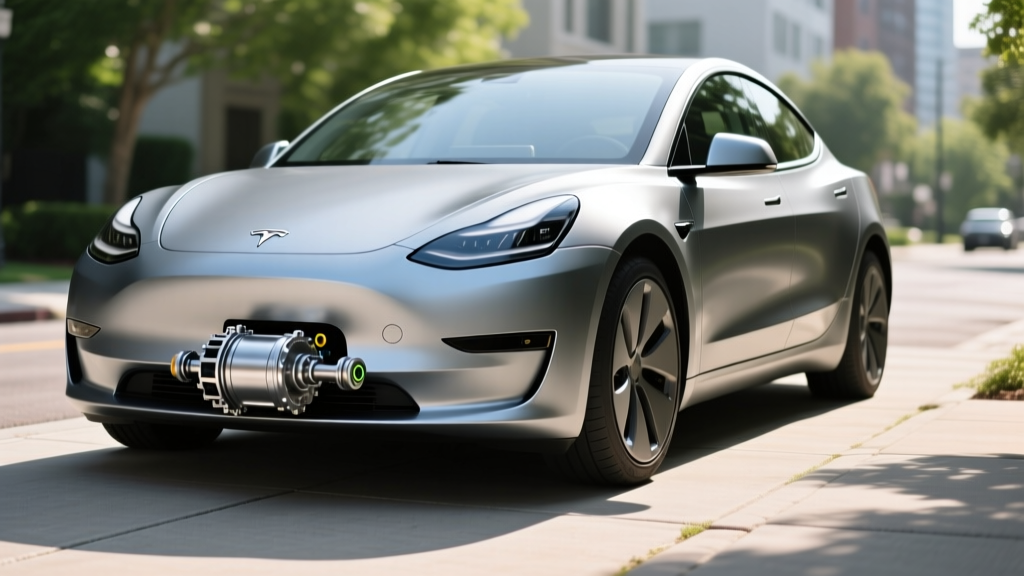
An electric power steering rack replaces the hydraulic lines, pump, and fluid reservoir with a compact electric motor mounted directly on or beside the steering rack. Torque sensors detect how hard you're turning the wheel, and an electronic control unit (ECU) commands the motor to provide proportional assist. In EVs like the Tesla Model Y, Hyundai Ioniq 5, and Ford Mustang Mach-E, the EPS system is integrated with the vehicle's drive-by-wire architecture and advanced driver-assistance systems (ADAS).
This integration is critical: features like lane-keeping assist, automated parking, and hands-free highway driving (such as GM's Super Cruise or Ford's BlueCruise) all route steering commands through the EPS rack. The motor must respond in milliseconds to both driver input and software commands, which is why EV steering racks tend to be more electronically complex than those in older gas cars.
Most EVs use one of two EPS configurations:
- Column-assist EPS (C-EPS): The motor is mounted on the steering column above the rack. Common in lighter EVs and more affordable to replace. Found in the Nissan Leaf and earlier Chevy Bolt EV.
- Rack-assist EPS (R-EPS) or Direct-assist EPS: The motor is integrated into the rack itself, providing more precise feel and higher assist force. Used in heavier EVs like the Ford F-150 Lightning, Rivian R1T, and most Tesla models. More expensive to service.
EV vs Gas Car: Steering System Maintenance Compared
One of the strongest ownership arguments for electric power steering is the elimination of hydraulic maintenance. Here's how the two systems compare in real-world cost and effort:
| Maintenance Item | EV (Electric Power Steering Rack) | Gas Car (Hydraulic Power Steering) |
|---|---|---|
| Power steering fluid change | Not required — no fluid | Every 50,000–100,000 mi ($80–$150) |
| Pump replacement | N/A — no hydraulic pump | $400–$900 (common failure at 80k–120k mi) |
| Hose/line leaks | N/A — no hydraulic lines | $200–$600 repair (common on older vehicles) |
| Rack replacement (full assembly) | $1,200–$3,500 | $800–$2,200 |
| Typical rack lifespan | 150,000–200,000+ mi | 100,000–150,000 mi (hydraulic) |
| ADAS integration | Full (lane-keep, auto-park, Level 2 assist) | Limited or none on older models |
| 10-year estimated steering maintenance | $0–$200 (inspection only) | $500–$1,500 (fluid, pump, hoses) |
The data is clear: over a 10-year ownership period, an EV's electric power steering rack saves most owners $500 to $1,300 in avoided hydraulic maintenance. According to fueleconomy.gov, EVs broadly have fewer moving parts in their drivetrain, and the steering system follows that pattern.
Real Costs: What EV Owners Actually Spend on Steering
While EPS racks are durable, they aren't immortal. Here's what real-world EV ownership data shows about steering-related costs:
| Vehicle (2025–2026 MY) | EPS Type | Rack Replacement Cost | Known Issues |
|---|---|---|---|
| Tesla Model Y (AWD Long Range, $44,990 MSRP) | R-EPS (direct rack assist) | $2,200–$3,100 | Occasional software calibration resets; hardware failures rare before 100k mi |
| Hyundai Ioniq 5 (SEL, $42,600 MSRP) | R-EPS | $1,800–$2,600 | Minimal reported issues; covered under 10-yr/100,000-mi powertrain warranty |
| Ford Mustang Mach-E (Premium, $43,995 MSRP) | R-EPS | $2,000–$2,900 | Some early 2021 models had recall for steering gear bolt torque; resolved |
| Chevy Equinox EV (LT, ~$33,000 MSRP) | C-EPS | $1,200–$1,800 | New platform; limited long-term data |
| Ford F-150 Lightning (XLT, $54,995 MSRP) | R-EPS (heavy-duty) | $2,800–$3,500 | Higher cost due to truck-rated rack; few reported failures |
For context, a comparable gas vehicle like the 2026 Toyota RAV4 (gas, ~$30,000 MSRP) would likely require a hydraulic pump replacement ($500–$700) and at least one fluid flush ($100) over the same ownership period, with rack replacement running $1,000–$1,600 if needed.
Common Misconceptions About EV Steering Systems
| Myth | Fact |
|---|---|
| "EV steering racks break more often because of the vehicle's weight." | EVs are 10–30% heavier than equivalent gas cars, but EPS racks are engineered for the specific vehicle mass. Failure rates are comparable to or lower than hydraulic systems, which suffer age-related seal and hose degradation regardless of weight. |
| "If the 12V battery dies, you lose all steering." | EPS racks draw from the 12V system, but EVs have DC-DC converters that continuously charge the 12V from the high-voltage traction battery while the car is on. You'd only lose steering assist if the entire electrical system fails — at which point the car would also lose propulsion. |
| "Electric steering feels numb compared to hydraulic." | Early EPS systems (circa 2010) earned this reputation. Modern EV racks use high-resolution torque sensors and variable assist profiles. Cars like the Porsche Taycan and BMW i4 are widely praised for steering feel that rivals hydraulic systems. |
| "ADAS features wear out the steering rack faster." | Lane-keeping and auto-parking use the same EPS motor as manual driving but at low torque levels. There's no evidence that normal ADAS use accelerates rack wear. The motor is rated for millions of assist cycles. |
| "You can't drive an EV if the EPS fails." | If the electric assist motor fails, the mechanical rack-and-pinion connection remains intact. You can still steer — it just requires significantly more effort, similar to driving a car with a broken hydraulic pump. Pull over safely, but you won't lose all control. |
Signs Your EV's Electric Power Steering Rack Needs Attention
EPS racks don't leak fluid (there is none), so failure signs are different from hydraulic systems. Watch for:
- Steering warning light on the dash: Usually yellow or red, often with a steering wheel icon. This indicates the ECU has detected a fault in the EPS motor, torque sensor, or wiring.
- Sudden increase in steering effort: The assist motor has stopped providing boost. The car remains drivable but steering will feel very heavy, especially at low speeds.
- Steering pulling to one side: Could indicate a calibration issue (fixable via software update at the dealer) or a mechanical problem with the rack mounting or tie rods.
- Clicking or grinding from the rack area: Internal gear wear or a failing motor bearing. This warrants prompt inspection.
- ADAS features disabling unexpectedly: Since lane-keeping and auto-park depend on the EPS rack, a fault may cause these features to deactivate. Check for stored diagnostic trouble codes (DTCs).
Most EV manufacturers cover the EPS rack under the powertrain or steering component warranty. Hyundai and Kia cover it for 10 years/100,000 miles. Tesla covers it under the 4-year/50,000-mile basic warranty. Ford covers it under 3 years/36,000 miles basic, with extended coverage possible under certain service programs. Always check your specific warranty booklet — the NHTSA database tracks recalls and service bulletins that may extend coverage for known EPS issues.
First-Time EV Buyer: Steering and Maintenance Decision Framework
Choose Your EV Based on Steering & Maintenance Priorities
If you want the lowest possible steering maintenance cost: Choose an EV with a proven C-EPS or R-EPS rack from a brand with a long powertrain warranty (Hyundai Ioniq 5, Kia EV6 — 10-year/100,000-mile coverage). Expected 10-year steering cost: $0.
If you rely heavily on ADAS features (lane-keep, auto-park, highway assist): Prioritize EVs with high-quality R-EPS racks and strong software ecosystems — Tesla Model Y/3 (Autopilot/FSD Supervised), Ford Mach-E (BlueCruise), or GM Ultium-platform vehicles (Super Cruise). These systems depend on precise EPS integration.
If you're buying a heavy EV (truck or large SUV): Expect higher rack replacement costs ($2,800–$3,500) due to heavy-duty components. The F-150 Lightning and Rivian R1S use reinforced racks. Budget accordingly if you plan to keep the vehicle past warranty.
If you live in a region with harsh winters and road salt: The rack's external tie rod ends and boots are susceptible to corrosion regardless of EV or gas. Inspect boots annually after year 5. This is not an EPS-specific issue — it affects all rack-and-pinion steering.
If you don't have home charging and rely on public infrastructure: Steering maintenance is unaffected by your charging setup. EPS racks operate identically whether you charge at home or use DC fast chargers. Don't let charging logistics influence your steering-related concerns.
Total Ownership Context: Where Steering Fits in EV Costs
Steering maintenance is a small line item in the broader EV ownership picture, but it illustrates a larger pattern. According to a 2024 study by Consumer Reports and data compiled by the IRS on clean vehicle incentives, EV owners save an average of $4,600 to $9,200 over the vehicle's lifetime on maintenance compared to gas car owners. The electric power steering rack contributes to that savings by eliminating fluid, pump, and hose service.
Here's a realistic 5-year cost snapshot for a mid-range EV versus a comparable gas crossover:
| Cost Category (5 Years / 75,000 mi) | EV (e.g., Ioniq 5 SEL) | Gas Crossover (e.g., RAV4 XLE) |
|---|---|---|
| Purchase price (after §30D credit, if eligible) | ~$35,100 (after up to $7,500 credit*) | ~$32,500 |
| Fuel / electricity | ~$3,200 (at $0.14/kWh avg) | ~$7,500 (at $3.40/gal, 28 MPG combined) |
| Steering system maintenance | $0 | $200–$400 (fluid flush, inspection) |
| Brake maintenance (regen extends pad life) | $150–$300 | $600–$1,000 |
| Oil changes | $0 | $500–$750 |
| Insurance (avg) | ~$9,500 (EVs typically 15–20% higher) | ~$8,000 |
| 5-year total operating cost | ~$12,850–$13,000 | ~$16,800–$17,650 |
*Federal §30D tax credit eligibility depends on MSRP caps ($55,000 for cars, $80,000 for SUVs/trucks), buyer income limits ($150,000 single / $300,000 joint AGI), battery critical-mineral and component sourcing requirements, and point-of-sale transfer availability. Rules are current for 2026 but subject to legislative change. Consult a tax professional and the IRS clean vehicle credit page for your specific situation.
Frequently Asked Questions
Can I retrofit a hydraulic steering system onto my EV?
No. EVs don't have an engine to drive a hydraulic pump, and adding an electric-driven hydraulic pump would add complexity, weight, and energy consumption with no benefit. EPS is the correct and only practical solution for electric vehicles.
Does regenerative braking affect the steering rack?
No. Regen braking operates through the electric traction motor and has no mechanical connection to the steering rack. However, one-pedal driving can change how you modulate the car in corners, which may subtly affect how often you make steering corrections — but this has negligible impact on rack wear.
Will an aftermarket steering wheel void my EPS warranty?
Possibly. If the aftermarket wheel interferes with the torque sensor calibration or the airbag system, a dealer may deny a steering-related warranty claim. Stick with OEM or OEM-equivalent wheels, or confirm compatibility with your service center before installing.
How do I know if my EV has a steering-related recall?
Enter your VIN at NHTSA's recall lookup. This will show all open recalls and technical service bulletins (TSBs) for your specific vehicle, including any related to the EPS rack or steering components.
Is steer-by-wire the same as electric power steering?
No. Electric power steering still has a physical mechanical connection (the rack and pinion) between the steering wheel and the wheels, with an electric motor providing assist. Steer-by-wire eliminates the mechanical connection entirely, using motors at both the steering wheel and the road wheels. The Tesla Cybertruck and Lexus RZ 450e use steer-by-wire, but most EVs still use conventional EPS racks. Steer-by-wire is a separate technology with its own maintenance and redundancy considerations.