Quick Answer: Are USPS Electric Postal Vehicles Worth the Switch?
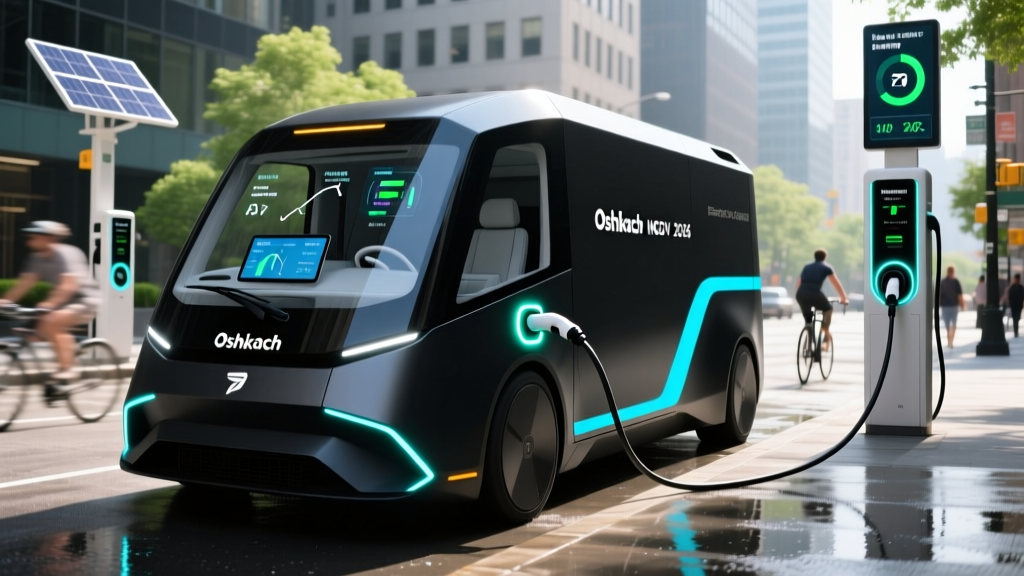
The U.S. Postal Service is replacing its 30-year-old Grumman LLV fleet with the Oshkosh NGDV (Next Generation Delivery Vehicle), available in both battery-electric (BEV) and low-emission ICE variants. The BEV version carries a 93 kWh LFP battery, targets approximately 85–100 miles of real-world range, and charges via Level 2 at roughly 19.2 kW. While the upfront per-unit cost runs higher than an ICE alternative, USPS projects 30–40% lower lifetime operating costs through eliminated fuel spend and drastically reduced maintenance. As of early 2026, initial BEV NGDVs are entering service in select metro routes, with full-scale deployment continuing through 2028.
Why USPS Is Going Electric: The LLV Problem
If you've received mail in the last three decades, you've seen the Grumman Long Life Vehicle (LLV) — the boxy, right-hand-drive aluminum van that has defined American mail delivery since 1987. The LLV was designed for a 24-year service life. Many units are now pushing 35+ years. They lack air conditioning, modern crash structures, and any meaningful safety technology. Their 2.5-liter four-cylinder engines average roughly 8–10 MPG in stop-and-go delivery routes, and maintenance costs have ballooned as parts become scarce.
In 2021, USPS awarded Oshkosh Defense a contract initially valued at $482 million to design and build the NGDV. After significant political and environmental pressure — including intervention from the EPA and Congressional scrutiny — USPS revised its procurement plan to commit to at least 66,000 battery-electric NGDVs out of a total planned fleet of up to 106,000 vehicles by 2028.
The math for fleet electrification is compelling on paper: postal routes are predictable, low-speed, short-distance, and return to a single depot nightly — the ideal profile for battery-electric operation.
Oshkosh NGDV BEV: Battery, Range, and Charging Specs
The electric postal vehicle variant of the NGDV uses a battery-electric powertrain built on a commercial-duty chassis. Here's what we know from USPS procurement documents and Oshkosh disclosures as of early 2026:
| Specification | NGDV BEV |
|---|---|
| Battery Chemistry | LFP (Lithium Iron Phosphate) |
| Battery Capacity | ~93 kWh (usable) |
| EPA-Est. Range | ~100 miles (route-dependent) |
| Real-World Route Range | ~70–90 miles (loaded, HVAC, cold weather) |
| Motor Output | ~200+ hp (est.) |
| Level 2 Charging (AC) | ~19.2 kW (est. 5–6 hours 0–100%) |
| DC Fast Charging | Not equipped (depot-only charging model) |
| Payload Capacity | ~1,500–2,000 lbs cargo |
| Right-Hand Drive | Yes (curbside delivery) |
| GVWR | Class 2–3 (~10,000–14,000 lbs) |
| Battery Warranty | 8 years / 100,000+ miles (fleet contract) |
Why LFP chemistry matters here: Lithium Iron Phosphate batteries sacrifice some energy density versus NMC (nickel manganese cobalt) but gain substantially in cycle life, thermal stability, and lower cost per kWh. For a vehicle that charges nightly and runs a predictable 20–40 mile route, LFP is the correct engineering choice. LFP cells can sustain 3,000–5,000+ full charge cycles before significant degradation — translating to 10–15+ years of daily cycling before capacity drops below 80%.
Real-World Range Reality Check
The NGDV BEV's ~100-mile rated range assumes moderate temperatures and typical route loads. In practice, postal carriers in cold-weather regions (Minnesota, Michigan, Maine) should expect 20–35% range reduction in winter due to battery chemistry slowdown and cabin/cargo heating demands. Routes running heavy HVAC in Arizona or Texas summers will similarly compress range. USPS route planners must ensure daily mileage stays within a 60–70 mile buffer to maintain reliable year-round service.
Cost Breakdown: Electric Postal Vehicles vs. Gas LLV
The economic case for electric postal vehicles rests on total cost of ownership (TCO), not sticker price. Here's a per-vehicle, 10-year comparison based on USPS fleet data, DOE energy cost averages, and fleet maintenance benchmarks:
| Cost Category | NGDV BEV (Electric) | Grumman LLV (Gas) | NGDV ICE (Gas) |
|---|---|---|---|
| Unit Acquisition Cost | ~$65,000–$75,000 | N/A (fully depreciated) | ~$45,000–$50,000 |
| Fuel / Energy (Annual) | ~$600–$900/yr | ~$3,500–$4,500/yr | ~$2,800–$3,500/yr |
| Maintenance (Annual) | ~$500–$800/yr | ~$3,000–$5,000/yr | ~$1,500–$2,500/yr |
| 10-Year Fuel/Energy Total | ~$6,000–$9,000 | ~$35,000–$45,000 | ~$28,000–$35,000 |
| 10-Year Maintenance Total | ~$5,000–$8,000 | ~$30,000–$50,000 | ~$15,000–$25,000 |
| 10-Year TCO (est.) | ~$76,000–$92,000 | ~$65,000–$95,000 | ~$88,000–$110,000 |
Key takeaways: The BEV variant has a higher acquisition cost — roughly $20,000–$25,000 more than the ICE NGDV — but recoups that premium within 4–6 years through fuel and maintenance savings. The aging LLV's maintenance costs have become so extreme (some facilities report $5,000+/year per vehicle) that even a new ICE NGDV represents a significant cost reduction. The BEV simply extends that advantage further.
Charging cost assumes an average commercial electricity rate of $0.10–$0.14/kWh at depot-level scale. At 93 kWh per full charge and ~250 working days per year, annual energy spend lands around $600–$900 — compared to $3,500+ in gasoline at $3.25/gallon and 9 MPG.
Depot Charging Infrastructure: The Hidden Cost
Electric postal vehicles don't charge at public stations. They charge at USPS depots — and that infrastructure buildout is the program's biggest logistical and financial challenge.
USPS has contracted for depot-level Level 2 charging installations across hundreds of facilities. A single depot outfitting 40 NGDV BEVs needs:
- 40 Level 2 chargers at 19.2 kW each (commercial-grade, J1772 or NACS connector)
- Electrical panel upgrades — many older postal facilities run 400–800A service and need upgrades to 1,600–2,000A+
- Demand charges from local utilities — commercial EV charging can trigger peak-demand pricing that significantly raises effective electricity cost
- Smart charging software to stagger charge sessions overnight and avoid grid peak hours
Estimated depot charging infrastructure costs range from $15,000–$30,000 per stall installed (including trenching, conduit, charger hardware, and electrical work), meaning a 40-vehicle depot faces $600,000–$1.2 million in charging buildout. USPS has secured funding through the IRA's charging infrastructure incentives and federal fleet modernization appropriations to offset these costs.
Charge time at 19.2 kW: a depleted 93 kWh battery reaches full charge in approximately 5–6 hours — well within a typical overnight depot window. The NGDV BEV does not require DC fast charging because postal vehicles return to base every evening, eliminating the need for mid-route top-ups.
EV vs. Gas Fleet Comparison: The Operational Data
| Metric | NGDV BEV | Grumman LLV (Gas) | NGDV ICE (Gas) |
|---|---|---|---|
| Fuel Economy / Efficiency | ~2.0–2.5 kWh/mile | 8–10 MPG | 12–15 MPG (est.) |
| Daily Route Range Needed | 20–60 miles (typical) | 20–60 miles | 20–60 miles |
| CO₂ Emissions (per year) | 0 tailpipe; grid-dependent | ~5–7 metric tons | ~4–5 metric tons |
| Oil Changes / Year | 0 | 6–10 | 4–6 |
| Transmission Service | None (single-speed) | Every 30–50k mi | Every 50–80k mi |
| Brake Wear | Low (regen braking) | High (stop-start routes) | Moderate–High |
| A/C & Cabin Comfort | Full HVAC, electric heat | Minimal / no A/C | Full HVAC |
| Safety Features | Airbags, ABS, backup cam, ADAS | None (1980s design) | Airbags, ABS, backup cam |
| Noise Level | Near-silent (residential benefit) | Loud (4-cyl, no insulation) | Moderate |
The operational advantages go beyond cost. Postal carriers consistently report that the LLV's lack of air conditioning is a serious health concern in Southern and Southwestern routes, where summer cargo-area temperatures can exceed 130°F. The NGDV BEV's electric HVAC system provides genuine climate control — a quality-of-life upgrade that also reduces heat-related worker compensation claims.
Regenerative braking is a major maintenance saver. Postal routes involve hundreds of stops per day. In the LLV, that means hundreds of brake applications wearing down pads and rotors. The NGDV BEV recaptures kinetic energy during deceleration, reducing friction brake wear by an estimated 50–70% over the vehicle's life.
Common Misconceptions About Electric Postal Vehicles
| Myth | Fact |
|---|---|
| "Electric mail trucks can't handle rural routes." | USPS assigns BEV NGDVs to routes within range capability. Rural routes exceeding 80+ miles daily may use the ICE NGDV variant. Route-matching is the solution, not a blanket rejection. |
| "The batteries won't last in extreme cold." | LFP batteries lose range in cold but don't fail. With depot charging and thermal management, the NGDV BEV operates in sub-zero conditions — at reduced range. USPS plans route assignments accordingly. |
| "Taxpayers are wasting money on expensive EVs." | The higher acquisition cost is recovered in 4–6 years through fuel and maintenance savings. Over a 10–15 year service life, BEV TCO is projected to be lower than ICE alternatives. |
| "The grid can't handle thousands of charging mail trucks." | Depot charging is scheduled overnight during off-peak hours. Smart charging management software staggers sessions. Most depot upgrades require local transformer and panel work, not grid-level infrastructure. |
| "Electric postal vehicles are self-driving." | The NGDV is a SAE Level 0–1 vehicle with basic driver-assistance features (backup camera, collision warnings). A human carrier drives every route. No autonomous delivery capability exists. |
What This Means for Consumer EV Buyers
You can't buy an NGDV — it's a government fleet vehicle. But the electric postal vehicle program signals several trends that directly affect consumer EV buyers:
- LFP battery validation at scale. When the U.S. government bets 66,000 vehicles on LFP chemistry, it accelerates supply-chain investment and drives down costs for LFP-equipped consumer vehicles like the Tesla Model 3 RWD, Ford Mustang Mach-E Select, and Chevrolet Equinox EV.
- Depot charging expertise transfers to home charging. The electricians, contractors, and software platforms building USPS depot infrastructure are the same firms expanding residential Level 2 installations.
- Fleet electrification normalizes EVs. Millions of Americans will see an electric mail truck daily. That visibility reduces range anxiety and unfamiliarity — the two biggest barriers to consumer EV adoption.
- Used fleet vehicles eventually hit the market. In 10–15 years, retired NGDV BEVs could enter the secondary market as quirky, rugged, ultra-low-cost electric utility vehicles — similar to how retired government Crown Vics became affordable used cars.
If You're Considering an EV for Delivery or Commercial Use
Choose a battery-electric commercial van if: Your daily route is under 100 miles, you return to a single depot nightly, you have access to Level 2 charging at that depot, and your local electricity rates are below $0.18/kWh. Vehicles like the Ford E-Transit (126-mile EPA range, 68 kWh battery, ~$55,000 MSRP) or the BrightDrop Zevo 600 offer similar economics to the NGDV in a commercially available package.
Choose an ICE or hybrid commercial van if: Your routes regularly exceed 150 miles, you operate in extreme cold without depot charging, or your facility cannot support the electrical upgrades needed for Level 2 charging. The DOE's fueleconomy.gov database provides side-by-side efficiency comparisons for all commercial vans.
The Rollout Timeline and What's Next
As of early 2026, Oshkosh has begun delivering production NGDV BEVs to USPS facilities in select metropolitan areas. The initial deployment prioritizes routes with predictable mileage, moderate climates, and depots where charging infrastructure is already operational.
The full procurement timeline:
- 2024–2025: Pilot deployments, depot infrastructure buildout, carrier training
- 2025–2026: Ramp-up of BEV production at Oshkosh's Spartanburg, SC facility
- 2026–2028: Full-rate production targeting 66,000+ BEVs and ~40,000 ICE NGDVs
- 2028+: Continued fleet replacement as LLVs are retired; potential contract expansion
USPS has also committed to purchasing a portion of its NGDV BEVs from a secondary supplier — Canoo was initially considered, though that company's financial instability has raised questions. Additional contracts may go to established commercial van makers. The USPS procurement office publishes contract updates periodically.
Frequently Asked Questions
How much does an electric postal vehicle cost?
The Oshkosh NGDV BEV is estimated at $65,000–$75,000 per unit at fleet scale, compared to ~$45,000–$50,000 for the ICE variant. These are government-contract prices and not comparable to consumer vehicle MSRPs. Over a 10-year service life, the BEV's total cost of ownership is projected to be lower due to dramatically reduced fuel and maintenance expenses.
What is the range of the USPS electric mail truck?
The NGDV BEV targets approximately 100 miles of range under moderate conditions with its ~93 kWh LFP battery. Real-world range on loaded routes with HVAC use typically falls to 70–90 miles, and cold weather can reduce this further by 20–35%. Most USPS delivery routes require only 20–60 miles per day, making range sufficient for the majority of assignments.
Do electric postal vehicles qualify for the federal EV tax credit?
No. The IRS §30D clean vehicle credit applies to personal-use vehicles purchased by individual taxpayers. Fleet vehicles purchased by government agencies like USPS do not qualify. However, commercial EVs purchased by private businesses may qualify for the §45W Commercial Clean Vehicle Credit (up to $40,000 for vehicles over 14,000 lbs GVWR), which is relevant for private delivery fleets buying similar electric vans.
How long does it take to charge an electric mail truck?
At a depot Level 2 charger rated at ~19.2 kW, the NGDV BEV's 93 kWh battery charges from empty to full in approximately 5–6 hours. Since postal vehicles return to the depot each evening and don't operate overnight, this charge time fits cleanly within the operational window. DC fast charging is not part of the design — it's unnecessary for a return-to-base fleet vehicle.
Will USPS electric trucks work in snow and extreme cold?
Yes, but with reduced range. LFP batteries experience higher internal resistance in freezing temperatures, and cabin heating draws additional energy. Expect 20–35% range loss in sustained sub-freezing conditions. USPS addresses this by assigning BEV NGDVs to routes with sufficient range margin and using ICE NGDVs on longer or more demanding cold-weather routes.
Are electric postal vehicles autonomous or self-driving?
No. The NGDV operates at SAE Level 0–1 automation. It includes basic driver-assistance features like a backup camera and collision warnings, but a human postal carrier drives the vehicle and performs all delivery tasks. There is no autonomous driving capability.