The Short Answer on Electric Post Office Trucks
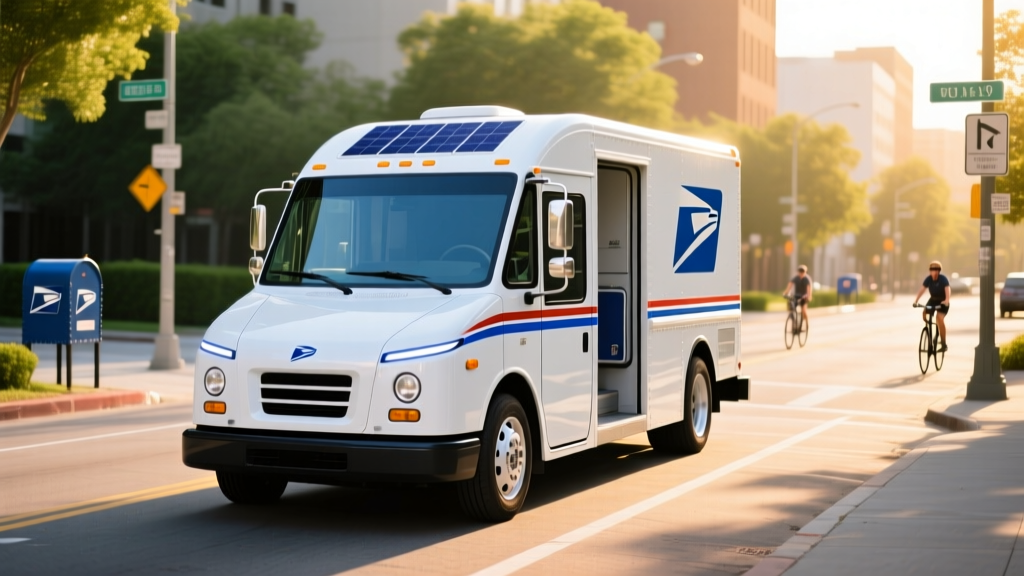
The United States Postal Service is replacing its 30-year-old Grumman LLV fleet with the Oshkosh Defense Next Generation Delivery Vehicle (NGDV), available in both battery-electric (BEV) and low-emission gas variants. The electric variant features a ~140 kWh battery pack, an EPA-estimated range of approximately 70–90 miles (sufficient for the average USPS route of 20–40 miles), and Level 2 AC charging. As of 2026, USPS has committed to purchasing at least 45,000 electric NGDVs out of a total 60,000-vehicle order, with deliveries ramping through 2028. For commercial fleet operators watching this rollout, the electric post office trucks program represents the largest single EV fleet procurement in U.S. history — and a proof point that short-route, depot-charged EVs deliver measurable fuel and maintenance savings.
Why USPS Is Going Electric: The Numbers Behind the Switch
The USPS fleet of roughly 230,000 vehicles has been dominated by the Grumman Long Life Vehicle (LLV) since 1987. These right-hand-drive icons run on aging 2.5L iron-block engines, achieve roughly 8–10 MPG, and cost an estimated $5,000–$7,000 per year each in maintenance due to parts scarcity and age. The math for electrification is straightforward on paper:
- Average daily route: 20–40 miles (well within EV range)
- Annual fuel cost per LLV: ~$2,400–$3,200 at 8 MPG and 12,000 miles/year
- Estimated annual electricity cost per NGDV BEV: ~$600–$900 at $0.12/kWh
- Annual fuel savings per vehicle: ~$1,800–$2,600
- Maintenance savings: EVs eliminate oil changes, transmission service, exhaust repairs, and spark plug replacements — estimated $2,000–$4,000/year per vehicle
According to the USPS sustainability reports, the agency expects the NGDV fleet to reduce greenhouse gas emissions by approximately 40% per vehicle compared to the LLV — even accounting for grid electricity generation mix.
USPS NGDV Electric Specs: Battery, Range, and Charging
| Specification | Value |
|---|---|
| Battery Capacity (usable) | ~140 kWh (LFP chemistry) |
| EPA-Estimated Range | 70–90 miles (route-dependent) |
| Real-World Range (stop-and-go, HVAC) | 55–80 miles |
| Motor Output | ~200 kW (~268 hp) |
| AC Charging (Level 2) | 19.2 kW (J1772/CCS1) |
| DC Fast Charging | Not equipped (depot-only charging) |
| Level 2 Charge Time (0–100%) | ~8–10 hours (overnight depot) |
| Cargo Volume | ~120 cu ft |
| Payload Capacity | ~2,000 lbs |
| GVWR | Class 3 (~12,500 lbs) |
| ADAS Features | AEB, lane departure warning, 360° cameras (SAE Level 0–1) |
Chemistry note: The NGDV BEV uses lithium iron phosphate (LFP) cells. LFP offers lower energy density than NMC but delivers significantly longer cycle life (3,000+ cycles to 80% capacity), better thermal stability, and no cobalt or nickel — making it ideal for daily-cycle fleet vehicles that need 15+ year service life. For fleet managers, LFP means the battery will likely outlast the vehicle's chassis.
Real-World Range Reality Check
The NGDV's 70–90 mile EPA figure assumes moderate conditions. In practice, USPS routes involve hundreds of stops (constant acceleration/deceleration), frequent door openings (HVAC load), and extreme climate operation. Expect 55–65 miles in winter conditions (below 30°F) and 75–85 miles in mild weather. Since the average route is under 40 miles, this provides a comfortable buffer — but rural routes exceeding 60 miles may require the gas-powered NGDV variant or mid-day opportunity charging.
Cost Breakdown: Electric vs. Gas NGDV Over 10 Years
| Cost Category | NGDV BEV (Electric) | NGDV ICE (Gas) | Legacy LLV (Gas) |
|---|---|---|---|
| Vehicle Acquisition | ~$65,000–$75,000 | ~$45,000–$55,000 | N/A (fully depreciated) |
| Fuel/Energy (10 years) | $6,000–$9,000 | $24,000–$32,000 | $30,000–$40,000 |
| Maintenance (10 years) | $8,000–$12,000 | $25,000–$40,000 | $50,000–$70,000 |
| Charging Infrastructure (per vehicle share) | $5,000–$15,000 | $0 | $0 |
| Estimated 10-Year Total | $84,000–$111,000 | $94,000–$127,000 | $80,000–$110,000* |
*LLV total includes only operating costs; vehicles are fully depreciated but increasingly unreliable.
The electric variant carries a $15,000–$25,000 higher upfront cost but breaks even on operating expenses within 4–6 years. Over a 15-year service life, the BEV variant saves an estimated $30,000–$50,000 per vehicle in fuel and maintenance. This aligns with broader fleet electrification data from the U.S. Department of Energy's Alternative Fuels Data Center, which shows medium-duty EVs achieving TCO parity with ICE vehicles at the 5–7 year mark for high-utilization routes.
Charging Infrastructure: What the USPS Buildout Means
The USPS has contracted for depot-level charging infrastructure across thousands of post offices nationwide. Key details:
- Charger type: Level 2 AC, 19.2 kW per port (CCS1 connector)
- Charging strategy: Overnight depot charging (vehicles return by 5 PM, depart by 8 AM = 15-hour charge window)
- Infrastructure cost: Estimated $10,000–$30,000 per charger installed (including panel upgrades, conduit, and utility coordination)
- Utility demand charges: A single post office with 20 chargers at 19.2 kW each draws up to 384 kW — requiring utility coordination and potential transformer upgrades
- Smart charging: Software-managed staggered charging to avoid peak demand charges and reduce electricity costs
For commercial fleet operators, the USPS buildout is creating a template for depot charging at scale. The lessons learned — utility lead times (often 12–18 months for transformer upgrades), load management software, and cold-weather preconditioning — are directly applicable to any fleet considering electric delivery vehicles.
What Fleet Buyers Can Learn From the Electric Post Office Trucks Program
| Myth | Fact |
|---|---|
| "EVs can't handle daily commercial routes" | The average USPS route is 20–40 miles. The NGDV BEV delivers 55–85 real-world miles. Range sufficiency is route-specific, not a blanket limitation. |
| "Battery replacement will cost more than the vehicle saves" | LFP batteries retain 80%+ capacity after 3,000 cycles. At one cycle/day, that's 8+ years before hitting the 80% threshold — and the pack still functions, just with reduced range. |
| "Cold weather makes fleet EVs impractical" | Range drops 20–35% in sub-freezing temps. For a 40-mile route with a 70-mile EPA vehicle, winter range of ~50 miles still covers the route. Preconditioning while plugged in mitigates cabin heating draw. |
| "Charging infrastructure is too expensive" | Level 2 depot charging runs $10K–$30K per port. Shared across a 10-year vehicle life and 15+ vehicles per port (staggered), the per-vehicle infrastructure cost is $1,000–$2,000. |
| "Electric trucks can't carry real payloads" | The NGDV BEV handles ~2,000 lbs payload and 120 cu ft of cargo — matching or exceeding the LLV it replaces. |
Decision Framework: Should Your Fleet Go Electric?
If-Then Guide for Fleet Electrification
- If your vehicles travel under 80 miles/day and return to a depot overnight → Strong EV candidate. Depot Level 2 charging covers your needs. Look at the Ford E-Transit (EPA 126 mi), BrightDrop Zevo 600 (EPA 272 mi), or Ram ProMaster EV (EPA 162 mi).
- If your routes exceed 120 miles/day or lack predictable depot returns → Consider PHEV or stick with ICE for now. DC fast charging for commercial vans is improving but adds downtime and cost.
- If you operate in extreme cold (sustained below 10°F) with routes over 60 miles → Budget for 35%+ range loss. Oversize your battery spec or add mid-day opportunity charging. LFP chemistry handles cold better than NMC for long-term health.
- If your utility offers commercial EV charging rates or demand-response programs → Factor in reduced electricity costs (some utilities offer $0.06–$0.08/kWh off-peak commercial rates).
- If your vehicles are approaching end-of-life within 2 years → Begin utility coordination now. Transformer upgrades can take 12–18 months. Start the infrastructure process before you need the vehicles.
Federal Incentives for Commercial EV Fleets (2026)
Unlike consumer EVs, commercial electric fleet vehicles don't qualify for the §30D consumer tax credit. Instead, fleet buyers should evaluate:
- IRC §45W — Commercial Clean Vehicle Credit: Up to $7,500 for vehicles under 14,000 lbs GVWR and $40,000 for heavier vehicles. Subject to manufacturer caps and domestic-content requirements. Check current eligibility at IRS.gov.
- IRC §179D — Energy-Efficient Commercial Building Deduction: Can apply to charging infrastructure installed at commercial facilities.
- State and utility incentives: Many states (California's HVIP, New York's Truck Voucher Incentive Program) offer $20,000–$100,000+ per commercial EV. Utility make-ready programs often cover 50–100% of charging infrastructure costs.
- EPA Clean School Bus / Clean Heavy-Duty Vehicle programs: Competitive grants for qualifying fleet electrification projects.
Tax incentive rules change frequently. Consult a tax professional and verify current-year eligibility on IRS.gov before making purchasing decisions.
What This Means for Consumer EV Buyers
The electric post office trucks program has indirect but meaningful benefits for individual EV buyers:
- Charging infrastructure spillover: USPS depot buildouts are accelerating utility upgrades in thousands of communities — upgrades that also support residential and public charging.
- LFP battery validation: The USPS bet on LFP chemistry validates the technology for consumer vehicles. LFP is already in the Tesla Model 3 Standard Range, Ford F-150 Lightning Standard Range, and Rivian Standard battery packs.
- Fleet EV resale market: As USPS and commercial fleets cycle through EVs (typically 7–10 years), a robust used commercial EV market will emerge — offering affordable electric work trucks and vans.
- Parts and service networks: Oshkosh and component suppliers are building medium-duty EV service capacity that benefits all commercial EV owners.
Frequently Asked Questions
How many electric post office trucks are on the road in 2026?
As of early 2026, USPS has taken delivery of several thousand NGDV units (both BEV and ICE), with production ramping toward the full 60,000-vehicle order. The electric variant represents at least 45,000 of those units. Full fleet replacement of the ~230,000 vehicle USPS fleet will extend well into the 2030s.
Can I buy a USPS NGDV for personal use?
No. The NGDV is manufactured exclusively for USPS under a government contract with Oshkosh Defense. However, similar electric delivery vans are available commercially: the Ford E-Transit, BrightDrop Zevo, Ram ProMaster EV, and Mercedes-Benz eSprinter.
Do electric post office trucks have DC fast charging?
No. The NGDV BEV is equipped only with Level 2 AC charging at up to 19.2 kW. This is intentional — the vehicle charges overnight at the depot and doesn't need mid-day fast charging for its typical 20–40 mile route. This design choice reduces vehicle cost and simplifies the charging infrastructure.
How does the NGDV compare to the old Grumman LLV?
The NGDV offers dramatically improved safety (modern crumple zones, airbags, ADAS), climate control (the LLV had no air conditioning), better visibility with 360° cameras, and either zero tailpipe emissions (BEV) or significantly improved fuel economy (ICE variant). The LLV's 8–10 MPG and $5,000+ annual maintenance costs made it one of the most expensive vehicles per mile in any U.S. fleet.
What happens if an electric post office truck runs out of charge on a route?
USPS routes are carefully mapped and the NGDV's battery is sized with margin for its assigned routes. Fleet management software monitors state of charge in real time. If a vehicle's charge drops below threshold, dispatch can reroute or send a relief vehicle. This is standard fleet telematics — not meaningfully different from managing fuel levels in ICE vehicles.
Is the USPS electrification program politically controversial?
The program has seen shifting political support. The initial 2022 contract called for only 10% electric vehicles, but this was revised to at least 75% (45,000 of 60,000) after Inflation Reduction Act funding and public pressure. Future political changes could affect the pace of procurement, but the economic case — lower operating costs — remains regardless of policy environment.