The Short Answer on Electric Pop Up Campers
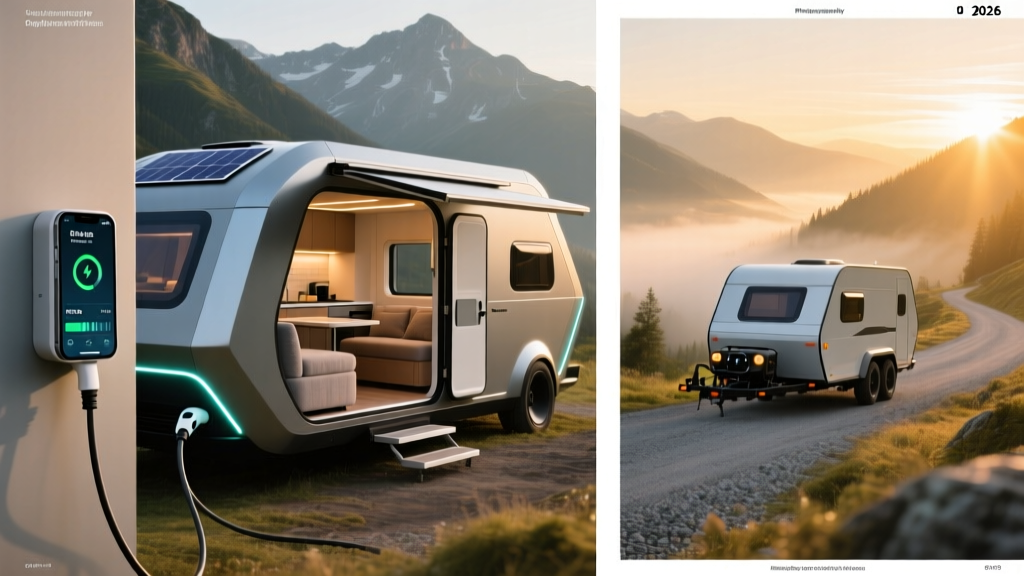
An electric pop up camper — a lightweight, collapsible trailer with electric-lift mechanisms and minimal tow weight (typically 1,200–2,400 lbs) — is one of the most EV-friendly camping options available. Towing one will reduce your EV's range by roughly 25–45% depending on speed, terrain, and trailer weight. A 300-mile EPA-rated EV like the Ford F-150 Lightning or Rivian R1S will realistically deliver 170–220 miles of towing range. The key advantage: pop up campers are light enough that most mid-size and full-size EVs can tow them without exceeding rated capacity, and their aerodynamic profile (low when collapsed) minimizes the range penalty compared to hard-sided travel trailers.
Why Pop Up Campers Are the EV Towing Sweet Spot
The physics of EV towing come down to three factors: weight, aerodynamic drag, and rolling resistance. Pop up campers — also called tent trailers or folding campers — score well on all three when compared to conventional travel trailers.
When collapsed for highway travel, a pop up camper presents a low, relatively flat profile roughly 4–5 feet tall and 7 feet wide. Compare that to a hard-sided travel trailer at 10–11 feet tall, which acts as a massive air brake above 55 mph. Since aerodynamic drag increases with the square of velocity, this height difference is the single biggest factor in towing range loss.
Weight matters too, but less than most buyers assume at highway speeds. Here's how common trailer categories compare:
| Trailer Type | Dry Weight | Loaded Weight | Height (Travel) | Est. EV Range Loss |
|---|---|---|---|---|
| Electric pop up camper | 1,200–2,400 lbs | 1,800–3,200 lbs | 4–5 ft | 25–45% |
| Teardrop trailer | 1,000–2,500 lbs | 1,500–3,500 lbs | 5–6 ft | 30–50% |
| Small travel trailer (16–20 ft) | 3,000–5,000 lbs | 4,000–6,500 lbs | 9–11 ft | 50–70% |
| Large travel trailer (25+ ft) | 6,000–9,000 lbs | 7,500–11,000 lbs | 10–12 ft | 60–80% |
The electric pop up camper occupies a practical middle ground: enough living space when deployed (sleeping 4–6 people in most models) with a travel profile that won't gut your EV's range on the highway.
Which 2026 EVs Can Tow an Electric Pop Up Camper?
Not every EV is rated for towing, and towing capacity varies dramatically. Here's a breakdown of current-model EVs that can handle a loaded pop up camper in the 2,000–3,500 lb range:
| Vehicle | Max Tow Rating | EPA Range | Est. Towing Range | Base MSRP |
|---|---|---|---|---|
| Rivian R1S (Dual-Motor) | 7,700 lbs | 352 mi | ~200–250 mi | $79,900 |
| Rivian R1T (Dual-Motor) | 11,000 lbs | 352 mi | ~200–250 mi | $73,000 |
| Ford F-150 Lightning (Ext. Range) | 10,000 lbs | 320 mi | ~185–230 mi | $62,995 |
| Chevrolet Silverado EV (4WT) | 10,000 lbs | 390 mi | ~225–280 mi | $57,900 |
| Hyundai Ioniq 5 (AWD w/ tow pkg) | 2,300 lbs | 290 mi | ~165–210 mi | $52,600 |
| Kia EV9 (AWD) | 5,000 lbs | 279 mi | ~160–200 mi | $59,900 |
| Tesla Model Y (AWD) | 3,500 lbs | 308 mi | ~180–220 mi | $46,630 |
Critical caveat: The towing range estimates above assume mixed highway driving at 60–70 mph in moderate temperatures (60–80°F). In cold weather (below 40°F), expect an additional 10–20% range loss from battery inefficiency combined with the towing penalty. Mountain driving with sustained grades will also compress range further.
For a pop up camper loaded to 2,500 lbs, the Hyundai Ioniq 5 AWD and Tesla Model Y are the most cost-effective options that stay within their rated limits. For heavier-loaded pop ups or those who want margin for gear and passengers, the Rivian R1T, F-150 Lightning, or Silverado EV provide substantial headroom.
Real Cost Breakdown: EV Towing vs. Gas Truck Towing
The upfront cost of an EV capable of towing is higher than a comparable gas truck, but the per-mile energy cost while towing tells a different story. Here's a data-driven comparison for a 500-mile round-trip camping weekend towing a 2,500 lb pop up camper:
| Cost Factor | EV (F-150 Lightning) | Gas (F-150 3.5L EcoBoost) |
|---|---|---|
| Energy efficiency while towing | ~1.8–2.2 kWh/mi | ~10–12 MPG |
| Energy needed (500 mi) | ~1,000 kWh | ~45 gallons |
| Home charging (Level 2, $0.14/kWh avg) | $140 | N/A |
| DC fast charging (avg $0.40/kWh) | $400 (if 100% public) | N/A |
| Gasoline ($3.40/gal national avg) | N/A | $153 |
| Charging stops needed | 2–3 (at ~150–200 mi intervals) | 1–2 fuel stops |
| Time added for stops | ~90–120 min total | ~20–30 min total |
The honest math: if you charge primarily at home before departure and at your campsite (assuming Level 2 access or a standard 120V outlet for overnight trickle), the EV towing cost is dramatically lower — roughly $70–140 vs. $153+ for gas. But if you rely entirely on DC fast charging along the route, the EV can actually cost more per mile than gas, and each stop takes 30–50 minutes depending on charger power and your battery's state of charge.
This is where trip planning becomes essential. Routes with reliable DC fast chargers (Electrify America, Tesla Superchargers, EVgo) at logical intervals make EV towing practical. Remote camping destinations without charging infrastructure require you to arrive with sufficient range for the return trip or arrange campsite charging.
Charging Logistics: What First-Time EV Towing Buyers Must Know
Towing changes the charging equation in ways that catch new EV owners off guard:
1. You cannot unhitch at most DC fast chargers. Pull-through charging stalls are still relatively rare. At most stations, you'll need to tow your camper into a standard parking spot or find a station designed for truck-and-trailer configurations. Tesla Superchargers with pull-through stalls are expanding, and some Electrify America locations now accommodate trailers, but plan ahead using apps like PlugShare or A Better Routeplanner (ABRP).
2. Towing crushes your charge curve advantage. A vehicle that normally gets 3–4 miles per kWh might drop to 1.8–2.2 miles per kWh while towing. This means your 80 kWh usable battery delivers roughly 145–175 real miles before needing a charge — not the 250+ miles you're used to driving solo.
3. Campsite charging is your best friend. Many campgrounds offer 30-amp or 50-amp NEMA outlets (the same ones used for RV hookups). With a mobile EV charger and the right adapter, you can charge at 3.3–7.2 kW overnight — adding 80–180 miles of range while you sleep. This effectively eliminates range anxiety for multi-day trips if you stay at established campgrounds.
4. Preconditioning still matters. Just as you'd precondition your EV battery before a DC fast charge in daily driving, do the same when towing. Navigate to your next charging stop using the vehicle's built-in route planner (Tesla, Rivian, and Ford all support this) so the battery management system warms the pack for optimal charge acceptance. Skipping this step can add 10–15 minutes to your charging stop.
Common Misconceptions About EVs and Pop Up Campers
| Myth | Fact |
|---|---|
| "No EV can tow a camper." | Multiple 2026 EVs are rated for 3,500–11,000 lbs of towing. A pop up camper at 2,000–3,000 lbs is well within range for mid-size and full-size EVs. |
| "You'll run out of charge on the highway." | With proper route planning and a pop up's low drag profile, most EVs deliver 170–250 miles of towing range — sufficient for 2–3 hour driving segments between charges. |
| "Towing voids the EV battery warranty." | Towing within the manufacturer's rated capacity does not void the battery warranty. Federal law mandates EV battery warranties of at least 8 years/100,000 miles covering capacity retention. |
| "EVs can't handle mountain passes with a trailer." | EVs actually outperform gas vehicles on sustained climbs (instant torque, no power loss at altitude). Regenerative braking on descents recovers energy — sometimes 15–30% of the climb's energy cost. |
| "I need a $80,000 electric truck to tow." | The Tesla Model Y (starting ~$46,630) is rated for 3,500 lbs — enough for most electric pop up campers. The Kia EV9 starts at ~$59,900 with a 5,000-lb rating. |
Tax Credits and Incentives for EV Towing Vehicles
If you're buying an EV specifically to tow your pop up camper, the federal §30D tax credit can offset a significant portion of the purchase. Under current IRS rules, eligible buyers can receive up to $7,500 for a new qualifying EV, with several important constraints:
- Income caps: Modified adjusted gross income must not exceed $150,000 (single), $225,000 (head of household), or $300,000 (joint filers).
- MSRP caps: Vans, SUVs, and pickup trucks must have an MSRP at or below $80,000. Sedans cap at $55,000.
- Battery sourcing: The vehicle must meet critical mineral and battery component requirements that phase in stricter thresholds each year. Check the fueleconomy.gov eligibility list for the specific model and model year.
- Point-of-sale transfer: As of 2024, you can transfer the credit to the dealer at purchase, reducing your out-of-pocket cost immediately rather than waiting until tax filing.
For the Ford F-150 Lightning and Rivian R1T (both classified as trucks), the $80,000 MSRP cap means most trims qualify. The Tesla Model Y, classified as an SUV, also qualifies if the specific VIN meets battery-sourcing requirements — which can change mid-year. Always verify current eligibility on the IRS and fueleconomy.gov sites before purchasing, and consult a tax professional for your specific situation.
Decision Framework: Should You Tow a Pop Up Camper With an EV?
Choose EV towing if:
- You have home Level 2 charging (240V, 32–48 amp) for pre-trip full charges
- Your typical camping trips are within 150–200 miles one-way, or along routes with DC fast chargers
- You camp at established campgrounds with electrical hookups (30A/50A outlets)
- You already own or plan to buy an EV with a tow rating that exceeds your loaded camper weight by at least 20%
- You value lower per-mile energy costs and don't mind 1–2 extra charging stops on longer trips
Stick with gas/hybrid towing if:
- You frequently camp in remote areas with zero charging infrastructure (BLM land, dispersed camping)
- Your trips regularly exceed 300 miles one-way through charging deserts
- You don't have access to home charging and would rely entirely on public infrastructure
- Your loaded camper weight exceeds 4,000 lbs (moving beyond pop up territory into hard-sided trailers)
- You need to tow and drive 400+ miles in a single day without adding 2+ hours for charging
Real-World Ownership Tips from EV Towing Experience
Invest in a weight-distribution hitch. Even with a lightweight pop up, proper weight distribution improves stability, reduces sag on the tow vehicle's rear axle, and helps maintain regenerative braking efficiency. Andersen Hitches and Equal-i-zer both make models suited to lighter trailers.
Monitor your tire pressures obsessively. Both the EV and the camper tires should be inflated to their max-rated pressure when towing. Under-inflated tires increase rolling resistance (further cutting range) and generate excess heat. Check pressures cold before every trip.
Use ABRP with your trailer weight dialed in. A Better Routeplanner allows you to input trailer weight and drag coefficient for more accurate route planning. For a typical pop up camper, use a drag coefficient (Cd×A) of approximately 3.5–4.5 m² — significantly less than a hard-sided trailer at 6–9 m².
Plan your charging stops around rest breaks. Towing is fatiguing. Use 30–40 minute DC fast charging stops as opportunities to stretch, eat, and check the camper's bearings and tires. This turns a perceived disadvantage (charging time) into a safety benefit.
Frequently Asked Questions
What is an electric pop up camper?
An electric pop up camper is a lightweight folding trailer that uses electric motors (rather than manual cranks) to raise and lower the roof and expand the living space. Some newer models also include lithium battery systems, solar panels, and electric appliances. The "electric" designation refers to the lift mechanism and amenities — not to a self-propelled drivetrain. These campers still require a tow vehicle.
How much range will I lose towing a pop up camper with my EV?
Expect a 25–45% range reduction depending on your speed, the loaded trailer weight, terrain, and temperature. At 65 mph on flat ground in moderate weather, a pop up camper typically costs about 30–35% of your EPA-rated range. At 75 mph or in cold weather, that loss can reach 40–50%. Always plan trips using your reduced towing range, not your solo driving range.
Do I need a special EV to tow a pop up camper?
No. Any EV with a manufacturer-rated tow capacity exceeding your loaded camper weight can tow a pop up. The Tesla Model Y (3,500 lb rating), Kia EV9 (5,000 lb), and Rivian R1T (11,000 lb) are all viable options. The critical factor is matching the vehicle's tow rating to your camper's loaded weight — not its dry weight.
Can I charge my EV while the pop up camper is attached?
Yes, but logistics vary. At most standard DC fast charging stalls, you'll need to find a pull-through spot or park in a way that accommodates the trailer length. Some charging networks are adding truck-and-trailer-friendly stalls. At campsites with electrical hookups, you can charge overnight with the camper attached using a mobile Level 2 charger and appropriate NEMA adapter.
Is towing a pop up camper with an EV cheaper than a gas truck?
Per-mile energy cost is typically 40–60% lower when charging at home ($0.10–0.16/kWh) compared to gasoline ($3.20–3.80/gal). However, if you rely exclusively on public DC fast chargers ($0.35–0.55/kWh), the cost advantage narrows or disappears. The biggest savings come from combining home charging with campsite charging to minimize expensive public charging stops.
Does towing affect my EV's battery warranty?
No. Towing within the manufacturer's rated capacity is a normal use case and does not void the battery or powertrain warranty. Federal law requires minimum coverage of 8 years/100,000 miles for EV battery capacity retention. Normal degradation from towing is expected and covered under the same terms as any other driving pattern.