Quick Answer: What Is an Electric One-Wheel Cycle?
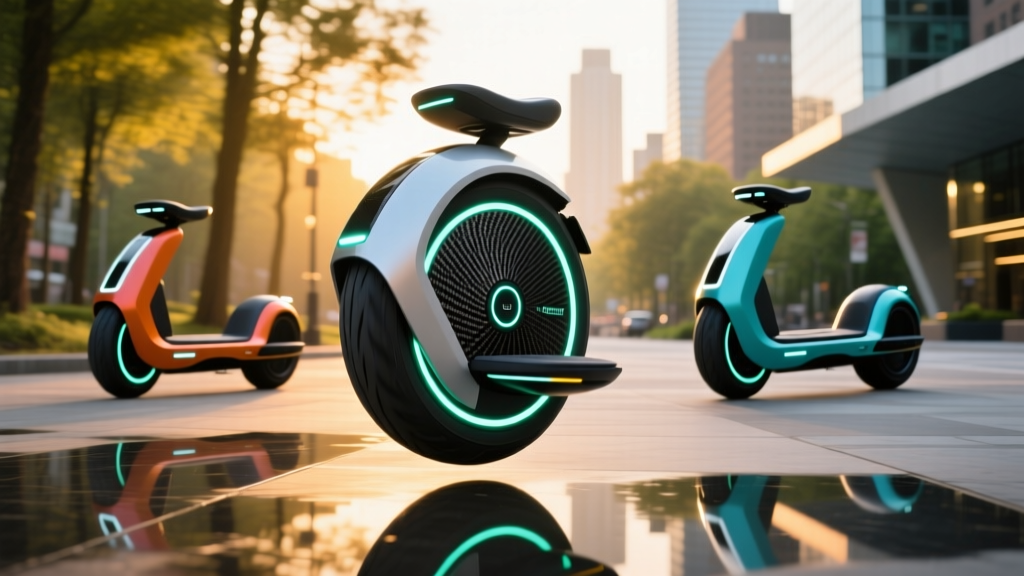
An electric one-wheel cycle is a self-balancing, single-wheeled personal electric vehicle (PEV) — typically either an electric unicycle (EUC) ridden standing with foot pegs, a Onewheel-style board with one centered wheel, or a seated electric monowheel. In 2026, most models range from $800 to $4,500, offer 15–60 miles of real-world range on 500–3,600 Wh batteries, and top out between 15–55 mph depending on wheel diameter and motor wattage. They are not street-legal cars and do not qualify for the federal §30D EV tax credit, but they can serve as ultra-low-cost last-mile commuters where local laws permit.
Search interest in the electric one-wheel cycle category has grown steadily as riders look for alternatives to e-bikes, scooters, and cars for short urban commutes. But unlike four-wheeled EVs, this segment is fragmented across three distinct form factors — each with different range, speed, safety, and legal profiles. This guide breaks down exact specs, real costs, and the decision framework you need before buying.
The Three Types of Electric One-Wheel Cycles
Not all single-wheeled electric vehicles are the same. Here's how the three main categories stack up on the specs that matter:
| Spec | Electric Unicycle (EUC) | Onewheel-Style Board | Seated Monowheel |
|---|---|---|---|
| Typical Price | $1,200–$4,500 | $1,800–$2,950 | $2,500–$6,000 |
| Motor Power | 1,500–5,000W | 2,000–3,500W | 1,000–2,000W |
| Battery Capacity | 800–3,600 Wh | 324–1,555 Wh | 500–1,500 Wh |
| Real-World Range | 15–60 miles | 12–30 miles | 15–35 miles |
| Top Speed | 25–55 mph | 19–20 mph | 15–25 mph |
| Charge Time (0–100%) | 2–6 hours | 1.5–3 hours | 2–4 hours |
| Weight | 40–80 lbs | 27–35 lbs | 55–100 lbs |
| Learning Curve | Moderate (days) | Low (hours) | Low (hours) |
EUCs (brands like Begode, Kingsong, Leaperkim, Inmotion) dominate the performance end. A 22-inch wheel with a 3,000W motor and 2,400 Wh battery — such as the Kingsong S22 — delivers roughly 40 real-world miles at 20 mph, tapering to ~25 miles if you sustain 35+ mph. Onewheel boards (Future Motion's Onewheel GT and GT S-Series) prioritize compactness and carve-friendly handling over raw range. Seated monowheels remain niche, mostly imported, and offer lower speeds with more rider comfort.
Real-World Range vs. Manufacturer Claims
This is where most first-time buyers get burned. A manufacturer advertising a "100-mile range" EUC is typically testing at 12 mph on flat ground with a 150-lb rider in 70°F weather. Real-world conditions cut that number significantly:
- Highway-speed riding (30+ mph): Expect 40–60% of the advertised range. Aerodynamic drag scales with the square of velocity — doubling your speed quadruples energy consumption.
- Cold weather (below 40°F): Lithium-ion battery internal resistance increases, reducing usable capacity by 15–30%. An EUC rated for 40 miles in summer may deliver 28–32 miles in winter.
- Hills and headwinds: Sustained climbs can double your Wh/mile consumption. A 5% grade at 25 mph may draw 40+ Wh/mile versus 20 Wh/mile on flat ground.
- Rider weight: Every 50 lbs above the 150-lb test standard reduces range by roughly 8–12%.
Rule of thumb: Take the manufacturer's stated range, multiply by 0.5–0.7 for realistic mixed-use riding, and multiply again by 0.75 for winter. A "60-mile" EUC realistically gives you 30–42 miles in summer and 22–32 miles in winter at moderate speeds.
Electric One-Wheel Cycle vs. E-Bike vs. Gas Scooter: Cost & Practicality
How does a one-wheeler actually compare to the alternatives you're probably cross-shopping? Here's a concrete 3-year ownership comparison assuming a 10-mile round-trip commute, 250 riding days per year:
| Cost Factor | EUC ($2,500) | Class 2 E-Bike ($1,800) | Gas Scooter 50cc ($3,200) |
|---|---|---|---|
| Purchase Price | $2,500 | $1,800 | $3,200 |
| Fuel/Energy (3 yrs) | $135 (at $0.14/kWh) | $150 (at $0.14/kWh) | $1,080 (at $3.50/gal, 80 MPG) |
| Maintenance (3 yrs) | $200 (tire, pads) | $450 (chain, brakes, tires) | $900 (oil, belt, tires, valves) |
| Insurance (3 yrs) | $0–$600* | $0–$300* | $900–$1,500 |
| Registration/License | $0 (most states) | $0 (most states) | $150–$450 |
| 3-Year Total | $2,835–$3,435 | $2,400–$2,700 | $6,230–$7,130 |
*Insurance for PEVs is optional in most states but recommended. Dedicated PEV policies from companies like Vantage and Sagequote typically run $15–$20/month.
The one-wheel cycle wins on energy and maintenance cost but loses to e-bikes on upfront price and cargo capacity. Against a gas scooter, the savings are dramatic — roughly $3,000–$4,000 over three years — but you sacrifice weather protection, passenger capacity, and highway legality.
Charging Costs and Home Charging Realities
One of the strongest economic arguments for an electric one-wheel cycle is charging cost. Here's the math:
- Battery size: A typical mid-range EUC has a 1,500 Wh (1.5 kWh) battery.
- Cost per full charge: At the US average of $0.16/kWh (EIA data), a full charge costs about $0.24.
- Cost per mile: At a real-world efficiency of 25 Wh/mile, you're paying roughly $0.004 per mile — about 30–40× cheaper than a 30 MPG gas car at $3.50/gallon.
- Annual cost (2,500 miles): Approximately $60 in electricity per year.
Home charging is simple: Every EUC and Onewheel ships with a standard 120V charger that plugs into any household outlet. No Level 2 installation, no electrician, no panel upgrade needed. A full charge on a 1,500 Wh battery takes 2–4 hours on the stock charger. Some high-end EUCs support optional fast chargers (up to 8A vs. the standard 2A) that cut charge time to under 2 hours, but these cost $150–$300 extra.
Apartment dwellers: Unlike a full EV, a one-wheel cycle charges indoors. The battery is small enough that fire risk is manageable — but buy a UL-listed model or at minimum store and charge in a fireproof bag. After the well-publicized Onewheel recalls and lithium-ion e-bike battery fires in NYC, several cities now recommend or require UL 2272 certification for PEVs.
Common Misconceptions: Myth vs. Fact
| Myth | Fact |
|---|---|
| "One-wheels are illegal everywhere." | Legality varies by state and city. EUCs and Onewheels are generally legal on bike paths and roads with speed limits ≤25 mph in CA, CO, WA, and many states. They are often banned from sidewalks. Check your local municipal code — there is no single federal rule. |
| "You'll fall and get seriously hurt." | Falls are a real risk, especially at speed. PEV emergency room visits have risen. But full-face helmets, wrist guards, knee pads, and armored jackets reduce injury severity dramatically. Experienced EUC riders logging 5,000+ miles/year report that cutouts (sudden power loss) are the primary danger — mitigated by riding within 70% of your wheel's top speed. |
| "They qualify for the $7,500 EV tax credit." | They do not. The IRS §30D credit applies only to four-wheeled motor vehicles with a GVWR under 14,000 lbs that meet battery sourcing and MSRP requirements. PEVs, e-bikes, and one-wheel cycles are excluded. Some states offer separate micromobility rebates — check your local energy office. |
| "Bigger battery = proportionally more range." | Not always. Larger batteries add weight (sometimes 20–30 lbs), which increases rolling resistance and motor load. A 2,400 Wh wheel may give only 50% more range than a 1,600 Wh model of the same platform, not 50% more. |
| "They're maintenance-free." | Tires wear out (expect 1,500–3,000 miles on a street tire). Bearings need occasional attention. Control boards can fail. Firmware bugs can cause dangerous cutouts. Budget $50–$100/year in consumables and keep your firmware updated. |
Safety: What First-Time Buyers Must Know
The electric one-wheel cycle segment has faced scrutiny following NHTSA investigations and Future Motion's 2023 Onewheel recall related to rider ejection when the board pushes back at its speed/power limits. Key safety principles:
- Never exceed 80% of your wheel's rated top speed. Above this threshold, the motor may not have enough torque reserve to keep you balanced, especially on inclines or bumps. This causes a "cutout" — instant face-plant at speed.
- Wear a full-face helmet minimum. Wrist guards and knee/shin armor are strongly recommended. PEV injuries commonly involve the head, wrists, and collarbones.
- Learn pushback. Every one-wheeler communicates its power limit by tilting the pedals or footpads upward. Respect this warning immediately — it means you're at the edge of what the motor can sustain.
- Pre-ride battery check. Never ride below 20% State of Charge (SoC). Voltage sag under load increases dramatically at low SoC, raising cutout risk.
- Water resistance is limited. Most EUCs are rated IP55 or IP65 — fine for light rain, but puddle submersion or heavy downpours can short the control board. Treat your one-wheeler like a laptop, not a Jeep.
Decision Framework: Which Electric One-Wheel Cycle Is Right for You?
Choose an EUC (Begode, Kingsong, Leaperkim) if:
- Your one-way commute is 10–30 miles and includes roads with 25–40 mph speed limits
- You want the option to ride at 30+ mph for efficiency
- You're willing to spend 3–7 days learning to ride confidently
- You need 30+ miles of real-world range
- Budget: $1,500–$4,000
Choose a Onewheel-style board if:
- Your commute is under 12 miles one-way on bike paths and lower-speed streets
- You value portability (fits under a desk, in a car trunk)
- You want the shortest learning curve (most riders are comfortable within 2–4 hours)
- You prioritize carving fun and off-road trail riding over speed
- Budget: $1,800–$2,950
Choose a seated monowheel if:
- You prefer not to stand for 20–40 minutes
- Your route is flat and under 15 miles
- You're risk-averse about speed (most seated models cap at 15–25 mph)
- Budget: $2,500–$5,000 (limited US availability — mostly direct import)
Skip the one-wheeler entirely and consider an e-bike or PHEV if:
- You need to carry cargo, passengers, or groceries
- Your area has no legal PEV access on your commute route
- You ride in heavy rain or snow regularly
- You're uncomfortable with the fall-risk profile of a self-balancing single wheel
What to Look For Before You Buy (2026 Checklist)
- UL 2272 or equivalent certification — protects against battery fire and electrical faults.
- Wheel diameter ≥16 inches for road use — smaller wheels are twitchy and handle potholes poorly.
- Suspension — coil or air suspension is increasingly standard on mid-to-high-end EUCs and dramatically reduces fatigue on rough pavement.
- Replaceable battery or accessible cells — some models use proprietary packs that cost $400–$800 to replace; others use standard 21700 cells that a skilled hobbyist can repack for $200–$350.
- Active community and parts availability — Begode, Kingsong, and Inmotion have strong US dealer networks and aftermarket support. Avoid no-name Alibaba imports with no local service.
- App quality and firmware update frequency — the companion app controls speed limits, tiltback angle, and alerts. Poorly maintained firmware is a safety issue.
- Weight vs. your carrying situation if you need to take it on transit or up stairs, anything over 50 lbs becomes a real burden.
Frequently Asked Questions
Can I ride an electric one-wheel cycle on public roads?
It depends entirely on your state and municipality. California (Vehicle Code §21281.5) explicitly permits electric unicycles on roads with speed limits up to 25 mph and on bike paths. New York City has a more restrictive stance. Always check your local ordinances before purchasing. No federal law governs PEV road access.
How long do one-wheel cycle batteries last before replacement?
Most quality EUC batteries use 21700 lithium-ion cells rated for 500–800 full charge cycles before degrading to 80% capacity. At one full cycle per day, that's roughly 1.5–2 years of heavy use or 3–5 years of moderate use before you notice meaningful range loss. Replacement packs cost $300–$800 depending on capacity and whether you go OEM or third-party.
Is a one-wheel cycle faster than an e-bike?
High-performance EUCs (3,000W+, 22-inch wheel) can sustain 35–45 mph, which exceeds most Class 3 e-bikes (28 mph legal limit). However, e-bikes are more stable at speed, more visible to cars, and legal in more jurisdictions. Speed is not the same as practical commuting speed — an e-bike at 25 mph often gets you there faster because you can ride more confidently in traffic.
Do I need insurance for an electric one-wheel cycle?
No state currently mandates insurance for PEVs, but homeowner's or renter's insurance often excludes motorized vehicles. Dedicated PEV insurance (from providers like Vantage or Sagequote) typically costs $15–$25/month and covers theft, liability, and medical payments. Given the injury risk, liability coverage is strongly recommended if you ride in traffic.
What's the best electric one-wheel cycle for a beginner in 2026?
For beginners, the Onewheel GT S-Series ($2,250) offers the easiest learning curve with a manageable 20 mph top speed and 12–18 mile real-world range. For an EUC, the Inmotion V12 ($1,800, 1,500 Wh, 16-inch wheel, ~25 mph top speed) is widely regarded as a safe, well-supported entry point with good low-speed stability and a gentle learning curve.