Quick Answer: Is an Electric One Wheel Bike Worth It?
An electric one wheel bike (also called a self-balancing electric unicycle or EUC) is a single-wheeled, gyroscopically stabilized personal electric vehicle designed for last-mile commuting and urban travel. In 2026, popular models from brands like KingSong, Begode, Leaperkim, and Inmotion offer real-world ranges of 25–60 miles on a single charge, top speeds of 25–55 mph, and purchase prices between $1,200 and $4,500. They cost roughly $0.003–$0.008 per mile in electricity — dramatically cheaper than any gas car or even a full-size EV. However, they are not classified as motor vehicles by the NHTSA, carry no federal §30D tax credit eligibility, require significant rider skill and protective gear, and face regulatory gray areas on public roads in most U.S. jurisdictions.
What Exactly Is an Electric One Wheel Bike?
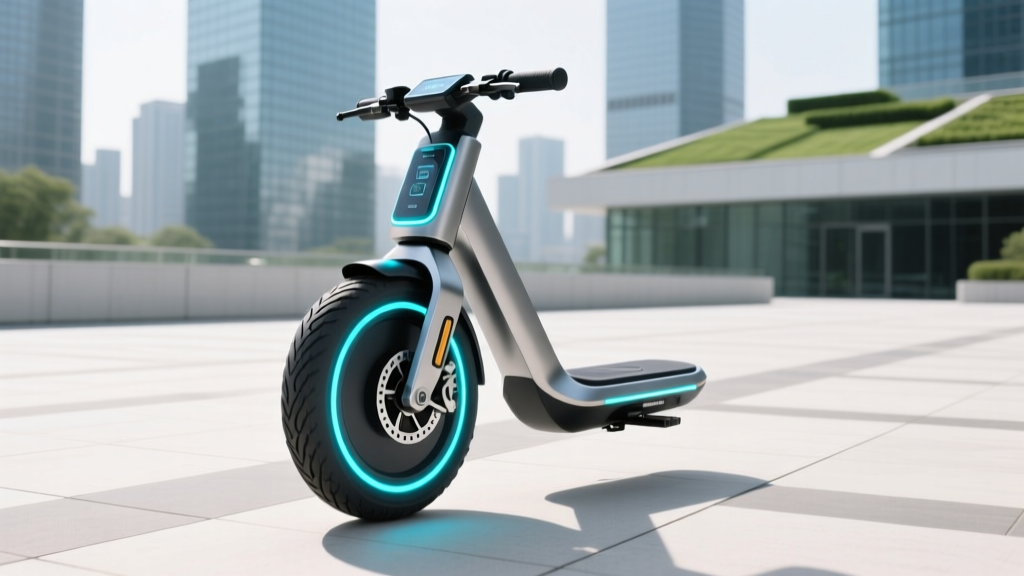
Unlike a conventional electric bicycle, an electric one wheel bike is a self-balancing unicycle. The rider stands on two foot pegs flanking a single large wheel (typically 16–22 inches in diameter), and an internal gyroscope and accelerometer system — paired with a brushless DC hub motor — keeps the unit upright. You control acceleration by leaning forward and braking by leaning back. Steering is done through body weight shifts and subtle foot pressure.
This is fundamentally different from a one-wheeled electric bicycle (like a retrofit e-bike with a single hub motor wheel), and it's important to clarify the terminology before shopping. In the PEV (personal electric vehicle) community, "electric one wheel bike" almost always refers to an electric unicycle (EUC), not a single-wheel bicycle frame.
Key components to understand:
- Motor: Typically 1,500W–4,000W peak output, directly driven in the wheel hub
- Battery: Usually NMC (nickel manganese cobalt) lithium-ion packs ranging from 500 Wh to 3,600 Wh
- Controller board: Manages balance, power delivery, and safety cut-offs
- Wheel/tire: 16" to 22" pneumatic tires, some tubeless for flat resistance
Range, Speed, and Battery Specs: The Numbers That Matter
Manufacturers often advertise optimistic range figures based on ideal conditions (light rider, flat terrain, moderate speed, warm weather). Here's how the top 2026 models actually stack up with real-world expectations:
| Model | Battery (Wh) | Claimed Range | Real-World Range* | Top Speed | Motor (Peak W) | Weight | Price (MSRP) |
|---|---|---|---|---|---|---|---|
| Inmotion V14 Adventure | 2,220 Wh | 62 mi | 35–45 mi | 43 mph | 3,500W | 72 lbs | $2,499 |
| KingSong S22 Pro | 2,220 Wh | 60 mi | 32–42 mi | 43 mph | 3,500W | 75 lbs | $2,299 |
| Begode Master Pro | 3,600 Wh | 90 mi | 55–70 mi | 55 mph | 4,000W | 95 lbs | $4,299 |
| Leaperkim Patton S | 2,400 Wh | 68 mi | 40–52 mi | 50 mph | 3,800W | 82 lbs | $2,899 |
| Inmotion V13 Challenger | 3,024 Wh | 80 mi | 50–62 mi | 56 mph | 4,500W | 102 lbs | $3,699 |
*Real-world range assumes a 180-lb rider, mixed terrain, speeds averaging 20–25 mph, and temperatures above 55°F. Cold weather (below 40°F) can reduce range by 20–35%.
kW vs. kWh — the critical distinction: When comparing these to full-size EVs, remember that a 2,220 Wh battery equals 2.22 kWh of energy capacity. A Tesla Model Y carries roughly 75 kWh. The motor's peak wattage (e.g., 3,500W or 3.5 kW) is its power output — how fast it can deliver that energy. Sustained output is typically 40–60% of peak, which matters for hill climbing and high-speed riding.
Cost Breakdown: Electric One Wheel Bike vs. Gas Car vs. Full-Size EV
The economics of an EUC are striking when you compare them to traditional transportation. Here's a five-year ownership cost model assuming a 10-mile round-trip daily commute (2,500 miles/year):
| Cost Category | Electric One Wheel Bike (Begode Master Pro) | Gas Car (30 MPG, $3.40/gal) | Full-Size EV (Tesla Model Y) |
|---|---|---|---|
| Purchase Price | $4,299 | $28,000 (used) | $44,990 |
| Fuel/Energy (5 yrs) | $125 (at $0.15/kWh) | $14,167 | $1,875 |
| Maintenance (5 yrs) | $300 (tire, bearing) | $4,500 | $1,200 |
| Insurance (5 yrs) | $0 (not insurable as vehicle) | $7,500 | $9,000 |
| Registration/Tax | $0 | $1,500 | $2,000 |
| 5-Year Total | $4,724 | $55,667 | $59,065 |
| Cost Per Mile | $0.038/mi | $0.45/mi | $0.47/mi |
At roughly $0.005 per mile in electricity, the EUC's energy cost is almost negligible. Charging a 3,600 Wh battery from empty to full uses about 3.6 kWh of electricity — approximately $0.54 at the U.S. average residential rate of $0.15/kWh (per EIA data). That gives you 55–70 real-world miles for about the cost of a single gumball.
However, this comparison has a critical caveat: an EUC cannot replace a car for most people. It carries no cargo, offers no weather protection, is unsafe in rain or ice, and cannot be used on highways. It's a supplement to a car or transit, not a replacement — unless your commute is short, your weather is mild, and you're willing to accept the risk profile.
Charging: What You Need to Know
One of the EUC's biggest practical advantages is charging simplicity. Unlike a full-size EV that may require a dedicated 240V Level 2 home charger installation ($500–$2,000), an electric one wheel bike charges from a standard 120V household outlet.
| Model | Battery Size | Charger Output | Full Charge Time | 80% Charge Time |
|---|---|---|---|---|
| KingSong S22 Pro | 2,220 Wh | ~350W (stock) | ~6.5 hours | ~4.5 hours |
| Begode Master Pro | 3,600 Wh | ~500W (stock) | ~7.5 hours | ~5 hours |
| Leaperkim Patton S | 2,400 Wh | ~420W (stock) | ~6 hours | ~4 hours |
| Inmotion V13 Challenger | 3,024 Wh | ~500W (stock) | ~6.5 hours | ~4.5 hours |
Charging best practices for NMC battery longevity:
- Avoid regularly charging to 100% — stop at 80–90% for daily use to reduce cell stress
- Never store the unit at 0% or 100% for extended periods; aim for 50–60% state of charge
- Do not charge immediately after a hard ride; let the battery cool for 20–30 minutes
- Charge in a temperature-controlled environment (50–80°F); cold charging below 40°F damages NMC cells
- Expect 800–1,200 full charge cycles before the battery degrades to 80% of original capacity — that's roughly 30,000–60,000 miles over the pack's life
Safety, Regulation, and the Reality No One Advertises
This is where honest ownership discussion matters most. Electric one wheel bikes occupy a regulatory gray zone in nearly every U.S. state.
| Myth | Fact |
|---|---|
| "They're legal everywhere like e-bikes" | Most states classify EUCs as neither bicycles nor motor vehicles. Riding on public roads, sidewalks, or bike lanes may be technically illegal depending on your jurisdiction. Check local ordinances. |
| "You don't need protective gear" | At 25–55 mph on a single wheel, a fall can cause serious injury. The EUC community strongly recommends a full-face helmet, wrist guards, knee pads, and often armored jackets. Riders in online forums report that "faceplanting" at speed without a helmet has led to severe dental and facial injuries. |
| "They're self-balancing so you can't fall off" | The gyroscope maintains fore/aft balance, but lateral balance is the rider's responsibility. Hitting potholes, wet surfaces, gravel, or exceeding the motor's tilt-back warning speed can result in a "cutout" — where the unit stops balancing and the rider is ejected forward. |
| "The battery is safe" | NMC lithium-ion packs in EUCs have been involved in thermal runaway fires, particularly with aftermarket modifications or damaged cells. Buy from reputable manufacturers, never modify the battery, and store/charge in a fire-resistant location. The NFPA has documented increasing lithium-ion fires from micromobility devices. |
| "They qualify for the $7,500 EV tax credit" | EUCs do not qualify for the federal §30D clean vehicle credit. That credit applies to four-wheeled motor vehicles meeting specific MSRP, income, and battery-sourcing requirements per IRS guidelines. EUCs are not classified as motor vehicles. |
Motor cutout — the most critical safety risk: Every EUC has a maximum speed limit determined by its motor power, battery voltage, and rider weight. Exceeding this limit causes the controller to issue audible and haptic "tilt-back" warnings (pushing the pedals up to slow you down). If you ignore these warnings or push past the motor's capability, the unit will cut out — meaning it stops balancing entirely. At 30+ mph, a cutout is extremely dangerous. Always ride well within your unit's rated speed limit, typically keeping a 20–30% speed margin below the advertised top speed.
Real-World Ownership: What a First-Time Buyer Should Know
Beyond the spec sheet, here are the practical realities that determine whether an electric one wheel bike fits your life:
Learning curve: Expect 10–20 hours of practice before you can ride confidently in traffic. Most riders report basic competence after 3–5 hours, but navigating curbs, slopes, uneven pavement, and emergency stops takes weeks. Plan to practice in empty parking lots, not on your commute route.
Weather limitations: EUCs are essentially unusable in rain (traction loss and water ingress risk), snow, ice, or temperatures below 25°F (battery performance drops sharply, and road surfaces become hazardous). If you live in a climate with harsh winters or frequent rain, your EUC will be seasonal transportation at best.
Home charging access: Unlike a full-size EV, you don't need a garage or dedicated circuit. You can charge an EUC in an apartment, office, or anywhere with a standard 120V outlet. This makes it one of the few electrified vehicles accessible to renters and apartment dwellers without any infrastructure investment.
Insurance: Most auto and homeowner's insurance policies do not cover EUCs. Some specialty insurers offer personal electric vehicle policies, but coverage is inconsistent. Factor in the risk of theft (these are portable and valuable) and the cost of self-insuring against injury.
Maintenance: Minimal compared to any car. Expect to replace the tire every 2,000–4,000 miles ($30–$80), check bearing play periodically, keep firmware updated, and occasionally replace control board components. Total maintenance over five years: $200–$500.
Decision Framework: Should You Buy an Electric One Wheel Bike?
| Choose an EUC If... | Choose Something Else If... |
|---|---|
| Your commute is 5–25 miles each way on paved roads or bike paths | You need to carry cargo, passengers, or groceries regularly |
| You live in a mild climate with dry weather most of the year | You live in an area with heavy rain, snow, or ice for months at a time |
| You want the fastest, most portable electric commute option and enjoy a physical challenge | You want a low-effort, step-through riding experience (consider an e-bike instead) |
| You can charge at home or work from a standard outlet | You need highway-speed travel or distances over 50 miles |
| You're willing to invest in full protective gear ($200–$500) and accept the injury risk | You're risk-averse or have health conditions that make falls dangerous |
| You want to supplement transit or a car, not replace one entirely | This needs to be your only vehicle |
EUC vs. Electric Bicycle — the most common cross-shop: A quality commuter e-bike (Rad Power, Lectric, Aventon) costs $1,000–$2,500, offers 25–45 miles of range, tops out at 20–28 mph, and is legal on bike paths and many roads under federal and state e-bike classifications. E-bikes are slower, less portable, and less thrilling — but they're legally clearer, easier to learn, safer in a fall, and can carry cargo. If legality and practicality are your top priorities, an e-bike is the more rational choice. If speed, portability, and the unique riding experience matter more, the EUC wins.
Can I ride an electric one wheel bike on public roads?
Legality varies by state and municipality. Most jurisdictions have no specific law addressing EUCs, which means they may default to being prohibited on roads and sidewalks. Some cities tolerate them on bike paths. Always check your local transportation code before riding in public. California, for example, has specific provisions for "electrically motorized boards" that partially cover EUCs, but most states do not.
How long does an EUC battery last before replacement?
With proper care (avoiding full discharges, not storing at extreme states of charge, keeping cool), expect 800–1,200 charge cycles to 80% capacity retention. At an average of 35 miles per charge, that's roughly 28,000–42,000 miles. Battery replacement costs $400–$900 depending on the model and capacity.
What happens if the battery dies while I'm riding?
The unit will issue multiple warnings (beeping, tilt-back, LED flashing) as the battery drops below 10–15%. If you ignore these and the battery reaches critical low voltage, the motor will cut out and you will fall forward. Always monitor your battery level via the companion app and maintain at least a 20% buffer for your return trip.
Do electric one wheel bikes qualify for any tax incentives?
No. The federal §30D clean vehicle credit and most state EV incentives apply only to four-wheeled motor vehicles meeting specific criteria. EUCs are classified as consumer products or recreational devices, not motor vehicles. Some employers may reimburse EUC purchases under commuter benefit programs, but this varies.
What's the best electric one wheel bike for a beginner?
For first-time riders, prioritize manageable weight (under 60 lbs), moderate top speed (25–30 mph), and a reputable brand with good community support. The Inmotion V12 or KingSong 16X are commonly recommended entry points in the $1,200–$1,800 range. Avoid high-performance models (Begode Master, Leaperkim Patton) until you have at least 100 hours of riding experience.