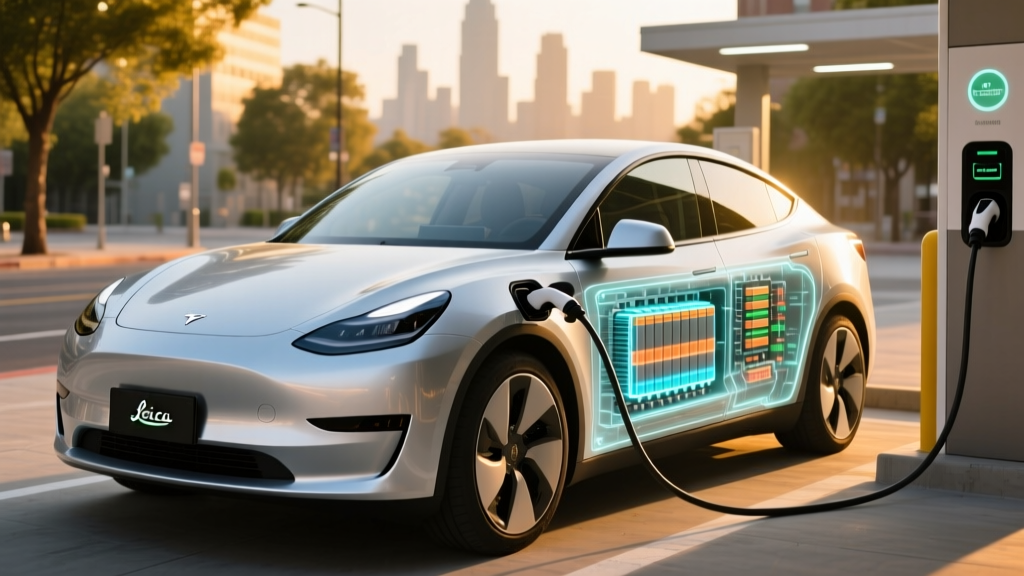
The short answer: Electric motors — spanning industrial pumps, HVAC systems, manufacturing, appliances, and transportation — account for roughly 53% of global electricity consumption, according to the International Energy Agency (IEA). Electric vehicles currently represent a small but rapidly growing slice of that total. In the U.S., transportation accounts for about 28% of total energy use but under 3% of electricity demand as of 2025, per the U.S. Energy Information Administration (EIA). For individual EV owners, the practical takeaway is that charging a vehicle adds roughly 1,000–1,500 kWh per year to a household's electric bill — translating to $400–$700 annually at average U.S. residential rates — which remains significantly cheaper than the $1,500–$2,200 a comparable gas car burns in fuel.
Why Electric Motor Consumption Matters to EV Buyers
If you've ever seen the headline that electric motors consume more than half the world's electricity and wondered whether plugging in an EV is straining the grid, you're asking the right question — but the context matters. The vast majority of that 53% figure comes from industrial applications: conveyor belts, water pumps, compressors, factory robotics, and commercial HVAC systems. Passenger EVs are a rounding error by comparison.
The U.S. Department of Energy projects that even if every light-duty vehicle on American roads were electric, total U.S. electricity demand would increase by approximately 25–30% — a significant but manageable shift spread over decades. For a 2026 EV buyer, the more relevant question is how grid demand affects your personal charging costs, your utility's rate structure, and whether your local grid can support the load.
Here's what that looks like in practical terms. The average U.S. driver covers roughly 13,500 miles per year. An efficient 2026 EV like the Hyundai Ioniq 6 (rated at 140 MPGe combined, consuming roughly 24 kWh/100mi) would use about 3,240 kWh annually. A less efficient SUV like the Ford F-150 Lightning (rated around 70 MPGe, ~48 kWh/100mi) would draw closer to 6,480 kWh. At the U.S. average residential rate of roughly $0.17/kWh in early 2026, that's $551 and $1,102 per year respectively — compared to $1,620–$2,160 in gasoline at $3.40/gallon for a 25 MPG sedan or 18 MPG truck.
EV Charging Costs vs. Gasoline: The Real Numbers
The cost advantage of electricity over gasoline is the single strongest economic argument for EV ownership, but it depends heavily on how and where you charge.
| Charging Method | Cost per kWh | Cost per 1,000 Miles (Sedan, 28 kWh/100mi) | Annual Cost (13,500 mi) |
|---|---|---|---|
| Home Level 2 (national avg residential) | $0.17 | $4.76 | $643 |
| Home Level 2 (time-of-use off-peak) | $0.09 | $2.52 | $340 |
| Public DC Fast Charging (avg network) | $0.40 | $11.20 | $1,512 |
| Tesla Supercharger (avg 2026) | $0.30 | $8.40 | $1,134 |
| Gasoline (25 MPG sedan, $3.40/gal) | n/a | $13.60 | $1,836 |
| Gasoline (18 MPG truck, $3.40/gal) | n/a | $18.89 | $2,550 |
The takeaway: Home charging — especially on a time-of-use plan with off-peak rates — delivers fuel savings of 70–80% versus gasoline. Relying exclusively on public DC fast charging erases most or all of that advantage. This is the single most important variable in the EV ownership equation, and it's why home charging access is non-negotiable for most buyers.
Total Cost of Ownership: EV vs. Gas vs. Hybrid
Fuel cost alone doesn't tell the full story. A 2026 EV buyer needs to weigh purchase price, the federal §30D tax credit, maintenance, insurance, and depreciation over a realistic ownership horizon.
| Cost Category (5-Year) | 2026 Tesla Model Y LR AWD | 2026 Toyota RAV4 Hybrid XLE | 2026 Toyota RAV4 Gas XLE |
|---|---|---|---|
| Base MSRP | $44,990 | $33,850 | $30,550 |
| §30D Federal Tax Credit | $0 (MSRP/income/sourcing rules apply — verify at IRS) | $0 (hybrid ineligible) | $0 |
| Fuel / Electricity (5 yrs, 13,500 mi/yr) | $3,215 (home L2 avg) | $5,100 (40 MPG, $3.40/gal) | $7,650 (28 MPG, $3.40/gal) |
| Maintenance (5 yrs) | $1,200 | $2,800 | $3,400 |
| Insurance (5 yrs, national avg) | $9,500 | $6,800 | $6,500 |
| Estimated Depreciation (5 yrs) | $20,250 | $13,540 | $13,750 |
| Total 5-Year Cost | $79,155 | $52,090 | $51,850 |
A few notes on this comparison. The Model Y's §30D eligibility in 2026 depends on battery sourcing, critical-mineral content, buyer income caps ($150K single / $300K joint), and the $80,000 SUV MSRP cap — always verify current rules at IRS.gov. Insurance premiums for EVs run 20–40% higher than equivalent gas vehicles, driven by higher repair costs and parts pricing. Depreciation remains steeper for EVs, though the gap has narrowed since 2023. And the RAV4 Hybrid's 40 MPG combined EPA rating — verified at fueleconomy.gov — makes it a formidable middle ground for buyers who lack reliable home charging.
Grid Impact: Will Millions of EVs Black Out the Grid?
This is the most common grid-scale objection to EV adoption, and the answer is grounded in load management, not raw capacity.
The U.S. electrical grid generates roughly 4,200 TWh per year. If every one of the approximately 280 million light-duty vehicles in the U.S. were electric and drove the national average mileage, total annual demand would increase by roughly 1,000 TWh — about a 24% increase. But this transition will unfold over 20–30 years, and grid planners already account for load growth.
The real challenge is peak demand timing. If millions of EV owners plug in at 6 PM when they get home — overlapping with residential peak load — local distribution transformers can overload. Utilities address this with:
- Time-of-use (TOU) rates that make off-peak charging (10 PM–6 AM) dramatically cheaper
- Managed charging programs that let the utility briefly pause or throttle your Level 2 charger during peak events, typically in exchange for $5–$15/month bill credits
- Distribution transformer upgrades at the neighborhood level, the cost of which is absorbed into rate base
For the individual buyer: if you have a Level 2 home charger and set it to charge during off-peak hours, your EV will almost never strain local infrastructure. A typical Level 2 charger at 48 amps (11.5 kW) draws roughly the same as a central air conditioner — manageable for most 200-amp residential panels.
Home Charging Realities: What First-Time Buyers Must Know
Not everyone can charge at home, and pretending otherwise does a disservice to apartment dwellers, street-parkers, and renters. Here's the honest breakdown.
If you have a garage or dedicated driveway: A Level 2 home charger (hardwired, 48A / 11.5 kW) adds roughly 30–40 miles of range per hour of charging. A full overnight charge easily replenishes any daily driving. Installation costs range from $800–$2,500 for a straightforward setup (charger near the panel, no upgrade needed) to $3,000–$7,000+ if your electrical panel needs upgrading from 100A to 200A service. Get a quote from a licensed electrician before committing to a vehicle.
If you live in an apartment or park on the street: Public charging infrastructure in 2026 is significantly better than in 2022, with expanded NACS (Tesla-style) access across Electrify America, EVgo, and ChargePoint networks. However, exclusive reliance on public DC fast charging costs roughly 2–3x more per mile than home charging and accelerates battery wear due to repeated high-power sessions. If you cannot install or reliably access a Level 2 charger, a plug-in hybrid (PHEV) like the Toyota RAV4 Prime (42 miles EPA electric-only range) or a conventional hybrid may be a more rational choice.
Cold-climate owners: Expect 20–35% range reduction in sustained sub-freezing temperatures, due to battery chemistry limitations and cabin heating demand. A vehicle with an EPA range of 300 miles may deliver 195–240 real-world miles in a Minnesota January. Heat pumps — standard on most 2026 Hyundai/Kia, Tesla, and BMW EVs — mitigate this by 5–10 percentage points compared to resistive heating. Preconditioning the battery while plugged in (using grid power rather than battery) before departure preserves range and enables faster DC charging.
Common Misconceptions About EVs and Electricity
| Myth | Fact |
|---|---|
| "EVs will overload the power grid" | Even full U.S. EV adoption would raise electricity demand ~25%, spread over decades. Managed off-peak charging prevents local overloads. |
| "Charging an EV is as expensive as gas" | Home Level 2 charging costs $0.04–$0.06/mile on average vs. $0.12–$0.17/mile for gas. Public DC fast charging narrows the gap but doesn't eliminate it. |
| "EV batteries need replacing every few years" | Modern NMC and LFP packs are warrantied for 8 years/100,000 miles (10 years/150,000 in CARB states) at 70% capacity retention. Real-world degradation data shows most packs retain 85–90% capacity at 100K miles. |
| "EVs are worse for the environment because of the grid" | Even on the dirtiest U.S. grids (coal-heavy regions), EVs produce fewer lifecycle emissions than comparable gas cars, per Argonne National Laboratory analysis. On cleaner grids, the advantage widens substantially. |
| "Electric motors in EVs are a major drain on global electricity" | Passenger EVs represent under 1% of global electricity consumption. Industrial motors (pumps, compressors, HVAC) account for the overwhelming majority of the 53% figure. |
Decision Framework: Should You Buy an EV, Hybrid, or Stick with Gas?
Buy a battery-electric vehicle (BEV) if:
- You can install or already have reliable Level 2 home charging
- Your daily driving is under 200 miles round-trip (covering 95%+ of U.S. commutes)
- You want the lowest per-mile fuel cost and minimal maintenance
- You qualify for the §30D credit or your state offers point-of-sale rebates
- You accept higher upfront cost and insurance premiums in exchange for long-term savings
Buy a plug-in hybrid (PHEV) if:
- You can charge at home but frequently take road trips exceeding 300 miles
- You want 30–45 miles of electric-only commuting with no range anxiety
- You live in a cold climate where EV range loss is a concern
- Your household has one vehicle that must serve all use cases
Buy a conventional hybrid (HEV) if:
- You cannot charge at home (apartment, street parking, no garage)
- You want better fuel economy with zero behavioral change
- Your budget is under $35,000 and you need maximum affordability
- You drive for rideshare or high-mileage work where simplicity matters
Stick with gas (for now) if:
- You tow heavy loads regularly (>7,000 lbs) and need maximum range under load
- You live in a rural charging desert with no realistic DC fast-charging access
- Your annual mileage is under 5,000 miles, making fuel savings negligible against higher EV purchase price
Frequently Asked Questions
Do electric vehicles significantly increase my home's electricity bill?
Yes, but less than most buyers expect. Adding a BEV driven 13,500 miles/year increases household electricity consumption by roughly 2,800–5,000 kWh annually depending on vehicle efficiency, translating to $475–$850/year at average U.S. rates. This replaces $1,500–$2,500 in gasoline spending, yielding net savings of $650–$1,900 per year.
Will my utility company charge me more for EV charging?
Most utilities offer optional time-of-use (TOU) rate plans that actually make EV charging cheaper during off-peak hours (typically 10 PM–6 AM). Some utilities offer dedicated EV rate plans with super-off-peak rates as low as $0.06–$0.09/kWh. Contact your utility before purchasing to understand available plans.
How does EV electricity use compare to my other appliances?
Charging an EV on a 48-amp Level 2 circuit draws about 11.5 kW — similar to running a central air conditioner or an electric oven. However, you're typically charging for 4–8 hours overnight, adding 40–90 kWh. For context, a typical U.S. home uses about 30 kWh/day total without an EV.
Does the federal tax credit apply to all EVs in 2026?
No. The §30D credit (up to $7,500) has strict requirements: the vehicle must meet battery component and critical-mineral sourcing thresholds, the buyer must fall under income caps ($150K single / $300K joint), the vehicle MSRP must not exceed $55,000 (sedans) or $80,000 (SUVs/trucks/vans), and the vehicle must undergo final assembly in North America. Many popular EVs qualify for only $3,750 or nothing at all. Always verify at IRS.gov and consult a tax professional.
Are hybrids a better choice if I'm worried about grid electricity demand?
From a personal-practical standpoint, hybrids are the better choice if you lack home charging access. From a grid-demand perspective, the difference is negligible at an individual level — one EV charging at home doesn't meaningfully affect grid stability. The macro-level grid question is managed by utilities through infrastructure investment and rate design, not by individual purchase decisions.