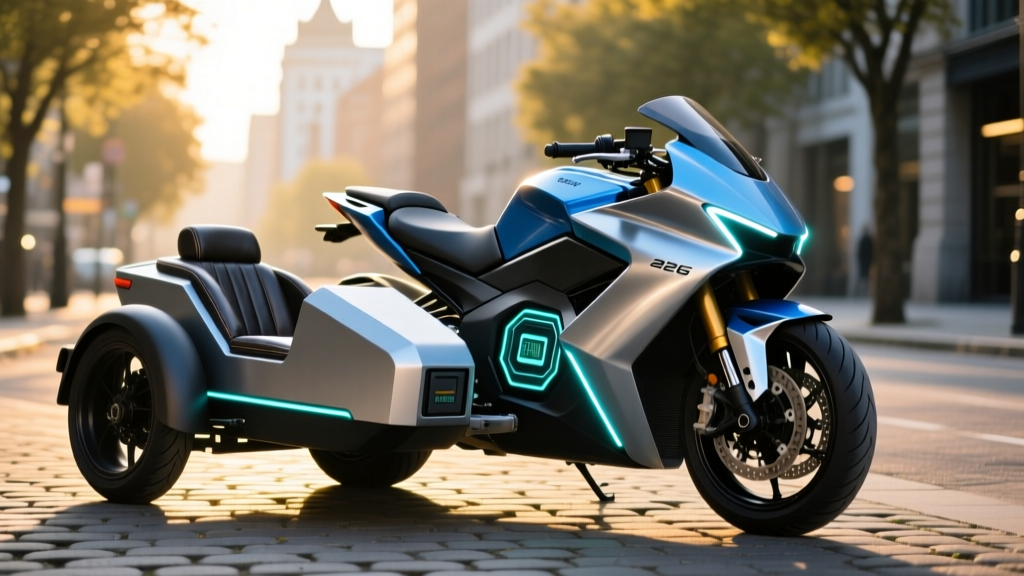
Electric motorbikes with sidecars remain a niche within a niche — and if you're searching for one, you likely already know the appeal: silent torque, zero tailpipe emissions, and a classic three-wheel stance. But before you commit, here's what you actually need to know about buying and owning an electric motorbike and sidecar in 2026.
Quick Answer: Is an Electric Motorbike and Sidecar Practical in 2026?
For most buyers, the answer is conditional. Purpose-built electric motorcycles with sidecars are extremely limited — no major OEM (Harley-Davidson, Zero, Energica) currently sells a factory sidecar-equipped electric model. Your realistic options are: (1) an aftermarket sidecar bolted to an electric motorcycle like the Zero SR/F or Energica Ego+, or (2) a custom build. Expect 80–130 miles of real-world range, $18,000–$32,000+ total cost (bike + sidecar rig), and Level 2 charging in 2–4 hours. Federal EV tax credits under §30D generally do not apply to two- or three-wheeled motorcycles — they require four wheels.
What Exactly Is an Electric Motorbike and Sidecar?
An electric motorbike and sidecar combines a battery-electric motorcycle with a single-wheel passenger or cargo attachment mounted to one side. The sidecar adds weight (typically 150–250 lbs for the rig alone), increases aerodynamic drag, and fundamentally changes handling dynamics — all of which directly impact range and energy consumption.
The electric motorcycle market in 2026 is dominated by a few key players:
- Zero Motorcycles — SR/F, SR/S, DSR/X (65–156 miles EPA range, 14.4–17.3 kWh battery, Z-Force lithium-ion NMC)
- Energica — Ego+, Eva Ribelle, Experia (130–261 miles combined, up to 21.5 kWh, NMC)
- Harley-Davidson / LiveWire — LiveWire ONE and S2 Del Mar (100–146 miles EPA, 15.4–10.5 kWh, NMC)
- Damon Motors — HyperSport (announced, 200-mile target, 20 kWh, not yet shipping at scale)
None of these manufacturers offer a factory sidecar option. Adding a sidecar means working with aftermarket fabricators like Velorex, Cozy, or EZ-Hook, or commissioning a custom weld. The sidecar adds 40–80 lbs of unsprung mass and can increase energy consumption by 20–40% depending on aerodynamics and passenger load.
Real-World Range and Battery Specs: What Changes With a Sidecar
Electric motorcycle manufacturers publish EPA or WMTC (World Motorcycle Test Cycle) range figures for the bike alone. Bolt on a sidecar, and those numbers drop significantly.
| Motorcycle (2026 Model Year) | Battery (kWh usable) | EPA/WMTC Range Solo (mi) | Est. Range With Sidecar (mi) | Peak DC Charge (kW) | Level 2 Charge Time (0–100%) |
|---|---|---|---|---|---|
| Zero SR/F (14.4 kWh) | 12.6 | 109 city / 82 hwy | ~60–75 hwy | 6 kW (Level 2 only; no DCFC standard) | ~2.5 hr |
| Energica Ego+ (21.5 kWh) | 18.9 | 160 city / 120 hwy | ~85–105 hwy | 24 kW (DCFC, CCS adapter) | ~3.5 hr (Level 2); ~30 min 20–80% DCFC |
| LiveWire ONE (15.4 kWh) | 13.6 | 146 city / 95 hwy | ~70–85 hwy | None (Level 2 only, 1.92 kW onboard) | ~7 hr (Level 2) |
| Zero DSR/X (17.3 kWh) | 15.8 | 137 city / 88 hwy | ~65–78 hwy | 6 kW (Level 2 only) | ~3 hr |
Key takeaway: Sidecar duty cuts highway range to roughly 60–105 miles for most current electric motorcycles. This makes the rig viable for urban commuting, short touring loops, and local rides — but not long-distance travel without careful charging planning.
Common Misconceptions: Electric Motorbike and Sidecar
| Myth | Fact |
|---|---|
| "Electric motorcycles charge as fast as cars." | Most electric motorcycles lack DC fast charging entirely. Zero and LiveWire rely on Level 2 (J1772) only, at 1.9–6 kW. Only Energica offers DCFC (up to 24 kW), which is still far slower than a 150–250 kW car charger. |
| "I'll get the $7,500 federal EV tax credit." | The §30D Clean Vehicle Credit under current IRS rules applies to four-wheeled vehicles. Two- and three-wheeled electric motorcycles do not qualify. Some states offer separate e-motorcycle rebates (e.g., California's CVRP previously offered up to $1,500 for zero-emission motorcycles — check current availability). |
| "A sidecar won't affect my range much." | Sidecar weight (+150–250 lbs with passenger) and aerodynamic drag typically reduce real-world range by 20–40%. A Zero SR/F that gets 82 highway miles solo may deliver only 60–65 miles with a loaded sidecar at 65 mph. |
| "Any electric motorcycle can accept a sidecar." | Not all frames are engineered for sidecar mounting. Subframe reinforcement, steering geometry changes, and rear axle loading must be evaluated by a qualified fabricator. Voiding the manufacturer warranty is a real risk. |
Cost Breakdown: Electric Motorbike and Sidecar vs. Gas Equivalent
Let's compare the total 5-year ownership cost of an electric motorcycle with sidecar against a popular gas-powered alternative — the Ural Gear Up, which is the most widely available factory sidecar motorcycle in the U.S. (675cc, ~41 HP, carbureted or EFI depending on year).
| Cost Category | Electric (Zero SR/F + Cozy Sidecar) | Gas (Ural Gear Up, new) |
|---|---|---|
| Purchase price (bike + sidecar rig) | $23,000–$28,000 ($20,495 bike + $3,000–$7,000 sidecar/fab) | $21,000–$24,000 (factory-equipped sidecar) |
| Federal tax credit | $0 (ineligible under §30D — two/three wheels) | $0 |
| Fuel / electricity (5 yrs, 6,000 mi/yr) | ~$900–$1,200 (30 kWh/mi avg, $0.14/kWh national avg) | ~$4,500–$5,500 (30 MPG avg, $3.50/gal avg) |
| Maintenance (5 yrs) | ~$400–$700 (tires, brake pads, belt, cabin filter — no oil, no valves) | ~$3,000–$4,500 (oil changes, valve adjustments, carb/EFI service, spark plugs, clutch) |
| Insurance (5 yrs, avg) | ~$4,500–$6,000 ($900–$1,200/yr — higher replacement cost) | ~$3,500–$5,000 ($700–$1,000/yr) |
| Estimated 5-Year Total | $32,300–$40,900 | $32,000–$39,000 |
The numbers show near-parity over five years, with the electric rig winning on fuel and maintenance but losing on purchase price and insurance. The breakeven point typically arrives around year 4–5 if you ride consistently. If your annual mileage is below 3,000 miles, the gas Ural may remain cheaper overall.
Charging Realities: What Sidecar Owners Face
Charging an electric motorcycle is fundamentally different from charging an electric car, and adding a sidecar complicates logistics further.
Home Charging (Level 1 and Level 2)
Most electric motorcycles charge via a standard J1772 connector or a proprietary plug. Level 1 charging (120V household outlet) delivers roughly 1–1.5 kW — sufficient for overnight top-ups of 10–15 miles per hour of charging. Level 2 (240V) at 3.3–6 kW can fully replenish most electric motorcycle batteries in 2–4 hours.
Sidecar-specific issue: A sidecar-equipped motorcycle is wider (typically 60–72 inches total width) and heavier. You'll need a garage or covered parking space wide enough to accommodate the rig, with a reachable outlet or installed Level 2 station. Running a 240V circuit to a detached garage or carport can cost $500–$2,000 depending on distance and panel capacity — get a quote from a licensed electrician before purchasing.
Public Charging
Public Level 2 chargers (ChargePoint, Blink, EVgo Level 2) are technically usable, but parking a sidecar rig in a standard EV charging space can be awkward — the sidecar wheel may extend beyond the painted bay. DC fast charging stations are largely irrelevant because most electric motorcycles cannot accept DCFC. Energica's 24 kW DC capability is the exception, and even that requires finding a CCS-compatible station with adequate clearance.
Cold-Weather Range Loss
Lithium-ion NMC batteries lose 15–30% of their usable capacity in freezing temperatures (below 32°F / 0°C). Unlike electric cars, most electric motorcycles lack active battery thermal management (liquid heating/cooling). If you ride year-round in a cold climate, expect your 80-mile sidecar range to drop to 55–65 miles in winter. Preconditioning features are rare on electric motorcycles — the Zero SR/F and Energica Ego+ offer limited battery warming, but nothing comparable to a Tesla or Hyundai heat-pump system.
Who Should (and Shouldn't) Buy an Electric Motorbike and Sidecar
Decision Framework: Is This Rig Right for You?
Choose an electric motorbike and sidecar if:
- Your daily rides are under 60 miles round-trip
- You have reliable home charging (garage or covered space with 240V access)
- You ride primarily in mild-to-warm climates (above 40°F most of the year)
- You value silence, instant torque, and near-zero drivetrain maintenance
- You're comfortable with a custom/aftermarket build and potential warranty implications
- You want a conversation-stopping rig that draws a crowd at every stoplight
Stick with a gas sidecar motorcycle (Ural, or vintage BMW/Honda) if:
- You plan long-distance touring (200+ mile days)
- You live in a region with harsh winters and need maximum range reliability
- You want a factory-supported, warrantied sidecar with dealer service
- Your budget is below $20,000 total
- You need quick refueling on multi-day trips (gas stations are everywhere; motorcycle-compatible public chargers are not)
What First-Time Buyers Must Know Before Purchasing
If you've never owned an electric vehicle — let alone an electric motorcycle with a sidecar — here are the non-obvious ownership realities that spec sheets won't tell you:
- Battery degradation is real but slow. Zero Motorcycles warranties its battery for 5 years with unlimited mileage, guaranteeing 70% capacity retention. Energica offers 2 years / 30,000 miles on the battery. After 5–7 years, expect 80–90% state of health (SoH) with normal use. Avoid repeatedly charging to 100% and storing at full charge — keep it between 20–80% for daily use.
- kWh is your fuel tank; kW is your fuel pump. Battery capacity is measured in kilowatt-hours (kWh) — this determines range. Charging speed is measured in kilowatts (kW) — this determines how fast you refill. A 14.4 kWh battery at 300 Wh/mile gives roughly 48 highway miles with a sidecar. A 6 kW Level 2 charger refills that battery in about 2.5 hours.
- Tire wear increases with a sidecar. The sidecar wheel and the motorcycle's rear tire wear faster due to asymmetric loading. Budget $200–$400 per tire replacement, and expect 8,000–12,000 miles from a rear tire (vs. 15,000–20,000 solo).
- Insurance requires specialty providers. Standard motorcycle insurers may not cover aftermarket sidecar modifications or may undervalue the total rig. Providers like Progressive, Dairyland, and specialty classic/custom insurers (e.g., Hagerty for custom builds) are more familiar with sidecar valuations.
- Warranty risk is real. Mounting a sidecar to a Zero SR/F or LiveWire ONE will almost certainly void the frame and powertrain warranty. Discuss this with the manufacturer and the sidecar fabricator before committing.
2026 Market Reality: What's Actually Available
As of early 2026, no major manufacturer sells a turnkey electric motorcycle with a factory sidecar. Your purchasing path looks like this:
| Option | Estimated Total Cost | Lead Time | Warranty Status |
|---|---|---|---|
| Zero SR/F + Cozy sidecar (aftermarket) | $23,000–$28,000 | 2–4 months (sidecar fab) | Bike warranty likely voided on frame; powertrain warranty may survive |
| Energica Experia + Velorex sidecar | $28,000–$35,000 | 3–6 months | Same frame warranty risk; DCFC capability is a plus |
| Custom build (donor electric bike + bespoke sidecar) | $30,000–$50,000+ | 6–12 months | No warranty; fully custom |
| Used electric motorcycle + used sidecar | $14,000–$22,000 | Variable (market-dependent) | Check battery SoH before purchase; request state-of-health report |
For reference, the Zero SR/F spec page lists the 2026 base model at $20,495 MSRP. The Energica Ego+ starts at approximately $24,000–$26,000 depending on configuration. Aftermarket sidecar kits from manufacturers like Cozy start around $3,500–$5,000 for the hardware alone, with professional installation adding $1,500–$3,000.
Frequently Asked Questions
Can I get a federal tax credit for an electric motorcycle with a sidecar?
No. Under IRS §30D, the Clean Vehicle Credit applies only to four-wheeled motor vehicles. Electric motorcycles — even with a sidecar making them three-wheeled — do not qualify for the $7,500 federal credit. Some states offer separate incentives for electric motorcycles; check your state energy office or the IRS clean vehicle credit page for updates.
How far can an electric motorbike and sidecar really go on a charge?
With current 2026 models, expect 60–105 real-world highway miles with a sidecar attached, depending on the battery size (12.6–18.9 kWh usable), speed, passenger load, and temperature. City riding at lower speeds can extend this to 90–130 miles. Cold weather (below 32°F) reduces range by an additional 15–30%.
Is it safe to add a sidecar to an electric motorcycle?
It can be done safely, but only by an experienced fabricator who understands steering geometry, weight distribution, and frame reinforcement. Electric motorcycles have different frame designs than traditional bikes (battery as stressed member, lower center of gravity), which requires specialized mounting approaches. Always have the work inspected and documented.
How long does the battery last before needing replacement?
Modern NMC lithium-ion motorcycle batteries are designed for 1,000–2,000+ charge cycles before dropping to 80% capacity. At 80 miles per charge and one cycle per day, that's 80,000–160,000 miles — well beyond the practical life of most motorcycles. Replacement batteries for a Zero SR/F cost approximately $4,000–$6,000 if needed out of warranty.
What's the best electric motorcycle for a sidecar conversion?
The Energica Experia or Ego+ is the strongest candidate due to its larger 21.5 kWh battery (best range buffer for sidecar duty) and DC fast charging capability (24 kW CCS). The Zero DSR/X is a second choice for its adventure-touring ergonomics and 17.3 kWh pack, though it lacks DCFC. Frame compatibility must be confirmed with your sidecar fabricator before purchase.