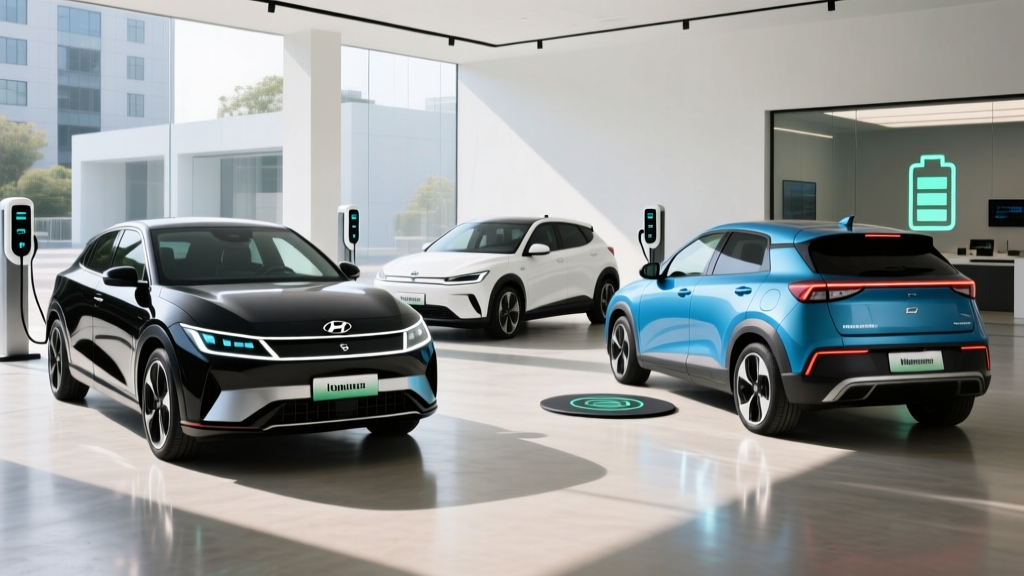
Quick Answer: What Are the Main Electric Motor Examples in Today's EVs?
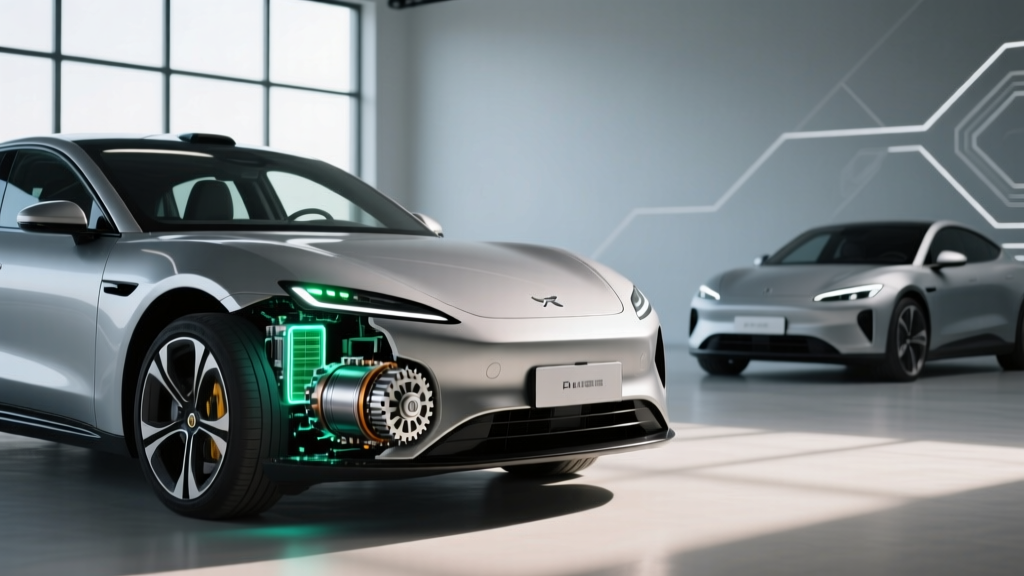
Modern electric vehicles use three primary motor architectures: Permanent Magnet Synchronous Motors (PMSM) — found in the Tesla Model Y, Hyundai Ioniq 5, and most mainstream EVs — which deliver the highest efficiency (up to 97%); AC Induction Motors — used in older Tesla Model S/X front axles and some heavy-duty applications — prized for durability and low cost but slightly less efficient; and Externally Excited Synchronous Motors (EESM) — used by BMW in the iX and i4 — which avoid rare-earth magnets entirely. A fourth type, the Axial Flux Motor, is emerging in high-performance applications like the Mercedes-AMG ONE and upcoming next-gen platforms, offering extreme power density in a compact package.
Why Electric Motor Type Matters for Your EV Purchase
Most EV shoppers focus on battery size and range, but the electric motor is the component that actually converts stored energy into motion. The motor type directly influences:
- Efficiency: How many miles you get per kWh of battery — which determines real-world range.
- Power delivery: Torque curves, 0-60 times, and highway passing performance.
- Regenerative braking strength: How aggressively the motor recaptures energy during deceleration.
- Long-term cost: Rare-earth magnet dependency affects supply-chain pricing and potential repair costs.
Unlike a gas engine, where cylinder count and displacement dominate the conversation, electric motors are differentiated by their electromagnetic design. Let's break down the electric motor examples you'll actually encounter when shopping for a 2026 EV.
The Four Electric Motor Architectures in Production EVs
1. Permanent Magnet Synchronous Motor (PMSM)
The PMSM is the dominant motor type in the EV market, used in roughly 75% of all battery-electric vehicles sold globally. It embeds rare-earth magnets (typically neodymium-iron-boron) into the rotor, creating a strong, constant magnetic field without requiring external current.
Key examples in 2026 models:
- Tesla Model Y (Rear Motor): 295 hp rear PMSM, contributing to a 320-mile EPA range and 127 MPGe combined (fueleconomy.gov). Real-world highway range: ~270-285 miles at 70 mph; expect ~240 miles in freezing temperatures.
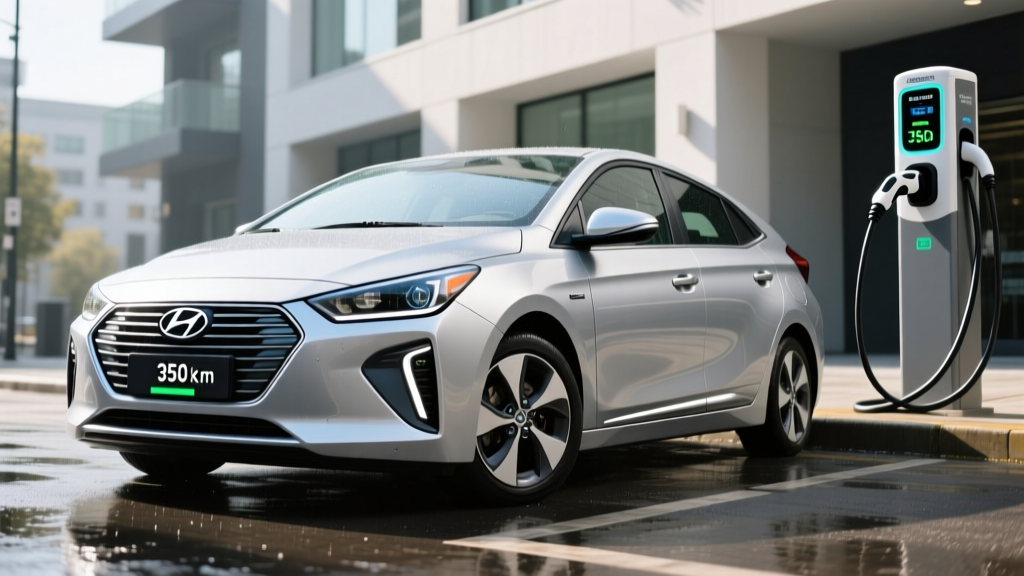
- Hyundai Ioniq 5 (RWD Long Range): 225 hp PMSM on the rear axle, 84 kWh NMC battery, EPA 303 miles, 114 MPGe combined. Peaks at 240 kW DC fast charging, achieving 10-80% in approximately 18 minutes on a 350 kW charger.
- Ford Mustang Mach-E (Extended Range RWD): 290 hp PMSM, 91 kWh usable battery, EPA 320 miles.
Trade-off: PMSM motors rely on rare-earth elements (neodymium, dysprosium), creating supply-chain vulnerability and higher material costs. This is why some manufacturers are exploring alternatives.
2. AC Induction Motor (ACIM)
The induction motor uses electromagnetic induction to generate the rotor's magnetic field — no permanent magnets required. It was the original Tesla Roadster's motor type and remains in use for specific applications.
Key examples:
- Tesla Model S/X (Front Motor — Dual Motor AWD): Tesla pairs a front induction motor with a rear PMSM. The front induction unit can freewheel (disconnect) when not needed, reducing drag and improving efficiency during cruising. Combined output in the Model S Dual Motor: 670 hp, 0-60 in 3.1 seconds.
- Heavy-duty/commercial EVs: Induction motors are favored in electric buses and trucks for their ruggedness and tolerance of high thermal loads.
Trade-off: Induction motors are typically 2-4 percentage points less efficient than PMSMs at part-load conditions (typical highway cruising). They also tend to be physically larger for equivalent power output.
3. Externally Excited Synchronous Motor (EESM)
The EESM replaces permanent magnets with a copper-wound rotor fed by a small current via slip rings or a rotary transformer. BMW has committed to this architecture for its Neue Klasse and current-generation EVs.
Key examples:
- BMW iX xDrive50: Dual EESM motors producing 516 hp combined, EPA 324 miles, 87 MPGe combined. The 111.5 kWh battery (NMC) supports up to 200 kW DC fast charging, 10-80% in ~31 minutes.
- BMW i4 eDrive40: Single rear EESM, 335 hp, EPA 301 miles, 84 kWh battery.
- Renault Megane E-Tech: Uses a separately excited synchronous motor (a variant of EESM), 217 hp, 60 kWh battery.
Trade-off: EESMs avoid rare-earth dependency entirely, which is a strategic and ethical advantage. However, they require a rotor excitation current, adding slight complexity and minor efficiency loss compared to PMSM at peak load.
4. Axial Flux Motor (Emerging)
Axial flux motors arrange the magnetic field parallel to the rotation axis (rather than radially), enabling a dramatically shorter, disc-shaped motor with exceptional power density. YASA (acquired by Mercedes-Benz) is the leading manufacturer.
Key examples:
- Mercedes-AMG ONE: Uses axial flux motors on the front axle for the hybrid hypercar's electric AWD system.
- Upcoming next-gen platforms: Mercedes has announced axial flux motors for future AMG EVs. Expect broader adoption post-2027 as manufacturing scales.
Trade-off: Currently expensive to manufacture at volume. Thermal management is more challenging due to the compact form factor.
| Motor Type | Peak Efficiency | Rare-Earth Required | Power Density | Key 2026 EV Examples | Best For |
|---|---|---|---|---|---|
| PMSM | ~95-97% | Yes (Neodymium) | High | Tesla Model Y, Ioniq 5, Mach-E | Mainstream efficiency, range maximization |
| AC Induction | ~91-94% | No | Medium | Tesla Model S/X (front), commercial EVs | Durability, freewheeling AWD setups |
| EESM | ~93-96% | No | High | BMW iX, i4, Renault Megane E-Tech | Rare-earth-free, ethical sourcing |
| Axial Flux | ~95-97% | Yes | Very High | Mercedes-AMG ONE (hybrid), future AMG EVs | Performance, compact packaging |
Motor Type vs. Real-World Efficiency: What the Numbers Show
The motor is only one variable in overall vehicle efficiency, but it plays a measurable role. Here's how efficiency translates across different EVs with varying motor types, measured in kWh per 100 miles (lower is better):
| Vehicle | Motor Type | HP | EPA kWh/100mi | EPA Range | Real-World Highway Range (est.) |
|---|---|---|---|---|---|
| Tesla Model Y LR AWD | PMSM (rear) + Induction (front) | 384 combined | 28 | 320 mi | ~270-285 mi |
| Hyundai Ioniq 5 RWD LR | PMSM | 225 | 29 | 303 mi | ~255-270 mi |
| BMW iX xDrive50 | EESM (dual) | 516 | 34 | 324 mi | ~265-280 mi |
| Ford Mach-E ER AWD | PMSM (dual) | 346 | 32 | 312 mi | ~260-275 mi |
| Rivian R1T (Dual Motor) | PMSM (dual) | 665 | 42 | 352 mi | ~280-310 mi |
The Tesla Model Y's combination of a rear PMSM and a front induction motor that can freewheel during steady-state cruising gives it a slight efficiency edge over dual-PMSM setups in certain driving conditions. BMW's EESM in the iX sacrifices a few percentage points of peak efficiency but eliminates rare-earth dependency — a trade-off that matters more to some buyers than a marginal range difference.
Electric Motor vs. Gas Engine: A Cost and Efficiency Comparison
Understanding motor type only matters in context. Here's how electric motors stack up against internal combustion engines across the metrics that affect your wallet:
| Metric | Electric Motor (PMSM, avg. EV) | Gas Engine (2.0L Turbo, avg. sedan) |
|---|---|---|
| Energy Conversion Efficiency | 90-97% (battery to wheels) | 25-35% (fuel to wheels) |
| Moving Parts in Drivetrain | ~1 (rotor) | Hundreds (pistons, valves, cams, gears) |
| Fuel/Energy Cost per Mile | $0.04-$0.06 (home charging, $0.13/kWh avg.) | $0.12-$0.16 ($3.40/gal, 28 MPG avg.) |
| Annual Maintenance (drivetrain) | $0-$50 (no oil, filters, spark plugs) | $300-$600 (oil changes, filters, belts) |
| Expected Drivetrain Lifespan | 300,000+ miles (motor); 150,000-200,000 mi (battery) | 150,000-200,000 miles (engine); transmission may require rebuild |
| 0-60 mph (mid-range models) | 4.5-6.5 seconds (instant torque) | 6.5-8.5 seconds (torque builds with RPM) |
The efficiency gap is the single most important difference. An electric motor converts over 90% of electrical energy into motion, while a gas engine wastes 65-75% of fuel energy as heat. This means even when electricity prices rise, the per-mile cost remains roughly half that of gasoline.
What Motor Type Means for Your Ownership Costs
Motor type has indirect but real effects on your total cost of ownership:
Efficiency → Range → Charging Frequency
A more efficient motor (PMSM vs. induction at part-load) means fewer kWh consumed per mile. Over 15,000 miles annually, a 3 kWh/100mi efficiency advantage saves approximately 450 kWh per year — roughly $58 at residential rates ($0.13/kWh) or $180 at DC fast-charging rates ($0.40/kWh).
Rare-Earth Dependency → Repair Costs
PMSM motors contain neodymium magnets that are expensive and supply-constrained. If a PMSM requires replacement outside warranty (unlikely but possible after 150,000+ miles), costs can range from $3,000-$7,000 depending on the vehicle. EESM and induction motors, which avoid rare-earth materials, may offer lower replacement costs in the long term.
Regenerative Braking → Brake Pad Longevity
All motor types enable regenerative braking, but PMSM and EESM motors generally offer more precise torque control, enabling stronger single-pedal driving experiences. This translates to less friction brake wear — many EV owners report original brake pads lasting 100,000+ miles.
5-Year Ownership Cost Snapshot: Mid-Range EV vs. Gas Sedan
| Cost Category | EV (e.g., Ioniq 5 SEL, ~$48,000 MSRP) | Gas Sedan (e.g., Toyota Camry SE, ~$32,000 MSRP) |
|---|---|---|
| Purchase Price (after §30D credit) | ~$40,500 (if eligible; IRS §30D rules apply — income caps, MSRP caps, battery sourcing requirements) | $32,000 |
| Fuel/Energy (5 years, 75,000 mi) | $2,925-$4,875 (mix of home + DCFC) | $9,000-$12,000 |
| Maintenance (5 years) | $500-$1,000 | $2,000-$3,500 |
| Insurance (5 years) | $9,000-$12,000 (EV premiums typically 15-25% higher) | $6,500-$9,000 |
| Estimated 5-Year Total | $52,925-$58,375 | $49,500-$56,500 |
Note: The EV pulls ahead in total cost around year 6-7 in most scenarios, particularly if home charging dominates. Federal and state incentives accelerate the breakeven point. Tax credit eligibility depends on buyer income, vehicle MSRP caps ($55,000 sedans / $80,000 SUVs/trucks), and battery component/critical mineral sourcing — consult a tax professional and verify current-year rules at irs.gov.
Common Misconceptions About EV Motors
| Myth | Fact |
|---|---|
| "Electric motors wear out quickly like gas engines." | EV motors have one primary moving part (the rotor) and no combustion stress. Motors routinely exceed 300,000 miles with no degradation. The battery, not the motor, is the longevity concern — and most are warrantied for 8 years/100,000 miles with 70% capacity retention minimum. |
| "All EVs use the same motor." | As shown above, at least four distinct architectures are in production, each with different efficiency, cost, and material trade-offs. Motor choice is a deliberate engineering decision, not a commodity. |
| "More horsepower always means less range." | Not necessarily. A 500+ hp dual-motor EV can still achieve 300+ miles of range if the battery is large enough and the motors are efficient. The BMW iX xDrive50 produces 516 hp yet delivers 324 miles EPA. Efficiency (kWh/100mi) matters more than peak power. |
| "EV motors can't handle towing or heavy loads." | Electric motors produce maximum torque from 0 RPM, making them excellent for towing. The Rivian R1T (dual PMSM, 665 hp) tows up to 11,000 lbs. The Ford F-150 Lightning (dual PMSM, 580 hp) tows 10,000 lbs. Range does decrease significantly under tow — expect 50-60% of rated range when pulling max load. |
| "Rare-earth-free motors are always worse." | BMW's EESM delivers 93-96% efficiency — competitive with PMSM — while completely avoiding neodymium and dysprosium. For buyers concerned about ethical mining practices, EESM is a legitimate alternative with no meaningful performance penalty. |
Decision Framework: Which Motor Type Should You Prioritize?
Your ideal motor type depends on your priorities as a buyer. Use this framework:
- Choose PMSM-dominant EVs (Tesla, Hyundai, Kia, Ford) if your priority is maximum range per kWh, proven reliability, and the widest model selection. This is the default for most buyers.
- Choose EESM-dominant EVs (BMW, Renault) if rare-earth-free sourcing matters to you ethically or if you want to hedge against potential rare-earth supply disruptions affecting long-term parts costs.
- Choose dual-motor setups with induction front motors (Tesla AWD) if you want all-weather traction with optimized highway efficiency — the front motor freewheels during cruising, reducing parasitic drag.
- Don't fixate on motor type alone if you're a first-time EV buyer. Battery chemistry (LFP vs. NMC), charging speed (peak kW and 10-80% time), and home charging access matter more for daily satisfaction than whether your motor uses neodymium magnets or copper windings.
What First-Time EV Buyers Should Know About Motors
If you're transitioning from a gas vehicle, here are the practical motor-related differences you'll experience:
Instant Torque Changes How You Drive
Electric motors deliver peak torque from 0 RPM. There's no turbo lag, no transmission hunting, no downshift delay. A 225 hp Ioniq 5 feels quicker in city driving than a 300 hp gas sedan because torque is immediate. This also means tire wear can be higher if you frequently accelerate hard — budget for tire replacement every 25,000-35,000 miles on performance-oriented EVs.
Regenerative Braking Is Motor-Driven
When you lift off the accelerator, the motor reverses its function and becomes a generator, converting kinetic energy back into stored electricity. The strength of this effect varies by manufacturer and driving mode. Hyundai/Kia offer adjustable regen paddles (0-3 levels); Tesla offers two modes (Standard and Low). Strong regen enables one-pedal driving in most city conditions, dramatically reducing friction brake use.
Motor Noise Is Minimal — Which Reveals Other Sounds
Without engine noise, you'll hear wind, road, and suspension sounds more clearly. Some EVs add synthetic motor sound for feedback (Porsche Taycan, BMW iX). At low speeds, pedestrian warning sound generators are required by NHTSA regulation (nhtsa.gov).
Cold Weather Affects the Battery, Not the Motor
The motor itself operates efficiently in cold temperatures. Range loss in winter (typically 20-35% below EPA at temperatures under 30°F) comes from the battery's reduced chemical efficiency and cabin heating demands — not from motor performance degradation. Preconditioning the battery (warming it before driving or charging) mitigates this.
Frequently Asked Questions
Do electric motors require any regular maintenance?
No scheduled maintenance is required for the motor itself. Unlike gas engines, there are no oil changes, spark plugs, timing belts, or air filters. The only drivetrain maintenance items are reduction-gear fluid changes (typically every 60,000-100,000 miles, $100-$200) and cabin air filter replacement. The motor bearings are sealed and designed to last the vehicle's lifetime.
Can an electric motor fail, and what does replacement cost?
Motor failure is rare but possible — usually due to bearing wear, inverter failure, or coolant intrusion after 150,000+ miles. Replacement costs range from $3,000-$7,000 for mainstream EVs to $10,000+ for high-performance models. All major manufacturers cover the motor under the powertrain warranty (typically 8 years/100,000 miles, sometimes 10 years/100,000 miles for Hyundai/Kia).
Why do some EVs have two different motor types?
Tesla's dual-motor AWD vehicles pair a rear PMSM (for efficiency during normal driving) with a front induction motor (which can disconnect entirely when AWD isn't needed, eliminating drag). This hybrid-motor approach maximizes efficiency while retaining all-weather traction. It's an engineering optimization, not a cost-cutting measure.
Will axial flux motors replace PMSMs in mainstream EVs?
Not in the near term. Axial flux motors offer exceptional power density but are currently expensive to manufacture at scale. Expect them in performance and luxury segments first (Mercedes-AMG, potentially Porsche) before trickling down to mainstream models post-2028. For 2026 buyers, PMSM and EESM remain the practical choices.
Does motor type affect eligibility for the federal EV tax credit?
No. The §30D tax credit is determined by battery component sourcing, critical mineral sourcing, vehicle MSRP caps, and buyer income limits — not by motor architecture. However, motor type can indirectly influence where a vehicle is manufactured and which supply chains are involved, which may correlate with battery sourcing compliance. Always verify current-year eligibility at irs.gov and consult a tax professional.
Which motor type is best for cold climates?
All motor types perform equally well in cold weather. The motor itself is not the limiting factor — battery chemistry and thermal management are. If you live in a cold climate, prioritize an EV with a heat pump (standard on most 2026 Hyundai, Kia, Tesla, and BMW models) and battery preconditioning capability. These features reduce winter range loss from ~35% to ~20-25%.