Quick Answer: An electric motor converts electrical energy (measured in kWh from the battery) into mechanical power (measured in kW) with instant torque delivery — no revving, no gear shifts. If you've searched "electric motor Tarkov," you likely encountered the term in gaming communities referencing the immediate, brutal acceleration EVs deliver. In real-world 2026 EVs, electric motors produce peak torque from 0 RPM, enabling 0-60 mph times as quick as 1.99 seconds (Lucid Air Sapphire) in a family sedan, while a comparable gas car needs 4,000-5,000 RPM to hit peak torque through a multi-speed transmission.
How Electric Motors Work: kW, Torque, and Why Gamers Notice
The phrase "electric motor Tarkov" surfaces in forums and gaming spaces because players who drive EVs in real life recognize the same physics simulated in games: electric motors deliver maximum torque the instant you press the pedal. There's no turbo lag, no transmission downshift delay, no VTEC crossover point. This isn't marketing — it's electromagnetic physics.
An electric motor works by passing current through copper windings (the stator) to create a rotating magnetic field that spins the rotor. The key specifications that matter to buyers:
- Power (kW): The rate of energy delivery. 1 kW = 1.34 horsepower. A 350 kW motor produces roughly 469 HP.
- Torque (lb-ft): Rotational force. EVs commonly produce 300-750 lb-ft from standstill.
- Efficiency: Electric motors convert 85-95% of electrical energy into motion. Gasoline engines convert only 20-35% of fuel energy — the rest is waste heat, per the U.S. Department of Energy.
This efficiency gap is the single largest reason EVs cost less per mile to operate, even when electricity prices rise.
EV Motor Types: Permanent Magnet vs. Induction vs. Axial Flux
Not all electric motors are identical. The 2026 market uses three primary architectures, each with trade-offs:
| Motor Type | How It Works | Efficiency | Used In (2026 Models) | Trade-off |
|---|---|---|---|---|
| Permanent Magnet Synchronous (PMSM) | Rare-earth magnets in rotor create constant field | 93-96% | Tesla Model 3/Y (rear), Hyundai Ioniq 5/6, Rivian R1S/R1T | Requires neodymium/dysprosium — supply-chain cost risk |
| AC Induction | Current induced in rotor cage by stator field | 88-92% | Tesla Model S/X (front motor), older Model 3 AWD front | Slightly lower efficiency but no rare-earth dependency; great for coasting/disconnect |
| Axial Flux | Magnetic field flows parallel to shaft (pancake shape) | 94-97% | Mercedes-AMG EQS, YASA-derived designs, Koenigsegg Gemera | Higher manufacturing cost; limited to performance/luxury applications |
For most buyers, the motor type matters less than the system-level output. A dual-motor AWD EV like the 2026 Hyundai Ioniq 5 N pairs two PMSM units for a combined 641 HP and 568 lb-ft, achieving 0-60 mph in 3.4 seconds — territory that required a V8 supercharger in the gas era.
Electric Motor vs. Gas Engine: The Numbers Don't Lie
The "electric motor Tarkov" curiosity often leads to a bigger question: how does EV acceleration compare to a gas car at a similar price? Here's a concrete 2026 comparison between popular models:
| Spec | 2026 Tesla Model 3 Long Range AWD | 2026 BMW 330i xDrive (Gas) |
|---|---|---|
| Power | 384 kW (515 HP) | 190 kW (255 HP) |
| Torque | 365 lb-ft (from 0 RPM) | 295 lb-ft (at 1,550-4,400 RPM) |
| 0-60 mph | 4.1 seconds | 5.6 seconds |
| Drivetrain | Dual motor AWD (no transmission) | 8-speed automatic AWD |
| EPA Efficiency | 132 MPGe combined (25 kWh/100mi) | 29 MPG combined |
| Fuel/Energy Cost per Mile* | $0.045 (home charging, $0.15/kWh) | $0.118 ($3.40/gal gas) |
| Base MSRP | $47,740 | $47,450 |
*Cost per mile based on U.S. average residential electricity rate of ~$0.15/kWh and national average gas price of ~$3.40/gallon as of early 2026. Your rates vary by state and utility.
The Model 3 delivers double the horsepower, 24% more torque available instantly, and a 1.5-second advantage to 60 mph — for roughly the same sticker price. The per-mile energy cost is less than half. The trade-off is range flexibility on long road trips and upfront charging infrastructure.
Real-World Ownership Costs: 5-Year Breakdown
Motor performance is fun, but ownership economics decide purchases. Here's a realistic 5-year / 75,000-mile cost comparison for a mid-range EV versus a gas equivalent, based on 2026 pricing:
| Cost Category | 2026 EV (e.g., Hyundai Ioniq 6 SE, $38,650 MSRP) | 2026 Gas (e.g., Honda Accord Sport, $30,990 MSRP) |
|---|---|---|
| Purchase Price (before incentives) | $38,650 | $30,990 |
| Federal Tax Credit (§30D, if eligible) | -$7,500 (point-of-sale transfer) | $0 |
| Effective Purchase Price | $31,150 | $30,990 |
| Home Level 2 Charger Install | $1,200-$2,500 (240V/48A circuit) | $0 |
| Fuel/Energy (75,000 mi) | $3,375 (27 kWh/100mi × $0.15/kWh) | $8,500 (30 MPG × $3.40/gal) |
| Maintenance (75,000 mi) | $900 (cabin filter, wipers, tire rotation, brake fluid) | $3,200 (oil ×8, filters, spark plugs, brake pads) |
| Insurance (5-year avg.) | $9,500 (EVs cost ~15-20% more to insure) | $7,800 |
| Estimated Depreciation | $16,500 (EV depreciation has improved but remains higher) | $13,500 |
| 5-Year Total Cost of Ownership | ~$62,625 | ~$63,990 |
The EV edges out the gas car on total cost over five years, primarily through fuel and maintenance savings that offset higher insurance and depreciation. But this assumes you qualify for the full §30D credit and can charge at home. Without home charging, public DC fast charging at $0.35-$0.50/kWh can double your energy costs and erase the advantage.
Common EV Motor & Ownership Myths — Fact-Checked
| Myth | Fact |
|---|---|
| "EV motors wear out like gas engines" | Electric motors have one moving part (the rotor). They routinely last 500,000+ miles. The battery degrades first. Motor failure is rare and usually covered under the 8-year/100,000-mile powertrain warranty. |
| "EVs are slower in cold weather" | Motor performance is unaffected by cold. Range drops 20-30% in sub-freezing temps due to battery chemistry and cabin heating — but 0-60 times remain consistent. Tesla, Hyundai, and BMW use heat pumps to mitigate range loss. |
| "You need to replace the motor" | Unlike timing belts or head gaskets, electric motors don't have scheduled replacement intervals. Inverter coolant flushes every 50,000-100,000 miles are the closest maintenance analog. |
| "All EVs are fast" | Single-motor base models (e.g., 2026 Chevy Equinox EV 2LT FWD, 213 HP) deliver 0-60 in ~8.0 seconds — comparable to a 4-cylinder gas crossover. Instant torque feels quicker in city driving due to 0-30 mph response, but highway passing power is modest. |
| "Regenerative braking replaces brake pads entirely" | Regen handles 80-95% of deceleration, so brake pads last 100,000+ miles. But brake fluid still absorbs moisture and needs flushing every 2-3 years, and rotors can develop surface rust from disuse. |
EV Motor Power vs. Battery Size: The Pairing That Matters
A 400 kW motor is useless if the battery can't deliver the current. This is where buyers get misled by peak horsepower figures. The battery's C-rate (discharge rate relative to capacity) determines sustained power delivery.
Consider two 2026 examples:
- Lucid Air Pure (88 kWh battery, 336 kW motor): The battery can sustain high discharge rates, enabling consistent 0-60 in 3.8 seconds even at 30% State of Charge (SoC).
- Nissan Ariya Engage (63 kWh battery, 160 kW motor): The smaller battery limits sustained high-power delivery. You'll get full power from 100% SoC, but at 20% SoC, acceleration noticeably softens — a characteristic called "power tapering at low SoC."
This is why a spec sheet alone doesn't tell the full story. When evaluating an EV, look at both motor kW and battery kWh — and read real-world reviews that test acceleration at partial charge. The IIHS and manufacturer spec sheets provide baseline data, but owner forums and track tests reveal sustained performance behavior.
Charging and the Electric Motor: Why Preconditioning Matters
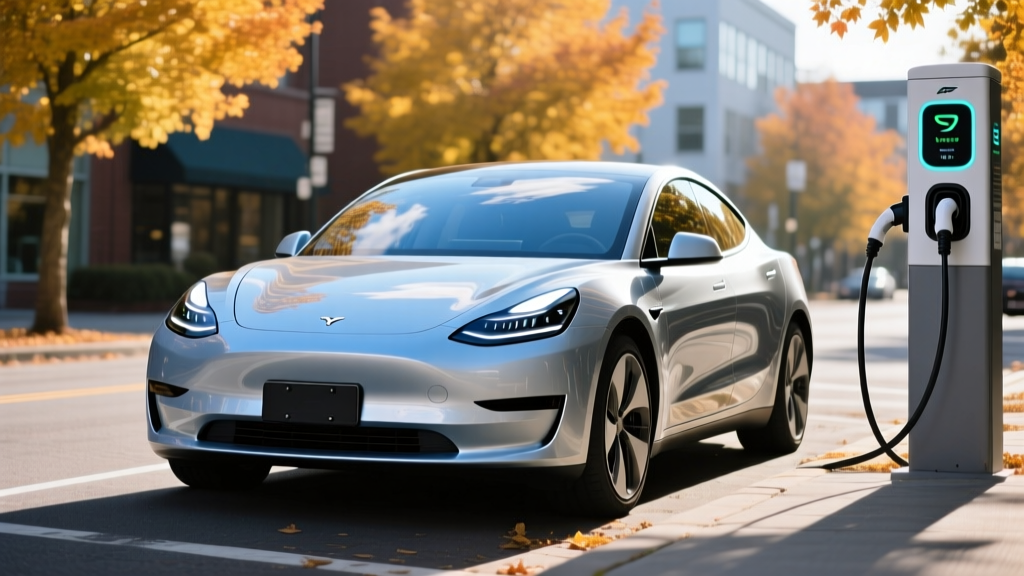
Your electric motor doesn't care about charging speed, but your battery chemistry does. To accept fast DC charging (150-350 kW), lithium-ion cells need to be in a specific temperature window — typically 30-45°C (86-113°F). This is why preconditioning matters.
When you navigate to a DC fast charger in a Tesla, Hyundai, or Rivian, the car's thermal management system begins heating or cooling the battery pack 10-25 minutes before arrival. Without preconditioning, a cold battery may accept only 40-50 kW instead of its rated 250 kW peak — adding 20-30 minutes to a 10-80% charge session.
Charging speed also follows a taper curve. A vehicle rated at "250 kW peak" typically sustains that rate only between 10-40% SoC. From 40-80%, the rate drops to 100-150 kW. Above 80%, it slows to 30-50 kW to protect cell longevity. This is why manufacturers quote 10-80% times rather than 0-100%:
- 2026 Hyundai Ioniq 5 (84 kWh, NMC): Peak 240 kW, 10-80% in ~18 minutes (with preconditioning)
- 2026 Tesla Model Y Long Range (78 kWh, NMC): Peak 250 kW, 10-80% in ~22 minutes
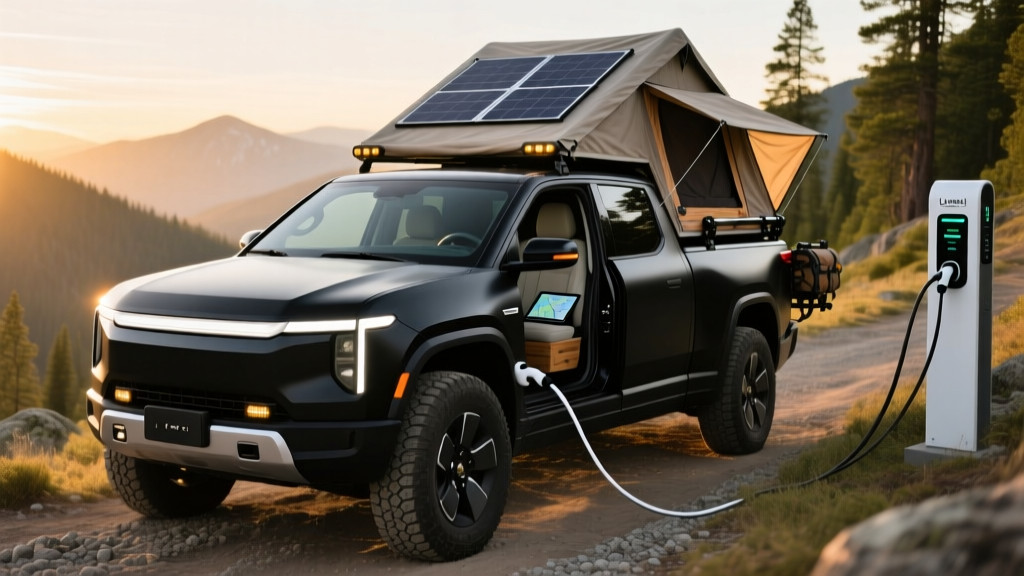
- 2026 Ford F-150 Lightning Extended Range (131 kWh, NMC): Peak 170 kW, 10-80% in ~41 minutes (larger battery, lower C-rate)
Decision Framework: Is an EV Right for Your Driving Pattern?
Choose an EV with a powerful electric motor if:
- You have access to Level 2 home charging (240V, 32-48A) or reliable workplace charging
- Your daily driving is under 250 miles round-trip (covers 95% of U.S. commutes)
- You value instant torque and low center-of-gravity handling for canyon roads or highway merging
- You want to eliminate oil changes, spark plugs, and transmission fluid for 10+ years
- You qualify for the §30D federal tax credit (income caps: $150K single / $300K joint; MSRP caps: $55K sedans / $80K SUVs and trucks; battery sourcing requirements apply)
Choose a PHEV or HEV hybrid instead if:
- You live in an apartment without charging access and public infrastructure is sparse in your area
- You regularly tow over 5,000 lbs or drive 400+ mile stretches through charging deserts (rural I-70, I-80, I-10 corridors)
- You live in extreme cold (-20°F or below for extended periods) and cannot garage the vehicle
- Your budget is under $30,000 and you need maximum range flexibility today
Choose a gas car if:
- You drive fewer than 6,000 miles per year (fuel savings won't offset EV premium)
- You keep vehicles 2-3 years and want to avoid EV depreciation uncertainty
- Your work requires frequent travel to areas with zero charging infrastructure
What First-Time EV Buyers Must Know About Motors and Ownership
If the "electric motor Tarkov" search brought you here from a gaming curiosity, the real-world takeaway is this: EV motors are simpler, more efficient, and more durable than any internal combustion engine ever built. They have fewer than 20 moving parts versus 2,000+ in a gas powertrain. They don't need warm-up, they don't stall, and they deliver full torque from a standstill every time.
But the motor is the easy part. The ownership experience hinges on three things the motor doesn't control:
- Battery chemistry and capacity (kWh): This determines your range and longevity. LFP (lithium iron phosphate) batteries in the 2026 Tesla Model 3 RWD and standard-range Ford Mustang Mach-E offer longer cycle life (3,000+ cycles to 80% capacity) but lower energy density and reduced cold-weather range. NMC batteries offer more range but degrade faster if routinely charged to 100%.
- Charging access: A home Level 2 charger ($500-$700 equipment + $700-$1,800 electrician install) transforms EV ownership from a chore into a convenience. Without it, you're dependent on public networks that vary wildly in reliability.
- Insurance and depreciation: EVs cost 15-25% more to insure on average due to higher repair costs after collisions (battery pack replacement, specialized labor). Depreciation has improved as the used EV market matured, but 3-year residuals still trail Toyota and Honda gas models by 5-10 percentage points.
The electric motor is the best part of an EV. The rest of the ownership equation requires honest math — and that math, for most drivers with home charging in 2026, works out in the EV's favor.
Do electric motors in EVs require maintenance?
No scheduled maintenance is required for the electric motor itself. Unlike a gas engine, there are no oil changes, timing belts, spark plugs, or valve adjustments. The inverter coolant may need flushing every 50,000-100,000 miles depending on the manufacturer. The motor bearings are sealed and designed to last the vehicle's lifetime. Most EV powertrain warranties cover the motor for 8 years / 100,000 miles (10 years / 150,000 miles in California-emission states like Hyundai and Kia).
Why do EVs feel faster than gas cars with the same horsepower?
Because electric motors deliver peak torque at 0 RPM. A 300 HP gas car might produce peak torque only above 4,000 RPM and must downshift to reach it — adding 0.5-1.0 seconds of delay. A 300 HP EV motor delivers full torque the instant current flows, making 0-30 mph city acceleration feel dramatically quicker even if 0-60 times are similar. This is the phenomenon that "electric motor Tarkov" references in gaming: the immediate, linear thrust with no mechanical delay.
Can an electric motor overheat during hard driving?
Under sustained high-load conditions (track driving, prolonged mountain climbs, towing at max capacity in hot weather), EV motors and inverters generate significant heat. Modern EVs use liquid cooling loops that circulate coolant through the motor stator and inverter. If temperatures exceed safe thresholds, the car will reduce power output ("power limiting") to protect components. This is rare in normal driving but documented in Tesla Model 3 Performance track use and Ford F-150 Lightning max-tow scenarios above 100°F ambient.
How long do EV electric motors last compared to gas engines?
Electric motors routinely exceed 300,000-500,000 miles with zero internal maintenance. Tesla has published fleet data showing motor replacement rates below 1% over 200,000 miles. Gas engines typically require major service (timing chain, head gasket, turbo replacement) between 120,000-180,000 miles. The battery pack — not the motor — is the EV's longevity limiting factor, with modern NMC packs retaining 85-90% capacity at 150,000 miles and LFP packs retaining 90-95%.
Does the electric motor affect EV range?
Yes, motor efficiency directly impacts range. A 95% efficient PMSM motor wastes less battery energy as heat than an 89% efficient induction motor. This is why many 2026 EVs use PMSM for the primary drive axle and induction for the secondary (which can freewheel/disconnect when not needed for AWD). Driving style affects range more than motor type: sustained 80 mph highway driving reduces range 15-25% versus the EPA combined estimate, regardless of motor architecture.