The Rivian R1T as a Camper Truck: Quick Verdict
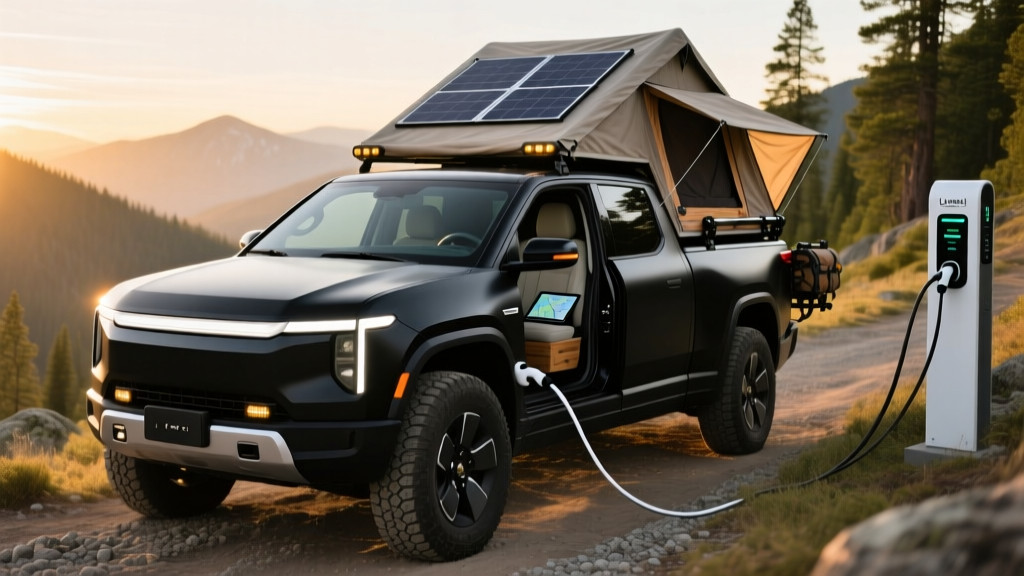
The Rivian R1T has carved out a unique niche in the electric truck market: a midsize pickup engineered from the ground up for overlanding and backcountry camping. Unlike full-size electric trucks that prioritize towing capacity above all else, the R1T focuses on trail-friendly dimensions, integrated camp features, and a gear tunnel that has become its signature party trick. For the 2025–2026 model year, the R1T lineup offers three battery configurations, a refreshed interior, and a growing ecosystem of factory and aftermarket camper accessories that transform it from daily driver to weekend basecamp.
But how does the R1T perform when you load it down with camping gear, drive it to remote trailheads, and rely on it as your shelter? We've examined the specs, tested charging logistics, and mapped out what it really costs to own a Rivian R1T camper truck in 2026.
| Spec | Dual-Motor Standard | Dual-Motor Large | Tri-Motor Max |
|---|---|---|---|
| EPA Range | 270 mi | 350 mi | 420 mi |
| Battery (usable) | 95 kWh (LFP) | 118 kWh (NMC) | 141 kWh (NMC) |
| Horsepower | 533 hp | 533 hp | 850 hp |
| 0–60 mph | 4.5 sec | 4.5 sec | 3.0 sec |
| Max DC Fast Charge | 200 kW | 200 kW | 220 kW |
| 10–80% DC Time | ~28 min | ~30 min | ~32 min |
| Level 2 Home Rate | 11.5 kW (~25 mi/hr) | 11.5 kW (~25 mi/hr) | 11.5 kW (~25 mi/hr) |
| MPGe (combined) | 70 MPGe | 73 MPGe | 70 MPGe |
| Towing Capacity | 11,000 lb | 11,000 lb | 11,000 lb |
| Base MSRP | $69,900 | $79,900 | $99,900 |
Real-World Range When Loaded for Camping
EPA Sticker: 270 mi (Standard) / 350 mi (Large) / 420 mi (Max Pack)
Real-World Expectation: Expect 220–240 mi on the Standard pack, 280–310 mi on the Large, and 340–370 mi on the Max Pack during mixed highway driving at 70 mph. Add 300–500 lb of camping gear, a rooftop tent, or a loaded gear tunnel, and subtract another 8–12%. In cold weather (below 35°F), plan for 20–30% range reduction regardless of pack size.
The R1T's efficiency is reasonable for an electric truck weighing over 7,000 pounds, but physics is unforgiving when you stack camping equipment on top. The gear tunnel — a 11.7-cubic-foot pass-through compartment behind the cab — is ideal for storing heavy items low and centered, which helps preserve handling without dramatically increasing aerodynamic drag. A rooftop tent, however, is a different story. Any roof-mounted cargo box or tent disrupts the R1T's relatively clean aerodynamic profile and can knock 15% off your highway range at sustained speeds above 65 mph.
For overlanding trips into areas with sparse charging infrastructure, the Max Pack's 420-mile EPA rating provides a meaningful buffer. Realistically, you can plan 300-mile legs between charges when loaded, which covers most backcountry loops in the western U.S. if you plan around Electrify America or Rivian Adventure Network stops. The Standard pack's 270-mile ceiling, by contrast, limits you to well-corridored routes unless you're prepared to dry-camp and recharge at your destination via Level 2 or solar trickle.
Source: fueleconomy.gov — Rivian R1T
Charging Speed: DC Fast Charging and Home Setup
| Charging Level | Power / Rate | Miles Added per Hour | Notes |
|---|---|---|---|
| Level 1 (120V) | ~1.4 kW | ~3 mi/hr | Emergency/trickle only |
| Level 2 (240V, 48A) | 11.5 kW | ~25 mi/hr | Full charge overnight (~10–14 hrs for Max Pack) |
| DC Fast (Standard/Large) | Peak 200 kW | ~140 mi in 20 min | 10–80% in ~28–30 min; tapers sharply above 80% |
| DC Fast (Max Pack) | Peak 220 kW | ~150 mi in 20 min | 10–80% in ~32 min; larger buffer means longer absolute time |
Rivian equips the R1T with a NACS (North American Charging Standard) port as of the 2025 refresh, granting native access to Tesla Supercharger stalls without an adapter — a significant advantage for overlanders who often find Superchargers in rural areas where CCS networks are sparse. The R1T also supports CCS charging via adapter for Electrify America, EVgo, and other legacy networks.
The charging curve matters more than peak numbers. The R1T sustains close to its peak rate between 10–50% state of charge, then tapers progressively. By 80%, charge speed drops to roughly 60–70 kW, and charging from 80–100% can add another 25+ minutes. For road-trip planning, plan your stops around 10–80% sessions — roughly 30 minutes for a meaningful range boost — and avoid the temptation to top off to 100% unless you're at your overnight campsite on Level 2.
For home charging, a 48-amp Level 2 wall connector on a 60-amp dedicated circuit delivers the R1T's maximum 11.5 kW AC rate. Expect a full overnight recharge on most pack sizes. Installation costs typically range from $800 to $2,500 depending on panel proximity and whether your home's electrical panel needs a service upgrade to 200 amps — a common requirement in older homes.
Camp Kitchen, Gear Tunnel, and Overlanding Features
What elevates the R1T from a capable electric truck to a purpose-built camper platform is Rivian's attention to outdoor-use details:
- Gear Tunnel: 11.7 cubic feet of lockable, weather-sealed storage running the width of the truck behind the cab. Rivian offers a factory Camp Kitchen accessory ($5,500) that slides out of the gear tunnel on rails, featuring a two-burner induction cooktop, a sink with a 4-gallon water tank, and storage for cookware. The induction cooktop draws from the truck's main battery — no separate propane system needed.
- Vehicle-to-Load (V2L): The R1T's bed outlets can power up to 1,500 watts of external devices, enough to run LED camp lights, a portable fridge, laptops, or a small electric heater without a standalone generator.
- Frunk (Front Trunk): 11.0 cubic feet of lockable, drainable storage in the nose — ideal for muddy boots, wet gear, or a cooler that needs to stay cold independent of bed access.
- Bed Dimensions: 4.5 feet long (with the midgate open, extending into the cabin, the effective length reaches over 8 feet). The bed width between wheel wells is 50.1 inches, enough for a standard sheet of plywood or a compact bed platform build.
- Camp Mode: A software feature that maintains climate control and battery thermal management overnight while minimizing energy draw. Expect roughly 1–2% battery drain per hour in Camp Mode, meaning even the Standard pack provides 4+ nights of comfortable climate-controlled sleeping without recharging.
- Ground Clearance: Up to 14.9 inches in the highest air-suspension setting, with approach/departure/breakover angles that rival dedicated off-road SUVs. The air suspension also enables a "kneel" function for easier bed access at camp.
Pricing, Trims, and Federal Tax Credit Eligibility
| Configuration | Base MSRP | As-Tested (w/ Camp Kitchen) | §30D Credit Eligible? | Est. Net Cost |
|---|---|---|---|---|
| Dual-Motor Standard (LFP) | $69,900 | ~$78,400 | Up to $7,500* | ~$70,900 |
| Dual-Motor Large (NMC) | $79,900 | ~$88,400 | Up to $7,500* | ~$80,900 |
| Tri-Motor Max (NMC) | $99,900 | ~$108,400 | Up to $7,500* | ~$100,900 |
* Federal EV tax credit (§30D) eligibility depends on buyer income, battery component sourcing, and critical mineral requirements. The R1T qualifies as a light truck (MSRP cap: $80,000). See IRS rules below.
IRS §30D Federal Tax Credit Requirements (2026):
- MSRP Cap: Trucks/vans/SUVs must have a base MSRP at or below $80,000. The R1T Dual-Motor Standard ($69,900) qualifies outright. The Dual-Motor Large ($79,900) qualifies at base MSRP but adding options above $80,000 does not disqualify it — the cap applies to the manufacturer's base MSRP, not the final transaction price.
- Buyer Income Limits: Modified AGI must not exceed $300,000 (married filing jointly), $225,000 (head of household), or $150,000 (single).
- Battery Sourcing: The credit is split into two halves — $3,750 for critical minerals and $3,750 for battery components. Rivian has worked to qualify for the full $7,500, but sourcing requirements tighten annually. Verify current-year eligibility on the IRS qualified vehicles list before purchasing.
- Point-of-Sale Transfer: You can transfer the credit to the dealer at purchase for an immediate price reduction rather than waiting to claim it on your tax return.
- One Vehicle per 3 Years: The credit can only be claimed once every three years per taxpayer.
Driver Assistance and Technology
SAE Automation Level: Level 2
Rivian's Driver+ system is a Level 2 driver-assistance feature combining adaptive cruise control, lane-centering, and automatic lane changes on divided highways. The driver must remain attentive with hands on the wheel at all times. This is not self-driving. Eyes-on-road monitoring is enforced via a cabin camera.
The R1T's 15.6-inch center touchscreen runs Rivian's proprietary infotainment OS, which includes integrated route planning that accounts for elevation changes, weather, and charging stops — essential for overlanding trips where a miscalculated route could leave you short of the next charger. Over-the-air updates regularly add features; the 2025 refresh brought improved navigation with topographic map overlays and offline trail routing.
Notable tech drawbacks include the absence of Apple CarPlay and Android Auto (Rivian insists its native system is sufficient, which is a dealbreaker for some buyers) and a phone-as-key system that can be finicky in remote areas with poor cell service — always carry the physical key fob on backcountry trips.
Pros, Cons, and Who Should Buy the R1T Camper Truck
Pros
- Best-in-class integrated camp features (gear tunnel, Camp Kitchen, V2L, Camp Mode)
- Tri-Motor performance is absurd for a truck (850 hp, 3.0-sec 0–60)
- NACS port grants native Tesla Supercharger access for rural charging
- Air suspension with 14.9" ground clearance handles serious trails
- 420-mile Max Pack range provides genuine overlanding buffer
- Lockable frunk and gear tunnel keep camp gear secure and organized
Cons
- Camp Kitchen accessory is expensive at $5,500 and adds weight
- 4.5-foot bed is short for traditional truck-camping builds without midgate
- No Apple CarPlay/Android Auto
- Efficiency drops sharply with rooftop tents or heavy loads (15%+ range loss)
- Service center network is still sparse outside major metro areas
- Insurance premiums run 20–35% higher than comparable ICE trucks
Choose the Rivian R1T camper truck if: You want an all-in-one electric overlanding platform with integrated camp features, value trail agility over bed length, have access to home Level 2 charging, and your budget supports a $75,000–$110,000 vehicle.
Look elsewhere if: You need a full-size 6+ foot bed for traditional slide-in campers, require the lowest possible cost-per-mile, live in a region with no Rivian service presence, or prioritize Apple CarPlay integration. Consider the Ford Ranger PHEV (when available) or a used Rivian R1T with the Large pack for a lower entry point.
Warranty and Long-Term Ownership
Rivian covers the R1T with an 8-year/100,000-mile battery and powertrain warranty, with a guaranteed minimum 70% battery capacity retention over that period. The vehicle limited warranty is 5 years/60,000 miles. For overlanders who plan to keep the truck a decade or more, the battery warranty threshold is reasonable, though the 70% retention floor is less generous than Hyundai's 70% at 10 years/100,000 miles.
Long-term battery degradation data for Rivian's NMC packs is still maturing — the company only began deliveries in late 2021. Early owner data suggests approximately 5–7% degradation over the first 50,000 miles, consistent with industry norms for liquid-cooled NMC packs. The LFP Standard pack is expected to show slower degradation and tolerate regular 100% charging, which is an advantage for campers who want to start every trip at full state of charge without worrying about long-term health.
Source: Rivian Warranty Information
Frequently Asked Questions
What is the real-world range of the Rivian R1T when camping?
With camping gear loaded (300–500 lb) and no rooftop accessories, expect roughly 85–90% of the EPA sticker: about 230 miles (Standard), 300 miles (Large), and 365 miles (Max Pack) during mixed driving. Add a rooftop tent and subtract another 10–15% at highway speeds. In sub-freezing temperatures, reduce all figures by an additional 20–30%.
How fast does the R1T charge on a road trip?
At a DC fast charger, the R1T peaks at 200–220 kW depending on the pack, adding roughly 140–150 miles of range in 20 minutes during a 10–80% session. Plan 30-minute stops. Charging from 80–100% is dramatically slower and not worth waiting for at a public station — save that for overnight Level 2 at your campsite.
Does the Rivian R1T qualify for the $7,500 federal EV tax credit?
The R1T Dual-Motor Standard ($69,900 MSRP) and Dual-Motor Large ($79,900 MSRP) fall under the $80,000 truck MSRP cap. The Tri-Motor Max ($99,900) exceeds the cap and does not qualify for the §30D credit. Buyer income limits and battery sourcing requirements also apply — verify on the IRS qualified clean vehicles page before purchasing.
Can I use the R1T's battery to power my campsite?
Yes. The R1T's bed-mounted 120V outlets support up to 1,500 watts of continuous draw via its V2L (vehicle-to-load) capability. This is enough to run LED lighting, a portable fridge, an induction cooktop (briefly), laptops, and a small electric space heater simultaneously. For multi-day dry camping, monitor your state of charge and budget roughly 1–2 kWh per day for basic campsite power.
Is the R1T better for camping than the Ford F-150 Lightning or Chevy Silverado EV?
For dedicated overlanding, the R1T's advantage is its compact footprint (narrower, shorter wheelbase), air suspension ground clearance, and purpose-built camp accessories like the gear tunnel Camp Kitchen. The F-150 Lightning offers a larger bed, higher towing capacity, and Pro Power Onboard with up to 9.6 kW of V2L — better for powering a full campsite or job site. The Silverado EV has the longest range (up to 492 mi on the 4WT trim) but is physically massive and less trail-friendly. Your choice depends on whether you prioritize trail agility (R1T) or bed space and raw V2L power (Lightning).
What happens if I run out of charge on a remote trail?
Rivian offers roadside assistance for the duration of the basic warranty (5 years/60,000 miles), including tow-to-charger services. However, cell coverage is unreliable in many backcountry areas. Before any remote trip, download offline maps, identify the nearest charger, and maintain a 20%+ range buffer. The R1T's route planner will warn you if your planned route doesn't have adequate charging margins, but it can't account for unexpected detours or extreme weather that increases consumption.