The Short Answer on Electric Motor EVs
An electric motor EV converts roughly 85–95% of its battery energy into motion at the wheels, compared to about 20–30% for a gasoline engine. That efficiency gap is why a mid-size EV like the 2026 Hyundai Ioniq 6 SE (77.4 kWh battery, EPA 361 miles) achieves 140 MPGe combined while a comparable gas sedan sits around 30 MPG combined. For most buyers, the electric motor is the single biggest reason an EV costs less per mile to operate — typically $0.04–$0.06 per mile on home electricity versus $0.12–$0.16 per mile on gasoline at current national averages. The trade-off: higher upfront purchase price, variable public charging reliability, and real-world range that drops 15–30% in sustained cold weather or at highway speeds above 75 mph.
How an Electric Motor EV Powertrain Actually Works
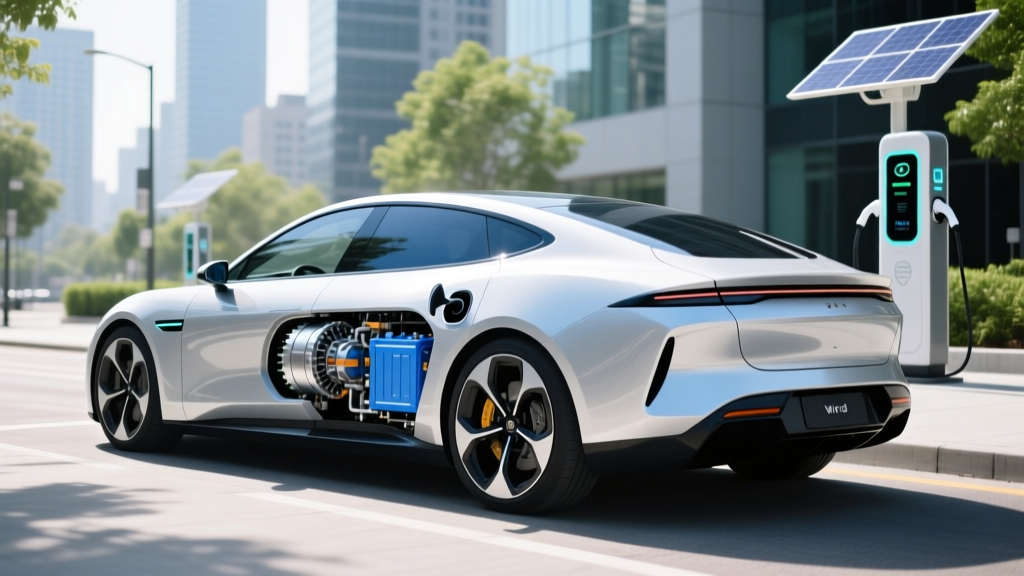
Every battery-electric vehicle (BEV) uses one or more electric motors in place of an internal combustion engine (ICE). The motor draws alternating current (AC) from an inverter, which converts direct current (DC) stored in the high-voltage battery pack. Most modern EVs use one of two motor types:
- Permanent Magnet Synchronous Motor (PMSM): Used in the Tesla Model Y, Hyundai Ioniq 5, and most efficiency-focused EVs. Delivers high torque density and peak efficiency above 95%, but relies on rare-earth magnets (neodymium, dysprosium).
- AC Induction Motor: Found in some Tesla configurations and older EVs. Slightly lower peak efficiency but avoids rare-earth materials and performs well at high RPM.
Unlike a gas engine that needs a multi-speed transmission to stay in its narrow power band, an electric motor delivers maximum torque from 0 RPM and operates efficiently across a wide speed range. Most EVs use a single-speed reduction gear, which eliminates shift shock, reduces mechanical complexity, and cuts maintenance (no transmission fluid changes, no clutch wear).
Motor Configuration Matters
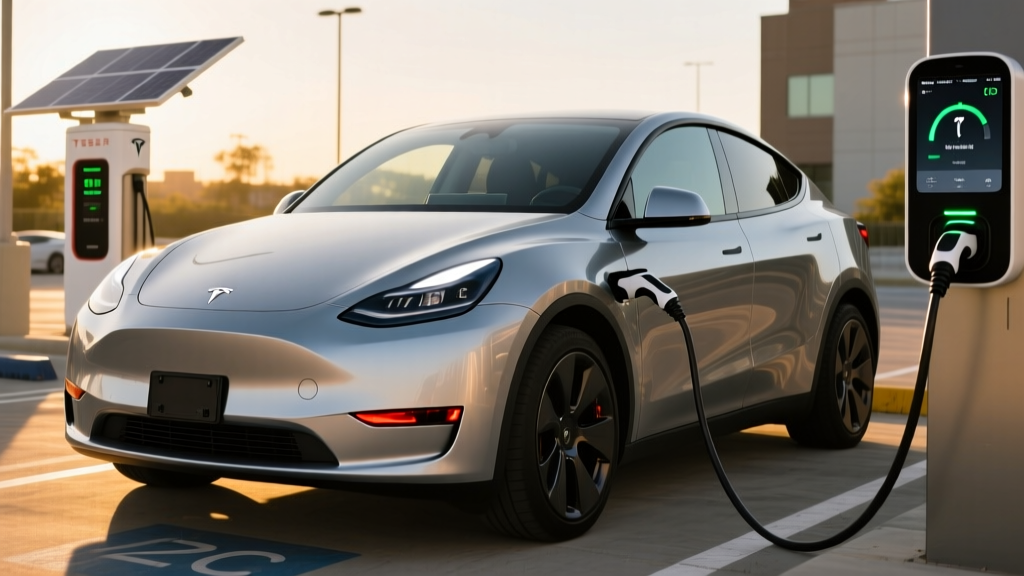
Single-motor EVs (typically front- or rear-wheel drive) prioritize efficiency and cost. Dual-motor setups add a second motor for all-wheel drive (AWD), improving traction and typically adding 40–80 horsepower, but at a 10–20 mile EPA range penalty due to added weight and drivetrain losses. For example, the 2026 Tesla Model Y Long Range RWD posts an EPA 320 miles, while the dual-motor AWD variant drops to EPA 310 miles despite the same 75 kWh (usable) battery.
Electric Motor EV vs Gas Engine: Efficiency and Cost by the Numbers
The efficiency advantage of an electric motor isn't marginal — it's a fundamental physics difference. Here's how that translates to real ownership costs.
| Metric | EV (e.g., Ioniq 6 SE) | Gas (e.g., Honda Accord 1.5T) |
|---|---|---|
| EPA Efficiency | 140 MPGe (25 kWh/100 mi) | 33 MPG combined |
| Energy Cost per Mile | $0.05 (home, $0.14/kWh avg) | $0.14 (gas at $3.30/gal avg) |
| 5-Year Fuel/Energy Cost | $3,750 | $10,500 |
| Maintenance (5 yr) | ~$1,800 | ~$3,600 |
| Purchase Price (MSRP) | $38,650 | $29,990 |
| Federal Tax Credit (§30D) | Up to $7,500* | $0 |
| Effective Purchase Price | ~$31,150* | $29,990 |
| 5-Year Total (purchase + fuel + maint) | ~$36,700* | ~$44,090 |
* §30D credit eligibility depends on MSRP caps ($55,000 sedans), buyer income limits ($150K single / $300K joint), and battery critical-mineral sourcing. Credit may apply at point of sale. Verify current rules at IRS.gov. Source: fueleconomy.gov.
The EV wins on operating cost by a wide margin — roughly $6,750 in fuel savings over five years — but the purchase-price gap and credit eligibility determine whether that advantage shows up in your wallet. If you don't qualify for the full credit (income above cap, vehicle sourcing non-compliant), the break-even point extends from roughly 2.5 years to 4–5 years.
Real-World Range: What the EPA Sticker Doesn't Tell You
EPA range estimates are tested on a dynamometer under controlled conditions. Your actual range depends on speed, temperature, terrain, and driving style. Here's what to expect from a typical 2026 electric motor EV rated at 300 miles EPA:
Real-World Range Reconciliation (300-Mile EPA Baseline)
- City/suburban, 68°F: ~290–310 miles (regen braking recovers energy; EVs often beat EPA in stop-and-go)
- Highway, 70 mph, 68°F: ~250–275 miles (aerodynamic drag dominates; no regen benefit)
- Highway, 75+ mph: ~220–250 miles (drag increases with the square of speed)
- City, 20°F (no heat pump): ~200–230 miles (cabin heating draws 2–5 kW; battery chemistry slows)
- City, 20°F (with heat pump): ~240–265 miles (heat pump cuts heating energy by 40–60%)
- Towing (if rated): ~140–180 miles (trailer drag and weight crush efficiency)
The electric motor itself doesn't lose efficiency in cold weather — it's the battery chemistry (lithium-ion ion transport slows at low temperatures) and cabin climate demands that reduce range. EVs equipped with a heat pump (standard on most 2026 models from Hyundai, Kia, Tesla, and Volkswagen) mitigate this significantly.
Charging an Electric Motor EV: Speeds, Costs, and Home Setup
Understanding charging requires separating power (kW — the rate energy flows) from energy (kWh — the total stored). A 75 kWh battery charged at 11 kW (Level 2) takes roughly 7 hours from empty. The same battery at a 150 kW DC fast charger can reach 80% in about 25–30 minutes, though the charge curve tapers sharply above 80% to protect battery health.
| Level | Power | Connector | Miles Added per Hour | Typical Use |
|---|---|---|---|---|
| Level 1 | 1.4–1.9 kW (120V) | Standard outlet (J1772/NACS) | 3–5 mi/hr | Overnight top-up, PHEVs |
| Level 2 | 7.2–19.2 kW (240V) | J1772 or NACS | 20–55 mi/hr | Home daily charging, workplace |
| DC Fast | 50–350 kW | CCS1, NACS, or CHAdeMO | 150–1,000+ mi/hr (peak) | Road trips, 10–80% in 18–35 min |
Home Charging Installation: Real Costs
Most EV owners do 80%+ of their charging at home on Level 2. Installation costs vary widely based on your electrical panel's capacity and the distance from panel to charger location.
| Component | Low End | High End |
|---|---|---|
| Level 2 charger hardware (40A–48A) | $350 | $750 |
| Electrician labor (240V/50A circuit) | $500 | $1,500 |
| Permit and inspection | $50 | $300 |
| Panel upgrade (if needed: 100A→200A) | $1,500 | $3,500 |
| Total (no panel upgrade) | $900 | $2,550 |
| Total (with panel upgrade) | $2,400 | $6,050 |
Homes built after 2000 typically have 200A panels with spare capacity. Older homes with 100A service may need an upgrade — get a load calculation from a licensed electrician before committing. Some utilities offer rebates of $200–$500 for charger installation; check with your local provider.
What If You Can't Charge at Home?
Roughly 30% of US households lack access to dedicated home charging (apartments, street parking, older condos). Public DC fast charging costs $0.30–$0.50/kWh on networks like Electrify America and EVgo — roughly 3–5× the cost of home electricity. At $0.40/kWh, a 75 kWh fill-up runs $30, narrowing the cost advantage over gasoline significantly. If reliable home or workplace charging isn't available, a plug-in hybrid (PHEV) like the Toyota RAV4 Prime (42 miles electric-only, then 38 MPG on gas) may be a more practical electrified choice.
Common EV Motor and Ownership Misconceptions
| Myth | Fact |
|---|---|
| "EV motors wear out quickly" | Electric motors have one moving part (the rotor) and routinely last 500,000+ miles. It's the battery, not the motor, that degrades. Most 2026 EVs carry 8-year/100,000-mile battery warranties guaranteeing ≥70% capacity retention. |
| "EVs are worse in cold weather" | EV motors perform identically in cold. Range drops 15–30% due to battery chemistry and cabin heating, but preconditioning (warming the battery while plugged in) recovers much of that loss. EVs start instantly in any temperature — no cold cranking. |
| "Charging takes too long" | Home Level 2 charging adds 20–40 miles per hour — plug in overnight and wake up full. DC fast charging reaches 10–80% in 18–30 minutes on 2026 models with peak rates of 200–350 kW. |
| "EVs are bad for the environment because of batteries" | Per EPA lifecycle analyses, EVs produce fewer total emissions than gas cars over their lifetime in every US grid region, even accounting for battery manufacturing. The gap widens as grids add renewables. |
| "Battery replacement costs $20,000+" | Full-pack replacements do cost $8,000–$20,000 depending on capacity, but most EVs never need one. Degradation data from Recurrent Auto shows median battery capacity at 91% after 100,000 miles for 2023–2026 models with modern thermal management. |
First-Time EV Buyer Decision Framework
Choose an Electric Motor EV If:
- You have access to Level 2 home or workplace charging (the single biggest ownership satisfaction factor)
- Your daily driving is under 80 miles round-trip (covers ~95% of US commutes with margin)
- You take road trips 2–4 times per year or fewer (DC fast charging handles these; plan 20–30 min stops every 200–250 miles)
- You live in a moderate or warm climate, OR you choose an EV with a heat pump for cold-climate range preservation
- You can access the §30D tax credit (check income limits, MSRP caps, and battery sourcing at IRS.gov)
Choose a Plug-In Hybrid (PHEV) Instead If:
- You lack reliable home or workplace charging
- You frequently drive 300+ miles in a day through areas with sparse charging infrastructure
- Your budget is under $35,000 and you need maximum flexibility without range planning
- You tow regularly (PHEVs and gas vehicles handle towing range far better than current EVs)
Stick With a Gas or Standard Hybrid (HEV) If:
- You live in an apartment with no charging access and no workplace chargers
- You're in a region with very limited public charging infrastructure (rural Plains states, parts of the Mountain West)
- You need the lowest possible upfront purchase price and can't wait for operating-cost break-even
Frequently Asked Questions
Do electric motors in EVs require maintenance?
Essentially none. Unlike gas engines with hundreds of moving parts, an EV motor has one primary moving component. There's no oil to change, no spark plugs, no timing belts. The only regular maintenance items on most 2026 EVs are tire rotation (EVs are heavier and wear tires 15–20% faster), cabin air filter replacement, brake fluid checks (regen braking extends pad life to 100,000+ miles), and windshield washer fluid. Expect $300–$500 per year in routine maintenance versus $700–$1,000 for a gas vehicle.
What's the difference between kW and kWh in EV specs?
This is the most common source of confusion. kW (kilowatts) measures power — the rate at which energy is delivered or consumed. Think of it like water pressure in a hose. kWh (kilowatt-hours) measures energy — the total amount stored or used over time. Think of it like gallons of water in a tank. A 75 kWh battery stores 75 kilowatt-hours of energy. If you charge it at 11 kW (Level 2), it takes roughly 6.8 hours to fill from empty. If a DC fast charger delivers 150 kW, it fills much faster — but only until the battery reaches ~80%, when the charge rate tapers to protect cell health.
How long will an EV battery last before needing replacement?
Modern EV batteries (NMC and LFP chemistries with active liquid thermal management) are designed to outlast the vehicle. Industry data from Recurrent Auto tracking over 15,000 EVs shows median capacity retention of 88–92% at 100,000 miles for 2022–2026 models. Federal warranty requirements mandate that EV batteries carry at minimum an 8-year/100,000-mile warranty against dropping below 70% of original capacity. LFP (lithium iron phosphate) batteries, used in standard-range Tesla Model 3/Y and some Ford and BYD models, show even slower degradation — often retaining 95%+ capacity at 100,000 miles — but offer slightly lower energy density, meaning less range per pound.
Is an EV actually cheaper to own than a gas car?
Over five years and 75,000 miles, yes — typically by $4,000–$9,000 — if you qualify for the federal tax credit and charge primarily at home. The savings come from lower energy costs ($3,750 vs $10,500 in our sedan comparison above) and reduced maintenance. However, EV insurance premiums run 15–25% higher on average (due to higher repair costs after collisions), and depreciation has been volatile — some 2022–2024 EVs lost 40–50% of value in two years as price cuts and new model introductions reshuffled the market. Buy an EV for the driving experience and daily operating savings, not as a financial instrument.
Can I charge a NACS (Tesla-style) EV on non-Tesla networks, and vice versa?
As of 2026, the industry is converging on NACS (North American Charging Standard). Tesla Superchargers now accept non-Tesla EVs with NACS inlets (Ford, Rivian, GM, and others have transitioned to NACS for 2025–2026 models). CCS1-equipped EVs from earlier model years can use adapters (typically $150–$250) to access Tesla Superchargers. CHAdeMO is effectively discontinued for new vehicles in the US. Before buying, check the specific vehicle's connector type and confirm your local public chargers support it.