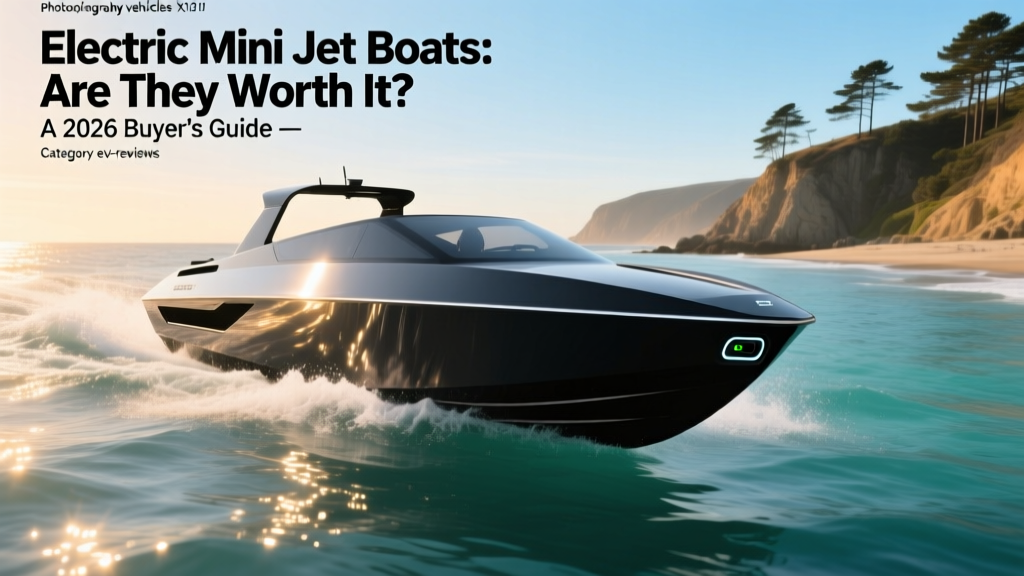
Quick Answer: What Are Electric Mini Jet Boats?
Electric mini jet boats are small, personal watercraft powered by electric motors instead of internal combustion engines. They typically range from 10 to 20 feet in length and use battery packs (usually lithium-ion) to power jet propulsion systems. In 2026, these boats offer 1-4 hours of runtime depending on speed and battery capacity, with recharge times ranging from 2-8 hours on standard shore power.
Unlike their gas counterparts that can run for 6-10 hours on a tank, electric mini jet boats prioritize quiet operation, zero direct emissions, and lower maintenance. However, they come with significant trade-offs: higher upfront costs ($15,000-$45,000), limited range, and longer "refueling" times that require planning.
Electric Mini Jet Boats vs Gas: The Real Numbers
| Metric | Electric Mini Jet Boat | Gas Mini Jet Boat |
|---|---|---|
| Purchase Price | $15,000 - $45,000 | $8,000 - $25,000 |
| Fuel/Energy Cost (per hour) | $2 - $6 (electricity) | $15 - $30 (gasoline) |
| Runtime at Cruising Speed | 1.5 - 3 hours | 6 - 10 hours |
| Refuel/Recharge Time | 2 - 8 hours | 5 - 10 minutes |
| Maintenance (annual) | $200 - $500 | $800 - $1,500 |
| Noise Level | 60-70 dB | 85-95 dB |
| Top Speed | 25-45 mph | 35-60 mph |
The cost advantage of electric becomes clear over time. At 100 hours of annual use, you're looking at $200-$600 in electricity versus $1,500-$3,000 in gas. Add in oil changes, spark plugs, and winterization for gas engines, and the annual savings can reach $1,000-$2,000. However, the 3-5 year payback period means electric only makes financial sense if you plan to keep the boat long-term.
Real-World Range and Performance Expectations
Manufacturers often advertise "up to 4 hours" of runtime, but real-world conditions tell a different story:
- Full throttle: 30-45 minutes (battery drains 3-4x faster)
- Cruising speed (20-25 mph): 1.5-2.5 hours typical
- Eco mode (10-15 mph): 3-4 hours possible
- Cold water/air (below 50°F): 20-30% range reduction
- Headwinds/current: 15-25% range reduction
Battery capacity typically ranges from 10-40 kWh in mini jet boats. A 20 kWh pack might give you 2 hours at moderate speeds, while a 40 kWh system pushes closer to 3-4 hours. Unlike EVs with regenerative braking, boats can't recover energy from deceleration—once it's used, it's gone until you plug in.
Charging Infrastructure: The Hidden Challenge
This is where most first-time electric boat buyers get blindsided. Unlike electric cars with extensive public charging networks, marina charging infrastructure is still developing in 2026.
Home charging options:
- Standard 120V outlet: 8-12 hours for full charge (impractical for most)
- 240V Level 2 (30-50 amp): 3-6 hours typical
- Marina shore power (if available): 2-4 hours on 240V
Installing a 240V outlet at your dock or home can cost $1,500-$4,000 depending on distance from your electrical panel and local permitting requirements. Many marinas don't offer charging yet, and those that do often charge $0.15-$0.30 per kWh—sometimes more expensive than home electricity rates.
Before buying, verify:
- Your marina allows and supports boat charging
- You can install a 240V outlet at home or dock
- Your electrical panel has capacity (may need 200-amp service upgrade: $2,000-$5,000)
Cost Breakdown: 5-Year Ownership
| Cost Category | Electric (5 Years) | Gas (5 Years) |
|---|---|---|
| Purchase Price | $30,000 | $15,000 |
| Charging Infrastructure | $2,500 | $0 |
| Fuel/Energy (100 hrs/yr) | $2,000 | $11,250 |
| Maintenance | $1,750 | $5,000 |
| Insurance (higher for electric) | $4,500 | $3,500 |
| Total 5-Year Cost | $40,750 | $34,750 |
Electric still costs about $6,000 more over 5 years, primarily due to the higher purchase price. The break-even point typically occurs around year 7-8, assuming consistent usage patterns.
Common Misconceptions About Electric Mini Jet Boats
| Myth | Reality |
|---|---|
| "Electric boats are maintenance-free" | You still need hull cleaning, jet pump maintenance, battery management, and winterization in cold climates |
| "I can use it all day like my gas boat" | Expect 2-3 hours of realistic runtime; plan activities around battery life |
| "Batteries need replacement every few years" | Modern marine lithium-ion batteries last 8-12 years with proper care; replacement costs $5,000-$12,000 |
| "It's cheaper to operate" | Lower fuel costs, but higher insurance, charging infrastructure, and purchase price offset savings initially |
| "Any marina can charge it" | Most marinas lack adequate charging infrastructure; verify before buying |
Decision Framework: Should You Buy Electric?
Choose an electric mini jet boat if:
- You primarily boat for 2-3 hours at a time
- You have reliable access to 240V charging at home or marina
- Noise reduction is important (residential areas, fishing, wildlife viewing)
- You plan to keep the boat 7+ years
- You boat in areas with emissions restrictions or "electric-only" lakes
- You value lower maintenance and don't mind the upfront premium
Stick with gas if:
- You regularly boat for 4+ hours or take long trips
- You lack charging infrastructure and can't easily install it
- You need high speeds (40+ mph) for water sports
- You're on a tight budget and need the lowest upfront cost
- You boat in remote areas without charging access
- You want the flexibility to refuel quickly and keep going
Frequently Asked Questions
How long do electric boat batteries last?
Marine-grade lithium-ion batteries typically last 8-12 years or 2,000-3,000 charge cycles before degrading to 80% capacity. Proper maintenance (avoiding full discharge, temperature management) extends life. Replacement costs $5,000-$12,000 depending on capacity.
Can I use my electric boat in saltwater?
Yes, but saltwater accelerates corrosion on electrical components. Look for boats with marine-grade corrosion protection, rinse thoroughly after each use, and budget for more frequent inspections. Some manufacturers void warranties for saltwater use—check before buying.
What happens if I run out of battery on the water?
Unlike gas boats that can be refueled from a jerry can, a dead electric boat requires towing back to shore and charging. Always monitor battery levels and maintain a 20-30% reserve. Some models offer auxiliary gas generators as range extenders ($2,000-$4,000 add-on).
Are there any tax incentives for electric boats?
As of 2026, federal EV tax credits (§30D) apply only to road vehicles, not boats. Some states offer marine electrification incentives—check with your state's environmental or energy agency. Commercial operators may qualify for different programs.
How does cold weather affect electric boat performance?
Cold water and air temperatures (below 50°F) reduce battery efficiency by 20-30%. Lithium-ion batteries also can't charge below freezing without damage. If you boat in cold climates, plan for reduced runtime and store/charge the boat in heated spaces when possible.
Electric mini jet boats represent a viable option for specific use cases—short trips, noise-sensitive environments, and owners with charging access. But they're not a drop-in replacement for gas boats yet. Match the technology to your actual boating patterns, not aspirational ones.