Quick Answer: Electric mini excavators (1–6 metric tons) in 2026 typically pack 20–80 kWh of NMC or LFP battery, deliver 6–10 hours of mixed-duty operation per charge, and cost $40,000–$110,000 before incentives. Compared to diesel equivalents, they save roughly $8–$14 per operating hour on fuel and maintenance, with a payback period of 2–4 years for machines used 500+ hours annually. Charging takes 4–10 hours on Level 2 (240V/480V), making overnight depot charging the standard workflow.
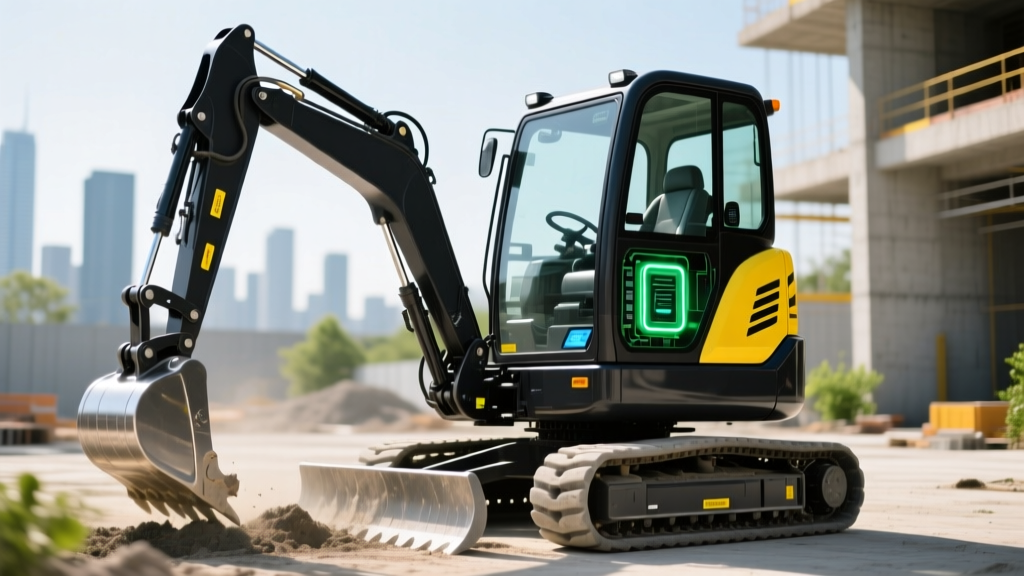
Compact electric excavators have moved from trade-show curiosities to viable jobsite tools. Manufacturers like Volvo CE, Caterpillar, Kubota, and Bobcat now ship battery-electric mini excavators with real production hours logged across utility work, landscaping, indoor demolition, and urban infrastructure projects. If you're evaluating whether to replace a diesel compact with an electric model—or spec one for a new fleet—the math hinges on your duty cycle, charging infrastructure, and local incentive landscape.
Electric Mini Excavator Specs: What's Available in 2026
Here's a snapshot of representative models on the market or announced for delivery. Specs reflect manufacturer data and field reports; battery chemistry and usable capacity vary by OEM.
| Model | Operating Weight | Battery (usable kWh) | Chemistry | Charge Time (0–100%) | Typical Runtime | Approx. MSRP |
|---|---|---|---|---|---|---|
| Volvo ECR25 Electric | ~5,700 lbs (2.6 t) | 48 kWh | NMC | ~5 hrs (Level 2, 240V) | 6–8 hrs mixed | $75,000–$85,000 |
| Caterpillar 301.9 Electric (announced) | ~4,300 lbs (1.9 t) | 32 kWh (est.) | LFP | ~4 hrs (Level 2) | 5–7 hrs mixed | $55,000–$65,000 (est.) |
| Kubota U17E | ~3,900 lbs (1.8 t) | 24 kWh | LFP | ~3.5 hrs (Level 2) | 4–6 hrs mixed | $45,000–$52,000 |
| Bobcat E32 Electric | ~7,200 lbs (3.3 t) | 60 kWh | NMC | ~7 hrs (Level 2, 480V) | 7–10 hrs mixed | $90,000–$105,000 |
Key takeaway: Battery capacity (kWh) directly determines your shift length. A 48 kWh pack under moderate digging and tramming loads averages 6–8 hours; heavier continuous trenching in clay can cut that to 4–5 hours. Always spec battery against your worst-case duty cycle, not your average day.
Electric vs. Diesel Mini Excavator: Operating Cost Breakdown
The purchase premium for electric is real—typically 40–80% over a comparable diesel compact. But total cost of ownership (TCO) tells a different story once you factor in fuel, fluids, and downtime.
| Cost Factor | Diesel Mini Excavator (3.5t) | Electric Mini Excavator (3.5t) |
|---|---|---|
| Purchase Price | $50,000–$60,000 | $80,000–$95,000 |
| Fuel/Energy Cost per Hour | $6–$10 (diesel @ $4.20/gal) | $1.50–$3.50 (electric @ $0.14/kWh) |
| Maintenance per Hour | $2.50–$4.00 (oil, filters, DEF, coolant) | $0.50–$1.00 (grease, hydraulic fluid checks) |
| Estimated Annual Cost (800 hrs/yr) | $8,800–$12,800 (fuel + maint.) | $1,600–$3,600 (energy + maint.) |
| 5-Year TCO (purchase + operating) | $94,000–$124,000 | $88,000–$113,000 |
At 800 hours per year, the electric machine saves roughly $7,200–$9,200 annually in operating costs. The purchase premium pays back in 2.5–4 years depending on local electricity rates and diesel prices. Below 300 hours per year, the payback stretches past 6 years and diesel may remain the better financial choice.
Source: Operating cost modeling aligns with data from the Volvo CE Electric Machines program and independent fleet TCO analyses.
Charging Infrastructure: What Jobsite Power Do You Need?
Unlike passenger EVs with established public networks, electric construction equipment relies almost entirely on depot or jobsite charging. Here's what that requires:
| Charging Level | Power (kW) | Voltage/Phase | Time (20–80% SoC) | Infrastructure Needed |
|---|---|---|---|---|
| Level 1 (120V) | 1.4–1.9 kW | 120V / single | 20–40+ hours | Standard outlet; impractical for daily use |
| Level 2 (240V) | 7.2–19.2 kW | 240V / single or split | 3–8 hours | Dedicated circuit, NEMA 14-50 or hardwired EVSE |
| Level 2 (480V) | 15–25 kW | 480V / 3-phase | 2–5 hours | Industrial service; common on commercial sites |
| DC Fast (rare) | 30–50 kW | 480V+ / 3-phase | 1–2 hours | Dedicated DC cabinet; $15,000–$35,000 install |
Practical reality: Most fleet operators install a 240V or 480V Level 2 station at the equipment yard. A 480V three-phase drop costs $3,000–$12,000 to install depending on panel proximity and trenching. For remote jobsites without grid access, some OEMs offer portable generator-charger units (diesel or battery-buffered) as a stopgap—though this partially defeats the emissions benefit.
If your yard already has 480V three-phase service for welders or other shop equipment, adding an excavator charger is a relatively minor electrical job. If you're on single-phase residential or light-commercial service, expect a panel upgrade ($2,000–$5,000) or a utility service upgrade ($5,000–$15,000+).
Real-World Ownership: Climate, Duty Cycle, and Limitations
Electric excavators perform differently than diesel in ways that matter on the jobsite:
Cold weather: Lithium-ion batteries lose 15–30% of usable capacity below 20°F (–7°C). A 48 kWh pack that delivers 7 hours in July may give you 5 hours in January. Some models include battery preconditioning (resistive or heat-pump warming) to mitigate this, but it draws from the pack itself. If you operate in northern climates, spec 20–30% more battery capacity than your summer duty cycle requires.
Continuous heavy digging: Sustained high-load trenching in rock or heavy clay generates significant heat in the battery and hydraulic system. Most machines derate power to protect the pack, which slows cycle times. For production trenching (8+ hours continuous heavy load), diesel still holds an edge in 2026.
Noise and emissions advantages: Electric excavators produce near-zero noise at idle and dramatically less under load—typically 65–75 dB(A) vs. 85–95 dB(A) for diesel. This makes them ideal for indoor demolition, hospital/school campus work, night shifts in residential areas, and any site with noise ordinances. Zero tailpipe emissions also eliminate ventilation requirements for enclosed spaces like tunnels or basements.
Regenerative hydraulics: Several 2026 models capture energy during boom-lower and swing-deceleration, recapturing 5–12% of total energy consumption. This extends runtime modestly but is most impactful in repetitive dig-dump-return cycles.
Incentives, Tax Credits, and Grant Funding
Unlike passenger vehicles, electric construction equipment does not qualify for the IRS §30D clean vehicle credit. However, other funding paths exist:
- IRS §179 Deduction: Electric equipment qualifies for full expensing under §179 (up to $1,220,000 for 2026), letting you deduct the entire purchase price in Year 1 rather than depreciating over 7 years.
- Bonus Depreciation: 60% bonus depreciation applies to qualified equipment placed in service in 2026, stackable with §179 in some configurations. Consult a tax professional for your situation.
- State/Utility Incentives: Programs vary widely. California's CORE (Clean Off-Road Equipment Voucher Incentive Project) has historically offered $20,000–$50,000 vouchers per unit. Check your state air-quality district and local utility for current commercial-equipment rebates.
- EPA Diesel Emissions Reduction Act (DERA) Grants: Federal funding occasionally covers incremental cost of replacing diesel off-road equipment with zero-emission alternatives.
Source: Current depreciation limits per IRS 2026 inflation adjustments. State incentive availability varies; confirm with your local air-quality management district.
Decision Framework: Should You Go Electric?
Choose an electric mini excavator if:
- You operate 500+ hours per year (payback under 4 years)
- Your work includes indoor, noise-restricted, or emissions-sensitive sites
- You have access to 240V or 480V charging at your depot
- Your typical shift is under 8 hours of mixed-duty work
- You want to reduce maintenance downtime and simplify fleet service
- State/utility incentives cover 20%+ of the purchase premium
Stick with diesel (or wait) if:
- You run under 300 hours per year (payback exceeds 6 years)
- Your work is primarily continuous heavy-load production trenching
- You operate in extreme cold (below 0°F) without heated storage
- You frequently mobilize to remote sites without grid power
- You need immediate full-shift runtime with no charging break flexibility
Common Misconceptions About Electric Excavators
| Myth | Fact |
|---|---|
| "Electric excavators can't match diesel digging force." | Breakout force is determined by hydraulic system pressure and cylinder geometry, not the prime mover. Most electric models match or exceed their diesel counterparts' bucket and arm forces. |
| "The battery will need replacing every 3 years." | Industrial NMC and LFP packs are warrantied for 4,000–6,000 charge cycles (roughly 8–15 years at one cycle/day). Capacity retention at end-of-warranty is typically 70–80%. |
| "Charging takes too long for a workday." | Overnight depot charging (8–10 hours on Level 2) fully replenishes the pack. Most operators charge between shifts, not during them. |
| "There's no resale value." | Used electric equipment resale is still developing, but early data from Volvo ECR25 Electric auctions shows 55–65% residual value at 3 years, comparable to diesel equivalents. |
Frequently Asked Questions
How long does an electric mini excavator battery last before replacement?
Most OEMs warrant traction batteries for 5–7 years or 4,000–6,000 full charge cycles, whichever comes first. At one charge cycle per workday (250 days/year), that's 16–24 years of cycle life. In practice, expect 80% capacity retention at year 8–10. Replacement cost for a 48 kWh pack runs $12,000–$18,000 in 2026, though prices continue declining.
Can I charge an electric excavator from a standard jobsite generator?
Technically yes, but it's inefficient and expensive. A 20 kW diesel generator burns roughly 1.5 gallons/hour to deliver ~16 kW of usable charging power—meaning you're spending $6+ per "charge hour" to run a machine designed to save on fuel. Grid charging at $0.14/kWh is 4–5x cheaper per operating hour.
Do electric mini excavators qualify for the $7,500 federal EV tax credit?
No. The IRS §30D Clean Vehicle Credit applies only to on-road passenger vehicles under 14,000 lbs GVWR. Off-road construction equipment is excluded. However, §179 expensing and bonus depreciation provide significant tax benefits—often exceeding $7,500 in Year 1 value for business owners.
What happens if the battery runs out mid-shift?
Unlike a diesel running out of fuel (which you can fix with a jerry can in 5 minutes), a depleted battery requires hours of charging. Operators manage this by monitoring state of charge (SoC) and scheduling a 30–60 minute midday top-up during lunch or by swapping to a second machine. Some fleet operators keep a mobile battery-buffer charger on-site for emergencies.
Are electric mini excavators suitable for rental fleets?
Increasingly yes, but with caveats. Rental customers need education on charge management, and the machine must return to a yard with charging infrastructure. Several national rental companies began adding electric compacts in 2025–2026, primarily for urban and indoor-demolition customers who specifically request zero-emission equipment.