Should You Buy an Electric Mini Cooper in 2026?
Quick verdict: The 2026 Mini Cooper Electric (Cooper SE) delivers an EPA-estimated 146 miles of range from its 40.7 kWh (usable) battery, starting around $30,900 before incentives. It's best suited for city-dwelling commuters with home Level 2 charging who drive under 100 miles daily. For road-trippers or apartment dwellers without charging access, the gas-powered Cooper S or a longer-range EV will serve you better.
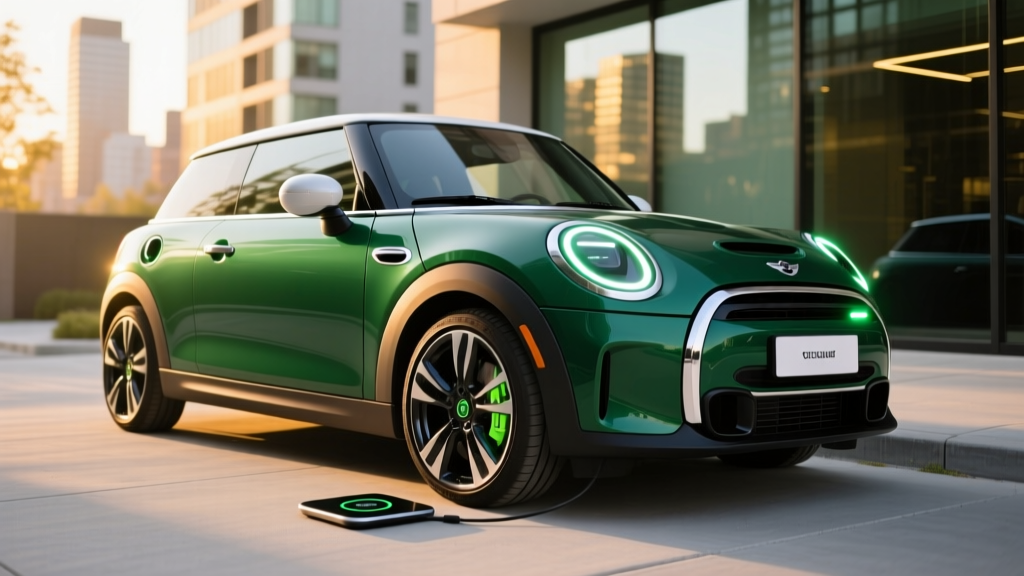
Mini's electric lineup has matured significantly since the original Cooper SE's disappointing 114-mile range. The current-generation Electric Mini Coopers — available in both the 2-door hardtop and the slightly larger 4-door variant — offer meaningfully improved batteries, faster charging, and updated tech. But the fundamental question remains: is the range enough for your life?
This guide breaks down the exact numbers you need to decide, from real-world range expectations to five-year ownership costs, comparing the electric Mini against its gas sibling and the broader subcompact EV market.
2026 Electric Mini Cooper Specs: Range, Battery & Charging
Mini offers the Cooper Electric in two primary trims for the US market: the Classic and the Signature. Both share the same powertrain hardware, with differences primarily in interior materials, driver-assistance features, and infotainment upgrades.
| Specification | Cooper Electric Classic | Cooper Electric Signature |
|---|---|---|
| EPA Range | 146 miles | 146 miles |
| Battery (usable) | 40.7 kWh, NMC | 40.7 kWh, NMC |
| Motor Output | 181 hp / 214 lb-ft | 181 hp / 214 lb-ft |
| 0–60 mph | 6.7 seconds | 6.7 seconds |
| Max DC Fast Charge | 95 kW (CCS) | 95 kW (CCS) |
| 10–80% DCFC Time | ~28 minutes | ~28 minutes |
| Level 2 (240V) Rate | 11 kW | 11 kW |
| Level 2 Full Charge | ~4.5 hours | ~4.5 hours |
| Combined MPGe | 114 MPGe | 110 MPGe |
| EPA Efficiency | 29 kWh/100mi | 30 kWh/100mi |
| Base MSRP | $30,900 | $34,050 |
| Battery Warranty | 8 yr / 100,000 mi | 8 yr / 100,000 mi |
Real-world range reality: The EPA 146-mile figure assumes mixed driving. Expect 115–130 miles on a full charge during sustained highway driving at 70+ mph, and 100–115 miles in freezing temperatures (below 32°F) where battery heating and cabin climate draw significant energy. City driving with regenerative braking can push range to 155+ miles. Plan conservatively: treat 120 miles as your reliable daily budget.
The 95 kW peak DC fast-charging rate is competitive for the subcompact segment, but note the charge curve: peak rate holds roughly from 10% to 50% State of Charge (SoC), then tapers progressively. The 28-minute 10–80% figure reflects this taper. Charging from 80% to 100% on DC adds another 25–30 minutes — standard behavior for NMC lithium-ion chemistry, which throttles current near full capacity to protect cell longevity.
Source: EPA Fuel Economy — Mini Cooper Electric
Electric Mini Cooper vs. Gas Mini Cooper: Cost & Driving Comparison
The gas-powered Mini Cooper S starts around $29,900 and delivers 228 hp from its 2.0L turbo four-cylinder, with EPA ratings of 28 city / 38 highway / 32 combined MPG. On paper, the gas model is cheaper to buy and has unlimited range via 5-minute fill-ups. But the five-year cost picture tells a different story.
| Factor | 2026 Cooper Electric (Classic) | 2026 Cooper S (Gas, 2-Door) |
|---|---|---|
| Base MSRP | $30,900 | $29,900 |
| Est. Federal Tax Credit (§30D) | Up to $7,500* | $0 |
| Effective Purchase Price | ~$23,400* | $29,900 |
| Fuel/Energy Cost (5 yr, 60k mi) | ~$2,700 (home L2, $0.14/kWh) | ~$7,500 ($3.50/gal, 32 MPG) |
| Maintenance (5 yr) | ~$1,200 | ~$3,800 |
| Insurance (5 yr est.) | ~$9,500 | ~$8,200 |
| 5-Year Total Cost (excl. depreciation) | ~$36,800 | ~$49,400 |
*Federal §30D tax credit eligibility depends on buyer income limits (AGI ≤ $150k single / $300k joint), vehicle MSRP cap ($55,000 for sedans/hatchbacks), battery critical-mineral sourcing, and North American final assembly requirements. The Mini Cooper Electric's assembly location and battery sourcing may affect eligibility — verify current-year rules at IRS.gov and consider point-of-sale transfer at the dealer. State and local incentives vary by jurisdiction.
The electric Mini's advantage is decisive in fuel and maintenance savings — roughly $4,800 and $2,600 respectively over five years. EVs eliminate oil changes, spark plugs, transmission fluid, and exhaust system repairs. Brake pad life extends significantly thanks to regenerative braking. Insurance runs higher on the electric variant due to elevated repair costs for battery-adjacent components, though the gap has narrowed as EV volumes increase.
Real-World Ownership: What First-Time EV Buyers Must Know
Owning an electric Mini Cooper differs fundamentally from a gas car in three daily ways: how you refuel, how weather affects range, and how you plan longer trips.
Home Charging Is Non-Negotiable for Convenience
The Cooper Electric's 146-mile range is manageable if you charge at home overnight. A Level 2 home charger (240V, 40-amp circuit delivering ~9.6 kW) adds roughly 35 miles of range per hour of charging and fully replenishes the battery in about 4.5 hours. Most owners plug in each evening and wake to a full battery — effectively never visiting a "gas station."
| Home Charging Item | Estimated Cost Range |
|---|---|
| Level 2 EVSE hardware (e.g., ChargePoint Home Flex, Emporia) | $400 – $700 |
| Electrician: 240V/50A circuit run (up to 40 ft from panel) | $800 – $2,000 |
| Electrical panel upgrade (if needed, 100A → 200A) | $1,500 – $3,500 |
| Permit & inspection | $100 – $300 |
| Total (typical, no panel upgrade) | $1,300 – $3,000 |
If you live in an apartment or condo without dedicated parking and charging access, relying on public DC fast charging at $0.35–$0.50/kWh erases most of the electric Mini's fuel-cost advantage and adds significant time inconvenience. Confirm your home or workplace charging situation before purchasing.
Cold Weather Cuts Range — Plan for It
Lithium-ion batteries lose efficiency in cold temperatures, and cabin heating draws heavily from the traction battery. In sustained sub-freezing conditions, expect 20–30% range reduction. A 146-mile EPA range becomes roughly 100–115 real-world winter miles. The Cooper Electric includes a heat pump (standard on Signature, available on Classic), which reduces heating energy consumption by ~30% compared to resistive heating — a meaningful advantage in cold climates.
Preconditioning the battery while plugged in (using grid power to warm the battery and cabin before departure) preserves range and improves regenerative braking performance. Use the Mini app to schedule preconditioning for your commute time.
Public Charging for Road Trips
At 95 kW peak DC charging, the Cooper Electric adds roughly 80 miles of range in a 20-minute stop at a compatible fast charger. Networks like Electrify America, EVgo, and ChargePoint offer CCS connectors the Mini requires. Mini's built-in navigation includes route planning with charging stops, but the limited range means a 300-mile trip requires two charging stops versus one in a 300+ mile EV. For frequent road-trippers, this is a genuine limitation.
Common Misconceptions About the Electric Mini Cooper
| Myth | Fact |
|---|---|
| "146 miles isn't enough range for anyone." | The average American drives ~37 miles per day (FHWA data). 146 miles covers 95%+ of daily driving with home charging. The limitation is road trips, not daily use. |
| "The battery will need expensive replacement in a few years." | Mini's battery warranty covers 8 years/100,000 miles with a capacity-retention threshold of 70%. NMC batteries in modern thermal-managed packs typically retain 85–90% capacity at 100,000 miles based on industry degradation data. |
| "EVs are worse in the cold — they barely work." | EVs start instantly in any temperature (no cold-cranking issues). Range drops 20–30% in freezing weather, but preconditioning and heat pumps mitigate this. Winter tires matter more than powertrain type for traction. |
| "Charging takes too long." | Home Level 2 charging happens while you sleep — zero active waiting. DC fast charging adds ~80 miles in 20 minutes, comparable to a sit-down meal stop on a road trip. |
| "The electric Mini is slower than the gas version." | The Cooper S hits 0–60 in 6.1 seconds vs the Electric's 6.7 seconds — a marginal difference. The Electric's instant 214 lb-ft of torque makes it feel quicker in city acceleration (0–30 mph) where most driving happens. |
Who Should Buy the Electric Mini Cooper?
Choose the Electric Mini Cooper if:
- You have home Level 2 charging access (garage, driveway, or dedicated spot)
- Your daily round-trip commute is under 100 miles
- You drive primarily in urban or suburban environments
- You qualify for the §30D federal tax credit (bringing effective price below $25,000)
- Road trips of 200+ miles happen fewer than 5 times per year
- You value instant torque, quiet operation, and zero tailpipe emissions in city driving
Choose the gas Mini Cooper S (or a longer-range EV) if:
- You lack reliable home or workplace charging access
- Your daily driving regularly exceeds 110 miles
- You take frequent road trips of 250+ miles and don't want to plan charging stops
- You live in an extreme-cold climate (sustained sub-zero °F) where range loss compounds
- You don't qualify for federal or state EV incentives, making the price premium harder to justify
For buyers who want the Mini aesthetic with more range flexibility, consider the Mini Cooper S as a conventional alternative, or look at the Hyundai Kona Electric (261 miles EPA, ~$33,000) or Chevrolet Bolt EV (259 miles, ~$27,000) as subcompact EVs with substantially more range at similar price points — though neither matches the Mini's driving dynamics or brand cachet.
Federal Tax Credit & Incentive Eligibility
The §30D federal clean vehicle credit can provide up to $7,500 for eligible buyers of the Cooper Electric, but qualification hinges on multiple requirements that change periodically:
- Buyer income cap: Modified AGI ≤ $150,000 (single) or ≤ $300,000 (married filing jointly)
- Vehicle MSRP cap: ≤ $55,000 for hatchbacks/sedans (both Mini trims qualify)
- Battery sourcing: Critical minerals and battery components must meet phased-in percentage thresholds from US or FTA-partner countries
- Final assembly: Must occur in North America — verify the specific model year's assembly location, as Mini has historically produced Cooper models in the UK (Oxford plant). This is the most common disqualifier for Mini EVs.
- Point-of-sale transfer: As of 2024+, eligible buyers can transfer the credit to the dealer at purchase, reducing the purchase price directly rather than waiting for a tax refund
Critical caveat: Mini Cooper Electric models assembled outside North America will not qualify for §30D regardless of other factors. Verify the VIN's country of origin with the dealer and cross-reference with the IRS's list of eligible vehicles before committing. State-level incentives (California's CVRP, Colorado's EV tax credit, etc.) may still apply independently.
Frequently Asked Questions
How long does the Mini Cooper Electric battery last?
Mini warranties the high-voltage battery for 8 years or 100,000 miles, guaranteeing it will retain at least 70% of original capacity. Real-world data from similar NMC packs in thermally managed systems suggests 85–92% capacity retention at 100,000 miles is typical. Battery replacement outside warranty, if ever needed, currently ranges from $8,000 to $14,000 depending on labor and cell availability.
Can I use a Tesla Supercharger with the Mini Cooper Electric?
Not directly. The Cooper Electric uses a CCS1 connector, while Tesla Superchargers use the NACS (North American Charging Standard) connector. Tesla has begun opening select Superchargers to non-Tesla EVs via a built-in adapter or through the Tesla app at Magic Dock-equipped stations, but coverage remains limited. A CCS-to-NACS adapter is available from some third-party manufacturers, but verify compatibility before purchasing.
Is the electric Mini Cooper good in snow?
Electric vehicles have a low center of gravity (battery pack under the floor) and instant torque control, which aids traction. However, the Cooper Electric is front-wheel drive only — all-wheel drive is not available. Winter tires are strongly recommended for snow-belt climates. Expect 20–30% range reduction in sustained freezing temperatures; preconditioning while plugged in helps preserve range.
What does it cost to charge the Mini Cooper Electric at home?
At the US average residential electricity rate of ~$0.16/kWh (EIA 2025 data), a full 40.7 kWh charge costs approximately $6.50 and delivers roughly 146 miles — about $0.045 per mile. Compare this to the gas Cooper S at 32 MPG combined with $3.50/gallon fuel: roughly $0.109 per mile. Home charging saves about $6.40 per 100 miles driven, or ~$3,800 over 60,000 miles.
Does the Mini Cooper Electric qualify for the $7,500 tax credit?
It depends primarily on final assembly location and battery sourcing requirements under current §30D rules. If the vehicle is assembled outside North America (Mini's Oxford, UK plant has been the traditional production site), it will not qualify regardless of other factors. Always verify the specific VIN with your dealer and check the current eligible vehicle list at fueleconomy.gov before purchasing.
Sources: EPA Fuel Economy, IRS Clean Vehicle Credits, Mini USA official specifications.