Quick Verdict: Who Should Buy the Electric MINI Cooper?
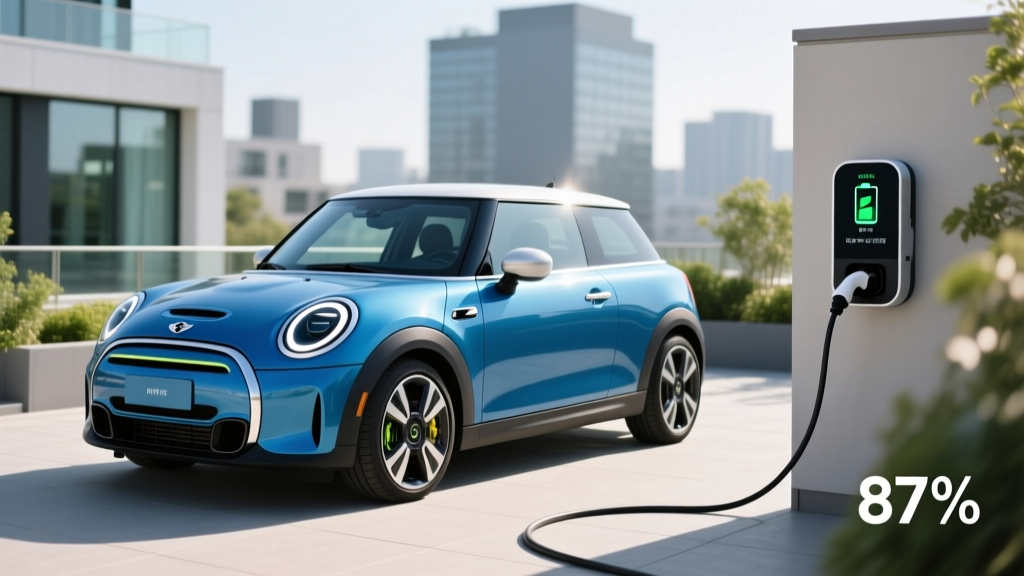
The 2026 Electric MINI Cooper is a city-focused EV with an EPA-estimated 178 miles of range (SE trim, 54.2 kWh battery) and a starting MSRP around $30,900. It's best for urban drivers with home Level 2 charging who want premium styling, agile handling, and daily commutes under 100 miles round-trip. It does not qualify for the full $7,500 federal §30D tax credit due to battery sourcing rules as of 2026, though a $3,750 partial credit may apply depending on your income and the specific VIN's critical-mineral compliance. If you need 250+ miles of range, frequent road-trip capability, or live in a charging desert, look at the Hyundai Kona Electric or Chevrolet Equinox EV instead.
Range and Battery: What the EPA Sticker Doesn't Tell You
The 2026 Electric MINI Cooper comes in two battery configurations. The base Cooper E uses a 40.7 kWh (usable) lithium-ion NMC pack good for an EPA-estimated 150 miles. The Cooper SE steps up to a 54.2 kWh usable battery delivering an EPA-estimated 178 miles. Both use a 400-volt architecture with NMC (nickel manganese cobalt) chemistry, which favors energy density over the ultra-long cycle life of LFP packs found in competitors like the base Tesla Model 3.
Real-World Range Expectations
EPA Sticker: 178 miles (Cooper SE)
Highway driving (70 mph, mild weather): Expect ~145–155 miles. The MINI's boxy shape and short wheelbase hurt aerodynamic efficiency at speed.
Cold weather (below 32°F): Plan for 115–130 miles. The Cooper SE does not include a standard heat pump in all trims, meaning cabin heating draws directly from the traction battery, compounding range loss.
City driving with regen: 170–180 miles is achievable thanks to aggressive regenerative braking recapturing energy in stop-and-go traffic.
| Spec | Cooper E | Cooper SE |
|---|---|---|
| Battery (usable) | 40.7 kWh (NMC) | 54.2 kWh (NMC) |
| EPA Range | 150 mi | 178 mi |
| Combined MPGe | 110 MPGe | 108 MPGe |
| kWh/100 mi | 30 | 31 |
| Horsepower | 181 hp | 215 hp |
| 0–60 mph | 7.3 sec | 6.7 sec |
Source: fueleconomy.gov and MINI USA official specifications.
Charging Speeds and Infrastructure Reality
The Cooper SE supports DC fast charging at a peak rate of 95 kW via a CCS1 connector (a NACS adapter is available through MINI dealers for Tesla Supercharger access). At peak rate, a 10–80% charge takes approximately 28 minutes. However, the charge curve tapers significantly above 60% SoC — expect the final 20% (60–80%) to take nearly as long as the first 50%. This is a modest charging speed compared to the Hyundai Ioniq 5's 240 kW peak or even the Chevrolet Bolt EUV's 55 kW, placing the MINI squarely in the "adequate for city use, painful for road trips" category.
| Level | Power | Time | Miles Added per Hour |
|---|---|---|---|
| Level 1 (120V household) | 1.4 kW | ~38 hours (0–100%) | ~4 mi/hr |
| Level 2 (240V, 32A home) | 7.4 kW | ~7.5 hours (0–100%) | ~22 mi/hr |
| Level 2 (240V, 48A) | 11 kW | ~5 hours (0–100%) | ~34 mi/hr |
| DC Fast (peak 95 kW) | 95 kW peak | ~28 min (10–80%) | N/A |
Home charging reality: If you can install a Level 2 charger (the most common scenario for EV owners), overnight charging fully replenishes the battery. Installation costs typically run $800–$2,200 depending on whether your electrical panel needs an upgrade from 100A to 200A service. If you rely solely on Level 1 (standard 120V outlet), you'll add only about 30 miles overnight — enough for short commutes but insufficient for heavier use.
Cost Breakdown: Electric MINI vs Gas MINI Cooper
The purchase decision hinges on total cost of ownership, not just sticker price. Here's how the 2026 Electric Cooper SE compares to the gas-powered 2026 MINI Cooper S (2.0L turbo, 201 hp) over five years and 60,000 miles.
| Category | Electric Cooper SE | Gas Cooper S |
|---|---|---|
| Base MSRP | $34,900 | $31,400 |
| Federal Tax Credit (§30D)* | –$3,750 (partial, sourcing-dependent) | $0 |
| Effective Purchase Price | $31,150 | $31,400 |
| Energy/Fuel (60k mi)** | $3,960 (home L2, $0.13/kWh) | $7,500 (30 MPG, $3.75/gal) |
| Maintenance (5 yr) | $1,800 | $4,200 |
| Insurance (5 yr avg) | $9,500 | $8,200 |
| 5-Year Total Cost | $46,410 | $51,300 |
*Federal tax credit eligibility depends on income caps ($150k single / $300k joint), MSRP cap ($55k for sedans), and battery critical-mineral sourcing. Verify your VIN's eligibility at IRS.gov §30D before purchase. Point-of-sale transfer is available through participating dealers.
**Energy costs assume 85% home Level 2 charging at the US average residential rate of $0.13/kWh and 15% public DC fast charging at $0.35/kWh. Gas costs assume the national average of $3.75/gallon. Adjust for your local rates.
The electric MINI wins on five-year cost by roughly $4,900, driven primarily by fuel and maintenance savings (no oil changes, fewer brake replacements due to regen). However, insurance premiums run 12–18% higher for the EV variant, and depreciation data for the electric MINI is still limited compared to the well-established gas model's resale curve.
Ownership Considerations Most Reviews Skip
Home Charging Access Is Non-Negotiable
With only 178 miles of EPA range and a 95 kW peak charge rate, the Electric MINI Cooper is punishing without reliable home Level 2 charging. Public DC fast charging at 95 kW means a 28-minute stop adds roughly 110 miles — acceptable for the occasional trip, but not a daily routine you'd enjoy. If you live in an apartment without charging access or street-park without a dedicated outlet, this car will frustrate you. Consider a PHEV like the MINI Countryman SE ALL4 (plug-in hybrid, ~25 miles electric-only) as a bridge.
Cold Climate Buyers: Heat Pump Matters
The Cooper SE's available heat pump (standard on Signature and above trims for 2026) reduces winter range loss by roughly 15–20% compared to resistive heating. If you live in the upper Midwest or Northeast, confirm the heat pump is included in your trim — base models without it will see sharper winter range drops.
Tire Wear and Maintenance Surprises
EVs are heavier (the Cooper SE weighs approximately 3,500 lbs vs ~3,000 lbs for the gas Cooper) and deliver instant torque, which accelerates tire wear. Budget $600–$900 every 25,000–30,000 miles for a set of EV-rated tires. On the positive side, brake pads often last 80,000+ miles thanks to regenerative braking handling most deceleration.
Common Misconceptions About the Electric MINI
| Myth | Fact |
|---|---|
| "It gets the full $7,500 tax credit." | As of 2026, the Electric MINI qualifies for a partial credit ($3,750) because its battery cells do not fully meet the critical-mineral sourcing requirements under §30D. Always verify per VIN. |
| "178 miles of range is enough for everyone." | 178 miles EPA drops to ~130 in winter and ~150 on the highway. It works for city commuters with home charging; it does not work for frequent 200+ mile trips without careful planning. |
| "I can charge it on any Tesla Supercharger." | Only with the MINI-approved NACS adapter, and only at V2/V3 Superchargers that support CCS-protocol vehicles. Not all Supercharger stalls are enabled for non-Tesla access. |
| "EVs need no maintenance." | No oil changes, but tire rotations, cabin air filters, brake fluid checks, coolant top-offs, and 12V battery replacements (yes, EVs still have a 12V battery) are all required. |
Decision Framework: Should You Buy the Electric MINI Cooper?
Choose the Electric MINI Cooper SE if:
- Your daily round-trip commute is under 80 miles
- You have access to Level 2 home charging (garage or driveway with 240V)
- You live in a mild-to-moderate climate (rarely below 20°F)
- You value styling, driving dynamics, and urban maneuverability over range
- You rarely drive more than 150 miles without an overnight stop
Look elsewhere if:
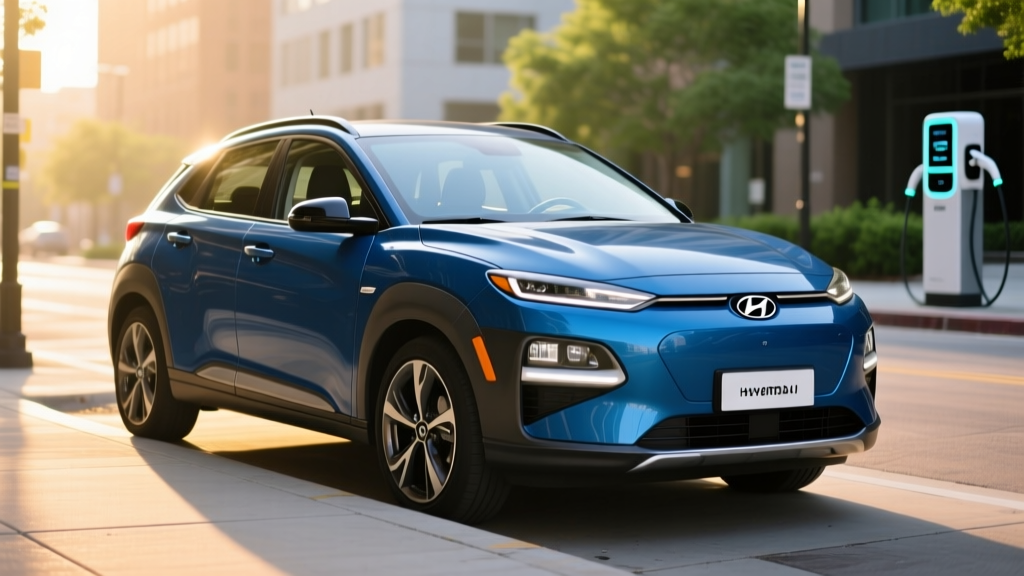
- You need 250+ miles of real-world range → consider the Hyundai Kona Electric (261 mi EPA) or Chevrolet Equinox EV (319 mi EPA)
- You lack home charging and rely on public infrastructure → the 95 kW peak charge rate makes road-trip stops slow
- You live in extreme cold (regularly below 10°F) → range drops below 120 miles without a robust heat pump
- You need a family vehicle with rear-seat space and cargo room → the MINI's 2-door layout and 8.7 cu-ft cargo area are limiting
- You want the full $7,500 tax credit → look at models with compliant battery sourcing (certain Hyundai, VW, and domestic-built options)
Battery Warranty and Longevity
MINI covers the high-voltage battery with an 8-year/100,000-mile warranty guaranteeing at least 70% capacity retention. NMC chemistry in this application typically shows 8–12% degradation over the first 100,000 miles based on data from BMW Group's broader EV fleet (the MINI shares its platform with the BMW iX1). To maximize longevity, avoid routinely charging to 100% — set your daily charge limit to 80–90% and reserve full charges for longer trips.
Frequently Asked Questions
Does the 2026 Electric MINI Cooper qualify for any state incentives?
State incentives vary widely. California's CVRP program, Colorado's state credit, and New York's Drive Clean Rebate have all offered between $1,000–$4,000 for qualifying EVs, but eligibility rules and funding availability change frequently. Check your state's energy office or the Alternative Fuels Data Center for current programs.
How does the Electric MINI compare to the MINI Countryman Electric?
The Countryman SE ALL4 (the larger MINI crossover EV) offers approximately 220 miles of EPA range, a 66.5 kWh battery, and significantly more cargo space (17.6 cu-ft vs 8.7). It starts around $41,400. If you need utility and range, the Countryman is the more practical choice; the Cooper is the more fun-to-drive city car.
What happens if the battery fails out of warranty?
Out-of-warranty high-voltage battery replacement for the Cooper SE is estimated at $12,000–$16,000 based on BMW Group parts pricing. However, NMC batteries in thermally managed systems like the MINI's rarely fail catastrophically — gradual capacity loss is far more common, and you'll likely see 80%+ capacity at 150,000 miles with proper charging habits.
Can I tow with the Electric MINI Cooper?
The 2026 Electric Cooper SE is not rated for towing. If you need even light towing capability (bike rack, small trailer), this is not the right vehicle.
Is the Electric MINI Cooper a good first EV?
Yes — if your lifestyle fits its constraints. The low running costs, easy parking footprint, and engaging drive make it an excellent introduction to EV ownership for city dwellers with home charging. Its limitations (range, charge speed, cargo space) are manageable when understood upfront but become dealbreakers if you expect a do-everything vehicle.