The Electric Microbus in 60 Seconds
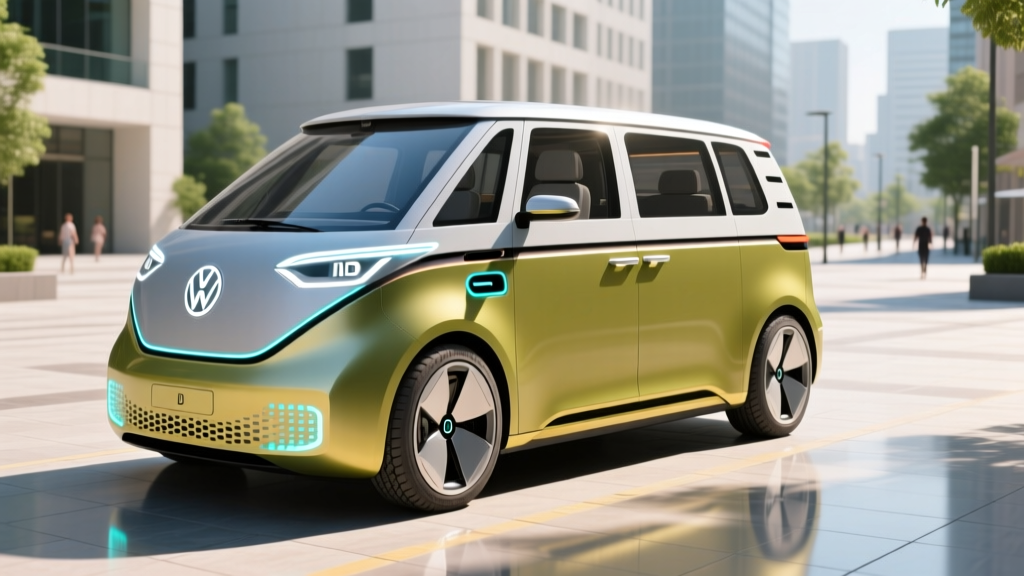
The Volkswagen ID. Buzz is the only mass-market electric microbus sold new in the United States for the 2025–2026 model years. It pairs retro styling with a 91 kWh (usable) NMC battery, EPA-estimated range of 234 miles (RWD) or 231 miles (AWD), and DC fast-charging capability up to 200 kW (10–80% in roughly 26 minutes). Pricing starts at $59,995 for the Pro S RWD before destination. It does not qualify for the $7,500 federal §30D tax credit as of 2026 due to battery-sourcing requirements, making the effective purchase price substantially higher than a gas minivan unless you find a dealer discount or state incentive.
What Exactly Is an Electric Microbus?
The term "electric microbus" refers to a battery-electric passenger van inspired by the classic VW Type 2 (Microbus). In the modern US market, that label belongs almost exclusively to the VW ID. Buzz. It seats up to seven across three rows, offers roughly 18.6 cu ft of cargo behind the third row (expanding to 75.5 cu ft with the second row folded), and rides on VW's MEB platform shared with the ID.4 crossover.
Other vehicles sometimes lumped into the "microbus" conversation — like the Chrysler Pacifica Hybrid (a PHEV minivan, not a BEV) or the Mercedes-Benz EQV (not sold in the US) — don't qualify as true electric microbuses in the American market. For 2026, the ID. Buzz is your only option if you want a fully electric van with this form factor.
Range, Battery, and Charging: The Numbers That Matter
| Spec | ID. Buzz Pro S (RWD) | ID. Buzz Pro S Plus (AWD) |
|---|---|---|
| EPA Range | 234 mi | 231 mi |
| Battery (usable) | 91 kWh, NMC | 91 kWh, NMC |
| Motor Output | 282 hp / 406 lb-ft | 335 hp / 406 lb-ft |
| 0–60 mph | ~7.9 sec | ~6.9 sec |
| DC Fast Charge Peak | 200 kW | 200 kW |
| 10–80% DCFC Time | ~26 min | ~26 min |
| Level 2 (AC) Charge Rate | 11 kW | 11 kW |
| Level 2 Full Charge Time | ~8.5 hrs | ~8.5 hrs |
| EPA Efficiency (MPGe) | 90 MPGe combined | 87 MPGe combined |
| Base MSRP (before dest.) | $59,995 | $69,995 |
| Battery/Powertrain Warranty | 8 yr / 100,000 mi | 8 yr / 100,000 mi |
Real-World Range Reality Check
The EPA sticker says 234 miles, but plan for less. At sustained highway speeds of 70–75 mph, expect roughly 190–210 miles in mild weather. In cold conditions (below 30°F), range can drop 20–30%, bringing usable range to 160–185 miles before you need a charger. The ID. Buzz's boxy shape creates significant aerodynamic drag at speed, which is the primary range killer on road trips. The heat pump (standard on US models) helps mitigate cold-weather cabin-heating losses but cannot fully overcome the physics of a 5,000+ lb van pushing air.
On DC fast charging, the 200 kW peak rate is competitive but not class-leading. The charge curve tapers notably above 80% SoC — a 10–80% session takes about 26 minutes at a compatible 200+ kW station, but 10–100% will push past 40 minutes. For road-trip planning, budget 30-minute stops every 170–190 miles to stay in the efficient charging zone and preserve a safety buffer.
Electric Microbus vs. Gas Minivan: Cost & Capability Comparison
The most common cross-shop is the ID. Buzz against a conventional gas minivan like the Toyota Sienna (hybrid) or Chrysler Pacifica (gas or PHEV). Here's how the math works over five years and 75,000 miles, assuming $3.50/gal gas and $0.16/kWh home electricity:
| Cost Category | VW ID. Buzz RWD | Toyota Sienna Hybrid (FWD) |
|---|---|---|
| Base MSRP | $59,995 | $39,995 |
| Federal Tax Credit (§30D) | $0 (sourcing ineligible) | N/A (hybrid) |
| Effective Purchase Price | $59,995 | $39,995 |
| Fuel/Energy (75,000 mi) | ~$3,260 (home charging) | ~$7,290 (36 MPG combined) |
| Maintenance (5 yr est.) | ~$1,500 | ~$3,800 |
| Insurance (5 yr est.) | ~$12,500 | ~$9,500 |
| 5-Year Total Cost | ~$77,255 | ~$60,585 |
The ID. Buzz saves roughly $4,030 on fuel and $2,300 on maintenance over five years compared to the Sienna hybrid, per fueleconomy.gov data. However, the $20,000 higher purchase price and elevated insurance premiums (EV insurance averages 15–25% more than comparable ICE vehicles) wipe out those savings. The electric microbus costs approximately $16,670 more to own over five years.
This gap narrows if you have access to a state rebate (California's CVRP, for example, or Colorado's state credit), free workplace charging, or significantly cheaper electricity rates. But on pure economics, the electric microbus is a lifestyle and values purchase, not a cost-saving one.
Real-World Ownership: What First-Time EV Buyers Must Know
Home Charging Is Non-Negotiable for Most Owners
The ID. Buzz's 91 kWh battery is large. On a standard 120V Level 1 outlet (1.4 kW), a full charge takes over 65 hours — essentially unusable for daily driving. You need a Level 2 home charger (240V, 48A circuit) to recharge overnight at 11 kW, which fills the battery in about 8.5 hours.
Expect to pay $800–$2,500 for a quality Level 2 charger and professional installation if your electrical panel has capacity. If you need a panel upgrade (200A service), add $1,500–$3,500. Without home charging, the ID. Buzz becomes a logistical challenge — relying on public DC fast chargers daily is expensive ($0.35–$0.50/kWh, or $32–$45 per session) and time-consuming.
Cold Climate Considerations
If you live where winters regularly drop below freezing, plan for meaningful range loss. The NMC battery in the ID. Buzz loses efficiency in cold temperatures, and the large cabin volume requires substantial energy to heat. Owners in northern states report real-world winter range of 160–185 miles on mixed driving. Preconditioning the battery while plugged in (using the VW app to schedule departure times) recovers some range by warming the pack on grid power rather than battery power.
Public Charging Network Compatibility
The ID. Buzz uses the CCS1 connector for DC fast charging and the J1772 connector for Level 2 AC charging. It does not have a native NACS (Tesla-style) port. However, VW has confirmed that a NACS adapter will be available, granting access to Tesla Supercharger stations. As of 2026, Electrify America, EVgo, and ChargePoint networks all support the CCS1 standard natively. Plan road trips around 150–200 kW capable stations for optimal charge times.
Tax Credits, Incentives, and the Fine Print
Here's where the electric microbus story gets complicated. Under current IRS §30D rules, the VW ID. Buzz does not qualify for the $7,500 federal clean vehicle tax credit as of 2026. The vehicle fails the critical-minerals and battery-component sourcing requirements — the battery cells are manufactured outside the qualifying supply chain.
Common Misconceptions About the ID. Buzz
| Myth | Fact |
|---|---|
| "It gets the $7,500 federal tax credit." | It does not. Battery sourcing rules disqualify it under §30D as of 2026. |
| "234 miles of range is plenty for road trips." | Highway/cold real-world range is 160–210 mi. Plan stops every ~175 mi. |
| "I can charge it on a regular wall outlet." | Level 1 (120V) takes 65+ hours. A 240V Level 2 circuit is essential. |
| "It fits a 4×8 sheet of plywood flat." | Cargo width between wheel wells is under 48 inches. It does not. |
| "Maintenance is basically free." | Tires, cabin filters, wipers, and brake fluid still need service. Budget ~$300/yr. |
Some buyers may qualify for state-level incentives — check your state's energy office or AFDC's state incentive database. California, Colorado, Massachusetts, and a few others offer rebates or credits that can partially offset the purchase premium. These programs change frequently, so verify current eligibility before purchasing.
Decision Framework: Should You Buy an Electric Microbus?
Choose the VW ID. Buzz Electric Microbus If:
- You have Level 2 home charging (or can install it) and drive under 150 miles round-trip most days.
- You value the design, space, and driving experience over pure cost optimization — the ID. Buzz is genuinely fun, quiet, and spacious.
- You want to reduce tailpipe emissions and have access to reasonably clean grid electricity or solar.
- You can absorb the $60,000+ price tag without depending on the federal tax credit to make the math work.
- You primarily drive in mild-to-moderate climates where range loss is manageable.
Choose a Hybrid Minivan (Sienna, Pacifica) Instead If:
- Your budget is under $45,000 and you need three rows of seating.
- You frequently drive 300+ miles between stops and don't want to plan around DC fast chargers.
- You live in an apartment or lack home charging access — a hybrid needs no infrastructure changes.
- You tow — the Sienna isn't a tow champion either, but the Pacifica gas model handles 3,600 lbs vs. the ID. Buzz's 2,500-lb limit.
- You live in extreme cold where 160-mile winter range creates genuine trip-planning anxiety.
FAQ: Electric Microbus Ownership Questions
Is the VW ID. Buzz the only electric microbus available in the US?
For 2025–2026, yes. The ID. Buzz is the sole battery-electric microbus/minivan sold new in the United States. The Chrysler Pacifica Hybrid is a plug-in hybrid (32 miles electric-only range), not a full EV. No other manufacturer currently offers a competing electric microbus in the US market, though Rivian's R2 (a smaller three-row SUV, not a van) is expected in 2026.
How much does it cost to charge the ID. Buzz at home?
A full charge from empty using the 91 kWh battery at the national average of $0.16/kWh costs approximately $14.56. For typical daily driving of 30–40 miles, expect to spend $2.50–$3.50 per day on electricity. Over a year of 12,000 miles, home charging costs roughly $520–$650, compared to $1,400–$1,800 for gas in a comparable minivan.
Can the ID. Buzz use Tesla Superchargers?
Not natively — the ID. Buzz has a CCS1 port, not NACS. VW has indicated a NACS adapter will be made available, which would enable Supercharger access. Until then, use Electrify America, EVgo, or ChargePoint DC fast stations. Many new public chargers are being built with both CCS1 and NACS cables.
What happens to the battery after the warranty expires?
VW covers the ID. Buzz battery for 8 years or 100,000 miles against defects and capacity loss below 70% of original. NMC batteries typically degrade 10–15% over 150,000 miles based on industry data. If replacement is ever needed out of warranty, expect a cost in the $15,000–$22,000 range including labor, though prices continue to decline as battery manufacturing scales. Most EV batteries outlast the vehicles they're installed in.
Does the ID. Buzz have self-driving capability?
No. The ID. Buzz comes with VW's IQ.DRIVE suite, which is a SAE Level 2 driver-assistance system — it provides adaptive cruise control and lane-centering, but the driver must remain fully engaged with hands on the wheel and eyes on the road at all times. It is not autonomous or "self-driving" in any capacity.